
When searching for smart thermostats with learning capabilities, you’ll find options that automatically adjust your home’s temperature based on your habits. The Google Nest Learning Thermostat (4th gen) stands out as the overall best for its seamless automation and user-friendly design. The Google Nest Thermostat E offers a more budget-friendly alternative with solid learning features, while the Nest Learning Thermostat Pro Edition adds advanced sensors for larger homes. However, choosing the right model involves tradeoffs between cost, compatibility, and features. Continue reading for a detailed breakdown of each option to help you make an informed decision.
Open a free Amazon Business account
Business pricing, bulk buying and tax-exempt orders.
Create a free accountAs an affiliate, we earn on qualifying purchases.
Key Takeaways
- The top-ranked models excel in learning accuracy and automation, reducing manual adjustments over time.
- Compatibility with your existing HVAC system and smart home ecosystem is crucial for smooth integration.
- Higher-priced options often include advanced sensors and broader control features, but may not be necessary for smaller homes.
- Ease of installation and intuitive interfaces significantly impact long-term satisfaction.
- Budget models provide good value but might lack some advanced learning or compatibility features.
| Google Nest Thermostat – Programmable Smart Learning Thermostat with Easy Installation and Trim Kit Bundle, White |  | Best Overall | Connectivity: Wi-Fi | Compatibility: 95% of heating and cooling systems | Display: Frosted display | VIEW ON AMAZON | See Our Full Breakdown |
| Google Nest Learning Thermostat E 3rd Generation Bundle |  | Best Value | Controller Type: Android, iOS | Additional Features: Programmable Temperature | Control Type: App Control | VIEW ON AMAZON | See Our Full Breakdown |
| Google Nest Learning Thermostat Pro Edition with Temperature Sensor (4th Gen, 2024) |  | Best for Advanced Compatibility | Compatibility: Most 24V systems including gas, electric, oil, heat pump, radiant, dual-fuel, geothermal, zoned HVAC | Generation: 4th Gen, 2024 | Includes: Temperature Sensor | VIEW ON AMAZON | See Our Full Breakdown |
| Google Nest Thermostat – Smart Thermostat for Home – Programmable Wi-Fi Thermostat – Charcoal | 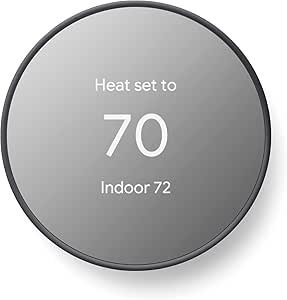 | Best for Voice Control and Energy Monitoring | Connectivity: Wi-Fi 2.4/5 GHz, Bluetooth Low Energy | Compatibility: Works without C wire in most homes | Features: Energy saving, HVAC monitoring, remote control, voice control | VIEW ON AMAZON | See Our Full Breakdown |
| Google Nest Learning Thermostat (4th gen) + Nest Temperature Sensor (2nd gen) – Silver |  | Best for Multi-Room Control | Model: 4th gen | Includes: Nest Temperature Sensor (2nd gen) | Display Size: 60% larger | VIEW ON AMAZON | See Our Full Breakdown |
| Google Nest Learning Thermostat 3rd Gen – Programmable Smart Thermostat for Home – Compatible with Alexa |  | Best Overall for Intelligent Home Optimization | Compatibility: Alexa, Google Assistant | Color: Stainless Steel | Features: Learning schedule, remote control, energy history, HVAC monitoring, Home/Away Assist | VIEW ON AMAZON | See Our Full Breakdown |
| smart thermostats with learning feature | Compatibility | Connectivity |
|---|---|---|
| Google Nest Thermostat | 95% of heating and cooling systems | Wi-Fi |
| Google Nest Learning Thermosta | — | — |
| Google Nest Learning Thermosta | Most 24V systems including gas, electric, oil, heat pump, radiant, dual-fuel, geothermal, zoned HVAC | — |
| Google Nest Thermostat | Works without C wire in most homes | Wi-Fi 2.4/5 GHz, Bluetooth Low Energy |
| Google Nest Learning Thermosta | Most 24V systems, Matter | Wi-Fi, Matter |
| Google Nest Learning Thermosta | Alexa, Google Assistant | Wi-Fi |
More Details on Our Top Picks
Google Nest Thermostat – Programmable Smart Learning Thermostat with Easy Installation and Trim Kit Bundle, White
This model stands out for its ease of installation and broad compatibility, making it a strong choice for homeowners seeking a straightforward upgrade. Unlike the Nest Learning Thermostat E, it offers a more traditional display and slightly wider HVAC compatibility, providing a balance between simplicity and flexibility. The automatic Home/Away Assist and smartphone control add to its convenience, but it does depend on a reliable Wi-Fi connection to function fully. Its main tradeoff is that compatibility may vary with older or atypical HVAC systems, which could require additional setup or accessories. Still, for most average households, this thermostat delivers reliable learning features in an accessible package.
Pros:- Learns your temperature preferences for energy savings
- Easy to install with included trim kit
- Automatic Home/Away Assist for convenience
- Controllable via smartphone app
Cons:- Requires Wi-Fi internet connection for full features
- Compatibility may be limited with some HVAC systems
Best for: Homeowners wanting a hassle-free, easy-to-install smart thermostat with good compatibility and automatic features
Not ideal for: Technically inclined users with complex HVAC setups or those seeking advanced customization beyond basic learning features
- Connectivity:Wi-Fi
- Compatibility:95% of heating and cooling systems
- Display:Frosted display
- Installation Time:Typically 30-60 minutes
- App Compatibility:iOS and Android
Our verdict“This is a solid pick for homeowners seeking a straightforward, reliable learning thermostat that installs quickly and works well with most systems.”
Google Nest Learning Thermostat E 3rd Generation Bundle
Compared with the more feature-rich Nest Learning Thermostat, the E version offers a more budget-friendly option that still learns your schedule and adapts to your routines, making it ideal for those who prioritize affordability. While it doesn’t have the larger display of the 4th gen or the advanced sensors, it performs well for basic energy savings and remote control via the app. However, some users report that setup can be a bit tricky, and it requires Wi-Fi to unlock its full potential, similar to the more premium models. For those who want a smart thermostat that learns and saves without the bells and whistles, this bundle provides excellent value, but it may fall short for tech enthusiasts seeking more advanced features.
Pros:- Learns your schedule to optimize comfort and savings
- Remote control via app for convenience
- Includes all necessary components for easy setup
- Compatible with most heating and cooling systems
Cons:- Requires Wi-Fi for full functionality
- Setup may be challenging for some users
- Limited display features compared to higher-end models
Best for: Budget-conscious households wanting a learning thermostat that covers the basics with remote access
Not ideal for: Tech-savvy users who want the latest display or advanced HVAC compatibility without additional sensors
- Controller Type:Android, iOS
- Additional Features:Programmable Temperature
- Control Type:App Control
- Connectivity Technology:Wi-Fi
- Power Source:Battery Powered
- Voltage:24 volts of alternating current
Our verdict“This bundle offers a cost-effective way to get a learning thermostat with remote control, ideal for budget-minded consumers who don’t need advanced features.”
Google Nest Learning Thermostat Pro Edition with Temperature Sensor (4th Gen, 2024)
This edition is tailored for homes with complex or diverse HVAC systems, offering extensive compatibility including gas, electric, oil, heat pumps, and zoned systems, unlike the standard models. Its professional installation requirement ensures optimal setup, but it may be a barrier for DIY enthusiasts. The addition of a temperature sensor and adaptive calibration enhances energy efficiency and comfort, making it a smart upgrade for larger or multi-zone homes. The tradeoff here is higher cost and installation complexity, but for those with demanding HVAC needs, this model delivers superior performance and flexibility.
Pros:- Compatible with a wide range of HVAC systems
- Enhanced energy-saving with temperature sensor
- Designed for professional installation
- Adaptive calibration improves efficiency
Cons:- Requires professional installation
- Higher cost compared to DIY models
- Less suitable for simple or small setups
Best for: Homeowners with complex HVAC systems or multi-zone setups seeking professional installation and maximum compatibility
Not ideal for: DIYers or those with simple HVAC systems who prefer easy, self-install options
- Compatibility:Most 24V systems including gas, electric, oil, heat pump, radiant, dual-fuel, geothermal, zoned HVAC
- Generation:4th Gen, 2024
- Includes:Temperature Sensor
- Installation:Professional recommended
Our verdict“This model is best suited for homes with complex HVAC systems wanting professional-grade performance and maximum flexibility.”
Google Nest Thermostat – Smart Thermostat for Home – Programmable Wi-Fi Thermostat – Charcoal
Compared with the Learning Thermostat, this model emphasizes energy efficiency and voice control, making it ideal for users who want seamless smart home integration. It supports Google Assistant, Matter, and other voice platforms, but lacks a lock feature, which could be a concern for households with children or shared spaces. Its energy-saving features include smart scheduling and HVAC monitoring, providing alerts for system issues. The need for Wi-Fi remains a common thread, and some systems might require additional wiring. Overall, it’s a practical choice for those who prioritize voice control and energy monitoring over advanced learning capabilities.
Pros:- Energy-efficient with smart scheduling and HVAC monitoring
- Remote control via smartphone app
- Supports Google Assistant and Matter-compatible devices
- ENERGY STAR certified
Cons:- No lock feature for security
- Requires Wi-Fi for full functionality
- Some systems may need additional wiring
Best for: Users seeking a voice-controlled thermostat with energy monitoring and simple setup
Not ideal for: Households needing advanced customization or a lock feature for security
- Connectivity:Wi-Fi 2.4/5 GHz, Bluetooth Low Energy
- Compatibility:Works without C wire in most homes
- Features:Energy saving, HVAC monitoring, remote control, voice control
- Lock feature:No
Our verdict“Ideal for voice-controlled smart home enthusiasts who want energy monitoring and remote management without complex setup.”
Google Nest Learning Thermostat (4th gen) + Nest Temperature Sensor (2nd gen) – Silver
This combo elevates the basic learning thermostat with a larger display and room-specific temperature sensors, making it ideal for multi-room or larger homes. Its compatibility with most 24V systems and support for Matter and voice assistants enhances its versatility. The larger, Dynamic Farsight display improves usability, especially when managing multiple zones. However, installation might be complex for some users, and the added sensors increase overall cost. For households wanting precise temperature control across different areas, this package offers a clear advantage over simpler thermostats like the Nest Thermostat E.
Pros:- Learns user preferences for comfort and savings
- Larger, dynamic display for easy viewing
- Includes multiple temperature sensors for room-specific control
- Supports various voice assistants and smart home platforms
Cons:- Installation can be complex and may require professional help
- Higher price point due to additional sensors
- Wi-Fi needed for full features
Best for: Homeowners with multi-room spaces or larger homes seeking precise, zone-based temperature control
Not ideal for: People with small or single-room setups who won’t benefit from room sensors
- Model:4th gen
- Includes:Nest Temperature Sensor (2nd gen)
- Display Size:60% larger
- Compatibility:Most 24V systems, Matter
- Control:Google Home app, Alexa, Siri, Google Assistant
- Connectivity:Wi-Fi, Matter
Our verdict“This package is best suited for larger homes or multi-room zones where precise temperature management makes a noticeable difference.”
Google Nest Learning Thermostat 3rd Gen – Programmable Smart Thermostat for Home – Compatible with Alexa
The Google Nest Learning Thermostat 3rd Gen stands out for its ability to adapt seamlessly to your daily routines, much like the Nest Thermostat E but with more advanced learning capabilities. Unlike the basic models, it actively studies your schedule to optimize both comfort and energy savings, making it ideal for tech-savvy homeowners who want a set-it-and-forget-it solution. While it offers remote control and energy monitoring, the need for separate temperature sensors for room-specific control could be a drawback for those seeking precise zoned heating without extra purchases. Its higher price point reflects its premium features, which may be overkill for users with simple needs or smaller spaces. Compared to the Nest Thermostat (4th gen), this model provides more learning features but requires additional sensors for full room-specific control, which can add to the total cost. Overall, this pick makes sense for users who prioritize intelligent learning and remote management but are willing to invest in a more comprehensive setup.
Pros:- Learns your schedule over time to optimize comfort and reduce energy use
- Remote control from any device enhances convenience
- Provides detailed energy insights and HVAC system alerts
Cons:- Requires additional purchase of temperature sensors for room-specific control
- Some features depend on compatible smart home systems, increasing complexity
- Higher price compared to more basic programmable thermostats
Best for: Homeowners looking for a smart thermostat that learns routines and offers remote control for maximum convenience.
Not ideal for: Renters or users with small, single-zone systems who don’t want to invest in additional sensors or higher-priced models.
- Compatibility:Alexa, Google Assistant
- Color:Stainless Steel
- Features:Learning schedule, remote control, energy history, HVAC monitoring, Home/Away Assist
- Connectivity:Wi-Fi
- Installation:Requires compatible HVAC system
- Room Sensors:Optional
- Display:Wall-mounted, touchscreen
- Power:C-wire compatible
- Price Range:Higher
Our verdict“This thermostat suits households that want a sophisticated, learning-enabled system capable of remote management and energy monitoring, provided they’re willing to invest in extra sensors and higher cost.”
How We Picked
These products were evaluated based on their learning accuracy, ease of setup, build quality, compatibility with smart home systems, and overall value. We prioritized models that demonstrated reliable automation and user-friendly interfaces, ensuring they suit both tech-savvy users and beginners. The ranking reflects a balance between performance, affordability, and feature set, aiming to help different types of homeowners find the best fit. Products with significant drawbacks, such as limited compatibility or steep learning curves, were ranked lower despite their advanced features.| smart thermostats with learning feature | Connectivity |
|---|---|
| Google Nest Thermostat | Wi-Fi |
| Google Nest Learning Thermosta | — |
| Google Nest Learning Thermosta | — |
| Google Nest Thermostat | Wi-Fi 2.4/5 GHz, Bluetooth Low Energy |
| Google Nest Learning Thermosta | Wi-Fi, Matter |
| Google Nest Learning Thermosta | Wi-Fi |
Factors to Consider When Choosing Smart Thermostats With Learning Features
Choosing a smart thermostat with learning features involves understanding several key factors that affect usability and long-term satisfaction. Beyond basic compatibility, consider how well the device adapts to your schedule, the quality of its sensors, and how easy it is to install and control. Making the right choice means balancing upfront costs with features that truly add convenience and energy savings. This guide explores these considerations to help you navigate your options and avoid common pitfalls.Compatibility With Your HVAC System and Smart Home Ecosystem
Before purchasing, verify that the thermostat works with your existing heating and cooling setup. Some models are designed for specific systems like heat pumps or multi-stage HVAC units. Additionally, check if the device integrates seamlessly with your preferred smart home platform, such as Google Assistant, Alexa, or Apple HomeKit. Compatibility issues can lead to frustration or extra costs for adapters, so prioritize models that natively support your ecosystem for a smooth experience.
Learning Accuracy and Automation Capabilities
Not all learning features are equal. Look for thermostats that adapt quickly and accurately to your habits, reducing manual adjustments over time. Some models incorporate sensors to monitor occupancy and local weather, enhancing their automation. However, overly complex setups or inconsistent learning can undermine trust in the device. Balancing advanced learning with straightforward control is key for making your home both comfortable and energy-efficient.
Ease of Installation and User Interface
An intuitive setup process saves time and frustration. Many models now feature straightforward installation guides or even professional installation options. Once installed, a clear, responsive app or display helps fine-tune settings without hassle. Devices with complex menus or confusing controls can diminish the benefits of smart automation, especially for users who prefer simplicity. Consider your comfort level with tech when evaluating installation and daily use.
Sensor Quality and Additional Features
Advanced sensors can significantly enhance a thermostat’s learning and responsiveness, especially in larger or multi-zone homes. Look for models that include room sensors or support additional sensors for better temperature management. Other features like geofencing, voice control, and energy reports add convenience but often come at a higher cost. Weigh these extras against your actual needs to avoid paying for features that won’t be used regularly.
Price, Value, and Long-Term Savings
While premium models tend to offer more sophisticated features, they also come with a higher price tag. Sometimes, a mid-range model provides most of what you need for a lower cost, representing better value. Consider potential energy savings and how much you’re willing to invest upfront. Also, check for compatibility with existing smart home systems to avoid costly upgrades later. A well-chosen thermostat can reduce your utility bills and improve home comfort for years to come.
Frequently Asked Questions
Will a learning thermostat really reduce my energy bills?
Yes, a well-functioning learning thermostat can identify your schedule and adjust heating and cooling accordingly, often leading to noticeable energy savings. By avoiding unnecessary heating or cooling when your home is unoccupied or during sleeping hours, these devices optimize your HVAC system’s operation. However, the extent of savings depends on how consistently your schedule remains, and some homes may see more benefit than others. Proper setup and regular use are key to maximizing these benefits.
Can I install a smart thermostat myself, or do I need professional help?
Many smart thermostats are designed for DIY installation, with clear instructions and straightforward wiring options. Devices like the Google Nest Thermostat are particularly user-friendly, making it possible for most homeowners to install without professional help. However, if your HVAC system has complex wiring, multiple zones, or if you feel unsure about electrical work, hiring a professional can ensure proper setup and avoid potential damage. Investing in professional installation might be worth it for larger or more complicated systems.
Will a learning thermostat work with my existing voice assistant?
Most modern learning thermostats, including those from Google Nest, support popular voice assistants such as Google Assistant and Amazon Alexa. Compatibility allows you to control your thermostat via voice commands, adding convenience to daily routines. It’s important to confirm compatibility with your specific voice platform before purchasing. Also, consider how well the voice integration functions in your home environment, as some setups may require additional configuration for optimal performance.
Are there privacy concerns with smart learning thermostats?
Smart thermostats collect data on your occupancy patterns and temperature preferences to improve automation. While this data helps optimize energy use, it can raise privacy concerns if not managed properly. Reputable brands encrypt data and provide settings to control what information is shared. Reading privacy policies and adjusting data sharing options can help you safeguard your information. Ultimately, choosing trusted brands with transparent privacy practices can mitigate these concerns.
How long do learning features take to become effective?
Most smart thermostats need a few days to a couple of weeks to learn your schedule and preferences accurately. During this period, the device observes your habits and adjusts its behavior accordingly. Consistently following your routine helps speed up this process. Patience is important, as forcing manual adjustments during the learning phase can hinder the device’s ability to adapt effectively. Once fully trained, the thermostat should require minimal manual intervention.
Conclusion
For those seeking an all-around excellent choice, the Google Nest Learning Thermostat (4th gen) offers reliable automation and seamless integration, making it ideal for most homeowners. If you want the best value without sacrificing core features, the Nest Learning Thermostat E provides strong learning capabilities at a lower price point. For users with larger homes or complex systems, the Nest Learning Thermostat Pro Edition with additional sensors is worth considering. Beginners or those with simpler needs should lean toward models with straightforward setup, while tech enthusiasts may prefer premium options with expanded features. Your ideal pick depends on your home setup, budget, and desired level of automation.
NFL season / tailgating Picks
team gear
As an affiliate, we earn on qualifying purchases.