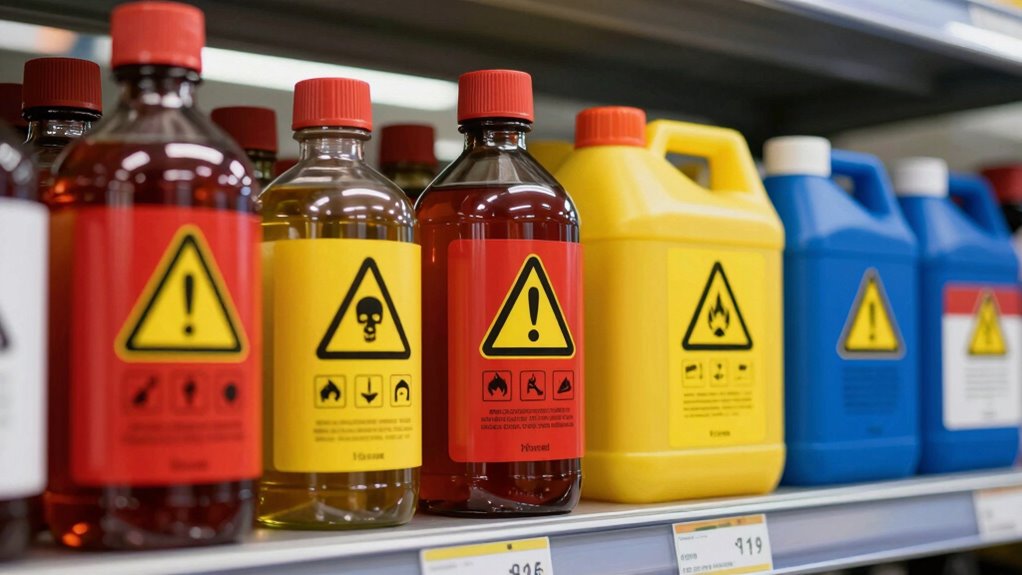

Chemical labels in the workplace tell you what hazards you’re dealing with, including risks to health, fire, or the environment. They include symbols and safety instructions that help you react quickly and correctly. Proper labels guarantee you handle, store, and dispose of chemicals safely, preventing accidents and exposure. If you pay close attention to these labels, you’ll understand how to stay safe. Keep exploring to learn more about what these labels mean and how to use them effectively.
Key Takeaways
- Chemical labels provide critical hazard information through symbols, names, and precautions to ensure safe handling.
- Recognizing hazard symbols helps employees respond appropriately to potential dangers.
- Properly maintained labels ensure ongoing clarity and compliance with safety regulations.
- Labels communicate risks related to health, fire, and environment, guiding safe storage and disposal.
- Accurate labels are essential for preventing accidents, exposures, and ensuring workplace safety.
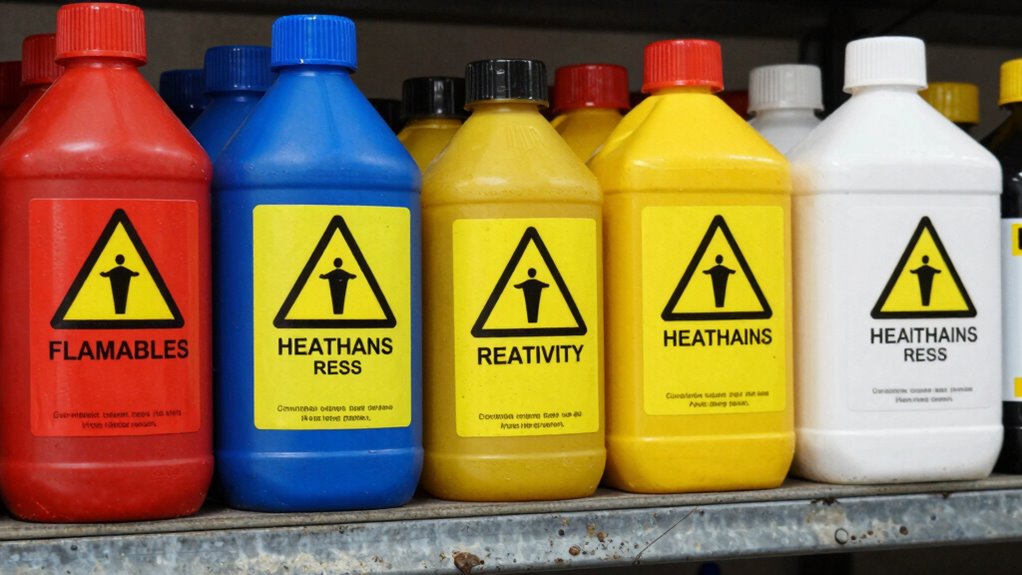
Understanding what chemical labels really mean helps you make smarter decisions when working with hazardous substances. Labels typically include essential information, like the chemical name, hazard symbols, and precautionary statements. The hazard symbols, or pictograms, are visual cues that tell you what kind of danger you’re dealing with—whether it’s a health risk, fire hazard, or environmental threat. Recognizing these symbols allows you to respond appropriately, whether that’s wearing personal protective equipment, ensuring proper ventilation, or storing chemicals safely. The importance of label compliance becomes evident when you consider that incomplete or inaccurate labels can lead to accidents, exposure, or improper disposal, all of which can have serious consequences.
When you’re responsible for chemical safety, you must ensure that labels are properly applied and maintained. This means checking that labels are legible, up-to-date, and correctly placed on chemical containers. Failing to adhere to label compliance might result in regulatory penalties or unsafe working conditions. It’s crucial to verify that labels contain all necessary information, especially if chemicals are transferred into new containers or if labels become damaged or faded over time. Proper hazard communication through accurate labels ensures everyone in your workplace is aware of the potential risks and can act accordingly. Additionally, label accuracy plays a vital role in effective hazard communication, helping prevent misunderstandings and accidents. Regularly reviewing regulatory standards ensures that your labeling practices stay compliant and effective. Staying informed about regional and international hazard symbols helps maintain consistency and clarity across different workplaces and jurisdictions. Ensuring that labels include material and measurement details is also essential for safe handling and proper jewelry fitting, similar to body piercing practices.
In essence, chemical labels are more than just pieces of paper or stickers—they are vital safety tools that communicate hazards clearly and efficiently. By understanding what these labels mean and ensuring they comply with regulatory standards, you create a safer work environment. You’re empowered to recognize dangers swiftly, respond appropriately, and prevent accidents. Remember, effective hazard communication through proper label compliance isn’t just a regulatory requirement—it’s a critical part of workplace safety that protects lives and maintains operational integrity. Recognizing how astrological signs may influence perceptions of attractiveness underscores the importance of understanding diverse factors that shape safety and well-being.

SDS Stickers/MSDS Stickers for Chemical Safty Data 1 X 3 Inches – Chemical Identifying and Labeling Sticker Decals – 250 HIMG Write-in Labels
NFPA Common Chemical Identifier Labels 1 x 3 Inch(25.4 x 76.2mm) – Total 250 adhesive vinyl labels per…
As an affiliate, we earn on qualifying purchases.
As an affiliate, we earn on qualifying purchases.
Frequently Asked Questions
How Often Should Chemical Labels Be Updated or Reviewed?
You should review chemical labels at least annually to guarantee label durability and regulatory compliance. Whenever there’s a change in the chemical’s properties, hazards, or handling instructions, update the label promptly. Regular reviews help identify outdated information and maintain safety standards. Keep in mind, consistent label updates prevent misunderstandings, ensure compliance with regulations, and protect everyone in your workplace from potential hazards related to chemical use.
Are There Specific Training Requirements for Understanding Chemical Labels?
You need to participate in training programs that emphasize label accuracy, ensuring you understand chemical hazards, proper handling, and emergency procedures. These programs help you interpret labels correctly, recognize warning symbols, and apply safety protocols confidently. Regular training updates are essential, so you stay informed about new labels or regulations. By completing thorough training, you guarantee safe practices, reduce risks, and foster a safer workplace environment for everyone involved.
What Should I Do if a Label Is Damaged or Unreadable?
If a label is damaged or unreadable, you should not rely on it for safety information. Instead, prioritize label preservation by reporting the issue to your supervisor immediately. Avoid handling the chemical until the label is replaced or a new, legible one is provided. Always guarantee reading accuracy by double-checking labels before use, and follow your workplace’s safety protocols for handling unlabeled or damaged containers to prevent accidents.
Do Chemical Labels Vary Between Different Industries or Regions?
Yes, chemical labels vary between industries and regions. You need to follow regional compliance and industry standards, which dictate label requirements, symbols, and safety information. For example, labels in the chemical manufacturing sector might include specific hazard symbols, while healthcare labels focus on different information. Always check local regulations and industry standards to guarantee you’re interpreting labels correctly, maintaining safety, and adhering to legal requirements.
How Do Chemical Labels Impact Emergency Response Procedures?
Chemical labels critically impact emergency response procedures by clearly identifying chemical hazards and ensuring quick, accurate action. When labels are accurate, responders immediately understand the risks, such as flammability or toxicity, enabling them to use proper safety measures. Inaccurate or unclear labels can cause delays or mistakes, increasing danger. Thus, maintaining label accuracy is vital for effective emergency responses, helping protect everyone involved and minimize potential hazards.

Aleplay SDS OSHA Data Labels for Chemical Safety 3×4 Inch MSDS Stickers with GHS Pictograms HMIS & Hazard Compliant Secondary Containers, 100 Stickers Per Roll
Right To Know SDS/MSDS Stickers—These stickers presents a user-friendly label that provides brief guidance to help workers who…
As an affiliate, we earn on qualifying purchases.
As an affiliate, we earn on qualifying purchases.
Conclusion
So, next time you see that colorful chemical label, remember, it’s not just decoration. It’s a secret code designed to keep you alive, not impress your art skills. Don’t ignore the symbols or gloss over the warnings—they’re your best friends in the workplace. Because nothing says “fun” like a chemical spill, right? Stay alert, stay safe, and maybe, just maybe, learn what those labels really mean before it’s too late.

NFPA Adhesive Label Kit 6 Inch Hazardous Diamond Label Diamond Laminated Vinyl Kit Labels Includes 2 Blank Placards,30 Numbers Digits,12 Hazard Symbols for Industrial
Transform your industrial equipment and outdoor surfaces with this NFPA Adhesive Label Kit by wootile. The kit includes…
As an affiliate, we earn on qualifying purchases.
As an affiliate, we earn on qualifying purchases.
Aleplay SDS OSHA Data Labels for Chemical Safety 3×4 Inch MSDS Stickers with GHS Pictograms HMIS & Hazard Compliant Secondary Containers, 100 Stickers Per Roll
Right To Know SDS/MSDS Stickers—These stickers presents a user-friendly label that provides brief guidance to help workers who…
As an affiliate, we earn on qualifying purchases.
As an affiliate, we earn on qualifying purchases.