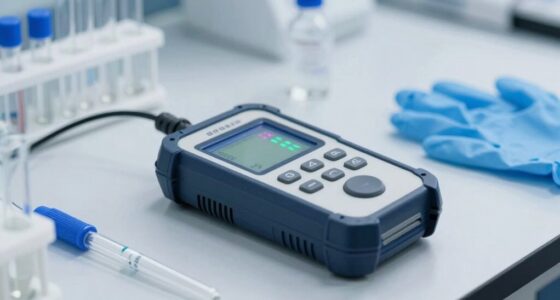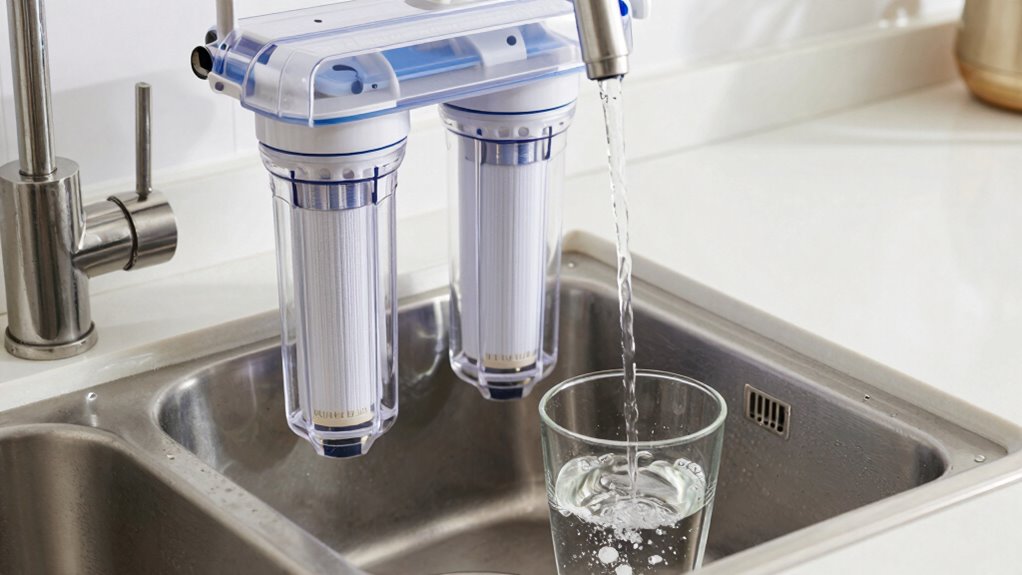

Reverse osmosis water systems improve input quality by forcing water through a semi-permeable membrane, trapping contaminants like bacteria, viruses, heavy metals, and pesticides. This process removes dissolved salts and impurities, resulting in cleaner, better-tasting water. Regular maintenance guarantees ongoing efficiency and safety. If you continue exploring, you’ll discover how proper upkeep and filtration efficiency keep your system running at its best, providing consistently high-quality drinking water.
Key Takeaways
- Reverse osmosis systems remove contaminants like bacteria, viruses, heavy metals, and pesticides from input water.
- They utilize semi-permeable membranes to filter out dissolved salts and impurities.
- Pre-filtration stages reduce sediment and chlorine, protecting the membrane and enhancing input water quality.
- Proper maintenance ensures consistent removal of impurities, maintaining high input water standards.
- System indicators and monitoring help detect issues early, preventing deterioration of input water quality.

Have you ever wondered how tap water is purified to remove contaminants and improve taste? Reverse osmosis water systems do a remarkable job of transforming ordinary tap water into clean, great-tasting drinking water. At the core of their effectiveness is their high filtration efficiency, which allows them to eliminate a wide range of impurities. These systems work by forcing water through a semi-permeable membrane that traps contaminants like bacteria, viruses, heavy metals, pesticides, and dissolved salts. This process ensures that the water you drink is of much higher quality than untreated tap water. The filtration efficiency of reverse osmosis units is one of their strongest features, providing a significant reduction in impurities and resulting in water that’s not only safer but also better in taste and clarity. Regular maintenance, including filter and membrane replacements, is essential to sustain this high level of performance.
Reverse osmosis systems effectively remove contaminants, delivering cleaner, better-tasting water through high filtration efficiency.
To maintain this level of performance, proper maintenance procedures are essential. Regularly replacing filters and membranes keeps the system functioning optimally and prevents the buildup of contaminants that could compromise water quality. Typically, pre-filters need changing every six to twelve months, depending on your water usage and quality. The reverse osmosis membrane itself may last longer, often needing replacement every two to three years. Staying on top of these maintenance procedures ensures the system continues to deliver water of consistent purity and taste. Additionally, cleaning and sanitizing the storage tank and other system components periodically prevents bacterial growth and mineral buildup, which could otherwise hinder filtration efficiency. Filtration efficiency is crucial for ensuring the system’s effectiveness over time. Properly maintaining the system also helps prevent system malfunctions, saving you repair costs in the long run. Furthermore, understanding the input water quality can help you better tailor your maintenance schedule for optimal results.
Beyond routine maintenance, paying attention to the system’s performance is key. If you notice a decline in water pressure or taste, it might be time to check and replace filters or the membrane. Many modern reverse osmosis units come with indicators to alert you when maintenance is due, making it easier to keep the system in top shape. Proper maintenance procedures not only sustain filtration efficiency but also extend the lifespan of your system, saving you money in the long run. Regular monitoring can also help identify potential system issues early before they lead to costly repairs. By making sure your reverse osmosis system is well-maintained, you’re ensuring that every drop of water it produces meets high standards of purity and taste.

iSpring RCC7AK-BN NSF Certified, 75 GPD, Alkaline 6-Stage Reverse Osmosis System, pH+ Remineralization RO Water Filter System Under Sink Patented Top-Mounted Faucet Design for Easy Installation
- Patented Top-Mounted Faucet Design: Easy above-sink installation
- Mineral Boost with AK Stage: Adds essential minerals and balanced pH
- Transparent Filter Housing: Monitor contaminant buildup easily
As an affiliate, we earn on qualifying purchases.
As an affiliate, we earn on qualifying purchases.
Frequently Asked Questions
How Long Do Reverse Osmosis Filters Typically Last?
You can expect reverse osmosis filters to last about 6 to 12 months, depending on your water quality and usage. The filter lifespan varies, so monitor its performance and replace filters as needed. Regular replacement frequency guarantees ideal water quality and system efficiency. Keep an eye on any changes in water taste or flow rate, which may indicate it’s time for a filter change. Proper maintenance keeps your system running smoothly.
Are Reverse Osmosis Systems Energy-Efficient?
Reverse osmosis systems are generally energy-efficient, especially compared to other water filtration options. Their energy consumption is low because they rely on pressure rather than electricity for filtration. System efficiency depends on proper maintenance and the quality of your water source. You can maximize efficiency by regularly replacing filters and ensuring the system operates correctly, which helps save energy and keeps your water pure.
Can Reverse Osmosis Remove All Contaminants?
Reverse osmosis can remove many contaminant types, but it doesn’t eliminate them all. Its filtration accuracy targets common pollutants like bacteria, viruses, heavy metals, and chemicals, yet some pesticides and volatile organic compounds may slip through. To guarantee water purity, you might need additional treatments. You must understand the limitations of reverse osmosis and consider supplementary filtration methods to achieve thorough contaminant removal.
What Is the Maintenance Cost of These Systems?
The maintenance expenses for reverse osmosis systems vary based on usage and system size, but generally, you should budget for filter replacements and membrane servicing. Conducting a cost analysis helps you understand ongoing costs, which are typically moderate. Regular maintenance guarantees peak performance and prolongs system life, saving you money long-term. Expect to replace filters every 6-12 months and membranes every 2-3 years, depending on water quality and system capacity.
How Does Water Pressure Affect System Performance?
Water pressure directly affects your reverse osmosis system’s performance by influencing water flow through the filters. If pressure is too low, the system struggles to operate efficiently, reducing filtration effectiveness. Proper pressure regulation ensures a steady flow, maintaining ideal performance. When pressure is adequate, your system filters water more effectively, extending filter life and ensuring consistent output quality. Regularly checking and maintaining pressure levels keeps your system running smoothly.
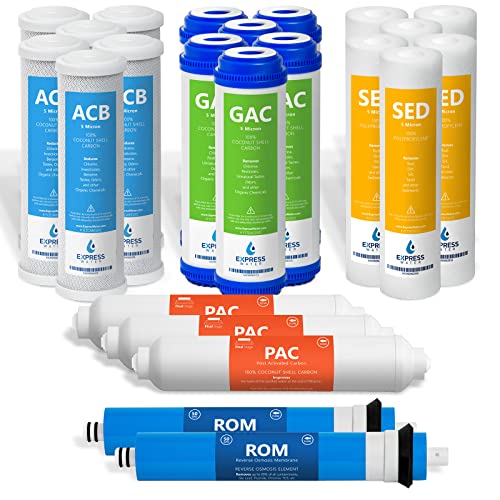
Express Water FLTSETC6G6S6I3M502 Reverse Osmosis Replacement Filter Set
- Reverse Osmosis Filters: Reduces up to 99.99% impurities
- Water Purification System: Produces safe, great-tasting water
- Replacement Filter Set: Filters designed to work together
As an affiliate, we earn on qualifying purchases.
As an affiliate, we earn on qualifying purchases.
Conclusion
By choosing a reverse osmosis water system, you markedly improve your water quality, making it safer and better tasting. Did you know that these systems can remove up to 99% of contaminants? This means you’re not just drinking cleaner water, but also protecting your health and prolonging the life of your appliances. Investing in reverse osmosis is a smart move for your well-being, ensuring every glass you drink is pure and revitalizing.

Membrane Solutions NSF/ANSI 58 Certified 50 GPD Reverse Osmosis Membrane
- Material: Food-grade Thin Film Composite (TFC)
- Rejection Rate: 97% stabilized salt rejection
- Filtration Efficiency: Reduces over 99% of impurities
As an affiliate, we earn on qualifying purchases.
As an affiliate, we earn on qualifying purchases.

2025 All-New 4 in 1 Tds Meter Digital Water Tester – Accurate and Reliable TDS EC & Temp(°C,°F) Meter – 0-9999ppm – Professional Testing for Drinking Water, RO/DI System, Aquariums etc
- Trusted Brand Commitment: Reliable water quality testing for everyone
- High Precision Results: Accurate readings with premium probe and chip
- Multifunctional 4-in-1 Design: TDS, EC, Temp °C/°F measurements
As an affiliate, we earn on qualifying purchases.
As an affiliate, we earn on qualifying purchases.