
TL;DR

Prime made for students and young adults
- Fast, free delivery for dorm and study essentials
- Prime Video and Amazon Music included
- Member-only deals
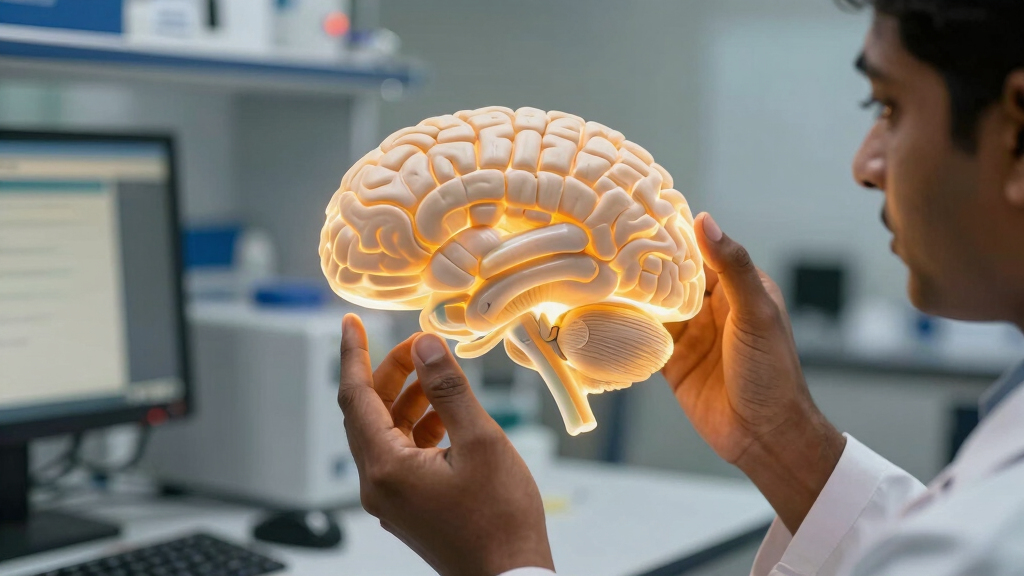
Indian scientists have developed the most detailed 3D atlas of the human brainstem to date. This breakthrough could improve understanding of brain functions and neurological disorders. The project is ongoing, with further validation expected.
Indian scientists have unveiled the most detailed 3D atlas of the human brainstem, a development that promises to enhance neurological research and medical imaging. The project, led by a team from the Indian Institute of Science, aims to provide insights into brainstem anatomy, which is relevant for understanding various neurological conditions.
The team used advanced imaging techniques combined with high-resolution MRI scans to create a comprehensive 3D model of the human brainstem. According to the lead researcher, Dr. Anjali Patel, this atlas offers a level of detail that surpasses previous maps, capturing intricate structures and pathways within the brainstem. The project involved collaboration across multiple institutions and took over three years to complete.
Preliminary validation indicates that this atlas could serve as a reference for neurosurgeons, neuroscientists, and radiologists. It is also expected to aid in understanding brainstem-related disorders such as Parkinson’s disease, multiple sclerosis, and stroke. The researchers plan to make the atlas accessible to the global scientific community through an open-source platform in the coming months.
Potential Impact on Neurological Research and Medicine
This development could improve the precision of brainstem studies, supporting early diagnosis and targeted treatment of neurological diseases. The detailed mapping may also assist in surgical planning, potentially reducing risks during brainstem surgeries. As Dr. Patel stated, “This atlas provides a valuable resource for research and clinical applications, contributing to a better understanding of brainstem anatomy.” The project highlights the ongoing contributions of Indian scientists in neuroimaging and anatomical research.
As an affiliate, we earn on qualifying purchases.
Advances in Brain Mapping and Indian Scientific Contributions
Creating detailed 3D brain atlases has been a goal in neuroscience, with previous efforts limited by technology and resolution. Historically, most brain maps focused on the cerebral cortex, with subcortical structures like the brainstem less defined. Recent technological advances, including high-field MRI and computational modeling, have enabled more detailed imaging. India’s contribution, led by the Indian Institute of Science, represents progress in this area, aligning with global trends toward precision neuroanatomy.
The project builds on earlier Indian research efforts in neuroimaging and neuroinformatics, emphasizing the country’s emerging role in neuroscience. It follows other initiatives aimed at understanding neurological diseases prevalent in the region, such as Parkinson’s and Alzheimer’s diseases.
“This atlas provides an increased level of detail, which can support further research into the brainstem’s structures.”
— Dr. Anjali Patel, lead researcher
neuroscience research 3D brain atlas
As an affiliate, we earn on qualifying purchases.
As an affiliate, we earn on qualifying purchases.
Validation, Accessibility, and Clinical Integration Unclear
While the atlas has been validated internally, its accuracy and usefulness in clinical settings have yet to be fully established. The timeline for public release and integration into medical practice remains uncertain. Additionally, the extent to which this atlas will influence ongoing research or surgical procedures requires further investigation, as peer-reviewed studies and clinical trials are still pending.
As an affiliate, we earn on qualifying purchases.
Next Steps: Validation, Publication, and Global Collaboration
The research team plans to publish detailed findings in a peer-reviewed journal within the next few months. They also aim to collaborate with international neuroimaging centers to validate and refine the atlas further. Long-term, the goal is to incorporate the atlas into clinical workflows and medical education, with updates based on new data and technological advances.
As an affiliate, we earn on qualifying purchases.
Key Questions
How does this new atlas differ from previous brainstem maps?
The new atlas offers higher resolution and more detailed 3D visualization, capturing structures within the brainstem that earlier maps could not resolve.
Will this atlas be available for public use?
The researchers plan to release the atlas on an open-source platform in the coming months, making it accessible to scientists and clinicians worldwide.
What practical applications could this atlas have?
It could support surgical planning, aid in diagnosing neurological disorders, and facilitate research into brainstem functions and diseases.
Are there any limitations or challenges remaining?
Validation in clinical settings and integration into medical practice are ongoing processes, and further peer-reviewed studies are needed to confirm its utility.
Source: hn
Fall Picks
fall essentials
As an affiliate, we earn on qualifying purchases.