The traditional way to produce ammonia is through the Haber-Bosch process, which combines nitrogen and hydrogen under high pressure and temperature using an iron catalyst. However, this method consumes a lot of energy and emits significant CO₂. Emerging technologies aim to make ammonia synthesis more sustainable by using renewable energy, electrochemical processes, biological nitrogen fixation, and advanced catalysts. Continuing this exploration can reveal how innovations could transform the future of ammonia production.
Key Takeaways
- The Haber-Bosch process synthesizes ammonia from nitrogen and hydrogen under high temperature, pressure, and iron catalysts, enabling large-scale fertilizer production.
- It is energy-intensive and emits significant CO₂, raising environmental concerns linked to fossil fuel reliance.
- Emerging sustainable methods include electrochemical processes powered by renewable energy and biological nitrogen fixation under ambient conditions.
- Advances in catalysts aim to lower operational temperatures and pressures, reducing energy consumption and environmental impact.
- Integration of renewable energy and innovative technologies seeks to develop greener, decentralized ammonia production solutions.
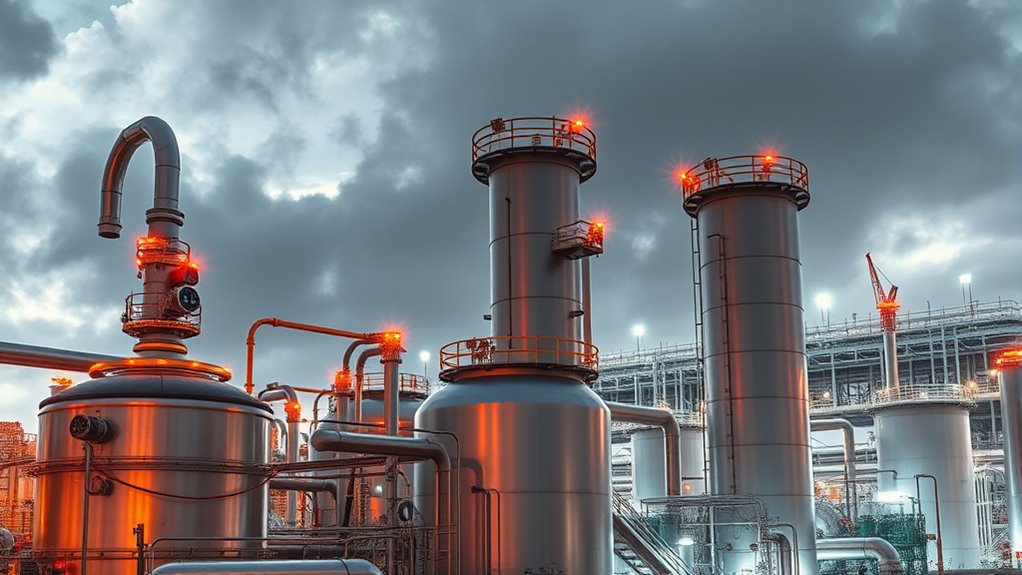
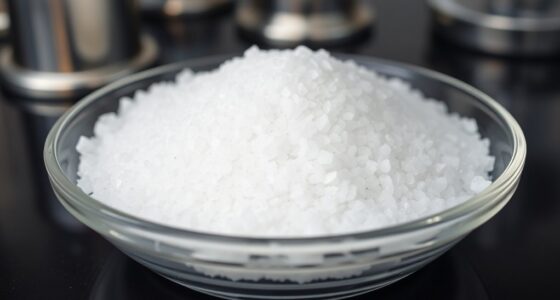
Have you ever wondered how ammonia, an essential ingredient in fertilizers and industrial processes, is produced? The process hinges on nitrogen fixation, which converts atmospheric nitrogen (N₂) into a form that living organisms and industries can use. Traditionally, this conversion occurs naturally through bacteria in the soil, but industrially, it’s achieved through the Haber-Bosch process, a method developed in the early 20th century. This process combines nitrogen from the air with hydrogen, usually derived from natural gas, under high temperature and pressure, using an iron catalyst. It’s highly efficient and has revolutionized agriculture by enabling large-scale fertilizer production. However, the Haber-Bosch process is energy-intensive and responsible for significant carbon dioxide emissions, prompting scientists and engineers to explore sustainable methods of ammonia synthesis.
Ammonia production via Haber-Bosch is efficient but energy-intensive and environmentally impactful.
Emerging technologies aim to reduce the environmental impact of ammonia production. One promising approach involves electrochemical processes that use renewable energy sources like wind or solar power to split water and generate hydrogen, which can then be combined with nitrogen. This method minimizes greenhouse gas emissions and moves toward more sustainable ammonia production. Researchers are also investigating biological nitrogen fixation mimicked by engineered bacteria or enzymes that can fix nitrogen under ambient conditions. Although still in experimental phases, these innovations have the potential to replace or supplement the Haber-Bosch process, especially in decentralized or smaller-scale applications.
Another focus of sustainable methods is developing catalysts that operate efficiently at lower temperatures and pressures, reducing energy consumption. Advances in nanotechnology and material science are enabling the design of such catalysts, which could make ammonia synthesis more environmentally friendly and cost-effective. Additionally, some efforts are directed at recycling or reusing waste heat generated during production to further improve overall energy efficiency. These innovations aim to create a future where ammonia is produced with a smaller carbon footprint, aligning with global goals to combat climate change. Furthermore, integrating renewable energy sources into the manufacturing process can significantly decrease emissions and reliance on fossil fuels.
In essence, while the Haber-Bosch process remains the dominant method for ammonia production today, ongoing research and development are paving the way for more sustainable methods. By harnessing renewable energy, biological processes, and advanced catalysts, we can produce ammonia more responsibly, ensuring that agriculture and industry continue to thrive without compromising the environment. As these emerging technologies mature, they could transform how we think about nitrogen fixation and industrial chemistry, making ammonia production cleaner, greener, and more sustainable for generations to come.
renewable energy ammonia synthesis kit
As an affiliate, we earn on qualifying purchases.
As an affiliate, we earn on qualifying purchases.
Frequently Asked Questions
What Are the Environmental Impacts of Ammonia Production?
You should know that ammonia production impacts the environment through a significant carbon footprint, mainly from energy use and fossil fuels. It also causes pollution if emissions aren’t properly controlled, releasing greenhouse gases and harmful pollutants. To minimize these effects, implementing effective pollution control measures is essential. This helps reduce environmental damage, supporting cleaner production methods and a healthier planet.
How Does Ammonia Contribute to Renewable Energy Storage?
You can use ammonia as a green energy carrier, especially in renewable energy storage. When produced sustainably, green ammonia stores excess electricity from renewable sources like wind or solar. This ammonia acts as an energy carrier, allowing you to transport and convert it back into electricity when needed. It’s a promising way to enhance renewable energy systems, reducing reliance on fossil fuels and lowering carbon emissions during storage and distribution.
What Are Alternative Methods to the Haber-Bosch Process?
Imagine you’re building a bridge; instead of traditional steel, you explore innovative materials. Similarly, alternative methods to the Haber-Bosch process focus on catalyst development and process scalability. Techniques like electrochemical ammonia synthesis or plasma-driven processes use renewable energy and advanced catalysts, offering greener options. These methods aim to efficiently produce ammonia with less environmental impact, making sustainable energy storage more feasible and transforming the way you think about chemical manufacturing.
How Is Ammonia Used in Non-Agricultural Industries?
You use ammonia in non-agricultural industries such as manufacturing, textiles, and refrigeration. It acts as an industrial catalyst in chemical processes and is crucial for producing plastics, explosives, and cleaning products. Additionally, ammonia serves as a storage solution for hydrogen in fuel cells and energy storage systems. Its versatility makes it essential across various sectors, highlighting its importance beyond agriculture and emphasizing the need for efficient storage solutions.
What Are Recent Innovations Improving Ammonia Synthesis Efficiency?
You might find it fascinating that recent innovations have boosted ammonia synthesis efficiency by up to 30%. Catalyst advancements now enable faster reactions and lower energy consumption, while process optimization techniques improve overall yields. These developments mean you get more ammonia with less environmental impact, making industrial production smarter and more sustainable. Staying updated on these innovations helps you understand how the industry is evolving toward greener, more efficient methods.

Electrochemical Water Electrolysis: Fundamentals and Technologies (Electrochemical Energy Storage and Conversion)
As an affiliate, we earn on qualifying purchases.
As an affiliate, we earn on qualifying purchases.
Conclusion
Think of ammonia production like fueling a car—you need the right ingredients and process. The Haber-Bosch process has driven agriculture for over a century, but emerging technologies are like turbochargers, promising cleaner, more efficient ways. Imagine a future where farms thrive with minimal environmental impact, just like a car running smoothly on a new, eco-friendly fuel. Embracing these innovations could transform our world, ensuring food security while protecting our planet.

Biological nitrogen fixation in sugarcane: History, concepts, evaluation methods and sources of variation
As an affiliate, we earn on qualifying purchases.
As an affiliate, we earn on qualifying purchases.

Catalyst Handbook (2nd Edition)
Used Book in Good Condition
As an affiliate, we earn on qualifying purchases.
As an affiliate, we earn on qualifying purchases.