
Carbon is incredibly versatile in chemistry because of its unique atomic structure, which has four valence electrons. This allows it to form stable covalent bonds with various elements, creating single, double, and triple bonds. Its ability to hybridize into sp, sp2, and sp3 orbitals enables a wide range of molecular structures and allotropes like diamond and graphite, each with different properties. Exploring this further reveals just how adaptable carbon really is.
Key Takeaways
- Carbon has four valence electrons, allowing diverse bonding options with multiple elements.
- It can form single, double, and triple covalent bonds, enabling complex molecular structures.
- Carbon can hybridize into sp, sp2, and sp3 orbitals, facilitating various bonding geometries.
- Its ability to form different allotropes results in materials with a wide range of properties.
- Carbon’s chemical versatility supports the creation of countless organic compounds and biological molecules.

Have you ever wondered why carbon forms the backbone of so many compounds in nature and industry? It all comes down to its unique ability to create a vast array of structures through its allotropes diversity and bonding complexity. Carbon’s versatility stems from its atomic structure, specifically its four valence electrons, which allow it to form stable covalent bonds with a variety of elements, including itself. This bonding flexibility leads to an incredible range of molecular forms, from simple gases to complex macromolecules, making carbon indispensable in chemistry.
Carbon’s unique bonding and allotropes make it the backbone of countless molecules in nature and industry.
One of the key reasons behind carbon’s versatility is its allotropes diversity. You might be familiar with some, like graphite, diamond, and amorphous carbon, but there are many more. Each allotrope forms under different conditions, exhibiting distinct physical properties. For instance, diamond features a rigid three-dimensional network of sp3 hybridized carbon atoms, making it incredibly hard and transparent. In contrast, graphite consists of layers of sp2 hybridized carbon atoms arranged in hexagonal lattices, which slide over each other easily, giving it lubricating properties. These different forms illustrate how carbon can adapt its structure to create materials with vastly different characteristics, all while maintaining the fundamental element.
Furthermore, the bonding complexity of carbon is what truly sets it apart. Unlike many elements that can only form limited types of bonds, carbon’s ability to hybridize into sp, sp2, and sp3 orbitals means it can engage in single, double, or even triple bonds. This variety allows for the formation of complex molecules with multiple bonding arrangements, leading to diverse chemical behaviors. For example, in organic chemistry, the carbon backbone can support a multitude of functional groups, giving rise to an astonishing diversity of organic compounds. This capacity to form stable bonds with other carbons and heteroatoms enables the creation of everything from simple hydrocarbons to intricate biological macromolecules like proteins and DNA.
All of these factors—its allotropes diversity and bonding complexity—combine to make carbon uniquely versatile in chemistry. You can see it in nature’s molecular architecture and in countless industrial applications, from fuels and plastics to advanced materials. This flexibility is what allows carbon to act as the fundamental building block of life and modern technology alike. In essence, it’s this incredible ability to adapt its structure and bonding that makes carbon’s versatility so unparalleled in the chemical world.
As an affiliate, we earn on qualifying purchases.
Frequently Asked Questions
How Does Carbon’s Ability to Form Multiple Bonds Affect Its Versatility?
Carbon’s ability to form multiple bonds greatly enhances its versatility. By creating double and triple bonds, you enable resonance stabilization, which makes molecules more stable and adaptable. Pi bonding in these bonds allows for diverse structures and reactions, giving you a wide range of chemical behaviors. This flexibility permits carbon to form complex, stable compounds essential in organic chemistry, making it a key element in life’s molecular diversity.
What Role Do Hybridization States Play in Carbon’s Bonding Diversity?
You see, hybridization states directly influence carbon’s bonding flexibility by altering orbital shapes and energies. When you understand hybridization effects—like sp, sp2, and sp3—you realize how each state allows different bonding geometries and strengths. This adaptability lets carbon form a wide variety of compounds, from simple molecules to complex structures, making it incredibly versatile in chemistry. Your grasp of hybridization effects reveal the full potential of carbon’s bonding diversity.
How Does Carbon’s Small Atomic Size Influence Its Chemical Bonding?
You notice that carbon’s small atomic radius allows its atoms to form strong, stable bonds with other elements. This compact size enables effective orbital overlap, increasing bond strength. As a result, carbon can create a wide variety of chemical bonds, including stable single, double, and triple bonds. Its small atomic size also supports the formation of complex molecules, making it incredibly versatile in chemistry.
Why Is Carbon Unique Compared to Other Elements in Organic Chemistry?
You’ll find that carbon’s unique because its electron configuration allows it to form four strong covalent bonds. This creates diverse bonding patterns, such as chains, rings, and complex structures, unlike most elements. Its ability to bond with itself and other elements makes it the backbone of organic chemistry, enabling the formation of countless compounds essential for life. This versatility is what sets carbon apart from other elements.
How Do Carbon Allotropes Differ in Properties and Applications?
Ever wondered how different forms of carbon serve diverse purposes? You’ll find that diamond structures are incredibly hard and transparent, making them perfect for jewelry and cutting tools. In contrast, graphite has layered sheets with slippery properties, ideal for pencils and lubricants. These allotropes differ vastly in properties and applications, showcasing carbon’s versatility. Their unique structures allow you to employ them in fields ranging from industry to technology.

LINKTOR Chemistry Molecular Model Kit (444 Pieces), Student or Teacher Set for Organic and Inorganic Chemistry Learning, Motivate Enthusiasm for Learning and Raising Space Imagination, A Fullerene Set
- Suitable for All Education Levels: 444-piece set for students from Grade 7 to graduate
- Includes Fullerenes and Basic Components: 136 atoms, 158 bonds, 150 parts for Fullerene
- Two Types of Chemical Models: Ball-and-stick and space-filling models
As an affiliate, we earn on qualifying purchases.
As an affiliate, we earn on qualifying purchases.
Conclusion
So, now you see why carbon’s versatility is truly unmatched in chemistry. Its ability to form endless bonds makes it the ultimate building block, capable of creating everything from simple fuels to complex life forms. Once you understand this, you’ll realize no other element even comes close to matching its creative power. Carbon’s versatility isn’t just impressive — it’s the backbone of the entire universe of chemistry, shaping life as you know it!
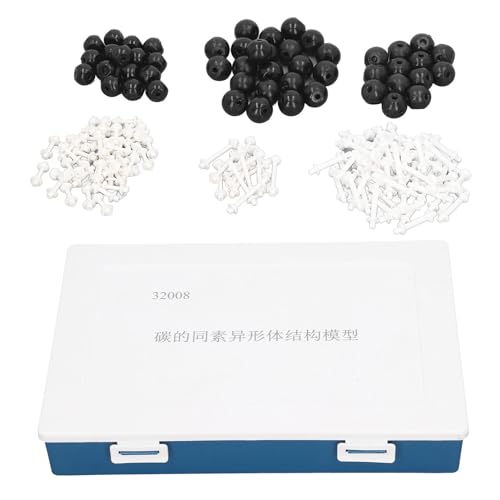
328 Pcs Molecular Crystal Structure Model Kit with Storage Box for Teacher and Student, 60 Carbon C60, 30 Diamond,39 Graphite,95 Short Bon,90 Medium Long Bon,14 Long Bon
- Educational Tool: Explore molecular crystal structures
- Versatile Building: Create various molecular models
- Color-Coded Atoms: Facilitates understanding of bonding
As an affiliate, we earn on qualifying purchases.
As an affiliate, we earn on qualifying purchases.
As an affiliate, we earn on qualifying purchases.