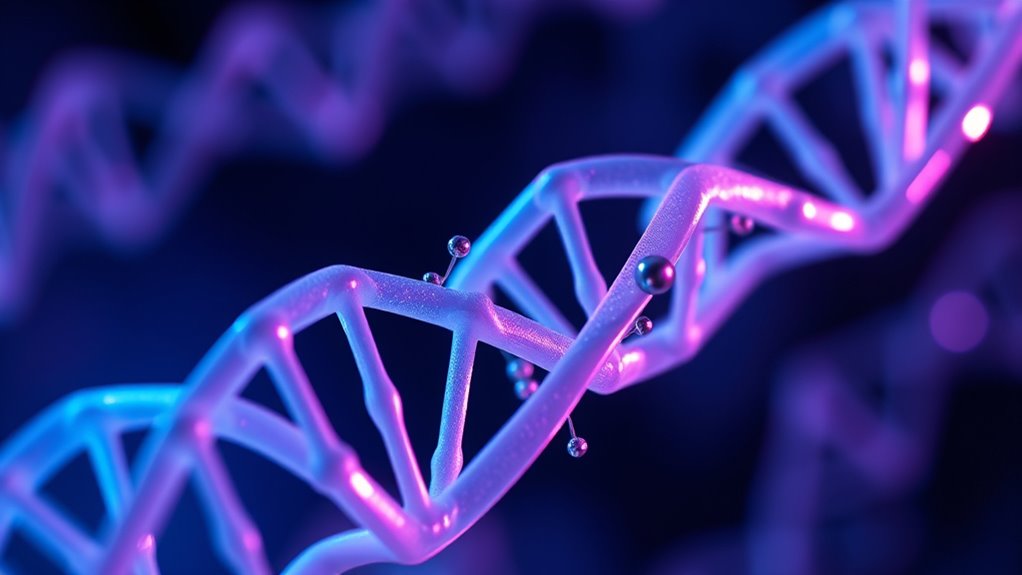

Advances in molecular robotics have led to the development of DNA machines and nanobots that can perform precise tasks at the nanoscale. These tiny devices are programmable, allowing you to design structures that can seek out and target specific cells, deliver medications, or repair tissues. Using DNA self-assembly and external cues like magnetic or light fields, you can control their movements effectively. Exploring further reveals how these innovations could revolutionize medicine and technology in the near future.

Get school and study supplies delivered free — and shop member deals
- Fast, free delivery on millions of items
- Access to Prime Big Deal Days deals on October 6–7
- Prime Video, Amazon Music and more included
Key Takeaways
- Recent developments enable precise design and self-assembly of DNA nanostructures for targeted molecular functions.
- DNA machines and nanobots can perform complex tasks, including targeted drug delivery and tissue repair.
- Integration of molecular motors and external stimuli enhances nanobot navigation within complex biological environments.
- Advances in programmable DNA strands allow for adaptable, environmentally responsive nanorobots for diverse applications.
- Ongoing research addresses challenges in control, stability, and real-world deployment of DNA-based molecular robots.
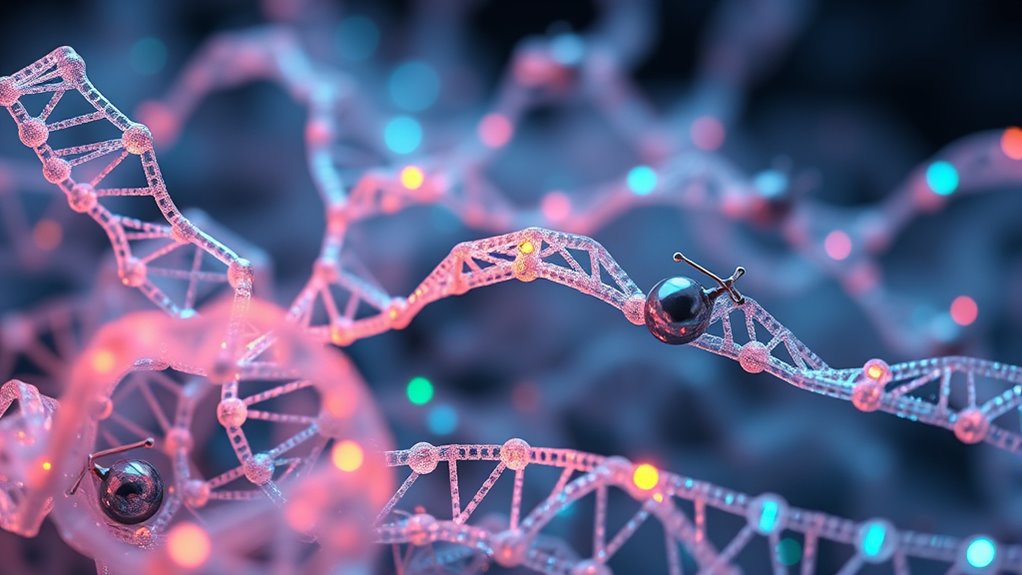
Have you ever wondered how tiny machines could revolutionize medicine, manufacturing, and technology? The field of molecular robotics is making significant strides, especially with the development of DNA machines and nanobots. These microscopic devices are designed to perform specific tasks at a scale so small that they can interact directly with biological systems or manipulate matter at the molecular level. The key to their functionality lies in DNA self-assembly, a process that allows these machines to form complex structures and perform precise operations by harnessing the natural properties of DNA molecules.
With DNA self-assembly, you can create intricate nanostructures that fold and connect in predictable ways, enabling the construction of functional devices at a scale previously thought impossible. Imagine programming DNA strands to assemble into a nanobot that can seek out and target cancer cells, deliver medication, or repair damaged tissues. This process relies on the specificity of base pairing, where complementary DNA sequences find each other and bind, guiding the formation of desired shapes and functions. By designing these sequences carefully, scientists can engineer nanobots that are both highly precise and adaptable to different tasks.
DNA self-assembly enables precise nanostructure design for targeted medical and technological applications.
Once these DNA-based machines are assembled, their navigation through complex environments becomes a critical challenge. Nanobot navigation involves controlling their movement within the human body or other environments, ensuring they reach their intended targets efficiently and safely. Researchers are exploring various strategies, such as attaching molecular motors or using external stimuli like magnetic or light fields, to guide the nanobots accurately. This precise control allows you to direct nanobots through the bloodstream or cellular landscapes, opening doors to targeted therapies and minimally invasive procedures.
The ability to program and control nanobot navigation means that they’re not just passive tools; they become active agents capable of responding to their surroundings, adapting their paths, and executing complex sequences of actions. This level of control is crucial for medical applications, where reaching a specific site quickly and avoiding off-target effects can make all the difference. Additionally, the integration of sensors into DNA nanostructures enables them to detect changes in their environment, such as pH, temperature, or the presence of specific biomarkers, and react accordingly. Furthermore, advances in understanding molecular motors and external guidance techniques are pushing the boundaries of what these tiny devices can achieve in real-world scenarios.
As an affiliate, we earn on qualifying purchases.
Frequently Asked Questions
What Are the Potential Ethical Implications of Molecular Robots?
You should consider that molecular robots raise ethical issues like privacy concerns, as they could be used for surveillance or data collection at a microscopic level. Additionally, their environmental impact might be significant if not properly controlled, possibly leading to contamination or unintended biological effects. As these technologies develop, it is crucial to address these ethical implications to guarantee responsible use and minimize potential harm.
How Close Are DNA Nanobots to Clinical Medical Applications?
You might think DNA nanobots are just around the corner, but they’re still in early experimental stages. Still, they show promise in targeted drug delivery and cellular repair, inching closer to clinical use. While we’re enthusiastic to see them in action, it’s essential to remember that safety and effectiveness need thorough testing, making the journey from lab to bedside longer than many hope—and definitely more complex than a simple leap.
Can Molecular Machines Operate in Living Organisms Without Toxicity?
You can be confident that molecular machines are designed to operate in living organisms with minimal toxicity. Researchers perform extensive biocompatibility testing to guarantee safety, and they incorporate toxicity mitigation strategies to prevent adverse effects. These efforts help ensure that DNA-based nanobots function effectively within biological systems without harming the host, paving the way for future medical applications with reduced risks of toxicity.
What Are the Main Challenges in Mass Production of Dna-Based Nanobots?
Scaling challenges and soaring manufacturing costs stall the scalable, sustainable synthesis of DNA-based nanobots. You face difficulties in precisely designing and assembling tiny structures at large volumes, which demands meticulous methods and costly materials. Overcoming these obstacles requires innovative techniques to streamline synthesis, reduce expenses, and guarantee quality at scale. Until then, mass production remains a monumental hurdle, hindering widespread application of DNA nanobots in medicine and technology.
How Do Molecular Robots Communicate and Coordinate With Each Other?
You can make molecular robots communicate through molecular signaling, where they exchange chemical signals to relay information. This communication enables coordinated behavior among the robots, allowing them to work together effectively. By designing specific signaling pathways, you guarantee that each robot responds to signals from others, orchestrating complex tasks. This mimics natural biological systems, enabling your molecular robots to perform collaborative activities with precision and efficiency.
molecular robotics educational set
As an affiliate, we earn on qualifying purchases.
As an affiliate, we earn on qualifying purchases.
Conclusion
You might think these DNA machines and nanobots are just theoretical, but they’ve already shown real promise. As you see, they can revolutionize medicine, manufacturing, and environmental cleanup. Sure, some worry about safety or ethical concerns, but with careful regulation and ongoing research, those challenges can be managed. Embracing these advances opens exciting possibilities—so don’t dismiss them as science fiction; instead, consider how they can transform our future.
As an affiliate, we earn on qualifying purchases.
As an affiliate, we earn on qualifying purchases.
Halloween Picks
halloween
As an affiliate, we earn on qualifying purchases.





![Competitive Programmer's Handbook (2018) [Pdf]](https://varietychem.com/wp-content/uploads/2026/10/competitive-programmer-s-handbook-2018-pdf-featured-260x140.jpg)