Remote sensing helps you monitor soil health and crop conditions accurately, which is essential for quantifying carbon sequestration. By using satellite images and aerial data, you can track land management practices that boost soil carbon storage. This data not only supports certified carbon credits but also proves your sustainability efforts to buyers. Using reliable remote sensing tools ensures you meet standards and maximize your monetization opportunities. Keep exploring how these technologies can enhance your farm’s carbon market potential.
Key Takeaways
- Remote sensing provides verified data on soil health and carbon sequestration, enabling farmers to qualify for and monetize carbon credits.
- Accurate satellite and aerial data demonstrate sustainable practices like cover cropping and reduced tillage, increasing carbon credit eligibility.
- Monitoring crop health and land use through remote sensing ensures farmers meet certification standards for carbon markets.
- Verified remote sensing data streamlines documentation and reporting, facilitating successful sale of carbon credits.
- Implementing precision agriculture guided by remote sensing enhances sequestration efforts, boosting revenue from carbon credit programs.
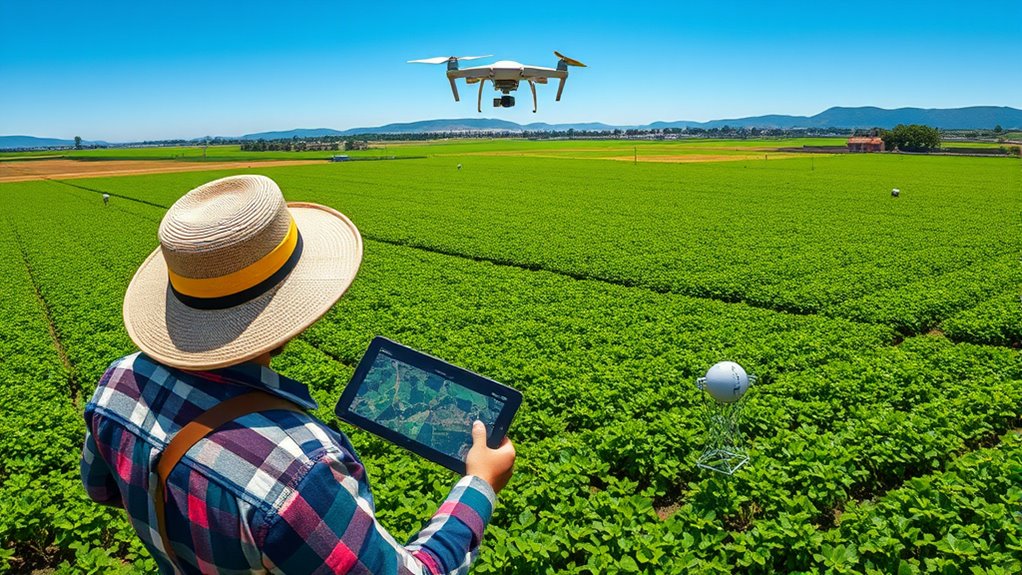
Remote sensing has become an essential tool in understanding and managing carbon utilization efforts. As a farmer, you can leverage this technology to enhance soil health and optimize crop monitoring, which are critical components in generating and maximizing carbon credits. By using satellite imagery and aerial data, you gain a detailed view of your land’s condition, enabling you to make informed decisions that improve soil quality. Healthy soils are crucial because they store more carbon, helping you meet carbon sequestration goals and qualify for credits. Remote sensing provides real-time insights into soil moisture levels, nutrient status, and compaction, allowing you to implement targeted practices like cover cropping, reduced tillage, or organic amendments that boost soil organic carbon. These practices, guided by accurate data, lead to healthier soils that trap more carbon, directly impacting your ability to monetize credits.
Crop monitoring is another area where remote sensing shines. It allows you to track crop growth, identify stress factors, and optimize inputs like water, fertilizer, and pesticides. When you monitor your crops regularly from afar, you can detect issues early, reduce waste, and improve yield quality—key factors that influence your carbon offset calculations. As you gather data on crop health, you also gather evidence of sustainable practices, which are increasingly valued in carbon markets. For example, maintaining consistent crop cover and minimizing chemical inputs demonstrate your commitment to reducing greenhouse gases, making your farm more attractive to carbon credit buyers. You can also use remote sensing to verify the effectiveness of your carbon sequestration strategies, providing documentation that supports your claims and ensures compliance with certification standards. Additionally, the use of vetted remote sensing tools ensures the accuracy and reliability of your data, which is crucial for successful carbon credit monetization.
Furthermore, remote sensing helps you streamline your operations by providing a detailed overview of your entire farm. You can identify areas that need attention without physically inspecting every inch, saving you time and resources. This efficiency allows you to implement precision agriculture practices that not only boost productivity but also enhance your carbon sequestration potential. As you integrate remote sensing data into your management routines, you’ll find it easier to track progress toward your sustainability goals and demonstrate your environmental stewardship. Ultimately, this technology empowers you to implement smarter, more sustainable farming practices that align with market opportunities for carbon credits, helping you monetize your efforts while maintaining healthy soils and thriving crops.
Frequently Asked Questions
How Do Remote Sensing Technologies Accurately Measure Soil Carbon Levels?
You can rely on remote sensing technologies to measure soil carbon levels accurately through satellite imagery and spectral analysis. Satellite imagery captures detailed surface data, while spectral analysis detects specific wavelengths reflected by soil components. By combining these methods, you get precise, consistent measurements of soil carbon, enabling farmers to monitor changes over time effectively. This approach offers a non-invasive, cost-effective way to track soil health and carbon sequestration efforts.
What Are the Initial Costs for Farmers to Start Carbon Credit Programs?
Starting a carbon credit program is like planting a seed—you need a financial investment upfront, usually between $5,000 and $20,000, depending on farm size and technology. You’ll also need technical expertise or access to specialists to navigate certification and measurement processes. While initial costs seem high, they pay off as you generate credits over time, turning your sustainable practices into a steady income stream.
How Do Farmers Verify the Authenticity of Their Carbon Credits?
You verify your carbon credits by conducting soil sampling to measure carbon sequestration accurately. Then, you submit your data to a third-party auditor who reviews and confirms your claims. This independent verification guarantees your credits are legitimate and meet industry standards. Regular soil sampling and transparent audits are essential for maintaining credibility, helping you confidently monetize your carbon credits and participate in the market effectively.
Can Small-Scale Farmers Benefit Equally From Carbon Credit Markets?
Yes, small-scale farmers can benefit from carbon credit markets, but it depends on market accessibility and farmer incentives. You might face challenges like limited resources or knowledge, but programs aiming to improve access and offer incentives can help you participate. By leveraging remote sensing and local support, you can monetize your sustainable practices, earning extra income while contributing to environmental goals. The key is ensuring equitable opportunities for all farmers.
What Regulations Govern the Sale and Transfer of Carbon Credits?
You need to follow specific regulations governing carbon trading and guarantee regulatory compliance when selling or transferring carbon credits. These rules vary by country and often include standards for measuring, verifying, and reporting your carbon savings. Staying updated on local policies helps you avoid legal issues and ensures your credits are valid. Always work with certified verifiers and registries to maintain transparency and credibility in the market.
Conclusion
Imagine standing in a lush field, where your efforts transform the air’s invisible carbon into tangible income. Remote sensing acts as your watchful eye, capturing every healthy crop and vibrant green. With each carbon credit earned, you’re not just farming—you’re contributing to a cleaner planet while boosting your livelihood. Embrace this future where technology turns effort into reward, and your fields become a beacon of sustainable success, shining brightly against the horizon of tomorrow.