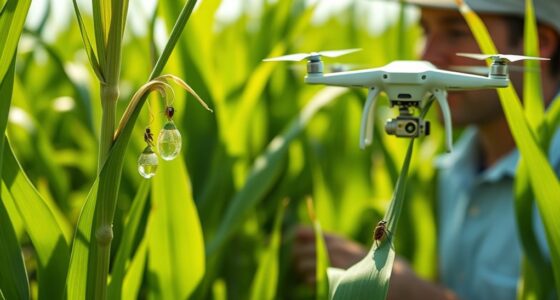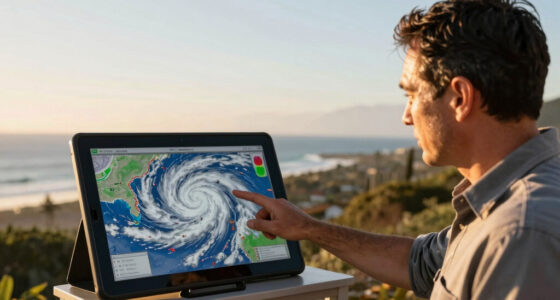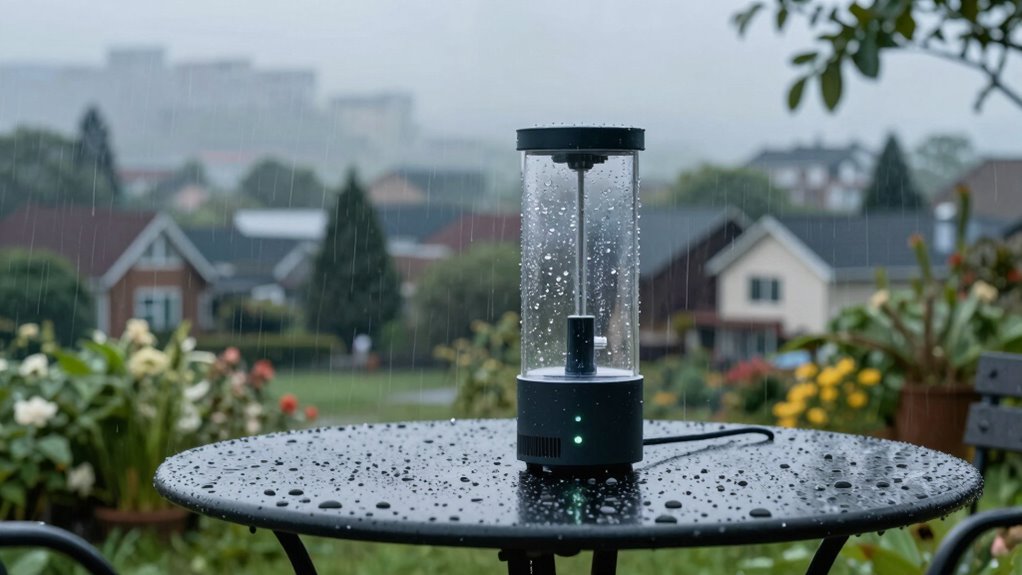
Wireless rain gauges still matter in 2026 because they provide you with real-time, accurate rainfall data essential for weather forecasting, agriculture, and flood prevention. These devices automate data collection, saving you effort and delivering immediate updates. Despite challenges like sensor drift and environmental interference, ongoing advancements keep them reliable and relevant. Their ability to support quick decision-making makes them indispensable for managing weather-related risks. If you explore further, you’ll discover how these tools continue evolving for even better performance.

Prime made for students and young adults
- Fast, free delivery for dorm and study essentials
- Prime Video and Amazon Music included
- Member-only deals
Key Takeaways
- They provide real-time, continuous rainfall data crucial for immediate weather response and decision-making.
- Wireless rain gauges bridge traditional measurement methods with modern technology for reliable environmental monitoring.
- They support critical applications like flood management, irrigation, and climate research effectively.
- Despite technological advancements, they remain cost-effective, simple, and essential in areas with limited infrastructure.
- Ongoing innovations enhance their durability and accuracy, ensuring relevance in evolving weather monitoring systems.
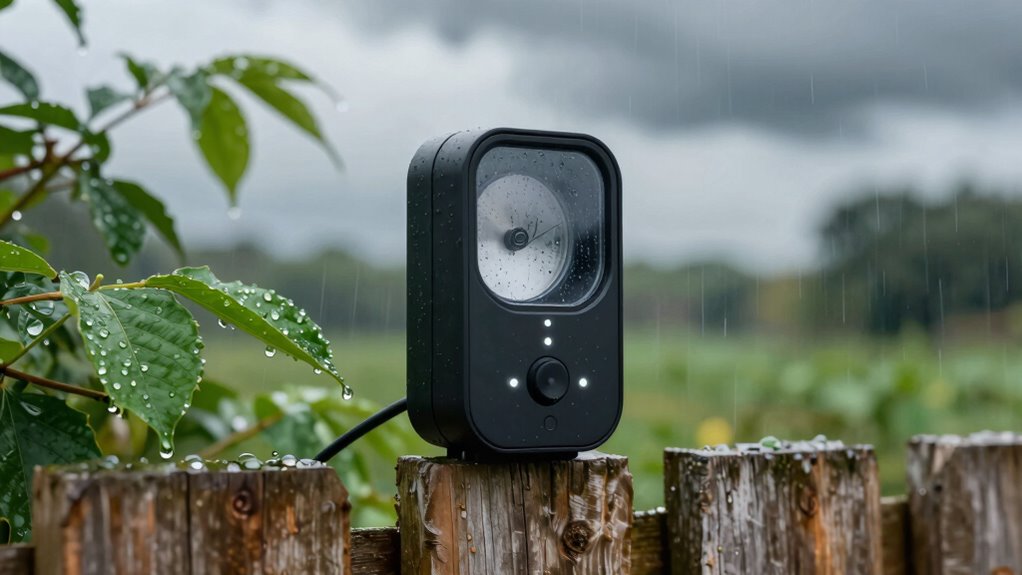
By 2026, wireless rain gauges have become indispensable tools for precise weather monitoring, offering real-time data without the hassle of tangled cables or manual readings. You rely on them to provide accurate, up-to-date rainfall measurements, whether you’re managing a farm, maintaining a garden, or tracking local weather patterns. Despite advancements, you might wonder if these devices still matter amidst rapid technological changes. The truth is, they remain crucial because of their ability to deliver reliable data, although they do face certain limitations rooted in their history and technology.
Historically, rain gauges have been essential for collecting rainfall data, which influences agriculture, flood forecasting, and climate research. Wireless models build on this legacy by adding convenience and immediacy, but their accuracy hasn’t always been perfect. In the past, some devices struggled with maintaining historical accuracy, especially when faced with environmental factors like wind, debris, or temperature fluctuations. These issues sometimes caused data discrepancies, leading users to question their reliability for critical decision-making. While modern wireless rain gauges have improved considerably, some technological limitations persist. For example, sensor calibration can drift over time, requiring regular maintenance to keep data precise. Additionally, environmental interference, such as electromagnetic noise or extreme weather, can temporarily disrupt readings or cause errors. You also recognize that sensor calibration and environmental factors are ongoing challenges in maintaining data accuracy. You understand that technological limitations are part of the evolving landscape of weather monitoring devices and must be managed carefully.
Wireless rain gauges have improved but still face calibration and environmental challenges impacting accuracy.
Nevertheless, you find that the benefits of wireless rain gauges outweigh their shortcomings. They eliminate the need for manual readings, making continuous monitoring more practical and less labor-intensive. You appreciate how real-time data helps you respond quickly to changing weather conditions, whether adjusting irrigation schedules or preparing for potential flooding. Advances in wireless technology, like better signal stability and improved sensor durability, have reduced many previous concerns. Still, you understand that no device is perfect. Technological limitations, such as power dependence on batteries or susceptibility to environmental factors, remind you to keep a critical eye on data accuracy and device maintenance. Additionally, ongoing innovations in wireless communication continue to enhance their reliability and functionality.
Ultimately, wireless rain gauges in 2026 matter because they bridge the gap between historical importance and modern needs. They provide a level of convenience and immediacy that manual gauges simply can’t match. While you acknowledge their limitations, you value their role in enhancing weather data collection, supporting better decision-making, and advancing climate understanding. As technology continues to evolve, so will these devices, but their core purpose—delivering reliable rainfall information—remains unchanged. You can confidently rely on wireless rain gauges as an integral part of your weather monitoring toolkit, knowing they combine the best of history and innovation to serve your needs.
wireless rain gauge with real-time data
As an affiliate, we earn on qualifying purchases.
As an affiliate, we earn on qualifying purchases.
Frequently Asked Questions
How Accurate Are Wireless Rain Gauges Compared to Traditional Methods?
Wireless rain gauges can be quite accurate, especially when they’re regularly calibrated to guarantee measurement accuracy. Their sensors are designed for durability, handling various weather conditions without losing precision. While traditional methods might still be slightly more reliable in extreme scenarios, modern wireless gauges offer real-time data with high accuracy, making them a valuable tool for weather monitoring. Just remember to maintain and calibrate them regularly.
What Maintenance Is Required for Wireless Rain Gauges?
To keep your wireless rain gauge working accurately, you need to perform regular sensor calibration and replace the batteries when they’re low. Check the device periodically to guarantee the sensor remains clean and free of debris, which can affect readings. Battery replacement is straightforward—simply swap out old batteries for new ones as needed. These simple maintenance tasks ensure your rain gauge continues to provide reliable, precise data.
Can Wireless Rain Gauges Operate During Extreme Weather Conditions?
Think of your wireless rain gauge as a sturdy lighthouse standing firm against fierce storms. During extreme weather, its sensor durability and design enable it to operate reliably, providing crucial data. Thanks to extreme weather resilience, it withstands high winds, heavy rain, and snow. You can trust it to keep working, helping you stay informed no matter how wild the weather gets, making it an indispensable tool year-round.
How Secure Is the Data Transmitted by Wireless Rain Gauges?
Your wireless rain gauge’s data transmission is quite secure thanks to data encryption, which protects it from unauthorized access. However, privacy concerns still exist, especially if sensitive location data is involved. To stay safe, make sure your device uses strong encryption protocols and regularly updates its security features. By doing so, you can confidently rely on your rain gauge without worrying about data breaches or privacy issues.
Are Wireless Rain Gauges Compatible With Smart Home Systems?
Wireless rain gauges are compatible with smart home systems, allowing you to integrate rainfall data seamlessly into your setup. This smart home integration enables you to automate alerts, irrigation, or weather monitoring, enhancing convenience. However, you should prioritize data privacy by choosing reputable devices with strong encryption. Ensuring your rain gauge securely shares data helps protect your information while maximizing its benefits within your smart home ecosystem.
best wireless rain gauge for agriculture
As an affiliate, we earn on qualifying purchases.
As an affiliate, we earn on qualifying purchases.
Conclusion
Even in 2026, wireless rain gauges remain crucial, offering real-time data that helps you stay ahead of weather changes. Did you know that over 60% of farms now rely on these devices for precise rainfall measurement? This statistic highlights their importance in agriculture and disaster management. As technology advances, wireless rain gauges will continue to be essential tools, ensuring you’re always informed and prepared, no matter what the weather brings.
digital wireless rain gauge for flood prevention
As an affiliate, we earn on qualifying purchases.
As an affiliate, we earn on qualifying purchases.
weather station with wireless rain measurement
As an affiliate, we earn on qualifying purchases.
As an affiliate, we earn on qualifying purchases.
Fall Picks
fall essentials
As an affiliate, we earn on qualifying purchases.