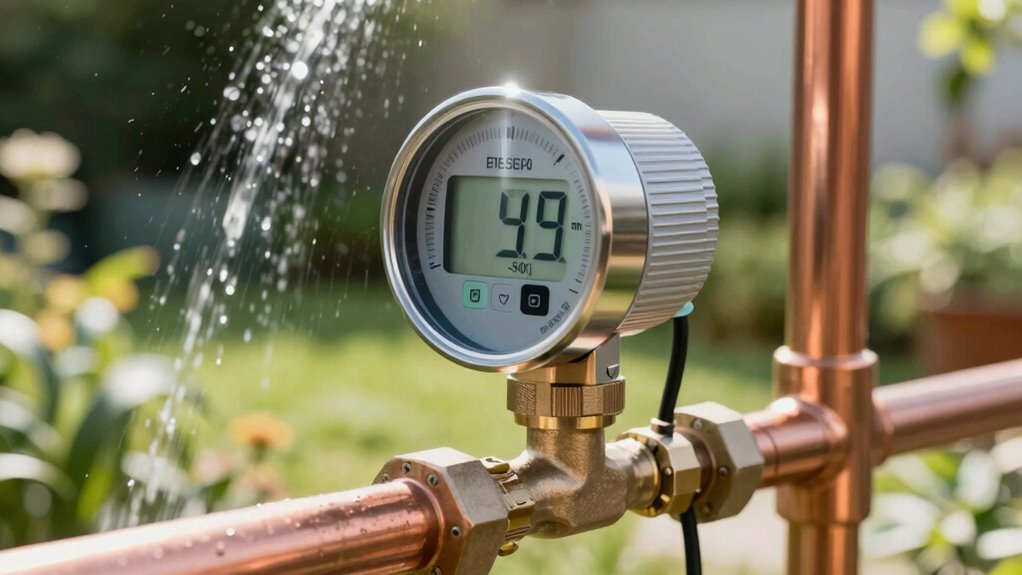

Smart flow meters show you detailed, real-time data on your water use, allowing you to spot leaks early and prevent costly damage. They reveal patterns in your consumption, helping you identify high-usage times or inefficient fixtures. By monitoring system performance, they suggest ways to optimize your plumbing and reduce waste. These insights enable you to make smarter decisions, conserve resources, and lower water bills—if you want to discover more, keep exploring how these tools can transform your water management.

Prime made for students and young adults
- Fast, free delivery for dorm and study essentials
- Prime Video and Amazon Music included
- Member-only deals
Key Takeaways
- Smart flow meters identify irregularities and hidden leaks, enabling early detection and reducing water waste.
- They analyze consumption patterns to highlight spikes and inefficient usage during specific times.
- They provide real-time feedback to promote mindful water use and help meet conservation goals.
- They offer insights into system performance, aiding maintenance planning and efficiency optimization.
- They support sustainable water management by revealing minor leaks and overall resource consumption.
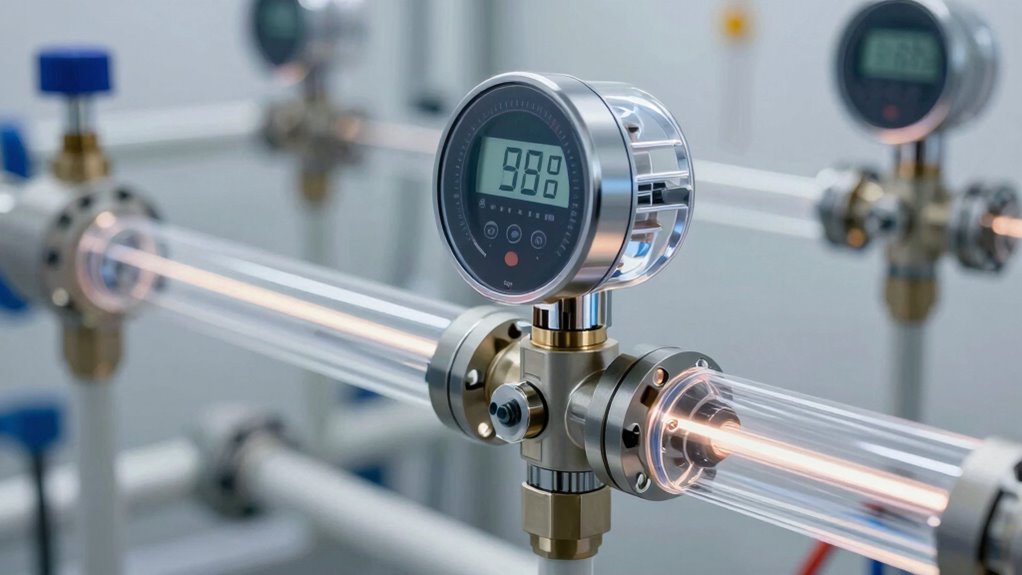
Smart flow meters are transforming how we manage water use by providing real-time data that helps you identify leaks, track consumption, and optimize efficiency. With these devices, you gain immediate insights into your water system, making it easier to catch issues early and prevent waste. Leak detection becomes faster and more accurate because the meters continuously monitor flow rates, alerting you to irregularities that might indicate a hidden leak. Instead of waiting for a spike in your water bill or noticing water damage, you can address leaks promptly, saving both water and money. This proactive approach helps maintain the integrity of your plumbing and reduces the risk of costly repairs down the line.
Smart flow meters enable early leak detection, saving water and preventing costly repairs.
Tracking consumption patterns is another key advantage of smart flow meters. They collect detailed data on your water usage over time, revealing daily, weekly, and monthly trends. By understanding these patterns, you can identify when and where water is being used most heavily. Are there times of day with unusual spikes? Do certain appliances or fixtures consume more water than expected? Armed with this knowledge, you can make informed decisions about how to adjust your habits or upgrade to more efficient fixtures. Over time, this leads to smarter water management, reducing unnecessary consumption and lowering your bills.
These meters also empower you to set specific goals for water efficiency. You might aim to cut your usage by a certain percentage or eliminate waste during particular periods. The real-time feedback makes it straightforward to see how your actions impact overall consumption, encouraging more mindful water use. Additionally, some smart flow meters connect to apps or home automation systems, giving you easy access to data and control options from your smartphone or tablet. This seamless integration simplifies monitoring and makes it easier to stay on top of your water management strategies.
Ultimately, smart flow meters reveal a lot about how effectively you’re managing water resources. They highlight patterns you might overlook, like minor leaks that can cause significant waste over time. They also show how your daily routines influence overall consumption, helping you identify opportunities for conservation. By providing precise, actionable data, these devices help you save water, reduce costs, and promote sustainability. In a world increasingly focused on resource conservation, smart flow meters give you the tools you need to make smarter, more efficient water use decisions every day. Additionally, understanding the contrast ratio of your water system components can help optimize performance and reduce waste. Properly assessing water system efficiency can lead to better maintenance and longer-lasting plumbing systems.
As an affiliate, we earn on qualifying purchases.
Frequently Asked Questions
How Do Smart Flow Meters Differ From Traditional Water Meters?
Smart flow meters differ from traditional water meters by providing real-time data analytics, allowing you to monitor water use more precisely. They enable better water conservation through immediate feedback and leak detection. Unlike traditional meters, which require manual readings, smart meters automatically transmit data, helping you identify patterns, inefficiencies, and potential issues quickly. This proactive approach improves water management, reduces waste, and promotes more sustainable water use practices.
Can Smart Flow Meters Detect Leaks Automatically?
Yes, smart flow meters can detect leaks automatically. Studies show that up to 20% of water is lost through leaks, highlighting the importance of leak detection. These meters monitor real-time water usage, alerting you to abnormal flow patterns. This helps you optimize water consumption, prevent damage, and save costs. By identifying leaks early, you can take swift action, ensuring efficient water use and reducing waste.
What Is the Cost of Installing Smart Flow Meters?
The cost of installing smart flow meters varies depending on the system size and features, but generally, you can expect a cost comparison to traditional meters to include higher upfront expenses due to advanced technology. The installation process is straightforward, often involving simple integration with existing plumbing and digital setup. While initial costs are higher, the long-term savings on water and maintenance can make smart flow meters a cost-effective choice.
How Secure Is the Data Collected by Smart Flow Meters?
Your data from smart flow meters is safer than Fort Knox, thanks to robust security measures. However, no system is completely invulnerable, so hacking risks do exist. Manufacturers implement encryption and strict access controls to protect your data privacy, but you should stay vigilant by updating software regularly. While the risk is low, understanding these safeguards helps you trust that your water use data remains confidential and secure.
Do Smart Flow Meters Require Regular Maintenance?
Smart flow meters do require regular maintenance to guarantee accurate readings. You should periodically check sensor calibration to prevent measurement errors, and replace batteries when needed to maintain functionality. Battery life varies depending on usage and model, so staying aware of power levels helps avoid unexpected disruptions. Routine maintenance keeps your smart flow meter operating efficiently, providing reliable data on water use and helping you identify potential savings opportunities.
As an affiliate, we earn on qualifying purchases.
Conclusion
So, next time you marvel at how smart flow meters track every drop, remember—they’re not just about saving water; they reveal just how inefficient we’ve been all along. Ironically, these tiny devices might be the only thing standing between us and a future where we actually use water wisely. Who knew that the secret to conservation was just a high-tech gadget? It’s almost poetic—our biggest water-saving hero is a small, smart meter.
As an affiliate, we earn on qualifying purchases.
As an affiliate, we earn on qualifying purchases.
Halloween Picks
halloween
As an affiliate, we earn on qualifying purchases.