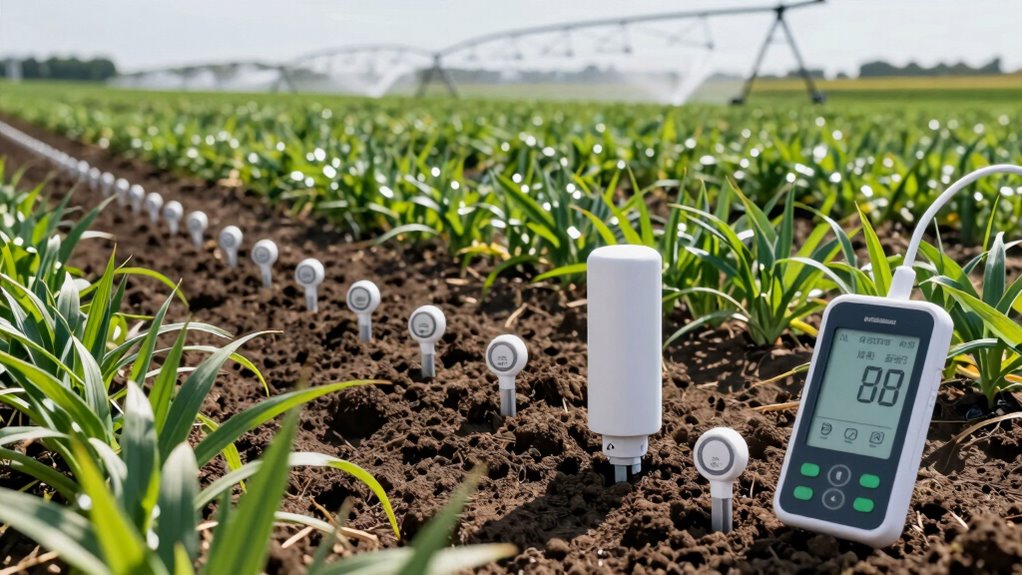

Wireless soil moisture sensors provide real-time, accurate data that helps you make precise remote irrigation decisions. By properly calibrating and maintaining these sensors, you guarantee reliable readings despite environmental factors or sensor aging. This accuracy allows you to water only when needed, saving water and energy, and reducing runoff. With features like wireless connectivity and automated alerts, you can respond quickly to soil conditions. Keep exploring to discover how these sensors can transform your irrigation management.
Prime for Young Adults — start your free trial
Fast free delivery, streaming and member deals for eligible 18–24 year olds.
As an affiliate, we earn on qualifying purchases.
Key Takeaways
- Wireless sensors enable real-time soil moisture monitoring for timely, informed irrigation decisions.
- Proper calibration and maintenance ensure sensor data accuracy, optimizing water use.
- Automated alerts from wireless sensors facilitate remote adjustments to irrigation schedules.
- Sensor integration with irrigation systems allows for precise, targeted watering based on soil conditions.
- Technological features like self-calibration enhance reliability and reduce manual upkeep for remote management.
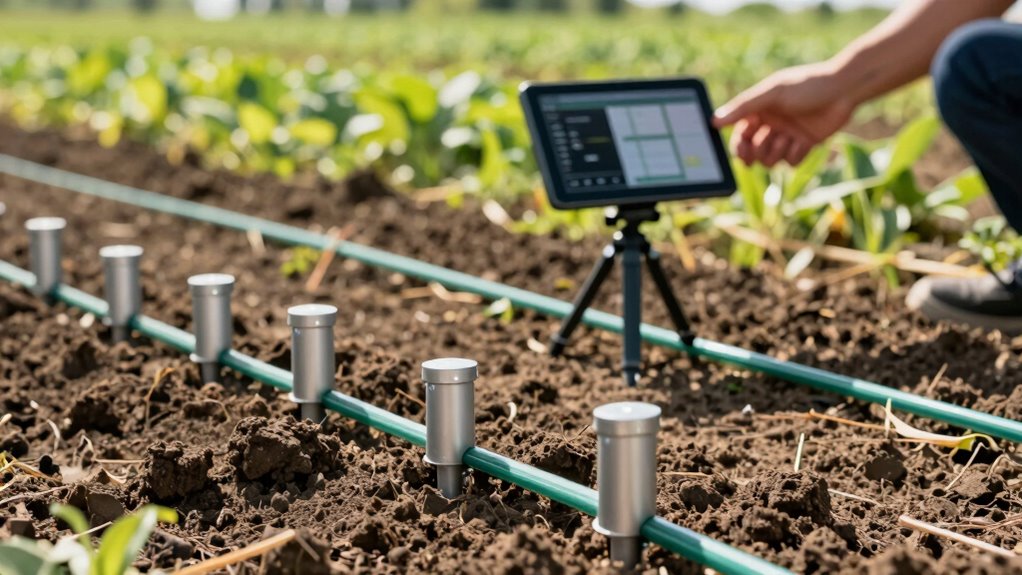
One of the key advantages of these sensors is their ability to deliver high data accuracy. When data is reliable, you can confidently determine when your soil actually needs water, avoiding over- or under-irrigation. However, maintaining this accuracy depends heavily on proper sensor calibration. When you first install your sensors, it’s essential to calibrate them correctly, ensuring they reflect your soil’s specific moisture characteristics. Calibration involves comparing sensor readings with manual measurements and adjusting accordingly, so the data you receive truly represents the moisture content in your soil. Over time, environmental factors like soil type, temperature fluctuations, or sensor aging can affect accuracy, so periodic recalibration becomes vital to keep your data trustworthy. Additionally, sensor calibration is a critical step that ensures your data remains precise and reliable over the lifespan of the sensors. Regular calibration checks also help detect potential sensor drift, maintaining consistent data quality. Proper sensor maintenance practices extend the lifespan of your sensors and improve the overall quality of your soil moisture data. Additionally, advancements in sensor technology now include features like self-calibration, which can further simplify maintaining accuracy and ease of use. Incorporating proper maintenance practices can also prevent sensor malfunctions and extend the longevity of your devices.
With well-calibrated sensors, you’ll notice how seamlessly you can integrate data into your irrigation decisions. Instead of relying on fixed schedules or visual assessments, you’ll get precise moisture readings that tell you exactly when and how much to water. This targeted approach not only conserves water but also reduces energy costs and minimizes runoff or plant stress. Wireless connectivity means you can access this data anytime, anywhere—whether you’re in the field, at home, or on the go. Many systems even allow you to set automated alerts or control your irrigation system remotely, making it easier to respond swiftly to changing soil conditions. Remote irrigation control further enhances efficiency by automating watering schedules based on real-time data. Furthermore, the reliability of your data hinges on proper sensor maintenance and calibration. Neglecting calibration can lead to skewed readings, causing you to irrigate unnecessarily or not enough. Regular calibration checks ensure your sensors stay accurate, maintaining the integrity of your data over time. This consistency empowers you to make confident decisions, knowing your irrigation reflects real soil needs rather than assumptions or outdated information. As technology advances, many wireless soil moisture sensors now include features like self-calibration or data validation, further enhancing their accuracy and ease of use.
As an affiliate, we earn on qualifying purchases.
Frequently Asked Questions
How Do Wireless Soil Moisture Sensors Perform in Extreme Weather Conditions?
Wireless soil moisture sensors generally perform well in extreme weather if properly calibrated and weather-resistant. You should guarantee regular sensor calibration to maintain accuracy after storms or temperature fluctuations. Choose sensors with weather resilience features like waterproof casings and temperature tolerance. Extreme conditions may affect readings temporarily, but with proper calibration and durable design, your sensors can reliably inform your irrigation decisions even during harsh weather events.
What Is the Typical Lifespan of a Wireless Soil Moisture Sensor?
A wireless soil moisture sensor typically lasts between 3 to 5 years. You’ll want to focus on sensor calibration to guarantee accurate readings and monitor battery longevity to prevent unexpected failures. Proper calibration maintains measurement precision, while regular battery checks extend your sensor’s lifespan. By staying proactive with these aspects, you maximize your sensor’s durability, ensuring consistent performance and reliable data for your irrigation decisions.
Are Wireless Soil Moisture Sensors Compatible With Existing Irrigation Systems?
Wireless soil moisture sensors are generally compatible with existing irrigation systems, but you’ll need to take into account sensor calibration and data integration. Calibration ensures accurate readings, which is essential for effective remote irrigation control. Data integration allows your sensors to communicate seamlessly with your current system, often via compatible controllers or software. Before installation, check your system’s specifications and ensure the sensors can sync properly to optimize watering and conserve water.
How Secure Is the Data Transmitted by Wireless Soil Moisture Sensors?
You can trust that the data transmitted by wireless soil moisture sensors is quite secure. Manufacturers use data encryption to protect your information, making it difficult for outsiders to access or tamper with it. While signal interference can occur, advanced protocols help minimize risks, ensuring your data stays safe. Overall, with proper setup, you can confidently rely on these sensors for accurate, secure moisture readings that support your irrigation decisions.
Can Wireless Soil Moisture Sensors Be Used for Different Crop Types?
Yes, wireless soil moisture sensors can be used for different crop types. You’ll need to perform crop-specific calibration to guarantee accuracy and adapt sensor placement strategies to suit each crop’s root zone and growth pattern. By customizing calibration and strategically positioning sensors, you can effectively monitor moisture levels across diverse crops, helping you optimize irrigation schedules and improve overall crop health.
remote irrigation system controller
As an affiliate, we earn on qualifying purchases.
As an affiliate, we earn on qualifying purchases.
Conclusion
As you embrace wireless soil moisture sensors, imagine them as silent sentinels guarding your fields, their signals like whispers from the earth itself. With each data point, you access a deeper understanding of your land’s needs, guiding your remote irrigation decisions like a steady hand in the dark. This technology becomes your stewardship’s compass, transforming your farm into a thriving, resilient oasis—proof that harmony between nature and innovation is just a sensor away.
soil moisture sensor calibration kit
As an affiliate, we earn on qualifying purchases.
As an affiliate, we earn on qualifying purchases.
automatic irrigation moisture sensors
As an affiliate, we earn on qualifying purchases.
As an affiliate, we earn on qualifying purchases.
Flea & tick season Picks
flea and tick prevention
As an affiliate, we earn on qualifying purchases.