Lithium extraction for batteries often relies on traditional mining, which can harm ecosystems, pollute water sources, and consume a lot of energy. However, innovative methods like direct lithium extraction from brines and geothermal sources are emerging, reducing environmental impact and conserving resources. These new techniques aim to make lithium sourcing more sustainable. To better understand how these processes work and tackle environmental issues, keep exploring further.
Key Takeaways
- Traditional lithium extraction via open-pit mining causes significant environmental damage, including habitat destruction and water pollution.
- Innovative methods like direct lithium extraction (DLE) reduce water use and ecosystem disturbance, offering more sustainable sourcing options.
- Extracting lithium from brines, geothermal waters, and clay deposits is less invasive and minimizes land and water impacts.
- Recycling lithium from used batteries helps conserve resources and decreases reliance on environmentally damaging extraction methods.
- Industry efforts focus on scaling eco-friendly processes, balancing rising demand with sustainable practices and environmental responsibility.
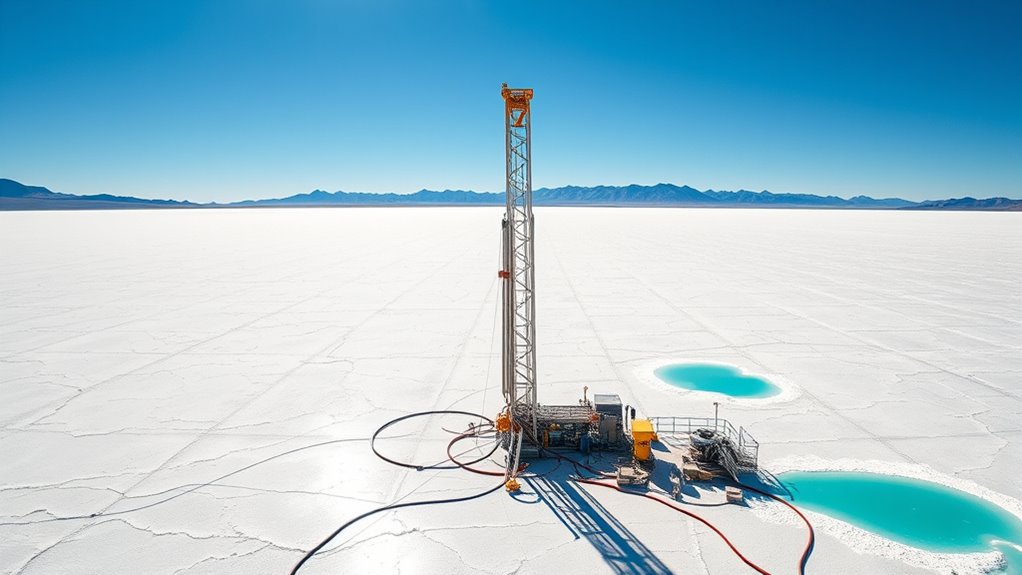
Have you ever wondered how the lithium in your smartphone or electric vehicle battery is extracted? It’s a process that involves more than just mining; it has significant environmental impacts that can’t be ignored. Traditional extraction methods, like open-pit mining, often lead to habitat destruction, water pollution, and high energy consumption. These methods can deplete local water sources, harm wildlife, and cause soil erosion, raising concerns about the sustainability of current practices. But, as the demand for lithium skyrockets, researchers and companies are turning to technological innovations to make extraction more environmentally friendly. New techniques, such as direct lithium extraction (DLE), aim to reduce water use, minimize land disturbance, and lower emissions. DLE uses advanced filtration, adsorption, and chemical processes to selectively extract lithium from brine or geothermal water, which means less disturbance to ecosystems and a smaller carbon footprint. These innovations are vital because they offer a way to meet rising demand without further damaging the environment. Additionally, sustainable practices in lithium extraction are becoming increasingly important to ensure environmental preservation and resource conservation.
Technological innovations are also making it possible to recover lithium more efficiently from sources that were previously considered unsuitable or too costly. For example, researchers are developing methods to extract lithium from clay deposits and lithium-rich geothermal brines, expanding the pool of potential resources. These new techniques often involve less invasive procedures and can often reuse water or recycle chemicals, reducing waste and pollution. Additionally, innovations like lithium recycling from used batteries are gaining traction, helping to close the loop and lessen the need for new mining altogether. This approach not only conserves natural resources but also helps mitigate some of the environmental impact associated with primary extraction.
As you can see, the environmental impact of lithium extraction is a pivotal issue, but technological innovations are offering promising solutions. They aim to make the process cleaner, more sustainable, and less disruptive to the planet. While challenges remain, such as scaling these new methods and ensuring economic viability, ongoing research and investment suggest a future where lithium can be sourced responsibly. Your awareness of these developments highlights the importance of supporting sustainable practices in the industry. By choosing products that prioritize environmentally conscious extraction methods, you help push the industry toward greener solutions. Ultimately, balancing the demand for advanced batteries with environmental stewardship depends on continuous innovation and responsible resource management.

EZ on the Earth Primary Lithium Battery Recycling Container – 3.5 Gallon, Battery Disposal Bin with Lid That Holds up to 41.8 lbs Batteries – Recycling Pail with Cardboard Box
Container for Wide range of Lithium Batteries — Easily recycle various lithium batteries from diverse devices, promoting hassle-free…
As an affiliate, we earn on qualifying purchases.
As an affiliate, we earn on qualifying purchases.
Frequently Asked Questions
How Does Lithium Recycling Impact Overall Demand?
Recycling lithium reduces overall demand by supplementing supply, making the supply chain more resilient. When recycling efficiency improves, you can recover more lithium from used batteries, decreasing the need for new extraction. This shift helps stabilize prices and lessens environmental impact. By boosting recycling efforts, you support a sustainable loop in the supply chain, ultimately lessening pressure on natural resources and reducing reliance on primary lithium sources.
Are There Alternative Materials to Lithium for Batteries?
Alternative materials to lithium are like hidden treasures waiting to be discovered. You can explore alternative chemistries such as sodium-ion or magnesium-ion batteries, which use more abundant elements. Solid-state batteries, promising increased safety and energy density, also serve as a viable option. These innovations could reduce dependence on lithium, making your energy storage solutions more sustainable and resilient for the future.
What Are the Social Impacts of Lithium Mining?
You should know that lithium mining can considerably impact communities, often leading to displacement and challenging Indigenous rights. As mining operations expand, local residents may lose their homes or face environmental degradation that affects their livelihoods. Indigenous groups sometimes struggle to protect their land and cultural heritage, which can cause social tensions. These issues highlight the need for responsible practices that respect community rights and minimize social disruption.
How Does Lithium Extraction Affect Local Water Supplies?
Think of lithium extraction as draining a crucial reservoir—your local water supply. It often leads to groundwater contamination, risking the purity of drinking water. This process can also worsen water scarcity, leaving communities struggling to access clean water. As mining depletes and pollutes underground sources, you might find your water resources diminished and compromised, affecting daily life and the environment around you.
What Innovations Are Emerging to Reduce Environmental Footprint?
You can explore eco-friendly extraction techniques like direct lithium extraction, which reduces water use and minimizes environmental impact. Emerging alternative extraction methods, such as geothermal brine extraction and solar evaporation with improved containment, also help lower the footprint. These innovations focus on sustainability, allowing you to obtain lithium more responsibly, while protecting local ecosystems and water resources. Embracing such advancements guarantees a more environmentally conscious approach to lithium harvesting.
sustainable lithium extraction equipment
As an affiliate, we earn on qualifying purchases.
As an affiliate, we earn on qualifying purchases.
Conclusion
As you explore lithium extraction, remember it’s like walking a tightrope between harnessing a crucial resource and protecting our planet. The process’s sustainability issues act as warning signs, urging you to seek cleaner, more responsible methods. By staying mindful of these challenges, you can help steer the future of battery technology toward a greener, more balanced path—because without careful stewardship, this precious mineral risks becoming a fleeting mirage rather than a lasting solution.
lithium extraction from brines
As an affiliate, we earn on qualifying purchases.
As an affiliate, we earn on qualifying purchases.

NERMAK 12V 10Ah Lithium LiFePO4 Deep Cycle Battery, 2000+ Cycles Rechargeable Battery for Solar/Wind Power, Lighting, Power Wheels, Ride-on Toy, Fish Finder and More, Built-in 10A BMS
【Superior Performance】: Lithium iron phosphate battery has high energy density, Long cycle life, Good safety performance, No memory…
As an affiliate, we earn on qualifying purchases.
As an affiliate, we earn on qualifying purchases.