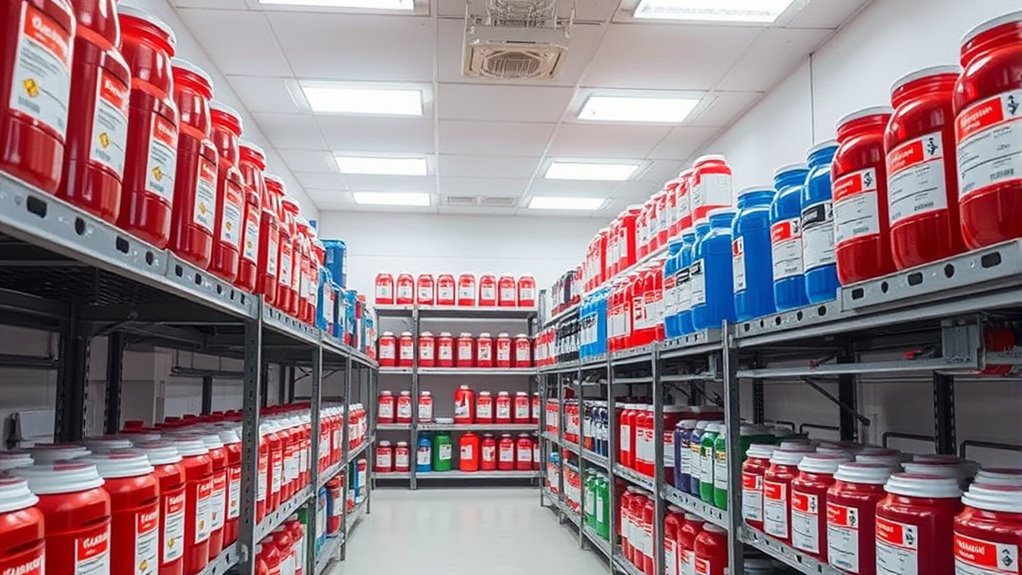

To guarantee safe chemical storage, you must carefully segregate incompatible substances like flammable liquids, oxidizers, acids, and caustics into dedicated, clearly marked zones. Proper labeling on each container is crucial, indicating contents, hazards, and handling instructions to prevent accidental misuse. Regular inspections and organized inventories help catch leaks or damage early and maintain safety compliance. Staying attentive to these practices is key—continuing will uncover more essential tips for effective storage and safety compliance.
Key Takeaways
- Store incompatible chemicals separately, such as flammables away from oxidizers and acids apart from caustics.
- Use clearly marked, dedicated storage zones for different chemical categories to prevent cross-contamination.
- Ensure containers have durable, legible labels indicating contents, hazards, and handling instructions.
- Regularly inspect storage areas for damaged containers and update labels to maintain safety standards.
- Follow local regulations and industry best practices for consistent segregation and accurate labeling procedures.
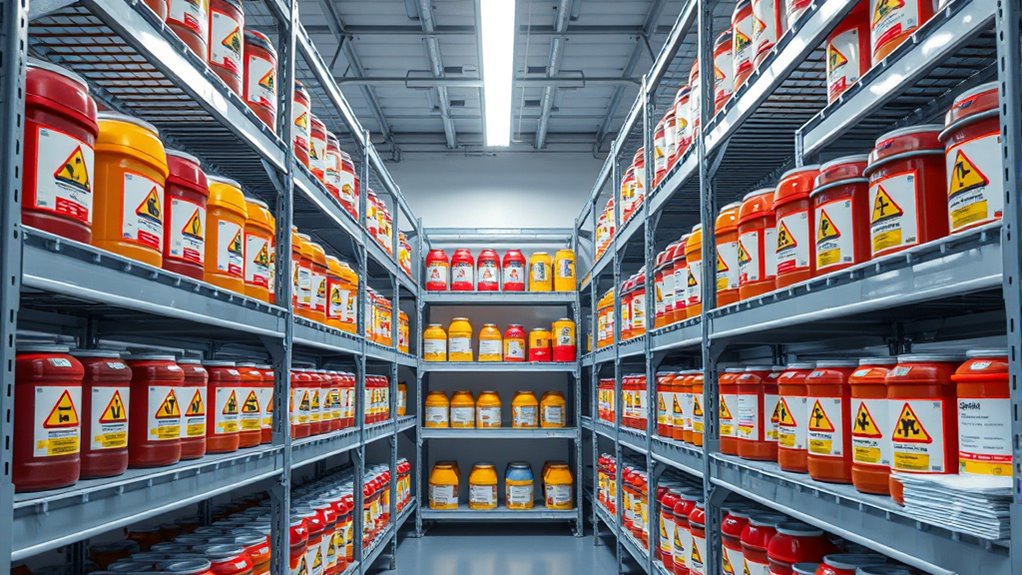
Are you storing chemicals safely? Proper storage of chemicals is essential to prevent accidents, injuries, and environmental damage. When dealing with hazardous materials, following strict storage procedures is crucial. You need to understand that hazardous material storage isn’t just about placing chemicals on shelves; it involves careful planning and organization to keep everyone safe. Segregation and labeling are key components of effective chemical storage, helping to minimize risks associated with incompatible substances or accidental mixing.
First, make sure you segregate chemicals based on their properties. Flammable liquids should be stored separately from oxidizers, acids from caustics, and reactive substances from those that are stable. This prevents dangerous reactions if leaks or spills occur. Use clearly marked, dedicated storage areas for each category, and ensure that these zones are well-ventilated and secure. Keeping incompatible chemicals apart reduces the chances of fires, explosions, or the release of toxic fumes. Always consult the safety data sheets (SDS) for specific storage requirements, as they provide vital information on how to handle and organize hazardous materials safely.
Segregate chemicals by properties; store flammables separately and consult SDS for safety guidelines.
Labeling is equally important. Every container should have a clear, durable label that indicates its contents, hazards, and any special handling instructions. Proper labels eliminate guesswork, ensuring that anyone who accesses the storage area can easily identify what’s inside and understand the risks involved. Labels should be visible and resistant to environmental conditions, such as moisture or chemical exposure. When you label containers correctly, you make it easier to follow emergency procedures if a spill or leak occurs. It also helps prevent accidental misuse or cross-contamination, which could lead to dangerous chemical reactions.
In addition to segregation and labeling, regularly inspecting your storage area is vital. Check for leaks, damaged containers, or expired chemicals. Keep an organized inventory of all stored hazardous materials, updating it as you add or dispose of chemicals. Incorporating modern storage solutions can enhance safety and efficiency in managing chemicals. Always follow local regulations and industry best practices to maintain a safe storage environment. Remember, your goal is to prevent accidents before they happen by implementing effective storage procedures that emphasize segregation and clear labeling. Doing so not only protects your team and facility but also ensures compliance with safety standards and environmental laws. Proper chemical storage might seem straightforward, but it requires consistent attention and adherence to best practices to truly minimize risks. Stay proactive, stay safe.

NFPA 704 Chemical Hazard Labels SDS Stickers for Safety Data
- Designed for industrial safety professionals: Suitable for labs, warehouses, and small businesses
- NFPA 704 Diamond system: Color-coded hazard ratings with customizable labels
- Durable vinyl construction: Waterproof, chemical-resistant, fade-resistant
As an affiliate, we earn on qualifying purchases.
As an affiliate, we earn on qualifying purchases.
Frequently Asked Questions
How Often Should Chemical Storage Areas Be Inspected?
You should inspect your chemical storage areas at least once a month to guarantee storage safety. Regular inspections help identify leaks, corrosion, or improper labeling early, reducing risks. Additionally, conduct thorough inspections after any incident or spill. Consistent inspection frequency keeps your storage compliant with safety standards, prevents accidents, and maintains a safe environment for everyone. Remember, proactive checks are key to effective chemical management.
What Are the Most Common Mistakes in Chemical Segregation?
Just like a floppy disk in a cloud era, many overlook common mistakes in chemical segregation. You often encounter issues like mixing chemicals with incompatible properties, risking dangerous reactions. Improper labeling is another mistake, causing confusion and mishandling. To prevent these, always check chemical incompatibility before storage and verify labels are clear, accurate, and visible. Proper segregation and labeling minimize risks and keep your workplace safe for everyone.
Are There Specific Labeling Standards for Hazardous Chemicals?
Yes, there are specific labeling standards for hazardous chemicals to guarantee proper chemical classification and labeling compliance. You should use standardized labels that clearly display hazard symbols, safety information, and handling instructions. These standards help prevent accidents and ensure safe storage and use. Always verify that labels are up-to-date and adhere to regulations like OSHA or GHS. Proper labeling helps you quickly identify hazards and maintain a safe work environment.
How Should Spills Be Managed in Storage Areas?
A spill in your storage area demands swift action. First, contain the spill immediately using spill containment methods to prevent further spread. Then, follow your established cleanup procedures carefully—wear appropriate protective gear, ventilate the area, and dispose of contaminated materials properly. Do not attempt cleanup alone if hazardous chemicals are involved. Staying calm and methodical guarantees safety and minimizes damage, turning a potential disaster into controlled containment.
What Training Is Required for Staff Handling Chemical Storage?
You need to complete training that covers emergency procedures and PPE requirements for handling chemicals safely. This training guarantees you understand proper storage protocols, how to respond to spills, and how to identify hazards. You’ll learn to use PPE correctly to protect yourself and others. Regular refresher courses are essential to stay updated on safety standards, so make sure you attend all sessions and follow the guidelines diligently.

Justrite S23303 Document Storage Box, Flip Top
- Protects papers from moisture and dirt: Safeguards important documents from elements
- Medium size with flip top: Convenient flip top opening for easy access
- Weather-resistant polyethylene: Durable, weatherproof construction
As an affiliate, we earn on qualifying purchases.
As an affiliate, we earn on qualifying purchases.
Conclusion
By following proper segregation and labeling, you reduce risks and guarantee safety. When chemicals are stored correctly, hazards become less likely, and accidents are prevented. It’s a simple step that makes a big difference, creating a safer environment for everyone. So, stay vigilant, double-check labels, and keep chemicals organized—because safety isn’t just a guideline, it’s a habit you develop. In the end, proper storage keeps you, your team, and your workplace protected.

Vohala Flammable Storage Cabinet, 60 Gallon, 42.9" W x 18.1" D x 44.1" H, Wide Double-Wall Steel Fire Cabinet for Chemical Storage
- Fire-Resistant Dual-Wall Construction: Enhanced fire safety and stability
- 60-Gallon Internal Capacity: Supports larger chemical containers
- Secure Three-Point Locking System: Ensures safe access and containment
As an affiliate, we earn on qualifying purchases.
As an affiliate, we earn on qualifying purchases.
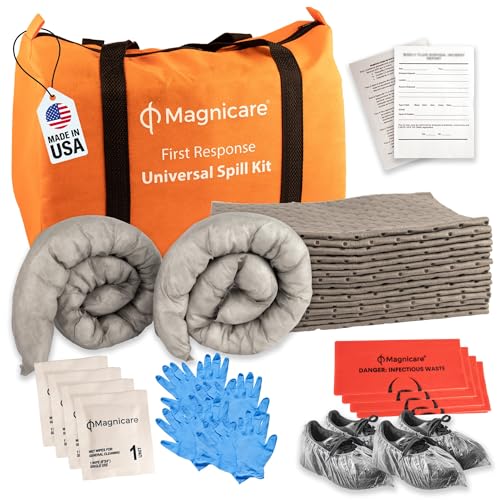
Universal Spill Kit OSHA Approved – Biohazard Clean up Kit for Oil, Water & Chemicals | 15 Absorbent Pads, 2 Socks, PPE, Biohazard Bags in Bright Orange Duffel Bag
- Universal Spill Coverage: Absorbs oil, water, and chemicals
- Complete Compact Kit: Includes pads, socks, PPE, and bags
- Professional-Grade Absorbents: Heavy-duty pads and socks for spills
As an affiliate, we earn on qualifying purchases.
As an affiliate, we earn on qualifying purchases.