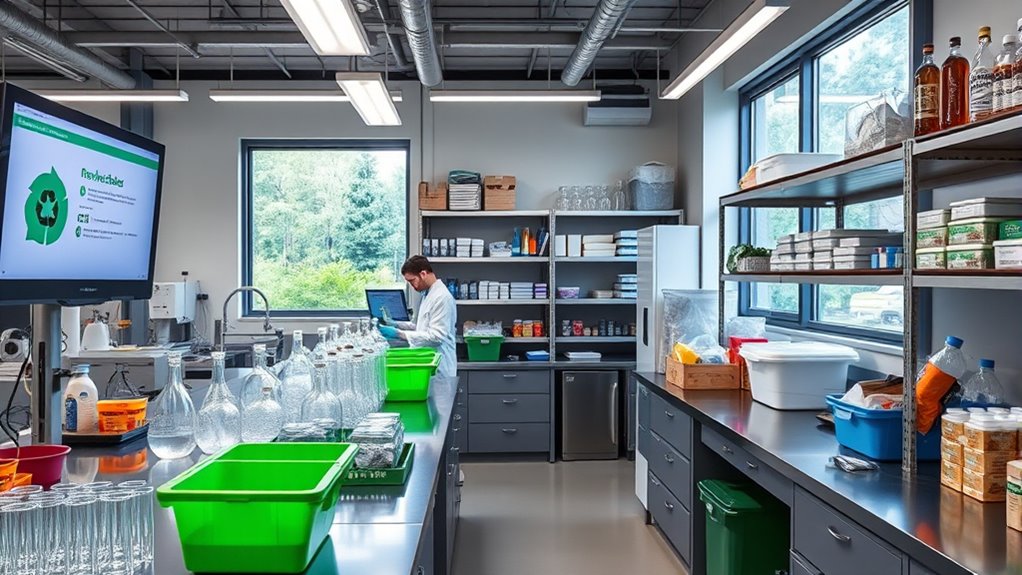

To reduce waste in labs and industry, focus on green chemistry principles like using safer solvents, recyclable catalysts, and designing processes that minimize hazardous substances from the start. Optimize reaction conditions such as temperature and reagent ratios to boost efficiency and cut waste. Incorporate continuous flow processes and real-time monitoring to catch issues early. By embracing these strategies, you’ll enhance safety, cut costs, and support sustainability—all valuable insights you’ll uncover by exploring further.
Key Takeaways
- Implement process optimization techniques such as adjusting reaction conditions to improve yields and reduce excess reagents.
- Utilize greener solvents and recyclable catalysts to minimize hazardous waste generation.
- Adopt continuous flow processes for better resource efficiency and waste reduction.
- Incorporate real-time monitoring to detect inefficiencies and prevent unnecessary byproducts.
- Design inherently safer and less wasteful reactions following green chemistry principles.
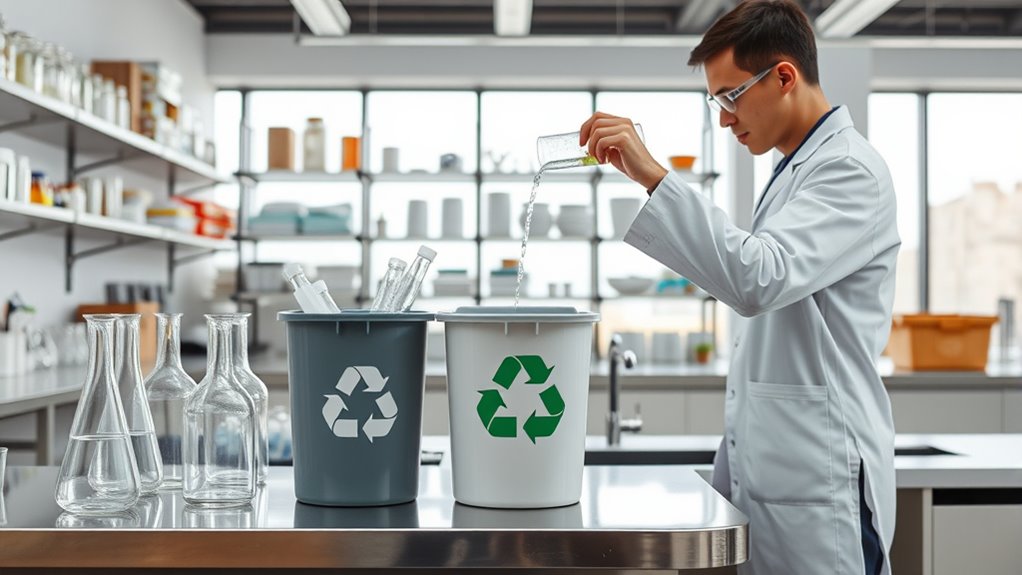
Have you ever wondered how you can make a real difference in reducing waste? One of the most effective ways is by adopting principles of green chemistry and focusing on process optimization. Green chemistry emphasizes designing chemical processes that minimize or eliminate hazardous substances, reducing waste production from the outset. Instead of relying on traditional methods that often generate large amounts of byproducts and waste, green chemistry encourages you to rethink reaction pathways, choose safer solvents, and develop more efficient catalysts. These strategies not only protect the environment but can also streamline operations, cut costs, and improve safety in your lab or industrial setting.
Process optimization plays a critical role in waste reduction because it helps you refine processes to maximize efficiency and minimize waste generation. By analyzing each step of your procedures, you can identify areas where resources are wasted or where reactions are less efficient than they could be. Implementing process optimization techniques can involve adjusting reaction conditions—such as temperature, pressure, or reagent ratios—to achieve higher yields with fewer raw materials. It also includes adopting continuous flow processes that reduce the volume of waste produced and enable better control over reaction parameters. When you optimize processes, you’re not just reducing waste but also increasing productivity and consistency, which benefits your overall operation.
Integrating green chemistry principles with process optimization means you’re proactively designing processes that are inherently less wasteful. For example, using solvent-free reactions or recyclable catalysts reduces the need for hazardous waste disposal. You can also substitute hazardous reagents with safer alternatives, which decreases the risk of spills and exposure while cutting down on waste streams. Additionally, implementing real-time monitoring tools allows you to make immediate adjustments, preventing excess reagent use and minimizing byproduct formation. This proactive approach ensures waste is minimized at every stage, rather than trying to manage it after it’s been created.
Furthermore, understanding the contrast ratio of your processes and equipment can help identify areas where image quality and clarity might be optimized, leading to more precise and efficient operations. In practice, adopting these strategies involves continuous education and a mindset geared toward sustainability. It’s about thinking creatively and critically about each process—asking yourself if there’s a greener, more efficient way to achieve the same results. Over time, integrating green chemistry and process optimization can lead to significant reductions in waste, lower environmental impact, and even cost savings. Ultimately, you have the power to transform your laboratory or industrial processes into models of efficiency and sustainability, making a tangible difference in waste reduction.
Frequently Asked Questions
How Can Employee Training Enhance Waste Reduction Efforts?
You can enhance waste reduction efforts by focusing on employee engagement through targeted training. When you provide effective training, employees understand the importance of waste reduction and how their actions make a difference. This boosts their motivation to adopt sustainable practices. As training effectiveness increases, employees become more proactive in identifying waste, suggesting improvements, and following best practices, ultimately leading to more successful waste reduction initiatives.
What Are the Most Cost-Effective Waste Reduction Practices?
Think of your waste management as a garden—simple, cost-effective practices can yield rich rewards. You can start by implementing recycling initiatives to turn waste into resources, and carefully managing hazardous waste to prevent costly accidents. These strategies don’t require a fortune; instead, they focus on smart, consistent actions that reduce waste volume and disposal costs. Your effort today cultivates a cleaner, safer environment and saves money in the long run.
How to Measure the Success of Waste Reduction Strategies?
You measure the success of waste reduction strategies by tracking key measurement metrics like waste volume decrease, cost savings, and material reuse rates. Success indicators include improved efficiency, reduced environmental impact, and compliance with regulations. Regularly review data to assess progress, set benchmarks, and identify areas for improvement. This ongoing monitoring helps you determine if your strategies are effective and guides future efforts in waste management.
What Legal Considerations Impact Waste Reduction Initiatives?
You need to take into account liability compliance and environmental regulations when implementing waste reduction initiatives. Make sure your activities meet legal standards to avoid penalties or liability issues. Stay updated on local, state, and federal laws that govern waste handling, disposal, and reduction methods. By proactively aligning your strategies with these regulations, you minimize legal risks and demonstrate responsible environmental stewardship, which can also enhance your reputation and operational efficiency.
How Can Waste Reduction Strategies Be Customized for Different Industries?
You can customize waste reduction strategies by understanding industry-specific regulations and applying technological adaptations that suit your sector. For example, in manufacturing, focus on process optimization and recycling, while in healthcare, prioritize proper disposal and sterilization. Tailor your approach by evaluating your industry’s unique waste streams and compliance requirements, then implement innovative tech solutions to minimize waste effectively and sustainably.
Conclusion
So, next time you’re tempted to toss that leftover chemical down the drain, remember: saving the planet might just require a little more effort than hitting “delete.” Waste reduction isn’t rocket science—it’s common sense dressed up as responsibility. But hey, if you’re happy trashing resources like there’s no tomorrow, who am I to stop you? Just don’t expect Mother Nature to thank you when she’s finally fed up with the mess.