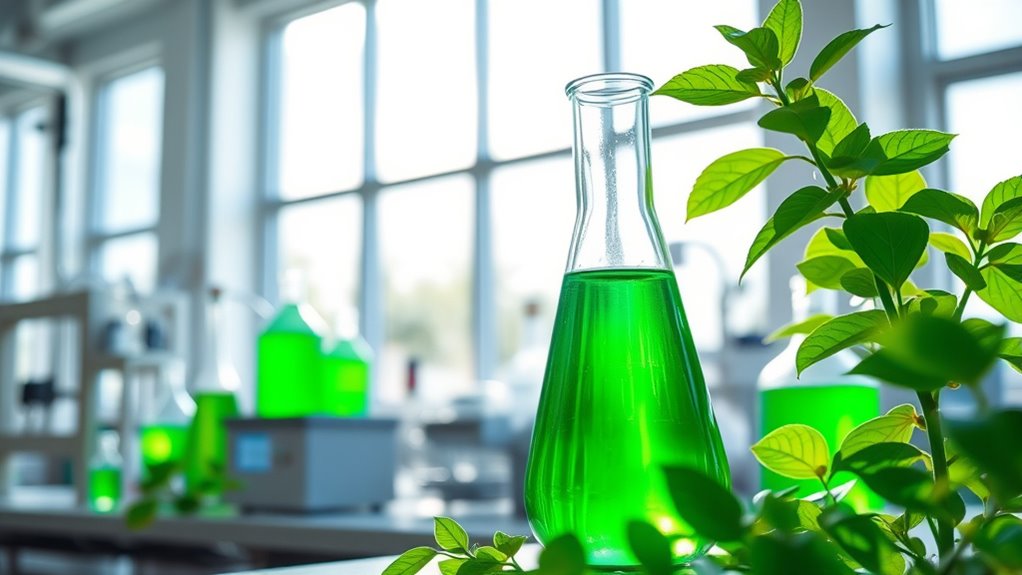

Green solvents provide a safer, eco-friendly alternative to traditional chemicals by reducing toxicity, emissions, and ecological impact. They are designed to break down naturally, emit fewer VOCs, and often come from renewable sources. By choosing green solvents, you help lower pollution, protect ecosystems, and support sustainable practices. If you want to discover more about how these innovative solutions can benefit your industry and the environment, keep exploring the options available.
Key Takeaways
- Green solvents are designed to reduce pollution and health risks by breaking down naturally without harmful residues.
- They emit fewer volatile organic compounds (VOCs), helping improve air quality and reduce smog formation.
- Typically derived from renewable sources, green solvents have lower toxicity and biodegrade faster, minimizing environmental contamination.
- They generate less hazardous waste and consume fewer resources throughout their lifecycle, supporting sustainability efforts.
- Adopting green solvents enables industries to maintain efficiency while lowering ecological footprints and promoting environmentally responsible practices.

Green solvents are environmentally friendly alternatives to traditional chemical solvents, designed to lessen pollution and health risks. They are gaining popularity because they help decrease the environmental impact associated with industrial processes. One of their key advantages is their biodegradability benefits, meaning they break down more easily in nature without leaving harmful residues. This feature markedly reduces long-term pollution, making them a smarter choice for companies aiming to minimize their ecological footprint. When you switch to green solvents, you’re not just improving safety; you’re actively contributing to a cleaner environment.
Green solvents reduce pollution and health risks by breaking down naturally without harmful residues.
Traditional solvents often contain volatile organic compounds (VOCs), which escape into the atmosphere and contribute to smog formation and air pollution. Green solvents, on the other hand, are formulated to emit fewer VOCs, helping to improve air quality. This reduction in harmful emissions is a direct way to lessen the environmental impact of industrial activities, especially in manufacturing, cleaning, and extraction processes. By choosing green solvents, you’re aligning your operations with sustainable practices that prioritize environmental health.
In addition to air quality improvements, green solvents typically have a lower toxicity profile. They often originate from renewable sources like biomass, citrus peels, or other plant-based materials. This means they pose fewer risks to workers handling them daily and to ecosystems if accidental releases occur. The biodegradability benefits of green solvents ensure that, when they do enter the environment, they decompose more rapidly and completely compared to conventional solvents. This quick breakdown minimizes the potential for contamination of soil and water, safeguarding wildlife and human health.
Another aspect worth contemplating is the lifecycle impact of green solvents. From production to disposal, they tend to consume fewer resources and generate less hazardous waste. This contributes to a lower overall environmental impact, helping companies meet stricter regulations and sustainability goals. By integrating green solvents into your processes, you support a circular economy where waste and pollution are kept to a minimum. Additionally, the use of green solvents often involves innovative sustainable practices that further reduce environmental footprints.
Switching to green solvents isn’t just about compliance; it’s about making responsible choices that benefit the planet and future generations. Their biodegradability benefits and reduced environmental impact make them a compelling alternative to traditional solvents. They enable you to maintain efficiency and productivity while actively reducing your ecological footprint. As more industries adopt these sustainable options, the cumulative positive effect on the environment becomes even more significant, demonstrating that environmentally conscious decisions can go hand in hand with business success.
Frequently Asked Questions
How Do Green Solvents Impact Industrial Manufacturing Costs?
Switching to green solvents can lead to significant cost reduction in industrial manufacturing by improving process efficiency. You’ll spend less on hazardous waste disposal, regulatory compliance, and safety measures. Green solvents often require less energy and simplify purification, saving time and resources. Although initial investments might be higher, the long-term savings and environmental benefits outweigh the costs, making your operations more sustainable and economically advantageous.
Are Green Solvents Suitable for All Chemical Processes?
Green solvents aren’t suitable for all chemical processes because their process compatibility varies. You need to assess whether they match your specific requirements, considering factors like solvent stability and how well they interact with other materials. While many green solvents work effectively, some may not withstand certain conditions or compatibilities. So, you must evaluate each process individually to determine if a green solvent can be safely and effectively used.
What Are the Limitations of Green Solvents Compared to Traditional Ones?
You’ll find that green solvents often have limitations, like needing thorough toxicity assessments to guarantee safety, which can delay their adoption. Additionally, supply chain considerations might pose challenges, such as limited availability or higher costs compared to traditional solvents. These factors can restrict their use in some chemical processes, making it essential to evaluate their suitability case by case.
How Do Green Solvents Influence Environmental Regulations Compliance?
Imagine your factory shining under clear skies, thanks to green solvents that help you meet environmental regulations. These eco-friendly options often come with regulatory incentives, making compliance easier and more cost-effective. By adopting green solvents, you align with compliance standards, reduce harmful emissions, and demonstrate your commitment to sustainability. This proactive approach not only keeps you compliant but also enhances your reputation, creating a positive impact on both the environment and your business.
What Is the Future Outlook for Green Solvent Development?
The future of green solvent development looks promising as innovations focus on biodegradability advancements and renewable sourcing. You’ll see more eco-friendly options that break down naturally and are sourced sustainably, reducing environmental impact. As research progresses, expect increased adoption in industries keen to meet stricter regulations and consumer demands. This shift will drive the creation of safer, more sustainable solvents, shaping a cleaner, greener future for industrial processes worldwide.
Conclusion
Just as the phoenix rises from the ashes, embracing green solvents can rejuvenate our environment and health. By choosing safer, eco-friendly alternatives over traditional solvents, you become a catalyst for positive change. Remember, every small step you take echoes the wisdom of turning away from harm and toward sustainability. Together, we can forge a cleaner, safer future—proof that even the smallest actions can spark a powerful transformation.