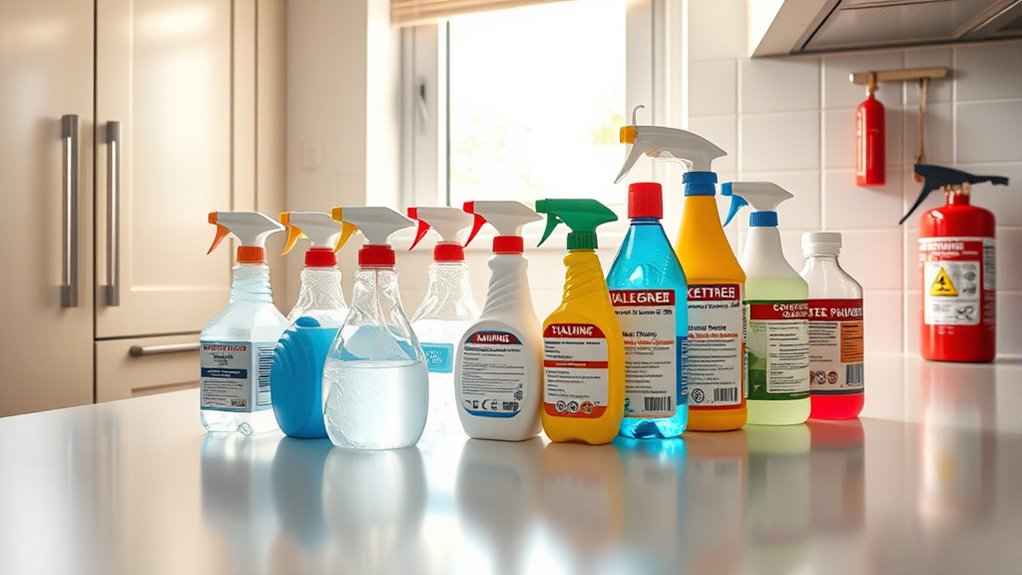

To minimize chemical hazards at home, store chemicals in a cool, dry, well-ventilated area away from children and pets, using clearly labeled original containers. Always handle chemicals carefully, wear protective gear, and never mix products unless instructed. Dispose of unused chemicals properly following local guidelines, and avoid pouring them down drains. Keep safety information accessible, and teach everyone about potential dangers. If you keep these tips in mind, you’ll create a safer environment for your family and uncover more safety practices to implement.
Key Takeaways
- Store chemicals in their original, clearly labeled containers in a designated, secure, well-ventilated area away from children and pets.
- Handle chemicals carefully by reading labels, wearing protective gear, and avoiding mixing substances unless instructed.
- Dispose of chemicals safely following local hazardous waste guidelines, and never pour them down drains without confirmation.
- Keep chemicals out of reach on high shelves or in locked cabinets, and clean spills immediately to prevent accidental exposure.
- Educate household members about chemical dangers, proper storage, handling, and emergency procedures to promote ongoing safety awareness.
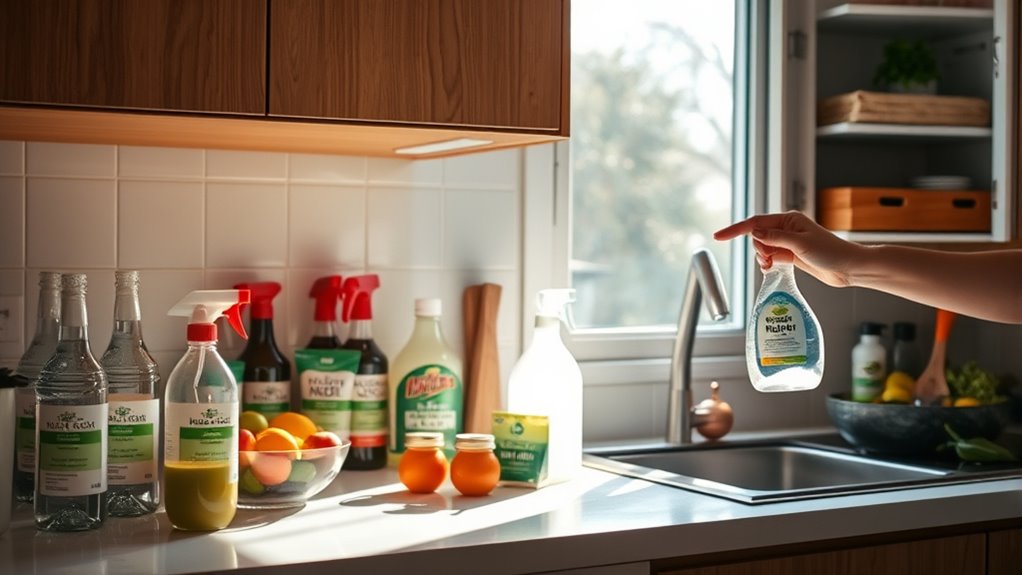
Keeping your home safe is crucial for peace of mind and the well-being of everyone inside. One of the most important aspects of household safety is managing chemical storage properly to prevent accidents and reduce toxin exposure. Many common household products contain chemicals that can be harmful if mishandled or stored improperly. To minimize chemical hazards, you need to be deliberate about how you handle, store, and dispose of these substances. Start by designating a specific area for chemical storage — ideally a cool, dry, well-ventilated space away from children and pets. Using sturdy, clearly labeled containers helps prevent accidental spills and makes it easier to identify contents quickly. Always keep chemicals in their original containers, as labels contain critical safety information, including warnings and instructions for safe use.
Toxin prevention begins with awareness. Read labels carefully before purchasing or using any chemical product. Follow recommended guidelines for handling and storage, and never mix chemicals unless explicitly instructed to do so. For example, mixing cleaning agents like bleach and ammonia can produce toxic fumes that pose serious health risks. When using household chemicals, wear protective gear such as gloves and masks, especially if you’re working with potent or concentrated substances. Keep chemicals out of reach of children and pets, ideally on high shelves or in locked cabinets. Remember, even seemingly harmless products like air fresheners, paints, or pesticides can be dangerous if misused or ingested.
Regularly inspect your chemical storage area for leaks, damage, or expired products. Dispose of old or unused chemicals safely, following local hazardous waste disposal guidelines. Never pour chemicals down the drain unless you’re certain it’s safe to do so, as this can contaminate water supplies. Educate everyone in your household about the dangers of chemicals and the importance of toxin prevention. Simple habits like closing lids tightly, avoiding transferring chemicals into unlabeled containers, and cleaning up spills immediately can considerably reduce risks.
Additionally, animated movies can serve as educational tools that promote safety awareness through engaging storytelling. Store chemicals away from food and beverages to prevent accidental ingestion. By taking these precautions, you create a safer environment that minimizes chemical hazards and protects your loved ones. Remember, proper chemical storage and toxin prevention are ongoing processes that require vigilance and responsibility. With careful management, you can greatly reduce the risk of accidents and ensure your home remains a safe haven for everyone inside.

Aleplay SDS OSHA Data Labels for Chemical Safety 3×4 Inch MSDS Stickers with GHS Pictograms HMIS & Hazard Compliant Secondary Containers, 100 Stickers Per Roll
Right To Know SDS/MSDS Stickers—These stickers presents a user-friendly label that provides brief guidance to help workers who…
As an affiliate, we earn on qualifying purchases.
As an affiliate, we earn on qualifying purchases.
Frequently Asked Questions
How Can I Identify Hidden Chemical Hazards in My Home?
You can identify hidden chemical hazards in your home by carefully reading chemical labels on products like cleaning supplies and pesticides. Look out for ingredients that may be hidden sources of hazardous chemicals, such as fragrances or preservatives. Regularly inspect storage areas for unlabeled or expired items. Being aware of these hidden sources helps you better manage risks and keep your home safe from chemical hazards.
Are Natural Cleaning Products Safer Than Chemical-Based Ones?
Natural cleaning products are generally safer than chemical-based ones because they usually contain fewer synthetic chemicals, reducing your exposure to potential hazards. When you choose natural cleaning options, you promote chemical safety in your home, lowering the risk of skin or respiratory irritation. Always read labels and opt for products with recognizable, natural ingredients to guarantee you’re making safer choices for your household environment.
What Should I Do if I Suspect Poisoning From Household Chemicals?
If you suspect poisoning from household chemicals, act quickly. Call emergency response immediately to get help on the way. Then, contact poison control for expert advice tailored to your situation. While waiting, keep the person calm and avoid inducing vomiting unless instructed. Your prompt action can make a difference, so don’t hesitate—quick communication with professionals guarantees you get the right care and guidance.
How Often Should I Check for Expired or Degraded Chemicals?
You should check your household chemicals at least once every three to six months for expiration dates or signs of degradation. Regularly inspecting your chemical storage helps guarantee safety precautions are maintained, preventing leaks or accidents. Look for discoloration, strange odors, or changes in consistency. Properly dispose of expired or degraded chemicals promptly. Keeping your storage organized and safe minimizes hazards and keeps your home environment secure and healthy.
Can Children Be Exposed to Chemicals Through Household Dust?
Like tiny messengers carrying secrets, household dust can transfer chemicals, exposing children through dust inhalation. Yes, kids are vulnerable because dust settles on surfaces they touch and breathe in during play. Regular cleaning reduces dust accumulation, lowering chemical transfer risks. Keep windows open for fresh air, use HEPA filters, and store chemicals safely. Protecting children from dust inhalation helps prevent harmful chemical exposure and promotes a healthier home environment.
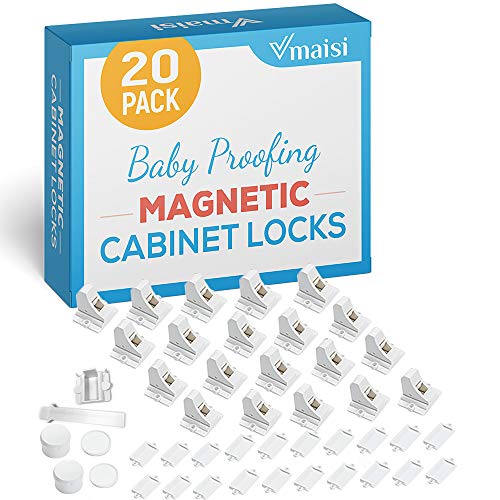
20 Pack Magnetic Cabinet Locks Baby Proofing – Vmaisi Children Proof Cupboard Drawers Latches – Adhesive Easy Installation
[ 20 LOCKS + 2 KEYS ] Baby Child Safety Magnetic Cabinet Locks Work Both for Drawers and…
As an affiliate, we earn on qualifying purchases.
As an affiliate, we earn on qualifying purchases.
Conclusion
By following these safety tips, you can substantially reduce your exposure to harmful chemicals at home. Did you know that nearly 85% of poisoning incidents involve household products? Staying informed and cautious makes your environment safer for everyone. Keep chemicals properly stored, label everything clearly, and dispose of them responsibly. Your proactive steps protect your family’s health and peace of mind, turning your home into a safer, healthier space for all.

Safe-HCL- (1 Quart, 0.94 Liter) Biologically Safe, Synthetic, Hydrochloric/Muriatic Acid – NO Personal Protective Equipment (PPE) Required
As an affiliate, we earn on qualifying purchases.
As an affiliate, we earn on qualifying purchases.
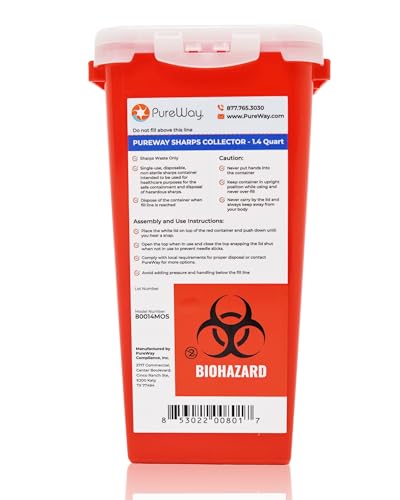
PureWay 1.4 Quart MailBack Sharps Disposal Container – Secure Needle Box for Safe Medical Waste & Used Syringe Disposal | Sharps Container for Home Use, Travel, Clinics, and Professional Settings
PREPAID RETURN & COMPLETE DISPOSAL – Sharps container mail back kit includes a 1.4 Quart sharps disposal container,…
As an affiliate, we earn on qualifying purchases.
As an affiliate, we earn on qualifying purchases.