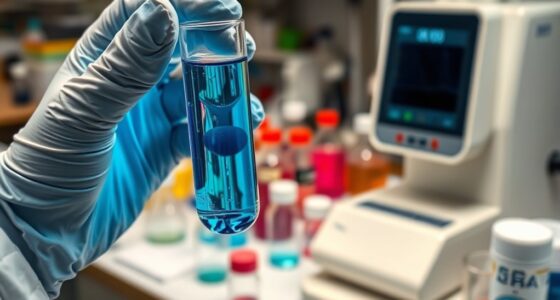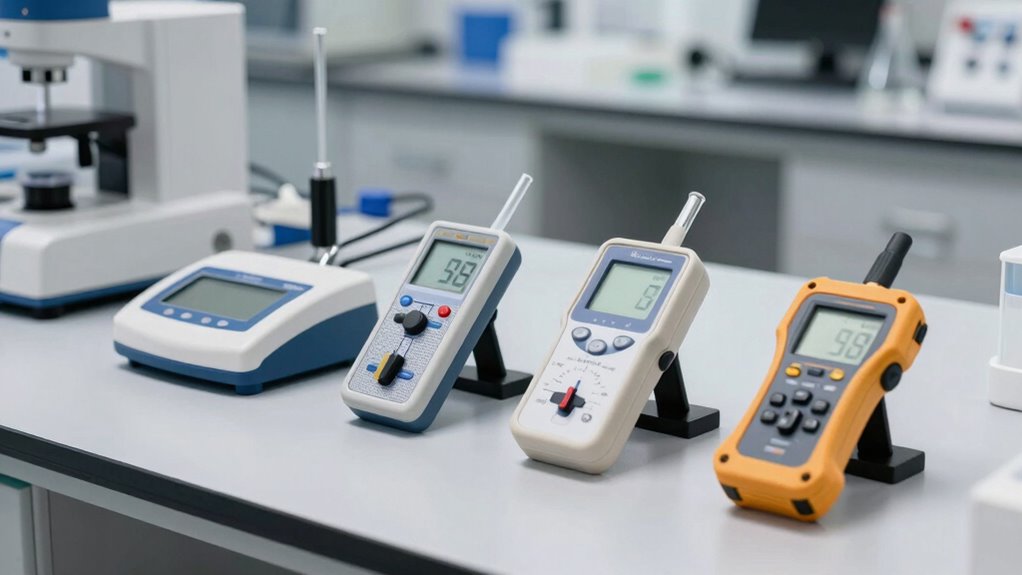
Choosing the best bench pH meter depends on your workflow needs, not on flashy features or marketing hype. Focus on devices that offer reliable readings, easy calibration, and sturdy construction for your environment. Look for models that simplify routine maintenance and fit seamlessly into your testing process. Prioritize durability and user-friendly design over unnecessary bells and whistles. To find the ideal match for your setup, explore the key factors that matter most to your specific application.
Key Takeaways
- Select a pH meter that offers calibration flexibility (manual and automatic) to suit high-volume or routine testing workflows.
- Prioritize durability and environmental robustness for consistent performance in demanding lab or industrial conditions.
- Ensure the device features user-friendly interfaces and maintenance prompts to minimize operational errors and downtime.
- Compatibility with your specific electrodes and ease of calibration maintenance directly impact measurement reliability.
- Consider long-term performance, including calibration accuracy and device longevity, over initial cost or hype-driven features.

When it comes to precise pH measurements in laboratory or industrial settings, choosing the right bench pH meter is crucial. Your decision shouldn’t be driven by hype or flashy features but by how well the instrument fits your specific workflow. A good bench pH meter should offer reliable readings, ease of use, and durable performance. It’s important to take into account calibration techniques because they directly impact measurement accuracy. Some meters require manual calibration using standard buffers, while others feature automatic calibration routines that save time and reduce human error. Assess your lab’s needs: if you handle high volumes or require frequent testing, look for models that streamline calibration with straightforward procedures. Proper calibration routines should be a top priority, ensuring your measurements stay consistent and trustworthy over time. Regular maintenance routines also play a crucial role in keeping your pH meter functioning at its best. This involves cleaning electrodes properly after each use, storing them correctly, and checking for signs of wear or damage. When selecting a meter, verify that it supports easy maintenance, such as accessible electrode ports and clear instructions for troubleshooting. The best meter for your workflow will be one that minimizes downtime, allowing you to focus on your work rather than constant repairs or recalibrations. Think about your typical testing environment; if your lab experiences temperature fluctuations or chemical exposure, choose a meter with robust construction and features designed to compensate for such factors. Additionally, some models have self-diagnostic capabilities or built-in prompts that remind you when calibration or maintenance is due, helping you stay proactive. Remember, investing in a reliable pH meter isn’t just about initial cost but about ongoing performance. Implementing routine calibration techniques and adhering to maintenance routines will extend the life of your instrument and ensure your results are accurate. Proper calibration methods greatly influence measurement accuracy and maintenance routines are essential for long-term reliability. Don’t underestimate the importance of user-friendly interfaces—machines that are intuitive to operate reduce the chance of errors and make calibration and maintenance more efficient. In fact, choosing a model that aligns with your workflow requirements can significantly improve overall efficiency and consistency. It’s also helpful to consider the environmental robustness of the device, especially if your lab faces challenging conditions. Ensuring that your pH meter has appropriate temperature compensation features can help maintain accuracy under varying environmental factors. Taking into account electrode compatibility is equally vital, as it affects both performance and ease of maintenance. In the end, the best bench pH meter for your workflow is the one that integrates seamlessly into your routine, providing dependable readings without unnecessary complexity. Focus on how well the device supports your specific needs, rather than chasing after the latest hype or features you won’t utilize regularly. By prioritizing calibration techniques and maintenance routines, you’ll ensure your measurements remain precise, your workflow stays smooth, and your lab or industrial processes continue running without hitches.
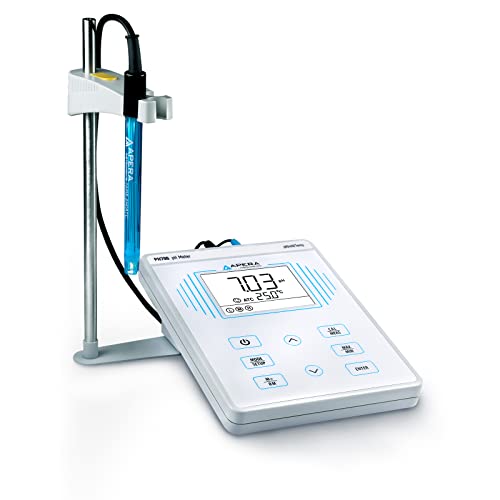
Apera Instruments, LLC-AI501 PH700 Benchtop Lab pH Meter, 0.01 pH Accuracy, 1-3 Points Auto Calibration, 3-in-1 pH/Temp. Electrode
- Electrode Type: Apera 201T-F 3-in-1 pH/temp electrode
- Calibration: Auto 1-3 point calibration with self-diagnosis
- Measurement Mode: Max/Min reading for quick analysis
As an affiliate, we earn on qualifying purchases.
As an affiliate, we earn on qualifying purchases.
Frequently Asked Questions
How Often Should I Calibrate My Bench pH Meter?
You should calibrate your bench pH meter at least weekly, but more often if you use it daily or for critical measurements. Calibration frequency depends on reagent quality—fresh, high-quality buffers guarantee accuracy. Always calibrate before each use if precision is essential, and check calibration more frequently if you notice inconsistent readings. Regular calibration keeps your measurements dependable and guarantees your pH meter functions effectively over time.
What Maintenance Is Required for Long-Term Accuracy?
To guarantee long-term accuracy, you should regularly calibrate your pH meter and properly store the electrode. Always keep the electrode in storage solution when not in use, avoiding air exposure that can dry it out. Follow your calibration schedule, typically weekly or as specified by the manufacturer, to maintain precision. Proper maintenance, including cleaning and timely replacement of electrodes, helps save you time and guarantees reliable results over time.
Are Portable pH Meters Better for Fieldwork?
Yes, portable pH meters are better for fieldwork because they offer portable convenience and enable you to test samples on-site. They’re designed for durability and ease of use in outdoor environments, helping you achieve field accuracy without needing to transport samples back to a lab. Their compact design allows quick readings, making them ideal when you need reliable, on-the-spot pH measurements in various field conditions.
How Does Temperature Affect pH Measurements?
Temperature impact greatly affects pH measurements because pH stability varies with temperature changes. As temperature increases, the pH of most solutions shifts, potentially leading to inaccurate readings if uncorrected. You should always account for temperature when measuring pH, either by using a pH meter with automatic temperature compensation or manually adjusting your readings. This guarantees your results are precise and reliable across different environments and conditions.
What Safety Precautions Are Necessary When Handling pH Reagents?
When handling pH reagents, safety is paramount—you must treat chemicals with respect. Always wear appropriate personal protective equipment, like gloves and goggles, to prevent skin or eye contact. Guarantee proper chemical safety protocols and store reagents in designated, labeled containers away from heat or sunlight. Remember, a little caution goes a long way in avoiding accidents, and always follow manufacturer instructions for safe reagent storage and disposal.

Bluelab pH Pen – ± 0.1 pH Accurate – Durable Double Junction Probe
- Versatile pH Control: Suitable for water, hydroponics, pools, and more
- Easy Two-Point Calibration: Simple setup with calibration indicators included
- Accurate Double-Junction Probe: Reduces contamination for precise readings
As an affiliate, we earn on qualifying purchases.
As an affiliate, we earn on qualifying purchases.
Conclusion
Choosing the right bench pH meter isn’t about chasing the latest hype; it’s about matching the tool to your workflow. Think of it as finding the perfect pair of shoes—comfort and fit matter more than brand names. When you select a meter that aligns with your needs, your measurements become more reliable, and your work flows smoother. Remember, the best choice is the one that supports your goals, not just the loudest buzz.

APERA INSTRUMENTS AI209-T Value Series PH20 pH Tester Combo Kit, Including the Maintenance Set, and a CalPod Solution Holder for Easy Calibration
- Complete Calibration and Probe Care Kit: Ensures reliable test performance
- Probe Cleaning Brush Included: Removes contaminants, extends probe lifespan
- Organized CalBox for Solutions: Stores solutions, reduces buffer costs by 50%
As an affiliate, we earn on qualifying purchases.
As an affiliate, we earn on qualifying purchases.
Apera Instruments, LLC-AI501 PH700 Benchtop Lab pH Meter, 0.01 pH Accuracy, 1-3 Points Auto Calibration, 3-in-1 pH/Temp. Electrode
- Electrode Type: Apera 201T-F 3-in-1 pH/temp electrode
- Calibration: Auto 1-3 point calibration with self-diagnosis
- Measurement Mode: Max/Min reading for quick analysis
As an affiliate, we earn on qualifying purchases.
As an affiliate, we earn on qualifying purchases.