
Fermentation works by using microorganisms like yeast and bacteria to convert sugars into alcohol, acids, and gases. You set up the right environment with warmth, moisture, and sugars, so the microorganisms become active. As they work anaerobically (without oxygen), they produce byproducts that change the flavor, texture, and preservation of foods like bread, beer, and wine. If you’d like to explore more about how this natural process unfolds, there’s plenty more to discover.
Key Takeaways
- Fermentation is a metabolic process where microorganisms like yeast convert sugars into alcohol, acids, and gases.
- It occurs in the absence of oxygen, ensuring specific byproducts form instead of others like carbon dioxide.
- Yeast activates under warm, moist, sugary conditions, initiating biochemical reactions to produce energy and byproducts.
- Signs of fermentation include bubbling, foaming, and changes in flavor and texture of the product.
- It naturally preserves food by creating an environment hostile to spoilage organisms while enhancing flavor.
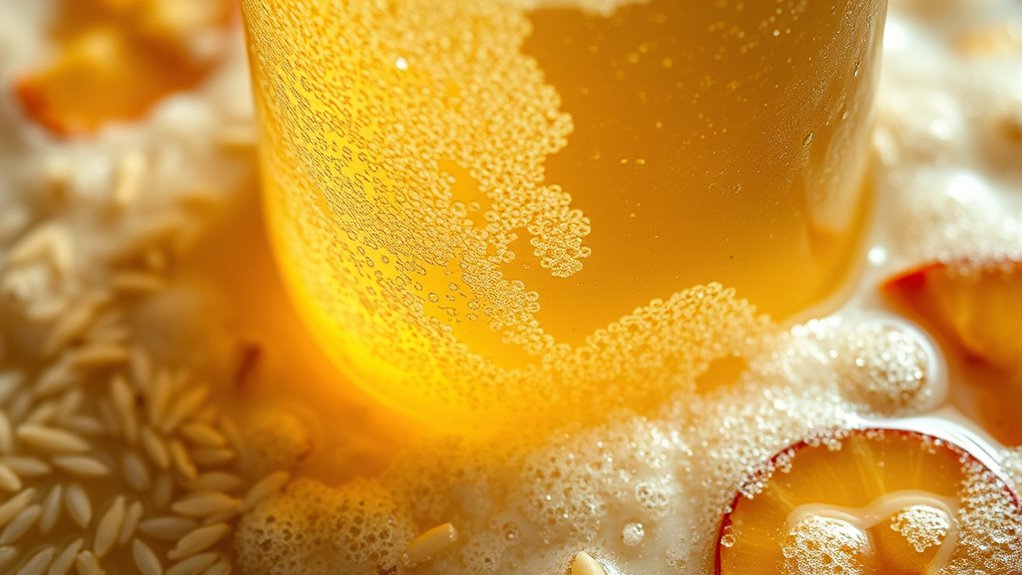
Fermentation is a natural process that transforms sugars into other compounds, such as alcohol or acids, through the action of microorganisms like yeast and bacteria. When you start fermentation, the first step is yeast activation. Yeast, a tiny fungus, remains dormant until it encounters the right environment—warmth, moisture, and sugars. Once activated, yeast begins to metabolize the sugars present in the mixture. This activation kicks off a series of biochemical reactions that convert sugar molecules into energy, producing alcohol and carbon dioxide as byproducts. Yeast activation is vital because it jumpstarts the fermentation process, setting the stage for the transformation of raw ingredients into flavorful products like bread, beer, or wine.
Yeast activation begins the fermentation, transforming sugars into alcohol and carbon dioxide to create flavorful products.
Understanding that fermentation is an anaerobic process is key. Anaerobic means it occurs without oxygen. Unlike many other forms of metabolism that require oxygen, fermentation relies solely on the absence of it. When oxygen is present, yeast and bacteria will typically prefer to use it, but in fermentation, you intentionally limit oxygen exposure. This environment forces the microorganisms to switch their metabolic pathways, leading to the production of different compounds—alcohol in brewing, lactic acid in yogurt, or acetic acid in vinegar. Maintaining an anaerobic environment guarantees that fermentation proceeds smoothly and that unwanted bacteria, which need oxygen, don’t interfere with the process.
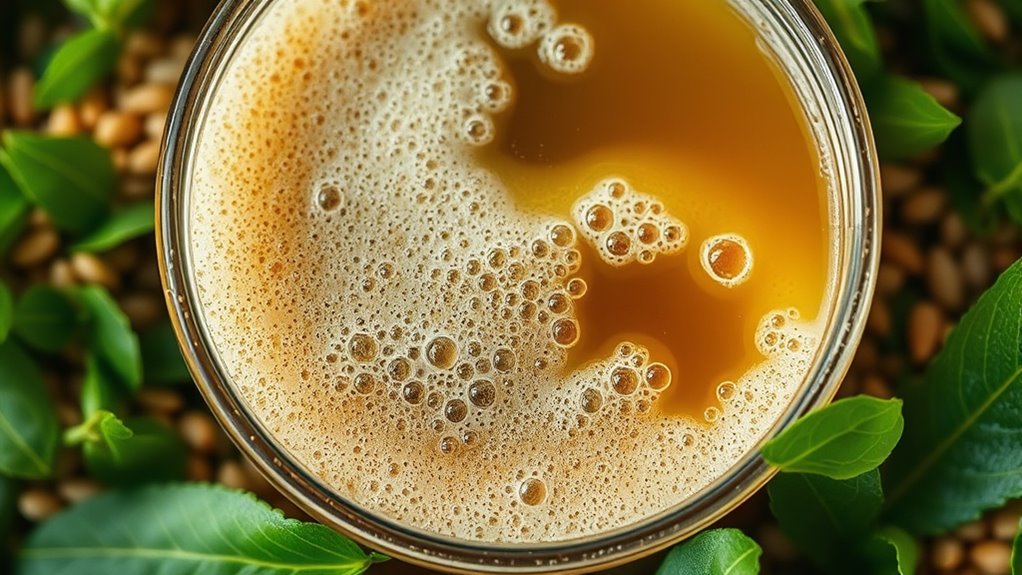
As you observe fermentation, you’ll notice signs like bubbling or foaming, which indicate active yeast or bacteria producing gases. The process is self-sustaining once started, as the microorganisms continue to feed on sugars, releasing alcohol, acids, and gases as they go. Temperature plays an important role here; too cold, and yeast activity slows down or stops; too hot, and the yeast can die or produce undesirable flavors. Keeping the mixture within an ideal temperature range guarantees efficient yeast activation and smooth fermentation. Additionally, awareness of health risks and allergies related to fermentation and seed ingredients helps ensure safe practices.
During fermentation, the yeast’s conversion of sugars into alcohol and gases not only alters flavor and texture but also preserves the product by creating an environment hostile to spoilage organisms. This natural preservation method has been used for centuries to produce bread, beer, wine, and fermented foods. Your understanding of yeast activation and the anaerobic process helps you appreciate how microorganisms transform simple ingredients into complex, delicious foods and drinks. By controlling factors like oxygen exposure and temperature, you can influence the fermentation, achieving the desired flavors and textures, whether you’re baking bread or brewing beer.

Fermenter lids – Home Fermentation Kit With 4 Wide Mouth Fermenting Lids With Airlocks, Oxygen Extraction Pump, Ideal For Sauerkraut, Kimchi, Pickles & Fermented Vegetable
𝗣𝗥𝗢 𝗙𝗘𝗥𝗠𝗘𝗡𝗧𝗘𝗥 𝗟𝗜𝗗𝗦 – 𝗗𝗜𝗬 𝗙𝗘𝗥𝗠𝗘𝗡𝗧𝗔𝗧𝗜𝗢𝗡 𝗠𝗔𝗗𝗘 𝗘𝗔𝗦𝗬: Master your at-home fermentation process with the amazing Pro Fermenter…
As an affiliate, we earn on qualifying purchases.
As an affiliate, we earn on qualifying purchases.
Frequently Asked Questions
What Are the Health Benefits of Fermented Foods?
Eating fermented foods boosts your gut health by introducing probiotic benefits that support digestion and immune function. These foods, like yogurt, sauerkraut, and kimchi, help balance your gut bacteria, reducing inflammation and improving nutrient absorption. Regularly consuming fermented foods can enhance your overall well-being, increase energy levels, and even improve mental clarity. So, adding these foods to your diet is a simple way to enjoy significant health benefits naturally.
How Long Does Fermentation Typically Take?
Fermentation duration varies depending on the food and conditions, but typically, it takes anywhere from a few days to several weeks. For example, yogurt ferments in 6 to 12 hours, while sauerkraut might take 1 to 4 weeks. You can monitor the fermentation timeline by observing changes in texture, aroma, and taste. Keep in mind, warmer temperatures usually speed up the process, so adjust your environment accordingly.
Can Fermentation Occur Without Bacteria or Yeast?
Yes, fermentation can occur without bacteria or yeast through chemical fermentation processes. Some theories suggest that fermentation might happen via purely chemical reactions, without microbes involved. While traditional fermentation relies on microbes like bacteria and yeast to produce alcohol or acids, certain chemical reactions can mimic fermentation effects, such as oxidation or dehydration, creating similar flavors or preservation without any microbial activity. However, these processes are less common and differ from biological fermentation.
What Are Common Mistakes to Avoid During Fermentation?
To avoid fermentation mistakes, steer clear of fermentation myths that could compromise safety. Always use clean equipment and proper ingredients to prevent contamination. Don’t rush the process or use incorrect salt levels, which can hinder fermentation or cause spoilage. Monitor the temperature and fermentation time closely, as these influence safety and success. By understanding proper techniques, you assure a safe, tasty outcome and avoid common pitfalls that could lead to fermentation failure.
How Do Temperature and Ph Affect Fermentation?
Temperature effects fermentation by speeding it up at warmer temps and slowing it down when it’s cooler. Too hot, and you risk killing beneficial microbes; too cold, and fermentation stalls. pH influence is vital too—maintaining an ideal pH guarantees healthy microbial activity and prevents spoilage. If the pH gets too acidic or alkaline, fermentation can become imbalanced. Keep an eye on both temperature and pH to guarantee a smooth, successful fermentation process.

KneadAce Sourdough Starter Culture – Fast-Activating Natural Wild Yeast for Homemade Bread – Dehydrated Sourdough Starter for Baking Artisan Loaves, Easy to Use & Perfect for Beginners
Each Dehydrated sourdough starter contains a blend of bacteria & yeast that boosts the nutritional content of your…
As an affiliate, we earn on qualifying purchases.
As an affiliate, we earn on qualifying purchases.
Conclusion
Now you see how fermentation works—transforming sugars into alcohol, acids, and gases through simple, natural processes. You understand how yeast and bacteria do the work, how heat and time influence the outcome, and how this ancient technique shapes your food and drinks. So, next time you enjoy bread, yogurt, or beer, remember that fermentation is behind the flavor, the texture, and the preservation. It’s nature’s magic making your favorites possible, every single time.

2 Pack 1 Gallon Large Fermentation Jars with 3 Airlocks and 2 SCREW Lids(100% Airtight Heavy Duty Lid w Silicone) – Wide Mouth Glass Jars w Scale Mark – Pickle Jars for Sauerkraut, Sourdough Starter
SUPER Fermentation Lid for Airlock: The improved threaded lids are sturdy, durable and rust free, they are airtight…
As an affiliate, we earn on qualifying purchases.
As an affiliate, we earn on qualifying purchases.

Sourdough Starter Kit – 38oz with Cookbook, Measuring Cup, Spatula, Wide Mouth Jar Cover, Thermometer, Date Marked Feeding Band, Glass Jar for Baker, Bread Baking Supplies
9-in-1 Complete Sourdough Kit: Includes all sourdough tools for starter maintenance: wide mouth jar for easy adding, stirring…
As an affiliate, we earn on qualifying purchases.
As an affiliate, we earn on qualifying purchases.