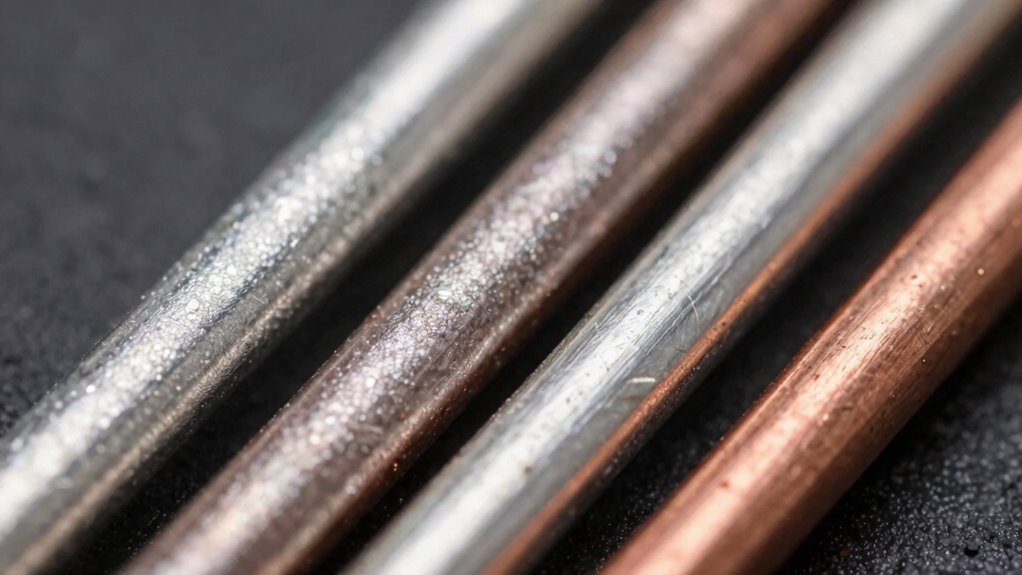

Some metals conduct better because they have more free electrons that move easily through a well-ordered atomic structure. Metals like copper and silver have high electron mobility and simple crystal arrangements, which boost conductivity. Impurities and defects, however, can block electron flow and lower performance. The number of free electrons per atom also plays a role—more electrons mean better conduction. To discover how these factors combine, keep exploring the fascinating details behind metal conductivity.

Prime made for students and young adults
- Fast, free delivery for dorm and study essentials
- Prime Video and Amazon Music included
- Member-only deals
Key Takeaways
- Higher electron mobility allows electrons to flow more easily, increasing conductivity.
- Simple, tightly packed atomic structures reduce disruptions to electron flow.
- A greater number of free electrons per atom enhances a metal’s ability to conduct electricity.
- Impurities and structural defects hinder electron movement, decreasing conductivity.
- Metals with delocalized electron clouds facilitate better electrical conduction.
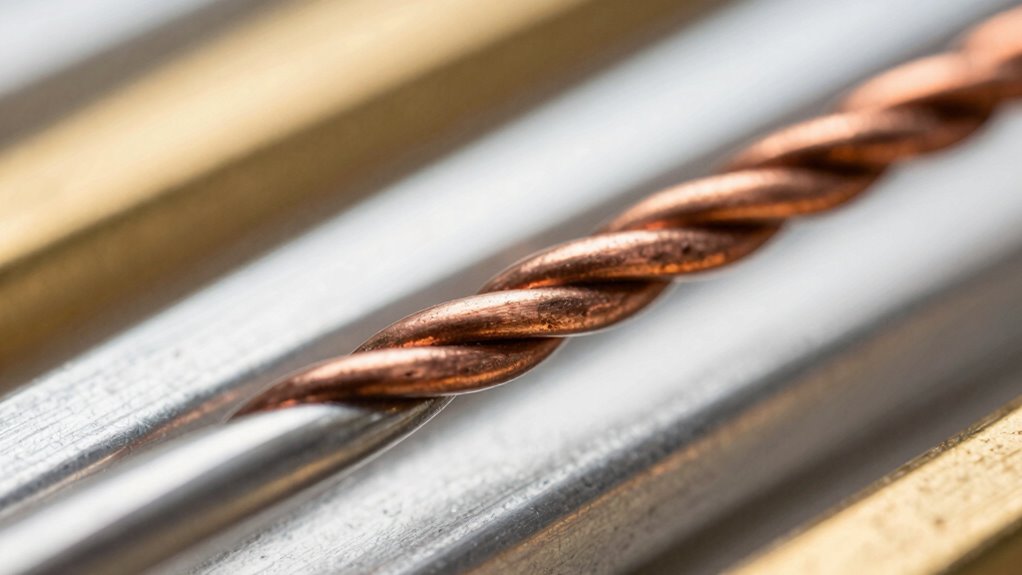
Have you ever wondered why metals are such effective conductors of electricity? The secret lies in their atomic structure and how freely their electrons can move. Metals have a unique arrangement of atoms that creates a sea of free electrons, which are not tightly bound to any particular atom. This atomic structure allows electrons to flow easily when a voltage is applied, making metals excellent conductors. The key factor here is electron mobility—the ease with which electrons can traverse the metal. Some metals have higher electron mobility than others, which directly impacts their conductivity. For example, copper and silver are among the best conductors because their atomic structures allow electrons to move with minimal resistance.
The atomic structure of metals is characterized by a lattice of positively charged ions surrounded by a delocalized cloud of free electrons. This delocalization means that electrons aren’t confined to a single atom but are shared across many atoms, forming what’s known as an electron sea. Because these electrons are free to drift through the lattice, an electric current can be established rapidly and efficiently. In metals with high electron mobility, these free electrons encounter fewer obstacles or collisions as they move, allowing for a swift flow of electric charge. Conversely, in metals with lower electron mobility, the electrons face more resistance due to factors like impurity atoms or structural defects, which hinder their movement and reduce conductivity.
Your understanding of why some metals conduct better than others also involves recognizing that atomic structure influences electron mobility considerably. Metals with a simple, tightly packed crystal lattice tend to have higher electron mobility because their regular atomic arrangement minimizes disruptions in electron flow. On the other hand, metals with more complex or distorted structures tend to have lower electron mobility, which translates into poorer electrical conductivity. Furthermore, the number of free electrons per atom varies among metals, influencing their ability to conduct electricity. Silver, for instance, has more free electrons per atom than iron, making it a superior conductor. Additionally, the presence of impurities or structural defects can significantly impede electron movement, reducing a metal’s overall conductivity.
In essence, the combination of atomic structure and electron mobility determines a metal’s ability to conduct electricity. When electrons can move freely and encounter minimal resistance, the metal becomes an excellent conductor. That’s why materials like copper and silver outperform other metals—they have an ideal atomic arrangement and high electron mobility, enabling efficient electrical conduction. Understanding these principles helps you appreciate why some metals excel in electrical applications while others are less suited for such purposes.
As an affiliate, we earn on qualifying purchases.
Frequently Asked Questions
How Does Temperature Affect Metal Conductivity?
Temperature effects your metal’s conductivity by influencing electron mobility. As temperature rises, atoms vibrate more, which creates more collisions for electrons. This hampers their movement, decreasing conductivity. Conversely, lowering the temperature reduces atomic vibrations, allowing electrons to move more freely. So, you notice better conductivity at lower temperatures because electron mobility increases, whereas higher temperatures hinder electron flow, reducing the metal’s ability to conduct electricity efficiently.
Do Alloys Conduct Electricity Better Than Pure Metals?
Alloys often conduct electricity better than pure metals because of their alloy properties, which enhance conductivity by reducing electron scattering. You benefit from conductivity enhancement as alloying can improve electrical flow, making the material more efficient. While pure metals usually have a straightforward conduction path, alloys optimize this path through their mixed composition, balancing strength and conductivity. This makes alloys especially useful in electrical applications where improved conductivity is essential.
What Role Do Impurities Play in Metal Conductivity?
Impurities in metals disrupt electron mobility through impurity scattering, which reduces conductivity. When impurities are present, they create irregularities in the metal’s crystal structure, causing electrons to scatter more frequently. This scattering hampers the free flow of electrons, decreasing the metal’s ability to conduct electricity efficiently. So, cleaner metals with fewer impurities typically have higher conductivity because they allow electrons to move more freely.
How Does Metal Crystal Structure Influence Conductivity?
Your metal’s crystal structure directly influences its conductivity by affecting electron mobility. A well-ordered lattice allows electrons to move freely, boosting conductivity. Conversely, lattice imperfections and dislocations hinder electron flow, reducing conductivity. When the crystal structure is uniform and free of defects, electrons encounter fewer obstacles, making the metal a better conductor. So, the arrangement of atoms and the presence of imperfections play key roles in how well a metal conducts electricity.
Can Metals Become Better Conductors Over Time?
Yes, metals can become better conductors over time through metal aging, which may lead to conductivity enhancement. This process often involves removing impurities, improving crystal structure, or reducing defects, all of which help electrons flow more freely. By properly treating or annealing the metal, you can enhance its conductivity, making it more efficient for electrical applications. Regular maintenance and specific heat treatments can markedly improve a metal’s conductive properties.
As an affiliate, we earn on qualifying purchases.
Conclusion
In the gentle dance of electrons, some metals glide more effortlessly than others, guiding energy with a subtle grace. While not every metal is equally gifted, understanding their unique qualities helps you appreciate their quiet strengths. By recognizing these delicate differences, you can choose the right material for your needs, trusting that even the faintest touch of conductivity can make a world of difference. Sometimes, it’s the softest conductors that make the biggest impact.
As an affiliate, we earn on qualifying purchases.
As an affiliate, we earn on qualifying purchases.
Fall Picks
fall essentials
As an affiliate, we earn on qualifying purchases.