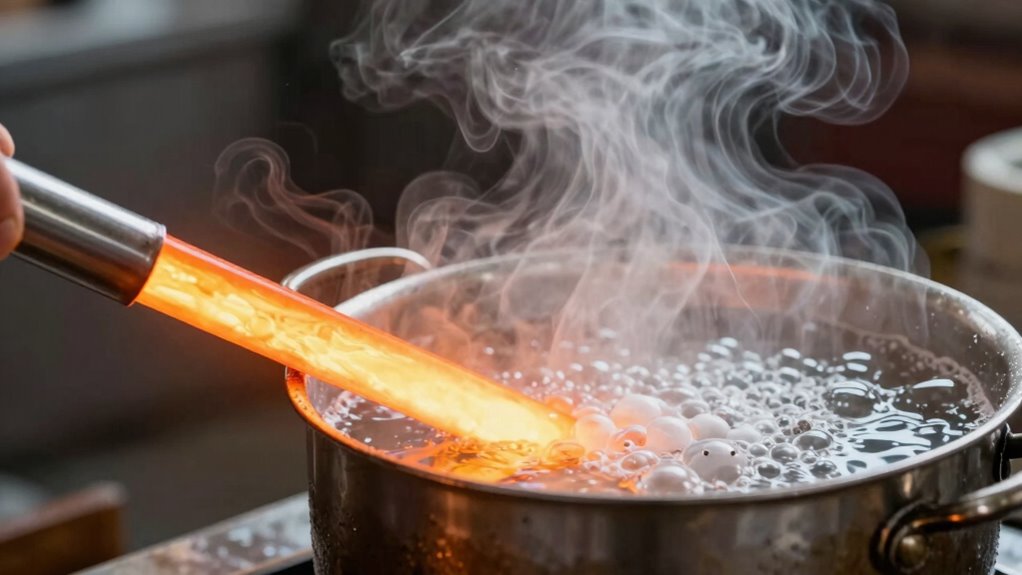

Endothermic changes absorb energy from their surroundings, causing a drop in temperature, like melting ice or vaporization. Exothermic changes release energy, warming the environment, such as water freezing or combustion. Recognizing these differences helps you understand natural phenomena and industrial processes. Knowing whether a process is endothermic or exothermic allows you to predict energy flow and manage reactions better. Keep exploring to discover more about how these processes impact our world.

Prime made for students and young adults
- Fast, free delivery for dorm and study essentials
- Prime Video and Amazon Music included
- Member-only deals
Key Takeaways
- Endothermic changes absorb energy from surroundings; exothermic changes release energy into surroundings.
- During endothermic processes, the system gains heat, causing surrounding temperature to drop; exothermic processes heat the surroundings.
- Melting, vaporization, and sublimation are examples of endothermic changes, while freezing, condensation, and combustion are exothermic.
- Recognizing energy flow helps understand phase transitions and chemical reactions’ nature.
- Managing heat transfer is essential in industrial processes and understanding natural phenomena.
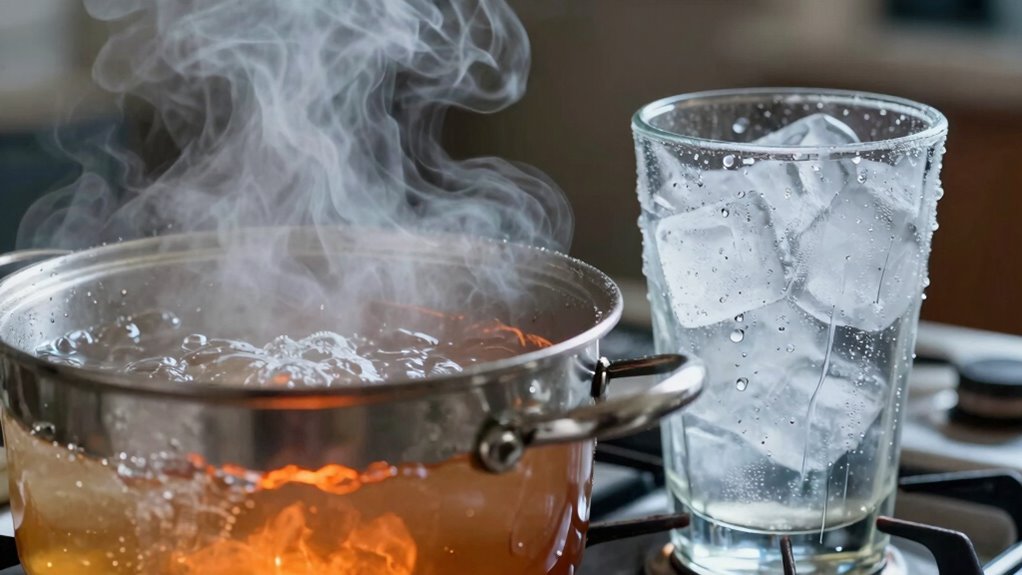
Understanding the difference between endothermic and exothermic changes is essential because these processes describe how energy is exchanged during chemical and physical transformations. When you observe a change in a substance, recognizing whether energy is absorbed or released helps you understand the underlying process. These changes often involve phase transitions, where matter shifts from one state to another, and energy transfer plays a key role in driving those transitions.
In an endothermic change, you’re dealing with a process that absorbs energy from the surroundings. Think about melting ice—when ice turns into water, it requires heat to break the bonds holding the solid structure together. This energy transfer doesn’t just heat the substance; it actively facilitates the phase transition. As you watch this happen, you’ll notice the temperature of the surroundings drops slightly, because energy is flowing into the ice. Endothermic processes are common in many physical changes, like vaporization, sublimation, and even certain chemical reactions that require energy input to proceed. Recognizing these energy exchanges is crucial for understanding phase transitions, which involve significant energy considerations.
Conversely, exothermic changes involve the release of energy into the environment. When you see a fire burning or ice forming from water vapor, energy is being released. For example, when water freezes into ice, it releases heat as the molecules settle into a more ordered, lower-energy state. This energy transfer heats the surroundings, which is why you might feel warmth near a fire or notice a temperature rise during condensation. These exothermic reactions are often spontaneous because they lead to a more stable, lower-energy state. Many chemical reactions, like combustion or oxidation, are exothermic, releasing energy as a byproduct. Understanding these processes in detail can help in industrial applications, where managing heat transfer is crucial.
Understanding these differences helps you interpret everyday phenomena and laboratory processes more accurately. For instance, knowing that melting requires energy input explains why ice melts when heated, while understanding that condensation releases heat clarifies why water droplets form on a cold glass. Recognizing whether a phase transition is endothermic or exothermic also helps in designing safer and more efficient systems. Recognizing how energy transfer influences these processes enhances your understanding of both natural phenomena and engineered systems, leading to more effective control and application of chemical and physical changes. This understanding enables you to predict, control, and apply these processes across various scientific and practical contexts.
As an affiliate, we earn on qualifying purchases.
Frequently Asked Questions
How Do Endothermic and Exothermic Reactions Affect Environmental Processes?
You can see that endothermic and exothermic reactions impact environmental processes through energy transfer. Endothermic reactions absorb heat, often cooling surroundings, which can influence climate patterns or ecosystems. Conversely, exothermic reactions release heat, contributing to warming and affecting thermal balances. Understanding these reactions helps you grasp their environmental impact, such as in natural weather cycles or industrial activities, guiding more sustainable practices to minimize negative effects on the environment.
Can a Reaction Be Both Endothermic and Exothermic at Different Stages?
Yes, a reaction can be both endothermic and exothermic at different stages. During the reaction phase, energy flow shifts—sometimes absorbing heat, other times releasing it. This dual nature adds complexity, revealing that reactions are not always straightforward. As the process unfolds, you witness a fascinating interplay of energy changes, emphasizing that reactions can evolve from absorbing to releasing energy, or vice versa, in a dynamic, ongoing dance.
What Are Common Everyday Examples of Endothermic and Exothermic Changes?
You see common endothermic examples during phase shifts like melting ice, where energy absorption causes solid to turn into liquid, and boiling water turning into vapor. Exothermic changes happen when you freeze water into ice, releasing energy. In everyday life, cooking processes like baking, or combustion reactions, release energy, while melting or evaporation absorb energy. Recognizing these changes helps you understand energy flow in daily activities.
How Do Temperature Changes Influence These Reactions?
Temperature changes directly influence these reactions through heat transfer. When temperature rises, endothermic reactions absorb heat, making them progress faster as they seek to balance the heat influx. Conversely, exothermic reactions release heat, so higher temperatures can slow them down or shift their equilibrium. You can see this in temperature regulation, where controlling heat transfer helps manage reaction rates, ensuring processes happen safely and efficiently.
Are There Industrial Applications Relying Specifically on Endothermic or Exothermic Processes?
You might be surprised to learn that many industries depend on endothermic or exothermic processes for efficiency. For instance, chemical manufacturing uses industrial catalysts to control exothermic reactions, releasing heat safely. Conversely, endothermic reactions like melting or absorption require energy input, aiding in energy management. Recognizing these processes helps optimize production, reduce costs, and improve safety across sectors like energy, pharmaceuticals, and materials engineering.
thermal conductivity experiment kits
As an affiliate, we earn on qualifying purchases.
As an affiliate, we earn on qualifying purchases.
Conclusion
Understanding the difference between endothermic and exothermic changes helps you grasp how energy moves in reactions. Did you know that in just one hour, the human body releases about 1,500 calories as heat during exercise? That’s a real-world example of an exothermic process. Recognizing these energy shifts allows you to predict and control reactions better, whether you’re cooking, heating, or studying chemistry. So, keep these concepts in mind—they’re everywhere around you!
chemical reaction heat transfer kits
As an affiliate, we earn on qualifying purchases.
As an affiliate, we earn on qualifying purchases.
endothermic and exothermic reaction models
As an affiliate, we earn on qualifying purchases.
As an affiliate, we earn on qualifying purchases.
Halloween Picks
halloween
As an affiliate, we earn on qualifying purchases.