
Caffeine’s molecular structure resembles adenosine, allowing it to block its receptors in your brain. This prevents calming signals and increases neuronal activity, boosting alertness and focus. Its lipophilic nature helps it cross the blood-brain barrier quickly, intensifying its effects. By increasing dopamine and norepinephrine release, caffeine enhances mood and reduces fatigue. To discover more about how its chemistry influences your energy levels, keep exploring these fascinating mechanisms.
Key Takeaways
- Caffeine’s molecular structure mimics adenosine, enabling it to bind to and block adenosine receptors in the brain.
- Its planar, aromatic design allows it to cross the blood-brain barrier quickly.
- By antagonizing adenosine receptors (A1 and A2A), caffeine increases neuronal activity and neurotransmitter release.
- This receptor blockade leads to heightened alertness, improved focus, and mood enhancement.
- Caffeine’s chemical properties facilitate its stimulating effects by disrupting calming signals in the nervous system.
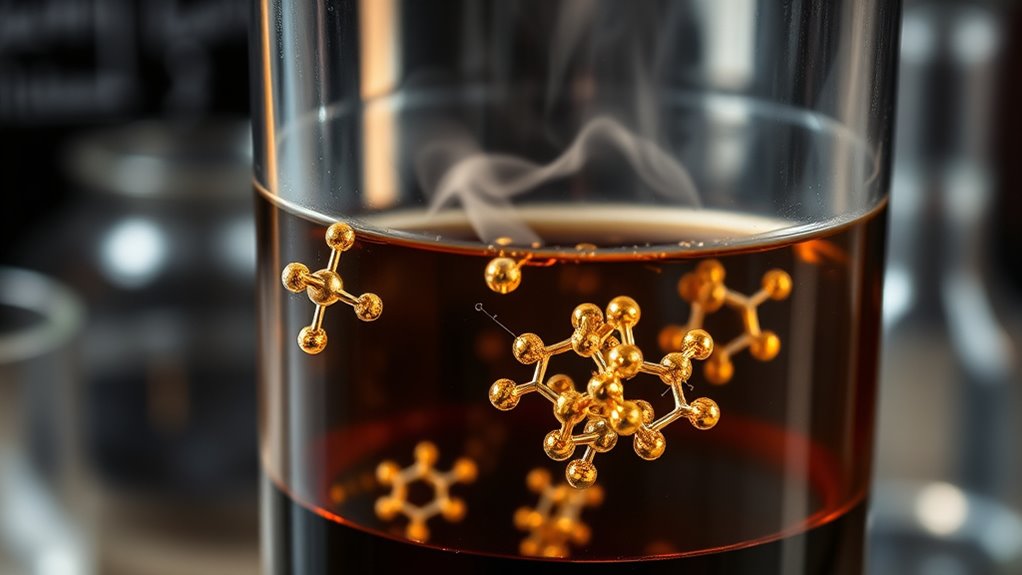
Have you ever wondered what makes caffeine such a powerful stimulant? It all comes down to its unique chemistry, particularly its molecular structure and how it interacts with your brain. Caffeine’s molecular structure resembles that of adenosine, a neurotransmitter that promotes relaxation and sleepiness. This similarity allows caffeine to bind to adenosine receptors in your brain, blocking their activation. When these receptors are occupied by caffeine instead of adenosine, your brain perceives less of the calming signal, leading to increased alertness and wakefulness. This receptor interaction is central to caffeine’s stimulating effects. The molecular structure of caffeine is quite clever. It’s a xanthine alkaloid, with a complex arrangement of carbon, hydrogen, nitrogen, and oxygen atoms forming a planar, aromatic ring system. This structure makes it lipophilic, meaning it easily crosses cell membranes, including the blood-brain barrier. Once inside your brain, caffeine quickly interacts with adenosine receptors, particularly A1 and A2A subtypes. By competitively binding to these receptors, caffeine effectively prevents adenosine from activating them. This blockade disrupts the usual calming effects adenosine has, resulting in heightened neuronal activity and the release of neurotransmitters like dopamine and norepinephrine. These chemicals boost your alertness, improve mood, and increase focus, which is why many reach for their coffee or tea during moments of fatigue.
Your body’s response to caffeine also depends on how these receptor interactions influence other signaling pathways. For example, blocking adenosine receptors can lead to increased adrenaline production, giving you that typical “jitters” or energy surge. The molecular structure of caffeine is designed perfectly for this receptor interaction—its shape mimics adenosine just enough to fit into the receptor’s binding site but not activate it, therefore acting as an antagonist. This precise fit and the resulting receptor blockade are what make caffeine so effective as a stimulant.
Frequently Asked Questions
How Does Caffeine Affect Sleep Quality?
Caffeine can substantially affect your sleep quality by causing sleep disruption and leading to restless nights. When you consume caffeine, it blocks adenosine receptors, making it harder to fall asleep and stay asleep. Even if you do manage to sleep, the quality might be compromised, leaving you tired and unrefreshed. To avoid these effects, limit caffeine intake, especially in the late afternoon and evening.
Can Caffeine Dependence Develop Over Time?
Yes, you can develop caffeine dependence over time. As you consume caffeine regularly, your tolerance buildup reduces its effects, prompting you to drink more. If you suddenly stop, you might experience withdrawal symptoms like headaches, fatigue, and irritability. This dependence happens because your body gets used to caffeine’s presence, making it harder to function without it. Being aware of these signs helps you manage your intake better.
What Are the Long-Term Health Impacts of Caffeine?
Long-term caffeine consumption can impact your health, leading to issues like caffeine withdrawal symptoms if you suddenly stop. It may also affect your bone health by reducing calcium absorption, increasing fracture risk. While moderate intake is generally safe, excessive consumption might cause sleep disturbances and increased heart rate. Be mindful of your caffeine habits, and consider how they might influence your overall well-being over time.
How Does Caffeine Interact With Medications?
You might think caffeine doesn’t affect medications, but it does. Caffeine interacts with drugs through metabolic pathways, altering how your body processes certain medicines. These drug interactions can increase side effects or reduce drug efficacy. Always check with your healthcare provider before combining caffeine with medications, especially if they involve stimulants or have narrow therapeutic windows. Recognizing these interactions helps make sure your treatments work safely and effectively.
Are There Genetic Factors Influencing Caffeine Metabolism?
Yes, genetic variations influence how you metabolize caffeine, causing metabolic differences among individuals. These genetic factors affect enzymes like CYP1A2, which play a key role in caffeine breakdown. If you have certain genetic variants, you might process caffeine faster or slower, impacting your sensitivity and how long caffeine stays in your system. Understanding these genetic differences can help you manage your caffeine intake better and avoid unwanted effects.
Conclusion
As you sip your coffee, imagine the tiny caffeine molecules dancing through your bloodstream, awakening your senses like a burst of sunlight on a sleepy morning. Their chemistry ignites a spark in your brain, clearing fog and sparking alertness. With each sip, you invite this lively energy to flow through you, turning sluggish moments into vibrant clarity. Caffeine’s magic is in its lively dance, awakening your mind and fueling your day with every invigorating drop.