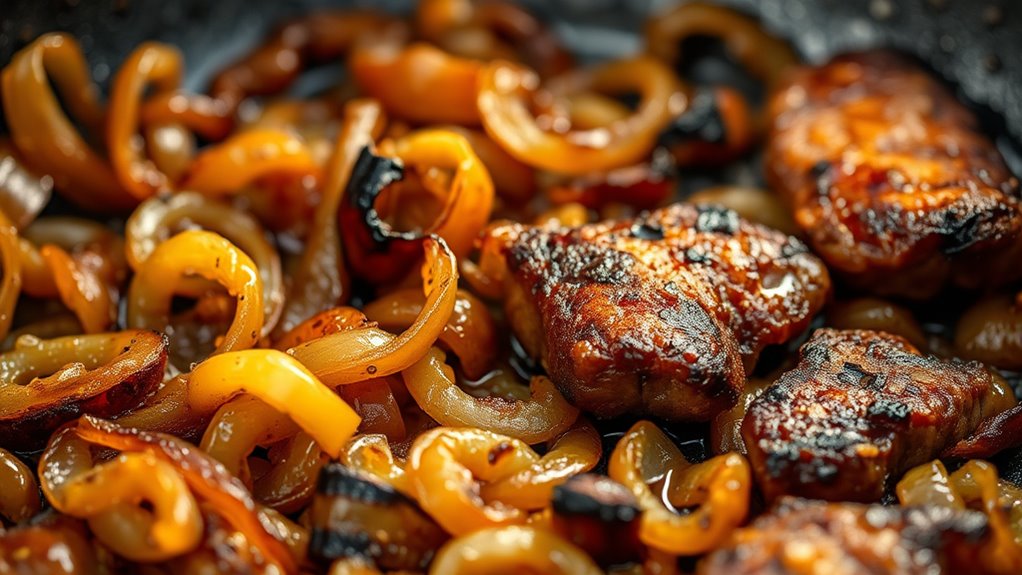

When you cook, heat triggers chemical reactions like the Maillard reaction and caramelization that develop flavors and color. The Maillard reaction occurs between amino acids and sugars at around 140°C, creating savory, browned notes in meats and bread. Caramelization happens when sugars break down at about 160°C, producing deep colors and nutty aromas. Controlling temperature and timing is key to achieving perfect browning and complex flavors — there’s more to uncover about these fascinating transformations.
Key Takeaways
- Browning reactions like Maillard and caramelization involve complex chemical processes that develop flavors and colors in cooked foods.
- The Maillard reaction occurs between amino acids and sugars at around 140°C, producing savory flavors and browned appearances.
- Caramelization is the thermal breakdown of sugars at approximately 160°C, resulting in deep color and nutty aromas.
- Temperature control is crucial to optimize flavor development while preventing burning and bitterness.
- Understanding these reactions allows for better cooking techniques, enhancing taste, aroma, and visual appeal of dishes.
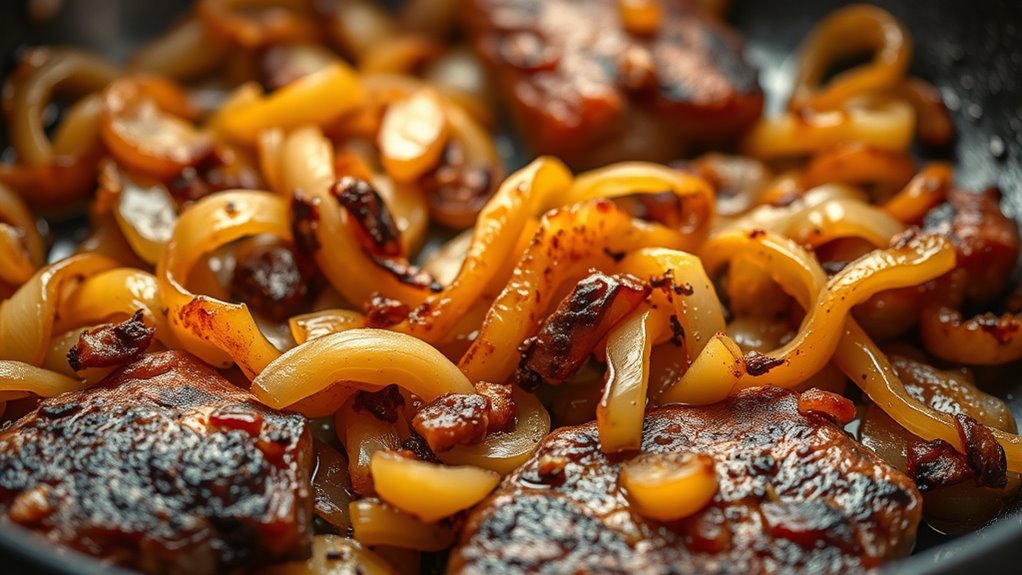
Have you ever wondered what happens on a molecular level when you cook? When heat hits your food, countless chemical reactions spring into action, transforming raw ingredients into flavorful, aromatic dishes. Two of the most important processes behind browning and flavor development are the Maillard reaction and caramelization. Understanding these mechanisms helps you see how simple ingredients turn into complex, delicious creations.
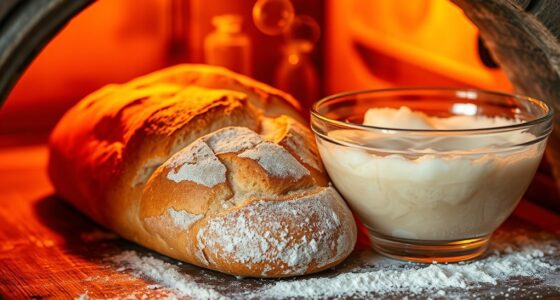
The Maillard reaction occurs when amino acids, the building blocks of proteins, react with sugars under heat. This process typically begins around 140°C (284°F) and continues as the temperature rises. As the molecules interact, they form new compounds that create the rich, savory flavors associated with roasted meats, toasted bread, and browned vegetables. This reaction is responsible for the appealing color change from raw to golden or deep brown, giving your food that appetizing appearance. It’s what makes a perfectly seared steak so flavorful and a loaf of bread so inviting.
Caramelization, on the other hand, involves the thermal decomposition of sugars. When you heat sugar beyond its melting point—around 160°C (320°F)—it begins to break down into smaller molecules, producing a range of new compounds. These compounds give caramel its characteristic deep amber color and distinctive sweet, nutty aroma. Caramelization is vital for creating sauces, candies, and desserts, as it adds depth and complexity to their flavor profiles. Unlike the Maillard reaction, caramelization doesn’t require amino acids; it’s solely a sugar transformation driven by heat.
Both reactions are highly dependent on temperature and time. Applying too much heat too quickly can cause burning, resulting in bitter flavors and unpleasant textures. Conversely, carefully controlling the heat allows these reactions to develop fully, revealing the complex flavors that make your dishes memorable. For instance, slow browning of onions through caramelization brings out their sweetness, while a well-seared piece of meat benefits from the Maillard reaction’s savory notes.
Knowing how these reactions work empowers you to cook with purpose. Whether you’re browning onions, roasting vegetables, or making caramel candies, understanding when and how these chemical processes occur helps you optimize flavor and appearance. By controlling temperature and timing, you can elevate your cooking from good to extraordinary, creating dishes that are not only visually appealing but also rich in depth and aroma. These molecular transformations are the secret behind the irresistible tastes and aromas we associate with well-cooked food, turning everyday ingredients into culinary delights. Additionally, proper baking temperature management ensures these reactions occur optimally without burning, highlighting the importance of precise heat control in cooking.
Frequently Asked Questions
How Does Altitude Affect Browning Reactions During Cooking?
Altitude effects can slow down browning reactions because the lower oxygen levels at higher elevations reduce the oxidation process needed for browning. As you cook at high altitudes, you might notice less color development and flavor complexity in your food. To compensate, you can increase cooking temperature or extend cooking time, helping to promote browning despite the reduced oxygen levels that influence these reactions.
Can Different Types of Sugars Influence Flavor Development in Browning?
Different sugar types markedly influence flavor development during browning. For example, glucose adds a subtle sweetness, while fructose can produce more intense caramel notes. Sucrose, common table sugar, creates a balanced flavor profile with rich caramel hues. Using various sugars allows you to tweak the flavor profiles of your dishes, enhancing caramel, nutty, or toasted flavors, depending on the sugar you choose.
What Role Do Enzymes Play in Early Stages of Browning?
Enzymes play a vital role in the early stages of browning by speeding up enzyme activity, which initiates browning reactions like enzymatic browning. When you cut or damage produce, enzymes such as polyphenol oxidase become active, leading to browning initiation. This process starts quickly, creating flavor and color changes before heat causes non-enzymatic browning. Your control over enzyme activity can influence how quickly and intensely browning occurs.
How Do Cooking Vessels Impact the Chemistry of Browning?
Your choice of cooking vessel material and its heat distribution substantially impact the chemistry of browning. For example, cast iron conducts heat evenly, promoting consistent Maillard reactions and flavor development. Non-stick pans may limit browning due to uneven heat, while copper or stainless steel vessels offer precise temperature control. By selecting the right vessel, you control how heat interacts with food, enhancing browning and flavor formation during cooking.
Are There Health Considerations Related to Browning Reactions?
Think of browning reactions as a double-edged sword. While they enhance flavor, you should be cautious. Excessive browning can lead to dietary risks, as it may produce carcinogenic compounds like acrylamide. To stay safe, avoid overcooking or burning foods, and maintain a balanced diet. This way, you enjoy richer flavors without risking your health from harmful chemicals formed during high-temperature browning.
Conclusion
Now that you know the science behind browning and flavor formation, you can confidently craft delicious dishes. By understanding the chemistry of cooking, you can control caramelization and Maillard reactions to master marvelous meals. Remember, a little knowledge adds a lot of flavor, so don’t shy away from experimenting. With this understanding, you’re equipped to elevate every eating experience, ensuring your culinary creations consistently impress and inspire. Happy cooking!