
Understanding the science behind cleaning agents reveals how soaps and detergents work differently. Soaps are natural, made from fats and alkaline substances, and work well in soft water but struggle with minerals in hard water. Detergents are synthetic and engineered to clean effectively in various water conditions, including hard water. They’re often more powerful but may contain chemicals that impact skin and the environment. Keep exploring to discover how these differences affect effectiveness and sustainability.
Key Takeaways
- Soaps are natural, biodegradable agents made from fats and alkaline substances, while detergents are synthetic and often derived from petrochemicals.
- Detergents are formulated to perform effectively in hard water, unlike soaps, which can react with minerals in water.
- Soaps generally have a lower environmental impact due to their natural composition and biodegradability compared to many synthetic detergents.
- Detergents can contain non-biodegradable surfactants and phosphates, potentially causing water pollution, whereas soaps decompose more easily.
- Skin safety varies; soaps are usually gentler, but synthetic detergents may cause irritation, influencing user choice based on skin sensitivity.
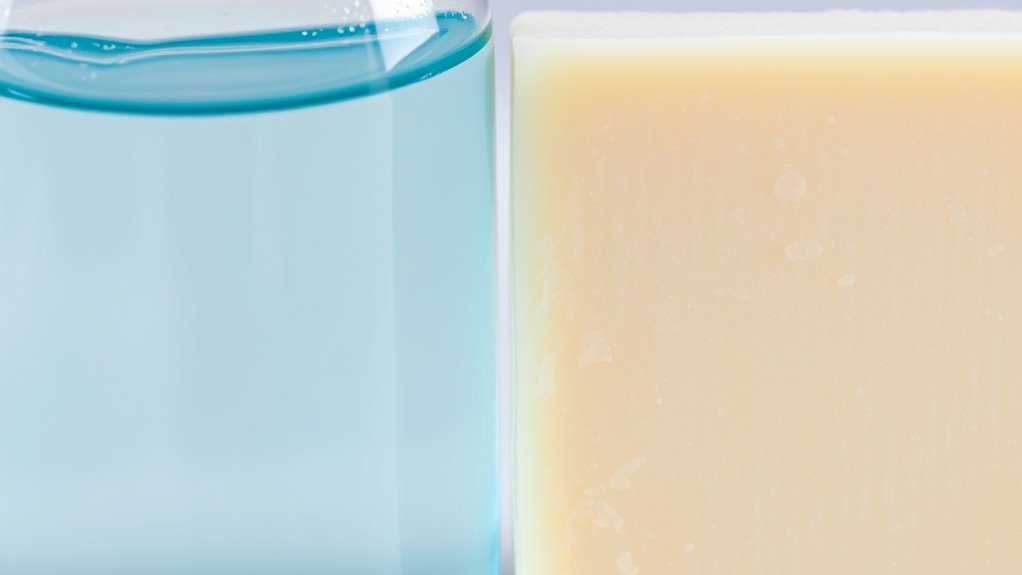
When it comes to cleaning your clothes and surfaces, understanding the difference between detergents and soaps can make a big difference in how effective your cleaning is. Both serve the purpose of removing dirt and oils, but their chemical makeup and environmental impact set them apart. Soaps are naturally derived, typically made from fats or oils combined with an alkaline substance like lye. Their chemical composition revolves around soap molecules, which have a hydrophobic tail that bonds with grease and a hydrophilic head that interacts with water. This structure allows soaps to emulsify oils and dirt, lifting them away from surfaces. However, soaps can sometimes be less effective in hard water, as minerals like calcium and magnesium react with soap molecules, forming insoluble scum.
Detergents, on the other hand, are synthetic cleaning agents crafted from petrochemicals or oleochemicals. Their chemical composition is more complex, often involving surfactants that are specially formulated to work across a wider range of water conditions, including hard water. Because of their engineered nature, detergents tend to be more powerful and versatile than soaps. Yet, this synthetic design raises concerns about biodegradability issues. Many detergents contain phosphates or non-biodegradable surfactants, which can persist in the environment, leading to water pollution and harming aquatic life. That’s why eco-friendly detergents are developed with biodegradable ingredients to mitigate these environmental impacts. Additionally, the choice between soaps and detergents can also influence the skin safety of users, especially those with sensitive skin or allergies.
Understanding these differences helps you make more informed choices, especially when weighing environmental factors. Soaps are generally more biodegradable due to their natural origins, breaking down more easily after disposal. Detergents with synthetic components, particularly those with complex surfactants, may take longer to decompose, contributing to pollution if not formulated responsibly. When selecting a cleaning agent, it’s essential to consider both its chemical composition and its biodegradability profile. Opting for biodegradable detergents can considerably reduce environmental harm, aligning your cleaning habits with sustainability goals. Additionally, being aware of the chemical makeup of your cleaning products helps you avoid potential skin irritations or allergic reactions caused by harsh chemicals.
Frequently Asked Questions
Are Natural Soaps Always Better Than Synthetic Detergents?
No, natural soaps aren’t always better than synthetic detergents. While they’re biodegradable and made from natural ingredients, their chemical composition can vary, and some may still cause biodegradability concerns. Synthetic detergents often contain surfactants designed to be effective in hard water and at lower temperatures, but they may have environmental impacts. You should consider both the biodegradability and chemical makeup when choosing the best option for your cleaning needs.
How Do Enzymes Enhance Cleaning Effectiveness?
Enzymes boost cleaning effectiveness by increasing enzyme activity, which helps break down proteins, fats, and carbohydrates more efficiently. When you use a product with enzymes, they target specific stains like food or grass, speeding up protein breakdown. This makes cleaning easier and more thorough, especially on stubborn spots. By actively breaking down complex molecules, enzymes guarantee your cleaning agents work faster and more effectively, leaving your surfaces spotless.
Can Detergents Cause Skin Allergies or Irritation?
Imagine a tiny battlefield on your skin—detergents can sometimes be the invaders causing chemical sensitivities or allergy triggers. Yes, detergents can cause skin allergies or irritation, especially if you’re sensitive or have pre-existing conditions. They contain chemicals that may irritate your skin or trigger allergic reactions. To stay safe, use gloves or opt for hypoallergenic options, and always rinse thoroughly to protect your skin’s delicate balance.
What Environmental Impacts Do Detergents Have Compared to Soaps?
Detergents often have a lower biodegradability comparison to soaps, meaning they take longer to break down in the environment. This can lead to increased chemical runoff effects, harming aquatic life and water quality. Soaps, made from natural ingredients, generally biodegrade faster and cause less environmental damage. You should consider choosing biodegradable soaps to reduce your ecological footprint and minimize pollution from cleaning products.
Are There Specific Cleaning Agents for Delicate Fabrics?
Imagine your delicate fabrics as fragile butterflies. You need gentle care to keep them vibrant. You should choose specific fabric care cleaning agents designed for delicate fabrics, which prioritize stain removal without damaging fibers. These specialized products often contain milder surfactants, ensuring your garments stay soft and intact. Using the right cleaning agents helps prevent damage, preserving the beauty and longevity of your delicate fabrics while effectively removing stains.
Conclusion
Now that you understand the differences, you can choose wisely. Whether you opt for the gentle touch of soap or the powerful action of detergent, remember each has its purpose. Soap cleans with natural simplicity, while detergent tackles tough stains with science. Both work to refresh and renew, to lift grime and restore shine. So, pick what suits your needs, and let your cleaning routine be a dance of effectiveness and care—clean, fresh, and confident.