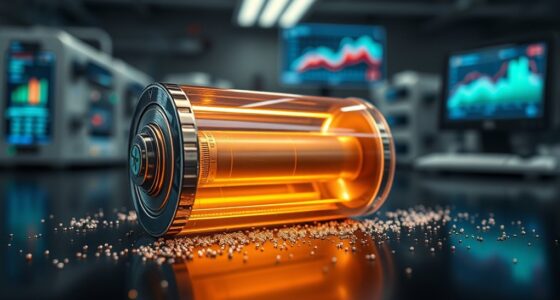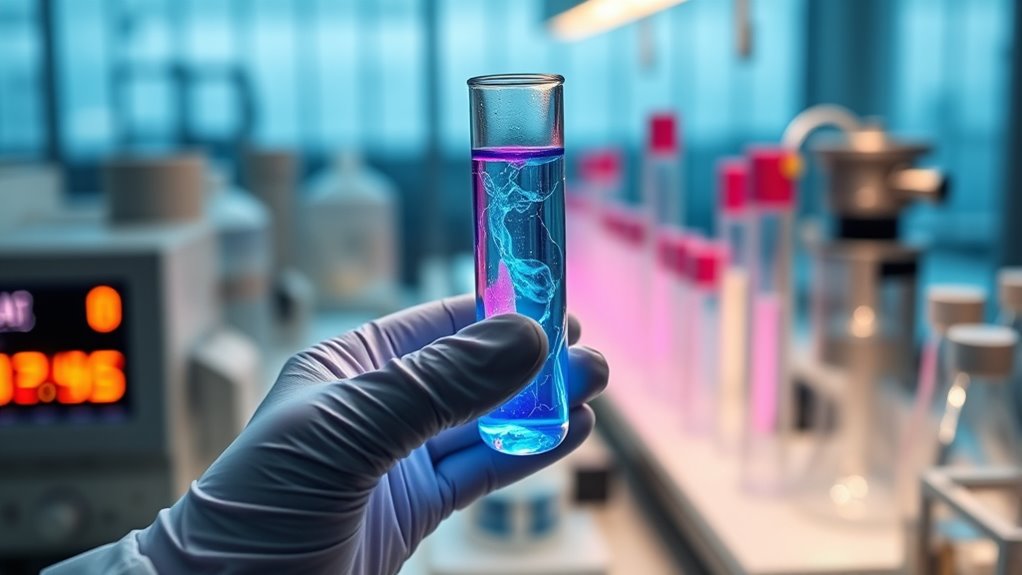

Innovative rocket fuel compounds with high energy density include green propellants like LMP-103S, advanced hydrolox formulations, and novel chemical reactions designed for safer and more efficient propulsion. These fuels aim to reduce toxic emissions while providing the power needed for deep-space missions. Researchers are exploring bio-derived and environmentally friendly options that balance energy output with safety. If you want to discover the latest breakthroughs and future possibilities, keep exploring how these new compounds are shaping space travel.
Key Takeaways
- Research focuses on energetic compounds like hypergolic ionic liquids and metal-organic frameworks with high energy content.
- Novel fuels such as hydrazine alternatives and energetic salts offer increased energy density and improved safety profiles.
- Metal-based fuels, including aluminum or boron powders, are combined with oxidizers for higher specific impulse.
- Exploration of bio-derived and environmentally friendly high-energy compounds aims to reduce toxicity while maintaining performance.
- Advanced formulations leverage nanostructured materials and novel chemical bonds to maximize energy density and stability.

Have you ever wondered what powers a rocket beyond Earth’s atmosphere? It’s the fuel that provides the necessary energy to propel spacecraft into space, pushing the boundaries of exploration. Traditionally, chemical propellants like liquid hydrogen and kerosene have been used because of their high energy density. But with increasing concerns about environmental impact and the quest for more efficient space travel, scientists are exploring novel rocket fuel compounds that offer high energy density while also considering alternative propulsion methods and environmentally friendly propellants. These innovations aim to make space missions safer, more sustainable, and more cost-effective.
Exploring innovative rocket fuels for safer, greener, and more efficient space exploration.
One promising area involves alternative propulsion methods that go beyond traditional chemical rockets. Electric propulsion systems, such as ion thrusters and Hall-effect thrusters, utilize electricity—often generated by solar panels—to accelerate ions or plasma. These systems consume less fuel overall but produce continuous, low-thrust acceleration. The key to their success lies in developing high-energy-density propellants that can be efficiently ionized and accelerated. Researchers are investigating compounds like xenon and newer, more environmentally friendly options such as krypton or even solid-state propellants that can be ionized efficiently. These alternative methods reduce the reliance on massive fuel tanks, making spacecraft lighter and more maneuverable.
When it comes to environmentally friendly propellants, the focus is on reducing toxic emissions and greenhouse gases associated with traditional rocket fuels. For example, hydrazine—a common but highly toxic propellant—is being phased out in favor of less hazardous options. Green propellants like LMP-103S, a liquid monopropellant, or hydrolox (hydrogen and oxygen) with cleaner combustion profiles are gaining attention. These compounds not only lower environmental impact but also enhance safety during handling and storage. Additionally, researchers are exploring new formulations based on bio-derived fuels or compounds that decompose into environmentally benign products after burn, helping to minimize space debris and atmospheric pollution.
Furthermore, innovations in fuel formulation are exploring the use of novel materials and chemical reactions to maximize energy output while maintaining safety and stability. Combining these efforts, scientists are working toward fuels that deliver high energy density while supporting alternative propulsion methods and being environmentally friendly. These fuels could revolutionize space travel by enabling longer missions, reducing launch costs, and decreasing ecological footprints. The challenge lies in balancing energy content, stability, and safety, but ongoing research promises a future where space exploration is more sustainable and efficient. As you follow these developments, it becomes clear that the evolution of rocket fuel compounds isn’t just about pushing the limits of energy but also about caring for our planet while reaching for the stars.
![[2-Pack] Reusable Ethanol Testing Kit - Wide Mouth Fuel Test Bottle for E85 and Ethanol Levels - Fewer Spills and Clear Results in Minutes - Test Hundreds of Times - Two Ethanol Test Bottles Included](https://m.media-amazon.com/images/I/51n+oPbsvaL._SL500_.jpg)
[2-Pack] Reusable Ethanol Testing Kit – Wide Mouth Fuel Test Bottle for E85 and Ethanol Levels – Fewer Spills and Clear Results in Minutes – Test Hundreds of Times – Two Ethanol Test Bottles Included
Wide Mouth Design for Fewer Spills: Designed specifically with a wide mouth to easily pour gasoline and water…
As an affiliate, we earn on qualifying purchases.
As an affiliate, we earn on qualifying purchases.
Frequently Asked Questions
What Are the Environmental Impacts of These New Rocket Fuels?
You should consider that these new rocket fuels may lower some environmental risks during launches, but they could also pose ecosystem effects if spills or leaks occur. Their high energy density might lead to less fuel needed per launch, reducing emissions. However, the production and disposal of these compounds might introduce new environmental impacts, so it’s essential to carefully evaluate their overall safety and long-term effects on ecosystems before widespread adoption.
How Are These Compounds Synthesized at Scale?
You need to overcome scaling challenges by optimizing manufacturing processes for these novel rocket fuel compounds. Typically, you start with laboratory synthesis, then gradually increase production while maintaining safety and purity standards. This involves automating reactions, ensuring consistent quality, and managing raw material supply. By refining these steps, you can efficiently produce high-energy-density fuels at scale, making them viable for practical aerospace applications.
What Safety Precautions Are Necessary for Handling High-Energy Fuels?
Handling high-energy fuels is like walking a tightrope over a volcano—you must respect their power. Always follow strict handling protocols, wear protective gear, and work in well-ventilated areas. Be aware of storage hazards, keeping fuels in secure, clearly labeled containers away from heat or ignition sources. Proper training and safety measures guarantee you prevent accidents and safely harness these potent compounds’ energy without risking disaster.
How Do These Fuels Compare Cost-Wise to Traditional Options?
You’ll find that novel rocket fuels with high energy density tend to be more expensive than traditional options initially. The cost analysis shows higher manufacturing costs due to specialized materials and complex production processes. However, these fuels can offer better performance, potentially reducing overall mission costs over time. While upfront expenses are higher, their efficiency and energy benefits might offset costs, making them a worthwhile investment for advanced space missions.
Are There Any Regulatory Hurdles for Deploying These Fuels Commercially?
You’ll face regulatory approval and licensing procedures when deploying these fuels commercially. Authorities may impose strict safety and environmental standards, requiring thorough testing and documentation. Managing these regulations can be complex, involving multiple agencies and lengthy approval processes. Staying informed about current regulations and working closely with regulators helps streamline licensing. While challenging, obtaining proper approval ensures safe, compliant deployment of innovative rocket fuels.

Kinetics, Energetics and Infrared Lasing in High Energy Rocket Propellant Ingredients at Cryogenic Temperatures
As an affiliate, we earn on qualifying purchases.
As an affiliate, we earn on qualifying purchases.
Conclusion
So, after all this talk about groundbreaking rocket fuels, you might think we’ve unlocked limitless power. Ironically, despite these new high-energy compounds promising to propel us further and faster, they remind us that even the most advanced formulas can’t escape the fundamental challenge: safety and control. As you marvel at these innovations, remember that sometimes, the best fuel isn’t the one with the highest energy density but the one we handle with the most caution.

The Rocket Mass Heater Builder's Guide: Complete Step-by-Step Construction, Maintenance and Troubleshooting
As an affiliate, we earn on qualifying purchases.
As an affiliate, we earn on qualifying purchases.

Fundamentals of Electric Propulsion, Second Edition
As an affiliate, we earn on qualifying purchases.
As an affiliate, we earn on qualifying purchases.