
TL;DR
Recent studies confirm that jellyfish can rapidly heal wounds within minutes. Researchers are investigating their biological processes to develop new regenerative therapies. The discovery could impact medicine, but many details remain uncertain.
New research confirms that certain jellyfish species can heal their wounds within minutes. This discovery has attracted the attention of scientists seeking to understand the biological mechanisms behind this rapid healing, which could lead to advances in regenerative medicine.
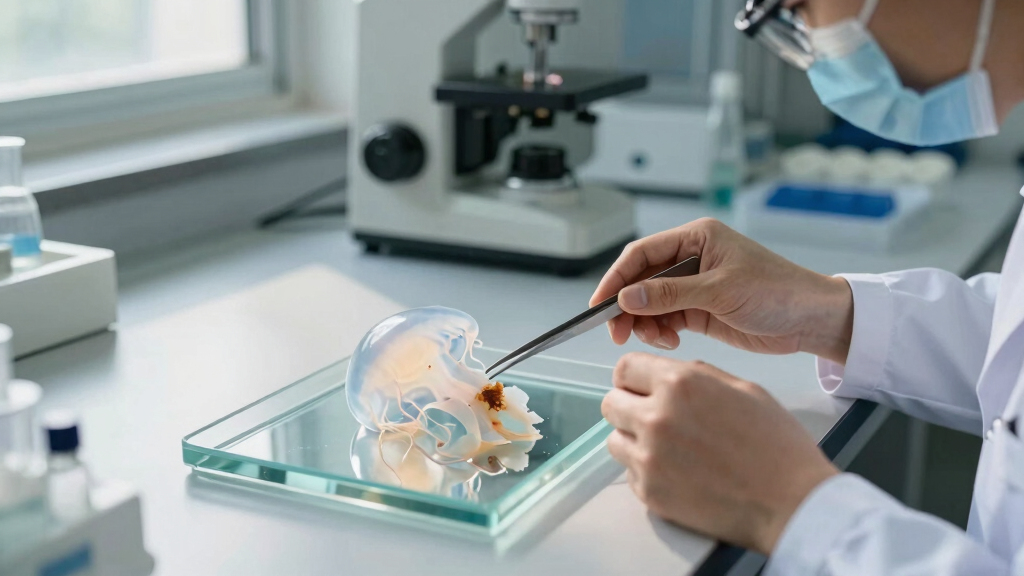
Scientists from multiple institutions have observed that some jellyfish, such as Aurelia aurita, can close and repair injuries remarkably quickly—within a few minutes after damage. These findings are based on controlled laboratory experiments where researchers inflicted minor wounds and monitored the healing process using high-resolution imaging.
While the precise biological pathways remain under investigation, preliminary data suggest that jellyfish may utilize unique cellular responses, including rapid tissue regeneration and specialized protein activity, to achieve fast wound closure. Researchers emphasize that these mechanisms differ from typical healing processes seen in other animals, making jellyfish a promising model for regenerative research.
Experts caution that the full biological details are still being uncovered, and it is not yet clear whether these processes can be replicated or harnessed for human medicine. Nonetheless, the discovery opens new avenues for exploring biological regeneration and healing.
Potential Medical Breakthroughs from Jellyfish Healing
This discovery matters because understanding how jellyfish achieve such rapid wound healing could inform the development of new treatments for human injuries and degenerative conditions. If scientists can replicate or stimulate similar biological responses in humans, it could lead to faster recovery times, reduced scarring, and improved healing therapies.
Moreover, studying jellyfish’s unique cellular responses might reveal novel proteins or genes that can be targeted pharmacologically, potentially revolutionizing regenerative medicine. The research also underscores the importance of marine organisms as sources of biomedical innovation.

Regenerative Medicine: A Guide to Stem Cell Therapy: Revolutionizing Medicine, Restoring Hope, and Embracing the Future of Healing
As an affiliate, we earn on qualifying purchases.
As an affiliate, we earn on qualifying purchases.
Jellyfish Wound-Healing Research and Past Discoveries
Jellyfish have long fascinated scientists due to their simple body structure and remarkable regenerative abilities. Prior studies have shown that some species can regenerate tentacles and other tissues, but the speed of wound closure observed in recent experiments is unprecedented. Previous research focused mainly on their regenerative capacity over days or weeks, not minutes.
The current findings build on earlier work exploring cnidarians’ cellular responses, but the rapid healing observed now is a new development. This research aligns with broader efforts to understand biological regeneration, which has included studies of other animals like salamanders and zebrafish. The novelty here is the speed and efficiency of jellyfish wound repair, which could provide new insights into cellular mechanisms of regeneration.
Scientists emphasize that these findings are preliminary, and more research is necessary to verify the mechanisms involved and explore potential applications.
“The speed at which some jellyfish can close and heal their wounds is astonishing and suggests highly specialized cellular responses that are not yet fully understood.”
— Dr. Emily Carter, Marine Biologist

Dry Healing and Moist Healing Wound Model Kit, 8-Piece Silicone Wound Simulation Patches for Nursing Education, Wound Care Training, Patient Education and Clinical Skills Demonstration
- Healing Method Comparison: Dry and moist healing simulation patches
- Realistic Healing Stages: Displays scab, granulation, epithelialization
- Durable Silicone Material: Soft, realistic texture for repeated use
As an affiliate, we earn on qualifying purchases.
As an affiliate, we earn on qualifying purchases.
Unanswered Questions About Jellyfish Healing Mechanisms
While the rapid wound healing in jellyfish has been confirmed through laboratory observations, the exact cellular and molecular mechanisms remain unclear. Researchers are still investigating which proteins, genes, or cellular responses enable this process, and whether these can be replicated in human tissues.
It is also uncertain whether all jellyfish species possess this ability or if it is limited to specific conditions or developmental stages. Additionally, translating these findings into practical medical treatments will require extensive further research and validation.

Career as a Biomedical Equipment Technician
As an affiliate, we earn on qualifying purchases.
As an affiliate, we earn on qualifying purchases.
Next Steps in Jellyfish Regenerative Research
Scientists plan to conduct more detailed molecular analyses to identify the specific biological pathways involved in jellyfish wound healing. They aim to compare different species and conditions to determine the universality of this ability.
Further experiments will test whether the identified mechanisms can be stimulated or mimicked in mammalian cells. Researchers also intend to explore potential biomedical applications, such as developing bioengineered tissues or new wound-healing drugs based on jellyfish biology.
The research community expects to publish more comprehensive findings over the coming year, which could influence future regenerative medicine strategies.

Handbook of Marine Model Organisms in Experimental Biology: Established and Emerging
As an affiliate, we earn on qualifying purchases.
As an affiliate, we earn on qualifying purchases.
Key Questions
How quickly can jellyfish heal their wounds?
Some jellyfish species have been observed to heal wounds within a few minutes after injury, a process that is unusually fast compared to other animals.
What makes jellyfish capable of such rapid healing?
The precise biological mechanisms are still being studied, but preliminary evidence suggests they involve specialized cellular responses, proteins, and tissue regeneration pathways unique to certain jellyfish species.
Can this jellyfish healing process be used in human medicine?
It is not yet clear whether the mechanisms can be replicated or stimulated in humans. Further research is necessary to understand how this biological process could be adapted for medical use.
Are all jellyfish capable of rapid wound healing?
Current research indicates that this ability may be limited to specific species or conditions, and more studies are needed to determine its prevalence across different jellyfish types.
What are the potential applications of this research?
If scientists can harness the mechanisms behind jellyfish’s rapid healing, it could lead to new treatments for injuries, faster recovery therapies, and advances in regenerative medicine.
Source: hn