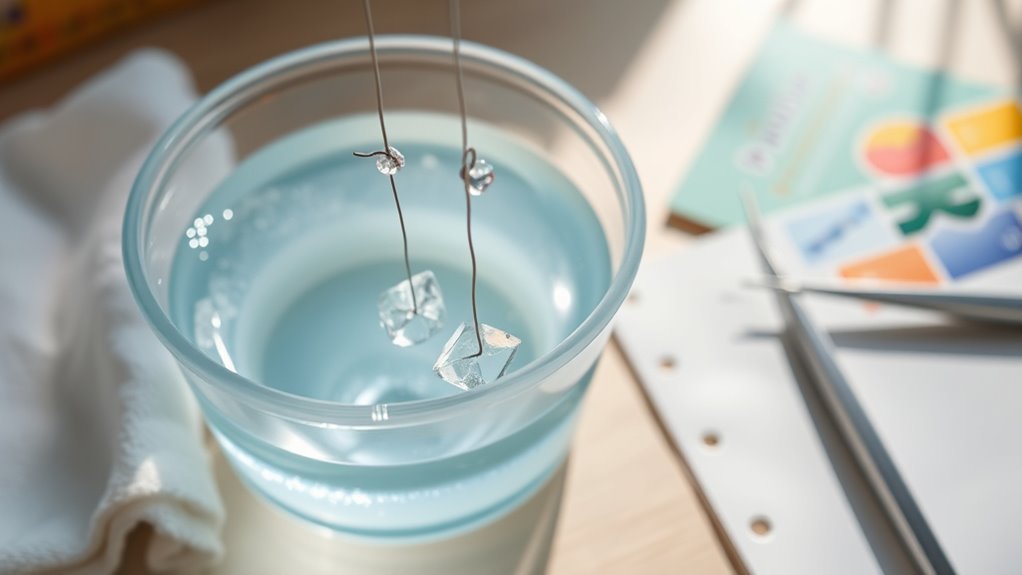

To choose a safe crystal growing kit, look for one designed for your age and skill level, with clear instructions and non-toxic chemicals like alum or salt. Always supervise children and handle all materials carefully, wearing protective gear when needed. Set up your workspace in a well-ventilated area, keep everything organized, and follow directions precisely. Staying safe guarantees a fun experience, and you’ll find helpful tips below to make your crystal growing adventure even more successful.
Key Takeaways
- Select kits with non-toxic, child-safe chemicals like alum, borax, or salt, suitable for the user’s age.
- Follow all safety instructions, including supervision, protective gear, and proper ventilation during use.
- Use sturdy, clearly labeled containers for mixing solutions and handle chemicals carefully to prevent spills or exposure.
- Dedicate a clean, organized workspace and work over trays or newspapers to catch spills during crystal growing.
- Practice patience and follow timing instructions for crystal formation to ensure safe, successful results.
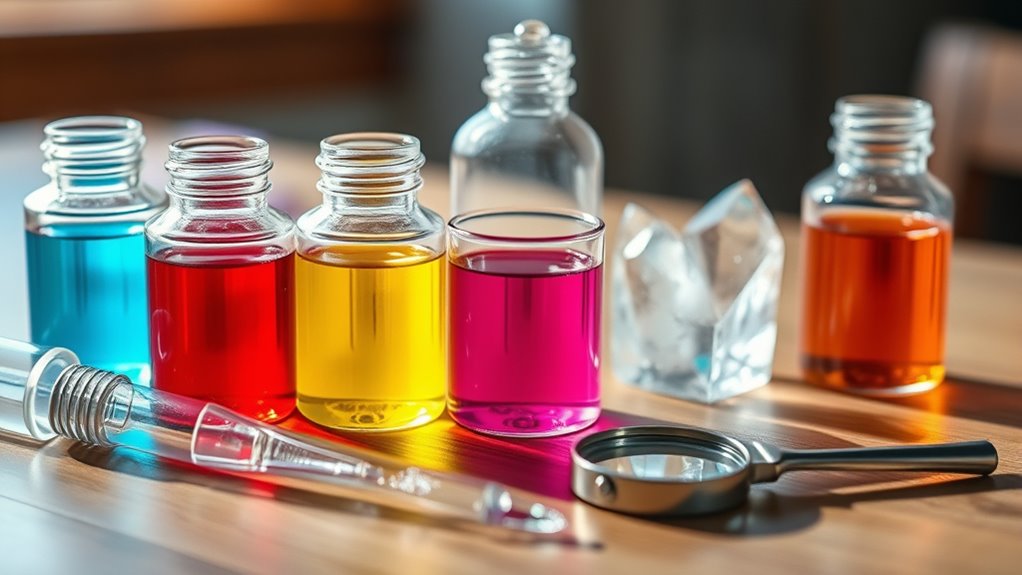
Crystal growing kits offer a fun and educational way to explore the science of crystallization right at home. Whether you’re a parent introducing children to basic chemistry or a hobbyist curious about minerals, choosing a safe and beginner-friendly kit is essential. Before diving in, it’s important to understand safety precautions to ensure a smooth and enjoyable experience. Many kits contain chemicals like alum, borax, or salt, which can be harmful if mishandled. Always read the instructions carefully, and supervise children closely during the process. Wearing protective gear, such as gloves and goggles, is a smart move to prevent accidental skin or eye contact. Keep work areas clean and well-ventilated, especially when working with powders or liquids that emit fumes or dust. Store any leftover chemicals out of reach of children and pets, and dispose of them properly once your project is complete.
As a beginner, you’ll want to follow some simple tips to make your crystal growing experience easier and safer. First, gather all your materials before starting—this prevents rushing and accidental spills. Use clear, sturdy containers that are safe for holding chemicals, and avoid using glassware that could break easily. When mixing solutions, do so slowly and carefully to prevent splashes. Always work over a tray or newspaper to catch any spills, and clean spills immediately with water and soap. Patience is key; crystals take time to grow, so follow the recommended waiting periods without rushing the process. If your kit includes heating or stirring, be cautious. Use heat sources safely, and never leave heated solutions unattended. Additionally, understanding the science of crystallization can help you better appreciate the process and troubleshoot issues if crystals do not form as expected.
Another beginner tip is to keep your workspace organized. Set aside a dedicated area for your crystal growing projects to avoid accidental knocks or contamination. Label your containers clearly if you’re working with multiple solutions or experiments. Check the kit’s age recommendations and don’t push beyond those limits—kits designed for children often contain safer, non-toxic ingredients, but adult supervision is still advised. If you encounter any issues, such as crystals not forming or solutions spilling, consult the instructions or look for online resources to troubleshoot. Remember, patience, safety, and careful handling are your best tools for successful crystal growth.
Frequently Asked Questions
Are Crystal Growing Kits Suitable for Children Under 8?
Crystal growing kits are generally not suitable for children under 8, as they require careful child supervision and involve materials that could be hazardous if mishandled. Always check the kit age recommendations before purchasing, and make certain you actively supervise your child during use. Younger children might find the process challenging or unsafe, so it’s best to wait until they’re a bit older and can follow safety instructions responsibly.
How Do I Safely Dispose of Leftover Chemicals?
To safely dispose of leftover chemicals from your crystal growing kit, you should follow proper disposal guidelines for chemical waste. Never pour chemicals down the drain or into the trash. Instead, store them in a labeled, sealed container and contact your local waste disposal authority or hazardous waste facility for guidance. This guarantees you handle chemical waste responsibly, protecting both your family and the environment.
Can I Reuse the Crystals for Future Experiments?
Ever wondered if you can reuse your crystals for future experiments? Generally, it’s best to avoid reusing crystals directly because of potential contamination. Instead, focus on crystal preservation and reuse techniques, like carefully removing crystals and storing them in a dry, safe place. While some experiments might allow reuse, most crystals lose their clarity or structure over time. So, for consistent results, growing new crystals is usually your best bet.
What Safety Gear Should I Wear During Crystal Growth?
You should wear protective eyewear and chemical gloves during crystal growth to keep yourself safe. The eyewear protects your eyes from splashes, while gloves prevent skin irritation from chemicals. Always follow the kit’s safety instructions and work in a well-ventilated area. Proper safety gear helps you enjoy the experiment without risks, ensuring a fun and safe crystal-growing experience.
Are There Allergy Risks Associated With Certain Crystals?
You should be aware that crystal allergy risks exist with certain crystals, especially if you have sensitivities. Some allergenic crystal components, like specific minerals or chemical additives, can trigger reactions such as skin irritation or respiratory issues. To stay safe, research the types of crystals you’re working with, avoid inhaling dust or fumes, and wash your hands thoroughly afterward. If you notice allergies, consult a healthcare professional before handling particular crystals.
Conclusion
Now that you know how to choose and use safe crystal growing kits, you’re all set to immerse yourself in this exciting activity. Just remember, safety always comes first—don’t cut corners or rush through the process. With patience and proper care, you’ll turn a simple kit into sparkling masterpieces. Keep in mind, Rome wasn’t built in a day, so enjoy each step and watch your crystals grow. Happy growing!