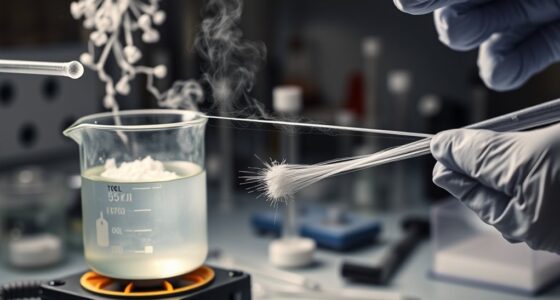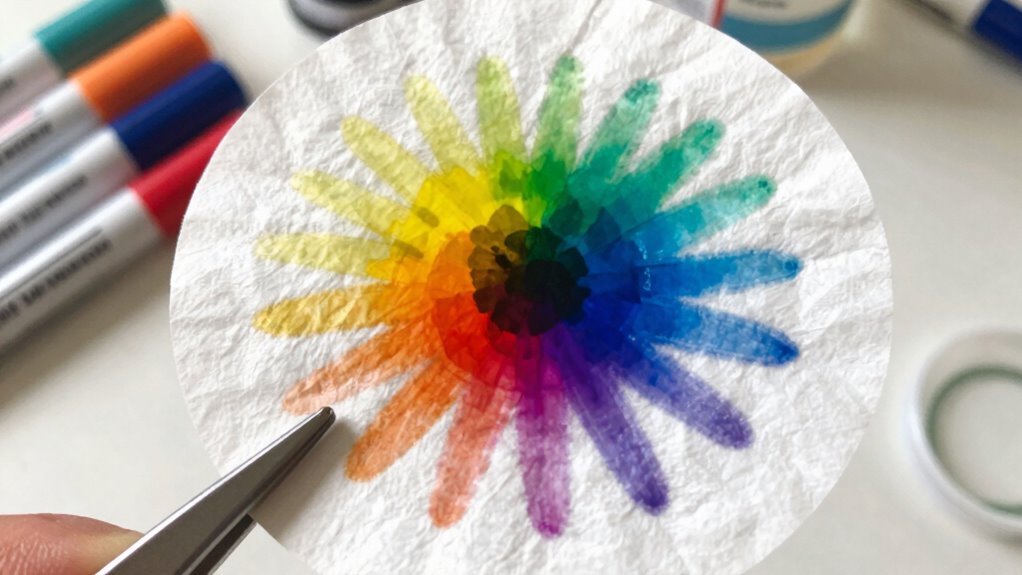

To do DIY chromatography with markers and coffee filters, cut a strip of filter paper, then draw small dots with different colored markers near the bottom. Dip the bottom into water, and watch as the water rises and carries the ink upward. The colors will separate into different pigments, showing how mixtures are made up of multiple components. If you continue exploring, you’ll discover more about how this fascinating scientific process works.

Prime made for students and young adults
- Fast, free delivery for dorm and study essentials
- Prime Video and Amazon Music included
- Member-only deals
Key Takeaways
- Use coffee filters or paper towels to create strips for separating marker ink components.
- Draw small dots of different marker colors near the bottom of each strip.
- Dip the bottom of the strip into water, ensuring the inked area remains above the water level.
- Observe the water rising and separating the ink into distinct color bands as it moves upward.
- Remove and dry the strip to reveal the separated pigments, demonstrating how mixtures can be analyzed.
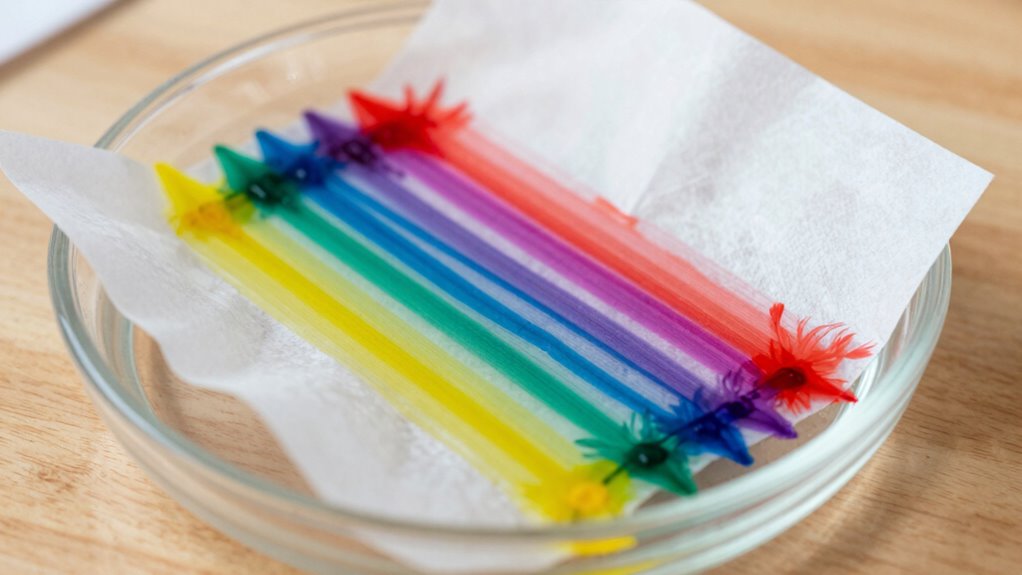
Chromatography is a fascinating and accessible technique you can easily try at home, allowing you to separate and analyze different substances in a mixture. When you set up your experiment, you’ll notice how different dyes or pigments move through the paper at varying speeds, creating a vivid display of color separation. This makes chromatography not only educational but also visually engaging. To start, you’ll need some basic materials: coffee filters or plain paper towels, markers with different ink colors, a small glass or cup with water, and some tape or paper clips to secure your setup.
Chromatography is a fun, easy way to see how dyes and pigments separate using simple household materials.
Your experiment setup is simple but essential for success. First, cut a strip of coffee filter or paper towel about a few inches long. Using a marker, draw a small dot of different colors near the bottom of the strip—make sure to leave enough space below the ink for the water to travel. When you dip the bottom of the paper into the water, the liquid will start to rise, carrying the ink with it. As the water moves upward, you’ll observe how the colors begin to separate into different components, revealing a spectrum of shades. This separation occurs because each dye in your marker has a unique chemical composition that influences how it interacts with the paper and water.
As you watch the colors start to spread, pay attention to how some pigments travel farther than others, resulting in distinct bands of color. This is the core of the chromatography process—separating mixtures based on their different affinities for the paper and their solubility in water. The experiment setup is straightforward, but the key lies in controlling variables such as the amount of water, the type of paper, and the placement of the ink dot. These factors influence the clarity and accuracy of your color separation.
Once the water has traveled a sufficient distance, carefully remove the strip from the cup and let it dry. You’ll see a beautiful pattern of colors, each representing a different pigment component from your marker ink. This simple DIY chromatography experiment helps you understand how mixtures can be separated and analyzed, which is essential in fields like chemistry and forensic science. Plus, it’s a fun and colorful way to explore science with everyday materials. The next time you want to see science in action, set up this experiment, and watch the magic of color separation unfold right before your eyes.
coffee filter chromatography kit
As an affiliate, we earn on qualifying purchases.
As an affiliate, we earn on qualifying purchases.
Frequently Asked Questions
Can I Use Any Type of Marker for Chromatography?
You can’t use any type of marker for chromatography because only certain marker types work well. Water-based markers, like washable or regular markers, usually produce good ink separation because their inks are soluble in water. Oil-based markers, like permanent markers, often don’t separate properly since their ink isn’t water-soluble. So, for clear results, choose markers with water-soluble inks to see distinct separation during your chromatography process.
How Long Does the Chromatography Process Take?
The chromatography process usually takes about 15 to 30 minutes, depending on factors like the type of markers and the solvent used. You’ll see the process begin quickly once the solvent starts moving up the coffee filter. The process duration varies if you want more distinct separation or if you’re using different markers. Keep an eye on the color bands, and stop when the separation meets your desired clarity.
What Other Household Items Can Be Used for Chromatography?
Like a painter seeking new colors, you can explore household items for chromatography. Alternative solvents such as rubbing alcohol or vinegar work well, while household filters like paper towels or plain paper can replace coffee filters. These items act as the canvas for your experiment, revealing hidden pigments and patterns. By using common household supplies, you turn everyday materials into tools for scientific discovery, revealing the secrets concealed within simple substances.
Is Chromatography Safe for Children?
Chromatography can be safe for children if you prioritize chemical safety and proper supervision. Always use non-toxic markers or food coloring and conduct the experiment in a well-ventilated area. Keep a close eye on kids to prevent spills or ingestion of chemicals. Under your supervision, children can enjoy learning about science safely, but never allow them to handle any potentially harmful substances without guidance.
Can This Method Separate All Types of Inks?
You can’t expect this method to separate all types of inks, as some inks contain complex dyes that don’t easily separate. Remember, “you get what you pay for,” so while it’s great for simple ink color separation and dye purity analysis, it won’t handle more intricate inks. For accurate results, specialized chromatography techniques are necessary. This DIY approach is fun but limited in scope.
DIY chromatography experiment supplies
As an affiliate, we earn on qualifying purchases.
As an affiliate, we earn on qualifying purchases.
Conclusion
Now that you’ve explored how to separate colors with coffee filters and markers, you’ve seen how simple it is to reveal science’s secrets. You’ve learned to observe, to experiment, and to understand. You’ve discovered how mixtures split and colors spread. You’ve experienced the thrill of discovery, the joy of exploration, and the power of DIY science. Keep experimenting, keep questioning, and let your curiosity lead you to new discoveries every time.
As an affiliate, we earn on qualifying purchases.
As an affiliate, we earn on qualifying purchases.
Halloween Picks
halloween
As an affiliate, we earn on qualifying purchases.