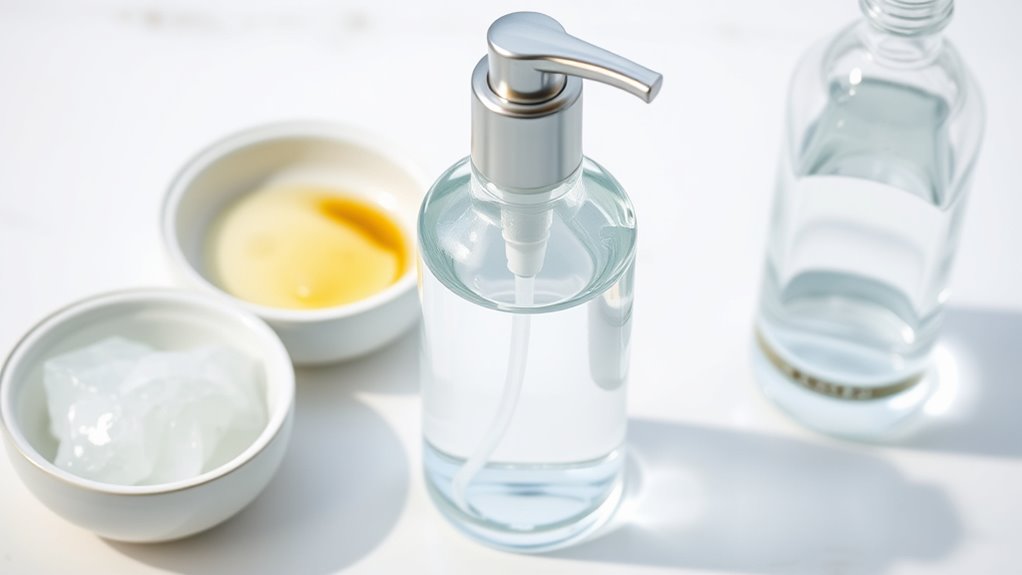

To make homemade hand sanitizer, combine at least 60% alcohol, like rubbing alcohol or vodka, with aloe vera gel to keep your hands moisturized. Add a few drops of essential oils for scent and extra antimicrobial benefits, but be cautious about allergies. Store it in a clean, airtight container and label it clearly. Ensuring the right alcohol content and safe ingredients is key for effectiveness; continue further for detailed tips and safety advice.
Key Takeaways
- Use at least 60% alcohol (rubbing alcohol or vodka) combined with aloe vera gel to ensure effective sanitization.
- Add essential oils like tea tree or lavender for antimicrobial benefits and pleasant scent, but use sparingly.
- Mix ingredients thoroughly and store in a clean, airtight container to maintain safety and efficacy.
- Avoid excessive dilution of alcohol to preserve germ-killing power and prevent reduced effectiveness.
- Label homemade sanitizer clearly, keep out of children’s reach, and remember it is a supplement, not a substitute for handwashing.
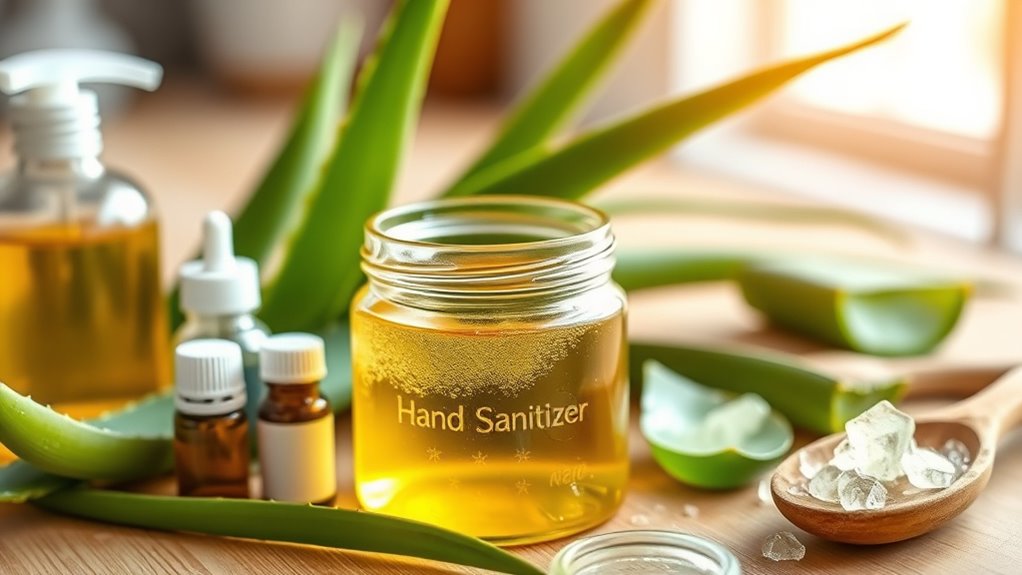
Have you ever wondered if you can make your own hand sanitizer at home? Creating a DIY disinfectant can be a practical way to keep your hands clean when store-bought options aren’t available. Plus, it allows you to customize ingredients to suit your preferences and needs. When crafting your own hand sanitizer, it’s important to focus on safe and effective ingredients, especially if you aim for a natural antiseptic. This approach not only minimizes exposure to potentially harmful chemicals but also guarantees you’re using ingredients with well-known antimicrobial properties.
Making your own hand sanitizer at home allows for safe, customizable, and effective antimicrobial protection.
The foundation of a homemade hand sanitizer typically involves an alcohol-based component, such as rubbing alcohol or vodka, which acts as the primary disinfectant. To make it effective, the alcohol concentration should be at least 60%, as anything less won’t reliably kill germs. Combining this with natural antiseptic ingredients can boost your sanitizer’s properties while making it gentler on your skin. For example, adding essential oils like tea tree, eucalyptus, or lavender can provide antimicrobial benefits along with a pleasant scent. These oils are known for their natural antiseptic qualities, making them a valuable addition to your DIY disinfectant.
When preparing your homemade hand sanitizer, you’ll want to mix the alcohol with a moisturizing agent like aloe vera gel. Aloe not only helps prevent dryness caused by alcohol but also contains some natural healing properties. To make your formula, combine the alcohol with aloe vera gel in a ratio that maintains at least 60% alcohol content—typically about two parts alcohol to one part aloe. Add a few drops of your chosen essential oils for fragrance and extra antimicrobial support, then stir well. Store your homemade sanitizer in a clean, airtight bottle to keep it effective and prevent contamination.
While making your own hand sanitizer is convenient, it’s vital to prioritize safety. Use only high-proof alcohol and avoid diluting it excessively, which can reduce its germ-killing power. Be cautious with essential oils, as some can cause skin irritation or allergic reactions if used in high concentrations. Always label your homemade sanitizer clearly and keep it out of reach of children. Remember that homemade disinfectants are best used as a supplement to, not a replacement for, thorough handwashing with soap and water. When in doubt, rely on commercially produced hand sanitizers that meet safety standards, especially in situations where hygiene is critical. Understanding the importance of alcohol concentration can help ensure your homemade sanitizer remains effective against germs.
Frequently Asked Questions
Can Homemade Sanitizer Replace Commercial Products Entirely?
Homemade sanitizer can’t fully replace store-bought products because DIY vs. store-bought options often lack consistent alcohol content and proper ingredients. While you can customize ingredients for personal preferences, homemade versions may not be as effective against germs. To guarantee safety, rely on commercial sanitizers with proven formulations, especially in high-risk situations. Use homemade sanitizer as a temporary solution, but don’t substitute it entirely for commercial products.
How Long Is Homemade Sanitizer Effective?
Your homemade sanitizer is effective for about 6 to 8 hours if stored properly, but its shelf life varies. Alcohol concentration is essential; it should contain at least 60% alcohol to kill germs effectively. Over time, the sanitizer’s potency decreases, especially if exposed to heat or sunlight. Make sure you check the ingredients regularly, and if it smells or looks off, it’s best to make a fresh batch for maximum protection.
Are There Any Allergies Linked to Homemade Ingredients?
Did you know about 15% of people report allergies to common household ingredients? When making homemade hand sanitizer, you should consider allergy testing to identify potential reactions. Some ingredients, like essential oils or aloe vera, can cause allergies in sensitive individuals. Always do ingredient substitutions carefully and consult a healthcare professional if you have concerns, ensuring your sanitizer is safe for everyone using it.
How Should Homemade Sanitizer Be Stored Safely?
You should store homemade sanitizer in a clean, airtight container made of glass or BPA-free plastic to prevent contamination. Keep it away from direct sunlight and heat sources, as these can compromise the ingredients. Label the container clearly with the date made. Follow proper storage precautions to ensure the sanitizer remains effective and safe for use. Regularly check for changes in smell or appearance before each use.
Can Homemade Sanitizer Be Used on Children or Sensitive Skin?
While it might seem tempting, you should be cautious about using homemade sanitizer on children’s skin or sensitive areas. Their delicate skin and allergy considerations mean commercial products are safer, as they’re tested for safety. Homemade sanitizers could cause irritation or allergic reactions, especially if they contain strong ingredients. It’s best to consult a healthcare professional before using homemade solutions on children or those with sensitive skin.
Conclusion
Remember, while homemade hand sanitizer can be a handy solution, it’s only as good as its ingredients. Think of it as a shield you craft—powerful, but not invincible. By understanding what goes into it and following safety tips, you protect yourself and those around you. In the end, your health depends on the choices you make—like a lighthouse guiding ships safely through storms, your diligence can keep you safe amidst unseen dangers.