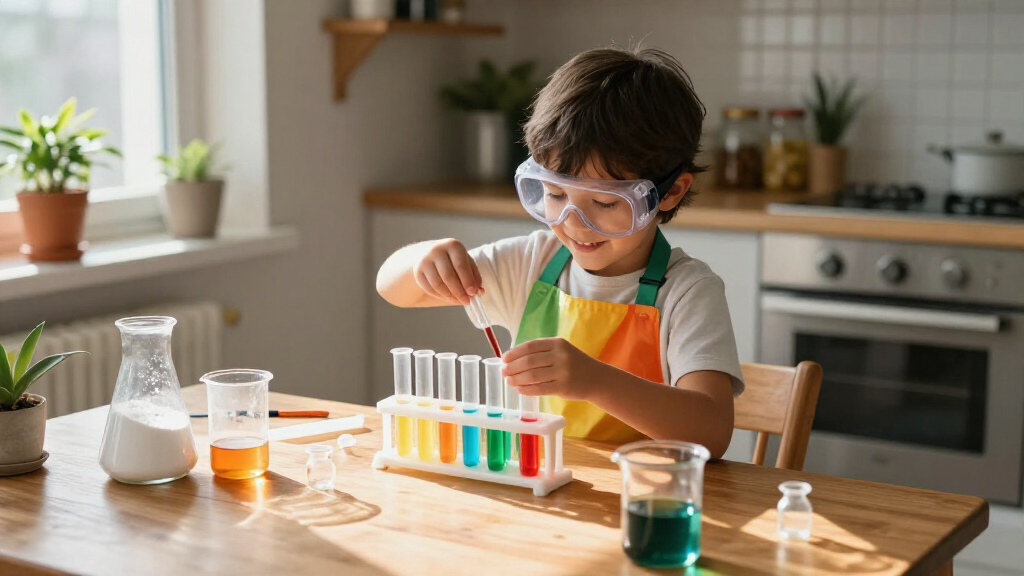

This guide shows how to select, prepare, and carry out science experiment kits for children. It is designed for parents, teachers, or guardians who want to introduce kids to hands-on science activities safely and effectively. The process includes choosing appropriate kits, setting up the workspace, conducting experiments, and ensuring a positive learning experience. The goal is to help children develop curiosity, learn scientific concepts, and enjoy the process of discovery within a manageable time frame.

Prime made for students and young adults
- Fast, free delivery for dorm and study essentials
- Prime Video and Amazon Music included
- Member-only deals
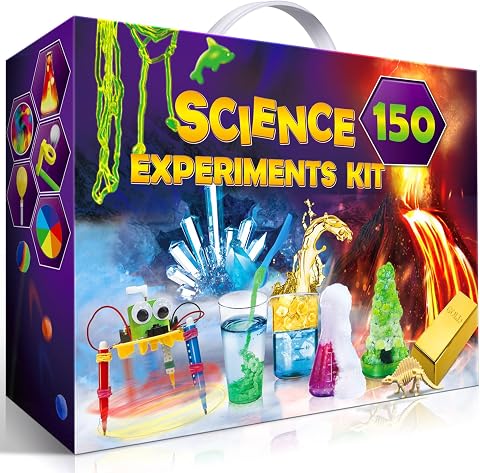
UNGlinga 150 Experiments Science Kit for Kids – Chemistry, Physics, Earth Science
- ✔ Age Range: 8 years and up
- ✔ Number of Experiments: 150
- ✔ Includes: Science tools and materials
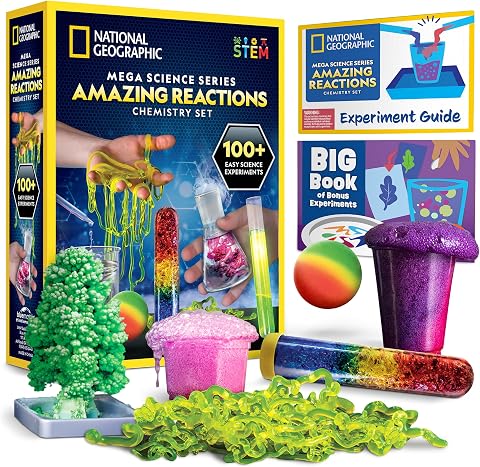
National Geographic Amazing Chemistry Set with 100+ Experiments for Ages 8-12
- ✔ Brand: Blue Marble
- ✔ Age Range: 8 years and up
- ✔ Number of Experiments: 100+

National Geographic Science Magic Kit with 100+ Experiments for Kids 8-12
- ✔ Brand: Blue Marble
- ✔ Age Range: 8 years and up
- ✔ Number of Packs: 1
Difficulty: Beginner | Time: 1-2 hours
What You’ll Need
Tools & Materials:
- Access to a clean workspace
- Basic household safety gear (apron, gloves, goggles)
- Cleaning supplies
Knowledge:
- Basic understanding of safety procedures
- Ability to supervise children during experiments
UNGlinga 150 Experiments Science Kit for Kids – Chemistry, Physics, Earth Science
This kit stands out for offering a whopping 150 experiments across multiple science disciplines, making it ideal for kids who love exploring a wide range of topics. Compared with the other options, it provides the most experiments, but it also requires more supervision and some assembly of tools. The included high-quality tools foster hands-on learning, yet some experiments may need additional household items, and safety information is limited. It’s best suited for parents or educators willing to guide children through diverse scientific explorations, particularly those who want to cultivate a broad scientific curiosity.
Pros:
- Large variety of experiments to keep kids continuously engaged
- High-quality, kid-friendly tools and materials
- Encourages hands-on, exploratory learning
Cons:
- Requires adult supervision for some experiments
- Some tools may need household supplementary items
- Limited safety guidance included
Best for: Children aged 8 and up who have a strong interest in exploring many science fields and enjoy hands-on activities.
Not ideal for: Parents seeking a quick, low-supervision activity or those concerned about safety precautions and assembly complexity.
Bottom line: A comprehensive and versatile science kit ideal for curious kids ready for diverse experiments, with some supervision required.
“A comprehensive and versatile science kit ideal for curious kids ready for diverse experiments, with some supervision required.”
National Geographic Amazing Chemistry Set with 100+ Experiments for Ages 8-12
This set offers over 100 engaging chemistry experiments, making it perfect for children fascinated by chemical reactions and STEM concepts. It includes all necessary materials and a bonus guide with 85 additional experiments using household items, which extends learning and creativity. Compared to the UNGlinga kit, this set emphasizes chemical reactions and crystal growing, providing a more focused but less varied experience. It’s ideal for kids who want to delve deeply into chemistry but may be less suitable for those interested in physics or earth science. Safety precautions are included, but adult supervision remains essential due to chemical handling.
Pros:
- Over 100 chemistry experiments for sustained engagement
- Includes real scientific tools for authentic experiments
- Bonus guide with additional household experiments
Cons:
- Requires adult supervision for safety
- Some experiments may take time and patience
- Limited to chemistry-focused activities
Best for: Kids aged 8-12 who want to explore chemistry in depth and enjoy hands-on experiments with real scientific tools.
Not ideal for: Children with minimal supervision or those looking for a broader science exploration beyond chemistry.
Bottom line: A chemistry-focused kit that offers in-depth experiments for STEM-minded kids, with added value through household experiment options.
“A chemistry-focused kit that offers in-depth experiments for STEM-minded kids, with added value through household experiment options.”
National Geographic Science Magic Kit with 100+ Experiments for Kids 8-12
This kit combines over 100 magic tricks and science experiments, making it perfect for children who love both science and magic. It includes everything needed for 20 magic experiments, plus a booklet with 85 additional magic and science activities. Compared to the chemistry set, it offers a more playful approach that appeals to kids interested in entertainment and learning simultaneously. While engaging and award-winning, some activities can be complex and require adult supervision, especially for younger or less experienced children. It’s a great choice for kids who enjoy a mix of magic and science, but might be less suitable for those solely focused on serious STEM learning.
Pros:
- Over 100 engaging science and magic experiments
- Includes a bonus booklet with additional activities
- Highly rated and award-winning product
Cons:
- Requires adult supervision for some activities
- Some activities may be challenging for younger children
- Less focus on traditional science topics
Best for: Children aged 8 and up who enjoy magic tricks, entertainment, and engaging science activities.
Not ideal for: Kids who prefer purely scientific experiments or lack adult supervision for complex activities.
Bottom line: An engaging blend of magic and science that sparks creativity and curiosity, ideal for kids who love entertainment and hands-on fun.
“An engaging blend of magic and science that sparks creativity and curiosity, ideal for kids who love entertainment and hands-on fun.”
As an Amazon Associate we earn from qualifying purchases.
Before You Start
Review the child’s age and skill level to select an appropriate kit. Gather all necessary materials and ensure the workspace is safe, clutter-free, and well-lit. Confirm that you understand the experiment instructions fully to guide the child effectively. Keep emergency contacts nearby, and prepare safety gear to use during experiments.
Step-by-Step Instructions
Step 1: Select an age-appropriate science kit
Review the recommended age range on the kit packaging and choose one suitable for the child’s age and skill level. Consider the child’s interests—whether they are curious about chemistry, physics, biology, or earth sciences—to pick a kit that will engage them.
Tip: Opt for kits with clear instructions and safety warnings. Reading reviews can help gauge the quality and educational value of the kit.
Check: You have a kit that is appropriate for the child’s age, interest, and skill level, and that includes all necessary components.
Step 2: Prepare the workspace and safety equipment
Set up a flat, stable surface in a well-ventilated area. Lay down protective coverings if needed to prevent messes. Put on safety gear such as goggles, gloves, and an apron. Gather all tools and materials included in the kit, along with any additional items specified in the instructions.
Tip: Ensure children are supervised at all times and understand the importance of safety equipment.
Check: The workspace is ready, safety gear is on, and all materials are organized and accessible.
Step 3: Read and understand the experiment instructions
Carefully read the entire experiment manual or instructions included in the kit, noting any safety warnings, required precautions, and step-by-step procedures. Clarify any unclear steps before starting.
Tip: Watch any demonstration videos if available, and prepare all ingredients or components in advance.
Check: You fully understand each step and safety measure before beginning the experiment.
Step 4: Introduce the experiment to the child
Explain the experiment’s purpose, what the child will learn, and safety rules. Use simple language and encourage questions. Emphasize the importance of following instructions carefully.
Tip: Positively frame the activity to build excitement and curiosity.
Check: The child understands the experiment’s goal and safety guidelines, ready to participate.
Step 5: Conduct the experiment step-by-step
Follow the instructions precisely, guiding the child through each step. Measure, mix, or manipulate materials as directed, ensuring safety protocols are maintained. Assist as needed but encourage the child’s active participation.
Tip: Pause after each step to check understanding and correct any mistakes immediately.
Check: The experiment proceeds smoothly, with results matching the instructions’ expected outcomes and no safety issues.
Step 6: Observe and discuss the results
Watch the experiment’s outcome together, asking the child what they see, feel, or think. Explain the scientific principles behind the results in simple terms.
Tip: Encourage questions and curiosity to deepen learning.
Check: The child can describe what they observed and understands the basic science concept demonstrated.
Step 7: Clean up safely and properly
Help the child wipe down surfaces, wash hands thoroughly, and store leftover materials as instructed. Dispose of any waste safely according to the kit guidelines.
Tip: Turn cleanup into a learning moment about responsibility and safety.
Check: The workspace is tidy, materials are stored or disposed of correctly, and safety is maintained.
Common Mistakes to Avoid
- Using the wrong age-appropriate kit — Always check the recommended age range and complexity before purchasing or starting a kit.
- Skipping safety precautions — Wear safety gear, supervise closely, and follow all safety instructions at every step.
- Not reading instructions thoroughly — Read all instructions completely before beginning and clarify any uncertainties beforehand.
- Rushing through steps — Take time with each step, ensuring understanding and proper execution before moving on.
Troubleshooting
Problem: Experiment results do not match expected outcomes
Solution: Check each step for accuracy, verify measurements, and ensure all materials are correct and properly prepared.
Problem: Materials are missing or damaged
Solution: Inspect all components before starting, and contact the kit provider if items are missing or defective.
Problem: Child loses interest or gets overwhelmed
Solution: Break the experiment into smaller parts, praise efforts, and relate the activity to their interests to boost engagement.
Problem: Messes or spills occur frequently
Solution: Use protective coverings and work in a designated area; clean spills immediately and calmly to maintain safety.
What Success Looks Like
The child successfully completes the experiment following instructions, observes the expected results, and can explain the basic science concept involved. The workspace remains safe and tidy, and the child expresses curiosity and understanding about what they did.
Next Steps
Store the kit for future experiments or related activities. Clean and organize materials. Explore additional experiments from the same kit or related kits to deepen understanding. Share the experience with others or document the results to boost confidence and learning. Repeat similar experiments to reinforce concepts or try more advanced kits as skills develop.
Frequently Asked Questions
Are science experiment kits safe for young children?
Yes, provided the kit is age-appropriate and safety instructions are followed carefully. Always supervise children during experiments, especially with chemicals or small parts.
What should I do if a chemical or material gets on the skin or eyes?
Immediately rinse the affected area with plenty of water, and seek medical advice if irritation persists or if chemical contact is significant. Keep safety supplies nearby at all times.
Can I reuse the experiment components?
Some components can be reused if they are not contaminated or damaged. Always follow the kit instructions regarding reuse and storage.
How do I choose the right kit for my child’s age?
Check the recommended age range on the packaging, consider your child’s interests, and read reviews to find a kit that matches their developmental level and curiosity.
Halloween Picks
halloween
As an affiliate, we earn on qualifying purchases.