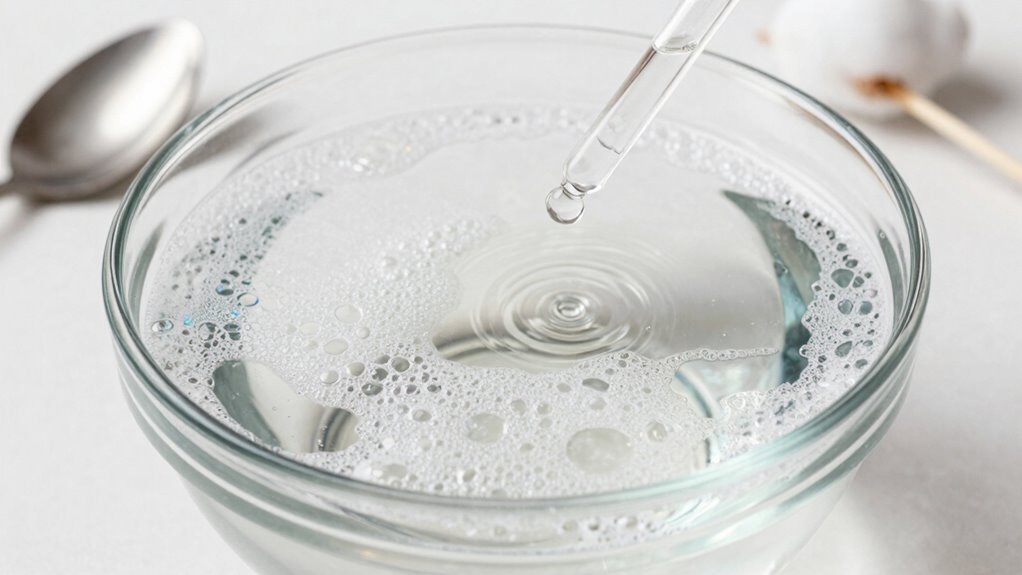

You can easily explore surface tension with simple household items like water, soap, and household objects such as paperclips and coins. Try floating a paperclip on water, then add soap to see how it breaks the tension. You can also observe how water supports objects like coins, but oil or syrup behave differently. These fun experiments help you understand how liquids behave, and if you continue exploring, you’ll discover even more fascinating details about surface tension.

Prime made for students and young adults
- Fast, free delivery for dorm and study essentials
- Prime Video and Amazon Music included
- Member-only deals
Key Takeaways
- Use water and dish soap to observe how soap reduces surface tension and causes water to ripple or spill.
- Float safety pins or paperclips on water by carefully placing them to demonstrate surface tension.
- Test small objects on water, oil, or syrup to compare how different liquids support objects due to surface tension.
- Conduct simple experiments with household items like coins, paper, or household chemicals for easy understanding.
- Follow safety precautions by handling chemicals carefully, using protective coverings, and washing hands afterward.
Have you ever wondered how water can hold its shape in a thin film or why small insects can walk on its surface? These interesting phenomena are all about the fascinating liquid properties of water, especially surface tension. By exploring simple experiments with household items, you can see these properties in action and gain a better understanding of how liquids behave. Just remember, safety comes first—always handle household chemicals with care, and avoid ingesting or inhaling any substances you use during these experiments.
One easy way to observe surface tension is by filling a glass with water and slowly adding a few drops of dish soap. You’ll notice that the soap breaks the surface tension, causing the water to ripple or even spill over the sides. This demonstrates how surfactants alter liquid properties by reducing tension at the surface. When doing this experiment, ensure your workspace is protected and wash your hands afterward. Keep small children supervised, and avoid using too much soap to prevent messes or slips.
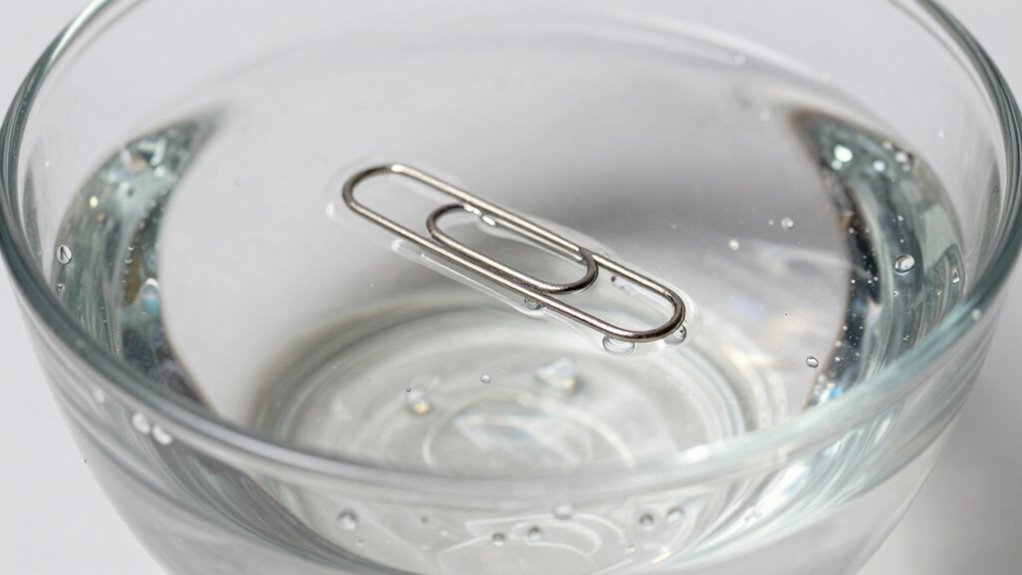
Another simple experiment involves floating a safety pin or a paperclip on the water’s surface. Carefully place the pin gently on the water, and you’ll see it remains floating despite being denser than water. This is because of surface tension, which creates a skin-like effect on the water’s surface. To make this more interesting, try gently blowing on the surface or adding a drop of soap nearby. Be cautious not to poke or disturb the water too aggressively, as this can cause the object to sink. Always handle sharp objects like pins safely, and keep your hands dry to prevent slips. Understanding liquid properties can help you grasp why these phenomena occur and how they relate to the behavior of different substances.
You can also test how different liquids have varying surface tensions by trying to float small objects like coins or paper on water, oil, or syrup. Observe how easily each liquid supports the object. This shows how liquid properties vary depending on the substance’s composition. When working with oils or syrups, remember they can stain surfaces, so use a tray or protective sheet. Clean up any spills promptly and wash your hands afterward.
These experiments highlight the key concepts of surface tension and liquid properties in a fun, accessible way. They’re safe if you follow basic precautions, and they help you see the science behind everyday phenomena. Remember, always prioritize experiment safety. Use common household items carefully, avoid ingestion, and supervise children. Additionally, understanding natural phenomena such as surface tension can deepen your appreciation for the intricate behaviors of liquids in both everyday life and backyard environments. With a little curiosity and caution, you can turn simple household items into a window for exploring the intriguing world of liquids and their fascinating properties.
household surface tension experiment kit
As an affiliate, we earn on qualifying purchases.
As an affiliate, we earn on qualifying purchases.
Frequently Asked Questions
Why Does Surface Tension Occur in Liquids?
Surface tension occurs because of molecular interactions, specifically cohesive forces between liquid molecules. When you look at a liquid, you see that molecules at the surface experience fewer neighboring molecules, creating an imbalance. This imbalance causes them to stick together more tightly, minimizing surface area. As a result, you notice the liquid forming droplets or a skin-like surface, which is the visible effect of these cohesive forces acting at the liquid’s surface.
How Can Surface Tension Be Measured Accurately at Home?
You can measure surface tension at home by using simple household item experiments. For accurate surface tension measurement techniques, try carefully placing a small needle or paperclip on the water’s surface and observing if it floats or sinks. Record your observations, and compare with known values or use a drop count method with soap solutions. These experiments help you understand surface tension without specialized equipment, making science accessible and fun.
Does Temperature Affect Surface Tension?
Yes, temperature effects do influence surface tension. When you increase the temperature in household experiments, the surface tension of a liquid decreases because the molecules move faster and resist cohesive forces less. Conversely, cooling the liquid increases surface tension. You can easily observe this by experimenting with soap and water, or oil and water, noting how temperature changes alter how the liquids behave on the surface, revealing important liquid properties.
Can Surface Tension Be Observed in Non-Liquid Substances?
Surface tension is primarily a property of liquids, so it’s rarely observed in non-liquid phenomena. However, you can use a surface tension analogy to understand how some non-liquid substances behave similarly, like a solid film holding tiny particles together or bubbles in foam. While not exactly the same, these examples help illustrate how surface tension concepts can sometimes be applied beyond liquids, highlighting the importance of cohesive forces.
How Do Surfactants Influence Surface Tension?
Surfactants reduce surface tension by disrupting the cohesive forces between liquid molecules, thanks to their unique surfactant chemistry. When you add surfactants during emulsification processes, they break down large droplets into smaller ones, creating stable mixtures like soap and water. This lowering of surface tension makes liquids spread more easily and mix better, which is why surfactants are essential in cleaning, cooking, and many industrial applications.
As an affiliate, we earn on qualifying purchases.
Conclusion
Now that you’ve explored these simple surface tension experiments, remember that like the delicate film of a soap bubble, your curiosity can hold the universe’s secrets. Each experiment is a drop in the vast ocean of science, revealing the unseen forces shaping our world. Keep questioning, keep experimenting—because in every tiny ripple, there’s a wave of understanding waiting to be discovered. Let your curiosity be the thread that weaves the fabric of knowledge ever finer.
liquid surface tension demonstration set
As an affiliate, we earn on qualifying purchases.
As an affiliate, we earn on qualifying purchases.
kids science experiment water and soap
As an affiliate, we earn on qualifying purchases.
As an affiliate, we earn on qualifying purchases.
Halloween Picks
halloween
As an affiliate, we earn on qualifying purchases.