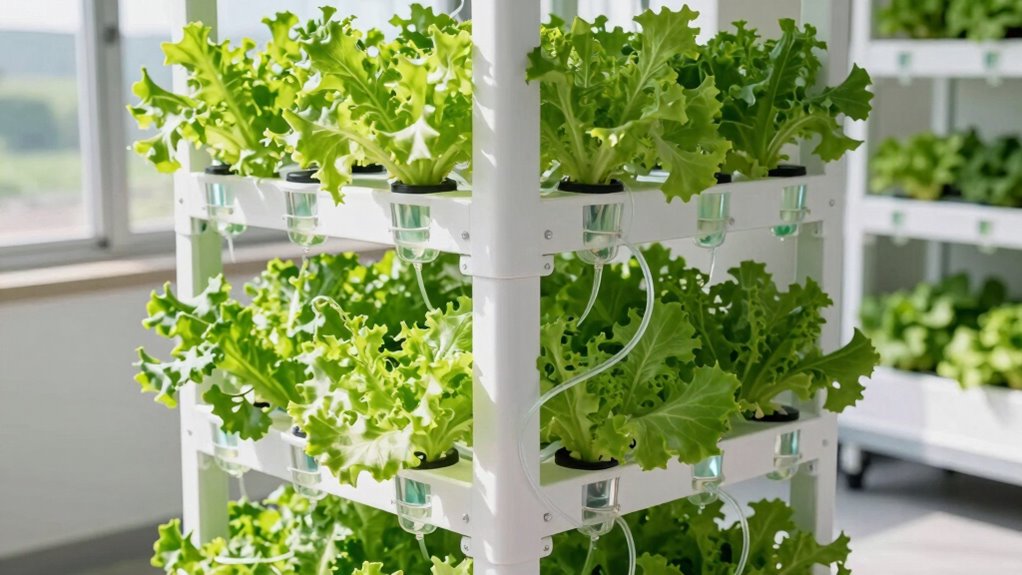

In hydroponic tower gardens, you supply plants with a nutrient-rich water solution that’s carefully managed for ideal growth. You need to monitor and adjust pH and electrical conductivity (EC) to keep nutrients available and prevent deficiencies. Consistent circulation of the solution ensures even distribution and healthy roots, while automated systems can help you maintain proper flow and levels. Keep an eye on nutrient and environmental conditions, and you’ll discover more ways to boost your garden’s success.

Prime made for students and young adults
- Fast, free delivery for dorm and study essentials
- Prime Video and Amazon Music included
- Member-only deals
Key Takeaways
- Nutrient solutions provide essential macro and micronutrients directly to plants, replacing soil in tower gardens.
- Maintaining proper pH (5.5-6.5) and electrical conductivity ensures nutrients remain available and balanced.
- Continuous circulation of nutrient solution prevents stagnation, promotes even distribution, and supports healthy root systems.
- Automated systems with timers and pumps help regulate nutrient flow and circulation efficiently.
- Regular monitoring of nutrient levels and system adjustments optimize plant growth and prevent deficiencies.
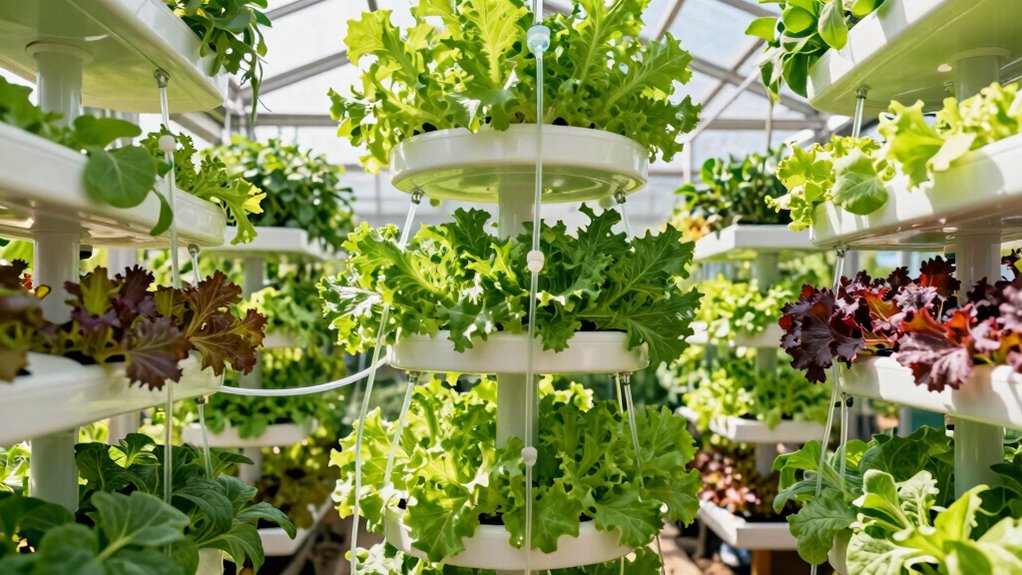
Understanding nutrient delivery is fundamental to growing healthy, productive plants in your hydroponic tower. Since soil isn’t involved, you’ll need to provide a nutrient-rich solution that delivers everything your plants need to thrive. The key is to regularly monitor the nutrient concentration, pH level, and electrical conductivity (EC) of your hydroponic solution. Most plants prefer a slightly acidic pH, around 5.5 to 6.5, so adjusting it as needed keeps nutrients available. You should also guarantee your nutrient mix contains essential macro and micronutrients, including nitrogen, phosphorus, potassium, calcium, magnesium, and trace elements. Proper nutrient delivery involves consistent circulation of the solution, so your plants receive a steady supply of nutrients without stagnation or deficiencies. An automated system with timers and pumps can help maintain this balance and reduce manual effort. Regularly testing for nutrient deficiencies ensures your plants stay healthy and productive, and understanding nutrient solution management is crucial for optimal growth. Additionally, understanding the importance of solution circulation helps prevent issues like root rot and ensures even nutrient distribution. Incorporating monitoring tools can further enhance your ability to maintain optimal conditions for your hydroponic system. Maintaining awareness of nutrient levels is essential for preventing imbalances that could hinder plant growth.
hydroponic nutrient solution kit
As an affiliate, we earn on qualifying purchases.
As an affiliate, we earn on qualifying purchases.
Frequently Asked Questions
How Long Does It Take for Plants to Mature in Tower Gardens?
In tower gardens, plants typically mature in about 4 to 8 weeks, depending on the plant type and growth conditions. Your plant growth timeline varies with factors like light, nutrient levels, temperature, and plant variety. Faster-growing plants like lettuce or herbs may mature in just a few weeks, while larger vegetables like tomatoes or peppers might take longer. Consistent care and ideal conditions help guarantee quicker maturation.
Can Hydroponic Tower Gardens Be Used Outdoors Year-Round?
Yes, you can use hydroponic tower gardens outdoors year-round, but climate adaptability and seasonal variations matter. In milder climates, they thrive year-round with minimal adjustments. However, in colder or extreme weather, you’ll need to protect your tower garden or bring it indoors during harsh seasons. Proper insulation, shading, or supplemental heating can help manage seasonal changes, ensuring your plants stay healthy regardless of outdoor conditions.
What Are Common Pests or Diseases in Tower Gardens?
You might be surprised by what threatens your tower garden—pests like aphids and spider mites or diseases such as powdery mildew can strike unexpectedly. Pest prevention is key, so inspect plants regularly and keep your garden clean. For disease management, guarantee proper airflow and avoid overwatering. Staying vigilant helps protect your crops and keeps your tower garden thriving, even amidst these hidden dangers.
How Much Space Is Needed for a Typical Hydroponic Tower?
A typical hydroponic tower requires about 2 to 3 feet of space in width and 5 to 7 feet in height, depending on the tower’s design. You should consider vertical spacing between planting sites, usually 6 to 12 inches, to guarantee healthy growth. The tower height determines how much you can grow vertically, so plan your space accordingly to accommodate your garden’s size and the plants’ growth needs.
Are There Specific Lighting Requirements for Tower Garden Plants?
Think of your tower garden as a sun-seeking plant, craving the perfect glow. You’ll need artificial lighting that mimics sunlight, focusing on the right light spectrum to promote healthy growth. LED grow lights are ideal, providing the necessary wavelengths. Aim for 12-16 hours of light daily, adjusting based on plant type. Proper lighting guarantees your tower garden flourishes, turning your indoor space into a lush, thriving oasis.
automatic hydroponic pump and timer
As an affiliate, we earn on qualifying purchases.
As an affiliate, we earn on qualifying purchases.
Conclusion
Now that you understand the basics of hydroponic tower gardens and nutrient delivery, imagine what you could grow with this innovative system. The possibilities are endless, and the potential for fresh, healthy produce is right at your fingertips. But there’s more to discover—secrets that could transform your gardening experience even further. Are you ready to access the full potential of your tower garden? The next step awaits, and it’s closer than you think.
As an affiliate, we earn on qualifying purchases.
hydroponic tower garden accessories
As an affiliate, we earn on qualifying purchases.
As an affiliate, we earn on qualifying purchases.
Fall Picks
fall essentials
As an affiliate, we earn on qualifying purchases.