To diagnose nutrient deficiencies from leaf symptoms, look for specific color changes like yellowing or purpling, especially in new or older leaves, depending on the nutrient involved. Observe patterns such as interveinal chlorosis, leaf curling, or spotting. Consider other factors like soil pH or watering practices that influence nutrient availability. To pinpoint the problem accurately, you should examine detailed symptoms and other conditions—continue exploring for more detailed clues.
Key Takeaways
- Observe early leaf color changes, such as yellowing or pale areas, especially in new or older tissues.
- Identify specific patterns like interveinal chlorosis or leaf spots that indicate particular nutrient deficiencies.
- Assess overall plant growth, vigor, and symptoms like stunted development or weak stems for deficiency signs.
- Consider environmental factors like soil pH and watering practices that influence nutrient availability and symptom development.
- Use visual cues combined with soil and tissue testing for accurate diagnosis and targeted nutrient correction.
Recognizing Nitrogen Deficiency Symptoms

Since nitrogen is a vital nutrient for plant growth, recognizing its deficiency early can save your crops from significant yield loss. One of the first signs is pale or yellowing leaves, especially in older foliage. Soil pH influences nitrogen availability; overly acidic or alkaline soils can hinder absorption, making deficiency more apparent. Keep an eye on your watering frequency, as overwatering can leach nitrogen from the soil, worsening deficiency symptoms. Underwatering, on the other hand, stresses plants and can slow nutrient uptake, including nitrogen. Regular monitoring of leaf color and health helps you identify issues early. Adjusting watering practices and testing soil pH can improve nitrogen availability, preventing deficiency symptoms from worsening and ensuring healthy crop growth. Incorporating Healthy Kid Play strategies such as role-play and interactive activities can also support educational efforts on plant health and sustainable gardening practices. Additionally, understanding soil chemistry can help you better manage nutrient levels for optimal plant development.
Identifying Phosphorus Deficiency Signs

You can spot phosphorus deficiency by noticing dark green or purplish leaf hues, especially on older leaves. Changes in growth patterns, like stunted or delayed development, are also common signs. Confirm these symptoms with soil and plant tests to guarantee accurate diagnosis.
Leaf Color Changes
Changes in leaf color are often among the earliest visible signs of phosphorus deficiency in plants. You might notice leaf discoloration, especially on older leaves, with a dull or bluish-green hue. Pigmentation changes can lead to a purplish tint, signaling a lack of this essential nutrient. To help identify these signs, consider this quick reference:
| Symptom | Affected Leaves | Typical Color Change |
|---|---|---|
| Discoloration | Older leaves | Bluish-green or dull appearance |
| Purpling | Lower leaves | Purple or reddish tint |
| Leaf Shedding | Severely deficient | Premature leaf drop |
Recognizing these subtle changes early helps diagnose phosphorus deficiency before more severe damage occurs. An understanding of plant nutrient deficiencies can further assist in timely diagnosis and treatment, especially since leaf color changes are a key indicator of ongoing nutritional issues. Additionally, being aware of leaf pigment alterations can improve the accuracy of identifying specific deficiencies.
Growth Pattern Alterations
Alterations in a plant’s growth pattern often signal a phosphorus deficiency. You might notice stunted growth or a delay in development, as the plant struggles to produce new leaves or expand. Developmental anomalies, such as shortened stems or abnormal branching, can also occur. These growth pattern alterations indicate that the plant isn’t efficiently converting nutrients into energy, affecting overall development. You may see older leaves darkening or appearing dull, while new growth remains sparse. Phosphorus is essential for energy transfer and root development, so deficiencies manifest through these growth irregularities. Pay close attention to these signs, as they often precede more visible symptoms, helping you identify phosphorus issues early and take corrective action. Insufficient phosphorus can also impact the root growth process, making it harder for plants to establish a strong foundation. Additionally, plants may exhibit leaf discoloration with a purplish hue, which is another indicator of phosphorus deficiency. Recognizing these early growth pattern alterations can be crucial for timely intervention and maintaining plant health.
Soil and Plant Tests
Identifying phosphorus deficiency early requires analyzing soil and plant tissue through targeted tests. These tests reveal critical factors like soil pH, organic matter, and nutrient levels, helping you pinpoint deficiencies. Phosphorus becomes less available in soils with high or low pH, so testing soil pH is essential. Organic matter impacts phosphorus retention and availability, so evaluating soil organic content guides your management. To accurately diagnose, consider these key testing points:
- Measure soil pH to determine phosphorus solubility.
- Analyze organic matter levels for phosphorus retention.
- Conduct tissue tests to confirm phosphorus deficiency signs.
Detecting Potassium Shortages in Leaves

Detecting potassium shortages in leaves involves observing specific visual cues that signal deficiency. One key factor is soil pH, which influences nutrient availability; if the soil is too acidic or alkaline, potassium becomes less mobile within the plant. As a result, deficiency symptoms appear more prominently on older leaves first, since potassium is a highly mobile nutrient. Look for edges of leaves turning yellow or browning, often starting at the tips and margins. You might also notice weak stems and reduced fruit quality. Because potassium moves easily within the plant, timely detection is essential. Regularly check your leaves for these signs, and consider soil pH levels to guarantee conditions support proper nutrient uptake. Addressing deficiencies early prevents long-term damage and promotes healthy growth. Monitoring air quality can also help identify environmental factors that affect plant health and nutrient absorption. Additionally, understanding plant nutrient mobility can aid in diagnosing deficiencies before symptoms become severe. Recognizing soil nutrient availability is crucial for effective diagnosis and treatment.
Symptoms of Iron Deficiency in Plants

When your plants show pale or yellowing leaves, iron deficiency might be the cause. Look for interveinal chlorosis, where the tissue between veins turns yellow while veins stay green. These symptoms can also slow down plant growth, signaling you to check iron levels. Incorporating chic seeds into your soil or plant diet can help improve overall plant health and nutrient absorption. Using appropriate soil amendments can further enhance iron availability to your plants.
Leaf Color Changes
Iron deficiency in plants often causes noticeable changes in leaf color, making it a key symptom to watch for. You might notice young leaves turn pale green or develop a yellowish hue, while older leaves remain relatively unaffected due to nutrient mobility. To confirm iron deficiency, consider foliar analysis, which can identify nutrient imbalances precisely. Look for these signs:
- Young leaves displaying chlorosis or pale coloration
- Limited color change in older leaves
- Uneven leaf coloration, especially in new growth
These symptoms occur because iron is less mobile within the plant, causing deficiencies to appear first in new tissues. Recognizing these leaf color changes early can help you diagnose the issue accurately and take corrective measures promptly. Additionally, understanding automation in business can streamline your diagnostic processes, enabling quicker response times to nutrient deficiencies. Being aware of leaf color changes is crucial for early detection, as it allows for timely intervention before the deficiency affects overall plant health. Monitoring other nutrient deficiencies can also help in comprehensive plant care.
Interveinal Chlorosis Signs
Interveinal chlorosis is a common symptom of iron deficiency that you can observe in affected plants. It appears as yellowing between the leaf veins while the veins themselves remain green, a clear sign of leaf vein discoloration. It indicates disrupted nutrient absorption, specifically of iron, which is essential for chlorophyll synthesis. As iron deficiency progresses, the interveinal areas lose their green pigment, leaving a stark contrast with the healthy veins. You’ll notice this symptom first on new, tender leaves, highlighting the importance of nutrient uptake in developing tissues. Understanding these visual cues helps you diagnose iron deficiency early, enabling targeted correction before the condition worsens. Recognizing the interveinal chlorosis pattern is vital for maintaining healthy nutrient absorption patterns in your plants. Additionally, the presence of beach town characteristics can influence soil and water conditions, affecting nutrient availability and deficiency development. Being aware of soil pH levels and their impact on nutrient solubility can further improve diagnosis and treatment strategies. Proper soil testing and nutrient management practices are essential for preventing and correcting deficiencies effectively.
Affected Plant Growth
As iron deficiency affects a plant’s ability to produce chlorophyll, you’ll notice its impact on overall growth. The plant’s foliage patterns become uneven, with young leaves turning yellow while older ones stay green. You might also see stunted growth, as the plant struggles to develop properly. Poor root health is common, leading to weak or deformed roots that hinder nutrient uptake. Watch for:
- Pale or yellowing new foliage
- Reduced leaf size and vigor
- Overall slowed growth and development
These symptoms indicate the plant isn’t getting enough iron, which hampers chlorophyll production and disrupts essential processes. As a result, your plant’s growth slows, leaves lose their vibrant color, and root development suffers, making it harder for the plant to recover.
Signs of Magnesium Deficiency

Magnesium deficiency can manifest through a variety of noticeable signs, often signaling that your body isn’t getting enough of this essential mineral. One common sign is magnesium and leaf curling, especially along the edges of older leaves, which may appear distorted or twisted. You might also notice yellowing between the leaf veins, known as interveinal chlorosis, starting on older foliage. Additionally, magnesium and fruit development can be affected, leading to smaller, less mature fruits or poor yield overall. Plants may struggle to produce healthy, vibrant foliage if magnesium levels are low. Recognizing these symptoms early helps you address deficiencies promptly, ensuring your plants remain healthy and productive. Understanding the importance of soil nutrients can help prevent deficiencies before they appear. Being aware of seed allergy risks is also crucial for maintaining a safe gardening environment.
Manganese Deficiency Indicators

You’ll notice manganese deficiency through specific leaf spot patterns and chlorosis on new growth. Marginal browning signs can also appear along leaf edges, indicating a problem. Recognizing these indicators helps you diagnose manganese deficiency early and take action. Additionally, understanding the plant’s seasonal availability can assist in determining whether nutrient supplementation is necessary at certain times.
Leaf Spot Patterns
Leaf spot patterns are key indicators of manganese deficiency in plants. Recognizing these patterns helps you with accurate disease identification and prevents unnecessary treatments. Manganese deficiency often causes small, dark spots on older leaves, sometimes with a yellow halo. These spots may merge, forming irregular patches that weaken leaf tissue. You might notice:
- Tiny, sunken spots with brown centers
- Yellowing around the spots, creating a mottled appearance
- Progressive leaf death if untreated
These leaf spot patterns differ from other diseases, making precise diagnosis essential. By observing how spots develop and spread, you can determine if manganese deficiency is the cause. Correct identification ensures you take appropriate corrective measures promptly, safeguarding your plants’ health and productivity.
Chlorosis on New Growth
Chlorosis on new growth is a key sign of manganese deficiency, often appearing before other symptoms become visible. You’ll notice the young leaves turn pale or yellow, while the veins stay green. To correct this, consider applying a foliar application of manganese directly to affected leaves, which provides quick relief. Additionally, incorporating a soil amendment rich in manganese can improve long-term availability in the soil. Ensuring proper soil pH is essential, as high pH levels can lock out manganese, worsening deficiencies. Regular monitoring helps you catch symptoms early, allowing timely intervention. Combining foliar treatments with soil amendments offers a balanced approach, helping restore healthy, green new growth and preventing further deficiencies.
Marginal Browning Signs
Marginal browning along the edges of leaves is a common indicator of manganese deficiency. This leaf margin discoloration often appears as scorched or burnt-looking tips, primarily starting at the leaf margins. You’ll notice the browning begins at the edges and may spread inward if untreated. To identify manganese deficiency through marginal browning signs, look for:
- Localized leaf margin discoloration that doesn’t affect the entire leaf
- Interveinal chlorosis accompanying browning
- Older leaves showing symptoms first, as manganese is mobile within the plant
This pattern helps distinguish manganese deficiency from other issues. Addressing it promptly involves correcting soil pH or supplementing with manganese fertilizers to restore healthy leaf margins and prevent further damage.
Symptoms of Calcium Deficiency

Have you noticed your plants developing weak stems or unusual growth patterns? These are common signs of calcium deficiency. Calcium mobility within the plant is limited, so new growth often shows the first symptoms. You might observe distorted or stunted leaves, especially at the tips or margins, where calcium transport is essential. In fruit development, calcium deficiency can cause problems like blossom end rot or misshapen fruit, as calcium is necessary for cell wall strength. You may also see dead spots or necrosis starting at the leaf edges. These symptoms indicate calcium isn’t reaching developing tissues effectively. Addressing calcium deficiency quickly helps prevent further damage and supports healthy, strong plant growth and critical fruit production.
Recognizing Zinc Deficiency Symptoms
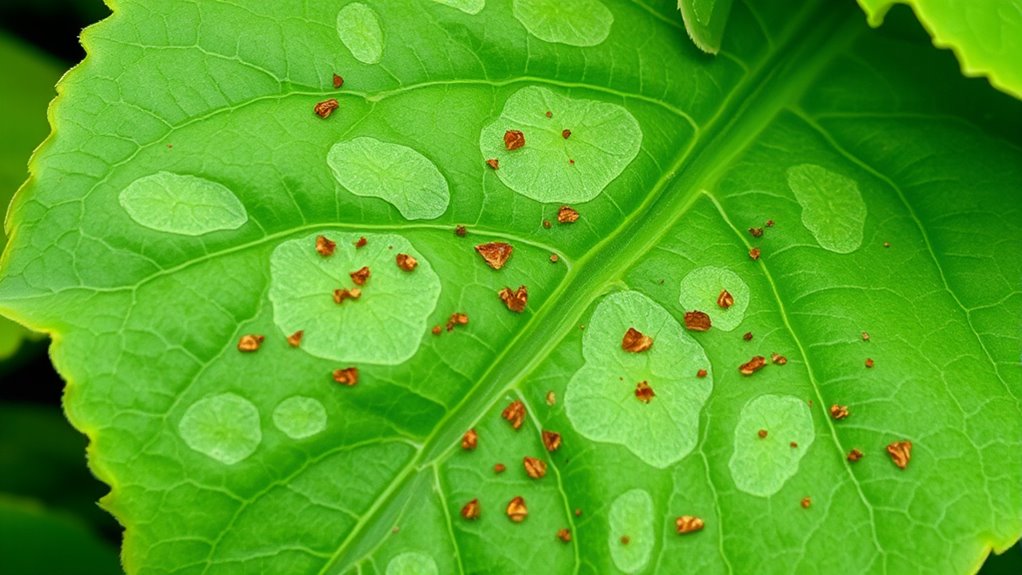
Zinc deficiency often manifests through distinctive symptoms that are easy to recognize once you know what to look for. You might notice stunted growth, with smaller leaves and reduced overall vigor. Leaf symptoms can include:
Zinc deficiency causes stunted growth and small, distorted leaves with interveinal chlorosis.
- Interveinal chlorosis, where the tissue between veins turns yellow while veins stay green
- Shortened, distorted new leaves that appear malformed
- Reduced leaf size, especially in younger leaves
Be cautious, as excess zinc or high zinc soil levels can cause zinc toxicity, leading to similar issues or toxicity symptoms. Recognizing these signs helps differentiate deficiency from toxicity. If the symptoms worsen despite zinc supplementation, check soil zinc levels to ensure they aren’t too high, which can inhibit nutrient uptake and harm your plants. Proper diagnosis prevents misapplication and ensures healthy growth.
Signs of Sulfur Deficiency
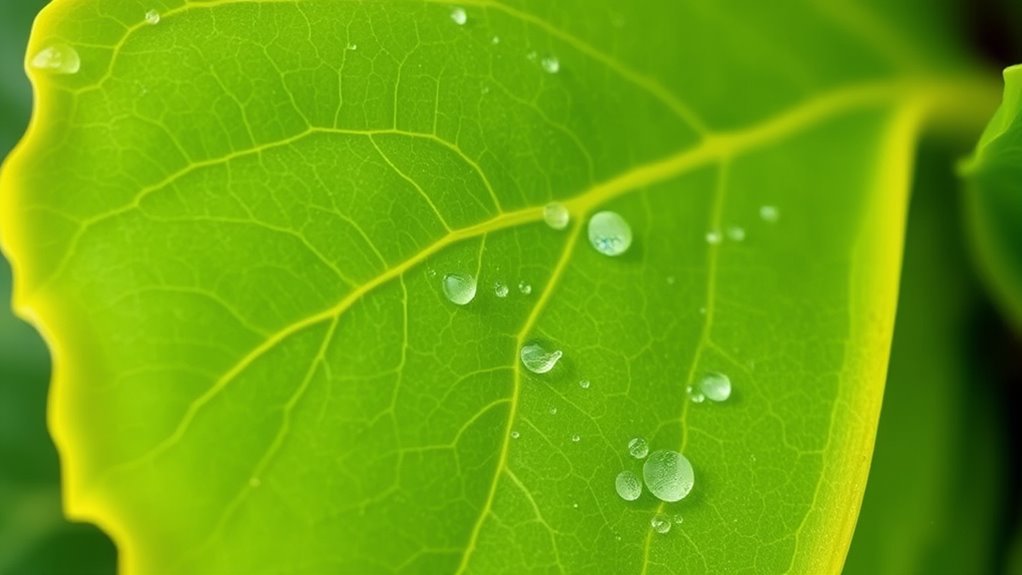
Sulfur deficiency often presents through noticeable changes in plant growth and foliage, signaling that your plants may not be getting enough of this essential nutrient. You might notice pale, yellowish-green leaves, especially on new growth, since sulfur is mobile within the plant. If your soil pH is too high, sulfur becomes less available, increasing deficiency risks. Inadequate fertilizer application, particularly if sulfur isn’t included in your fertilizers, can also cause deficiencies. Keep an eye out for stunted growth and delayed maturity. To address this, consider applying a sulfur-containing fertilizer or organic amendments like compost or gypsum. Ensuring proper soil pH and regular fertilizer application with sufficient sulfur levels will help prevent deficiency symptoms and promote healthy, vigorous plants.
Differentiating Between Nutrient Deficiencies and Other Stress Factors

Differentiating between nutrient deficiencies and other stress factors can be challenging because they often produce similar symptoms. For example, leaf discoloration might indicate a nutrient shortage or pest damage. To tell them apart, consider these factors:
- Soil pH effects: Improper pH can lock out nutrients, mimicking deficiencies.
- Pest damage indicators: Physical damage or irregular feeding patterns point to pests rather than deficiencies.
- Environmental stress: Factors like drought or temperature extremes can cause symptoms similar to nutrient issues.
Check for signs like uniformity in symptoms, presence of pests, or soil conditions. Recognizing these clues helps you accurately diagnose whether nutrient deficiencies or other stressors are causing the symptoms, ensuring appropriate treatment.
Frequently Asked Questions
How Can Soil Testing Help Confirm Nutrient Deficiencies?
Soil testing benefits include providing precise insights into nutrient availability in your soil, helping you confirm potential deficiencies. By analyzing nutrient levels, you can identify which nutrients are lacking or excessive, ensuring you address specific needs accurately. This process guides you in making informed fertilization decisions, improving plant health, and optimizing growth. Overall, soil testing is a valuable tool to verify if low nutrient levels are causing the symptoms you observe.
What Are Common Symptoms of Multiple Deficiencies Occurring Simultaneously?
Like a detective in a noir film, you notice that multiple deficiencies can cause visual symptom overlap, making diagnosis tricky. Common signs include yellowing leaves, stunted growth, and irregular spots. Look for deficiency combination clues, such as chlorosis paired with leaf curling, to identify simultaneous issues. Recognizing these patterns helps you determine which nutrients are lacking and address them effectively, preventing further plant stress or damage.
How Do Environmental Stresses Mimic Nutrient Deficiency Symptoms?
Environmental stress can cause symptom mimicry, making it tricky to distinguish from nutrient deficiencies. When plants face stressors like drought, extreme temperatures, or pollution, they often show leaf symptoms similar to deficiencies, such as discoloration or wilting. You need to contemplate environmental conditions alongside leaf symptoms, as stress-induced damage can imitate nutrient problems. Carefully analyze both factors to avoid misdiagnosis and choose appropriate treatments.
Can Foliar Feeding Correct Deficiencies Identified Through Leaf Symptoms?
Ever wondered if foliar feeding can fix deficiencies shown on leaves? You can indeed use foliar feeding for deficiency correction, especially for quick nutrient uptake. It’s an effective method when roots are compromised or slow to absorb nutrients. While it helps, remember it’s usually a supplement, not a replacement for soil fertilization. Proper application guarantees your plants get the nutrients they need right where they’re needed most.
Are There Visual Differences Between Deficiency Symptoms and Pest Damage?
You might wonder if visual cues can help you distinguish between deficiency symptoms and pest damage. Generally, pest damage often shows irregular holes, chew marks, or webbing, while deficiency symptoms tend to appear as uniform discoloration, spots, or leaf curling. To make an accurate pest distinction, closely examine the pattern and location of the damage, look for pests or their signs, and consider plant health overall. This helps you identify the cause more effectively.
Conclusion
Just like a skilled detective uncovers clues at a scene, spotting leaf symptoms reveals your plant’s hidden needs. By understanding these signs, you become a gardener who can read nature’s secret code, ensuring your plants thrive. When you recognize nutrient deficiencies early, you nurture a lush, vibrant garden—your own green oasis. Keep observing, stay attentive, and let your garden flourish as beautifully as a well-tuned symphony.