
Using salinity meters helps you monitor the salt levels in your irrigation water in real time. This allows you to adjust your watering schedules, blend water sources, or improve drainage to prevent salt buildup. Maintaining ideal salinity protects soil health, improves water retention, and supports healthy crop growth. Regular salinity measurements enable timely decisions that save resources and boost yields. Keep exploring to learn more about how to effectively manage water quality and enhance your farming success.
Key Takeaways
- Salinity meters provide real-time data to optimize irrigation schedules and prevent salt buildup in soil.
- Regular monitoring helps detect rising salinity levels early, enabling proactive water management.
- Adjusting irrigation based on salinity readings maintains soil health and crop productivity.
- Salinity data guides blending and leaching practices to dilute or remove excess salts.
- Long-term monitoring supports sustainable water use and soil resource management strategies.
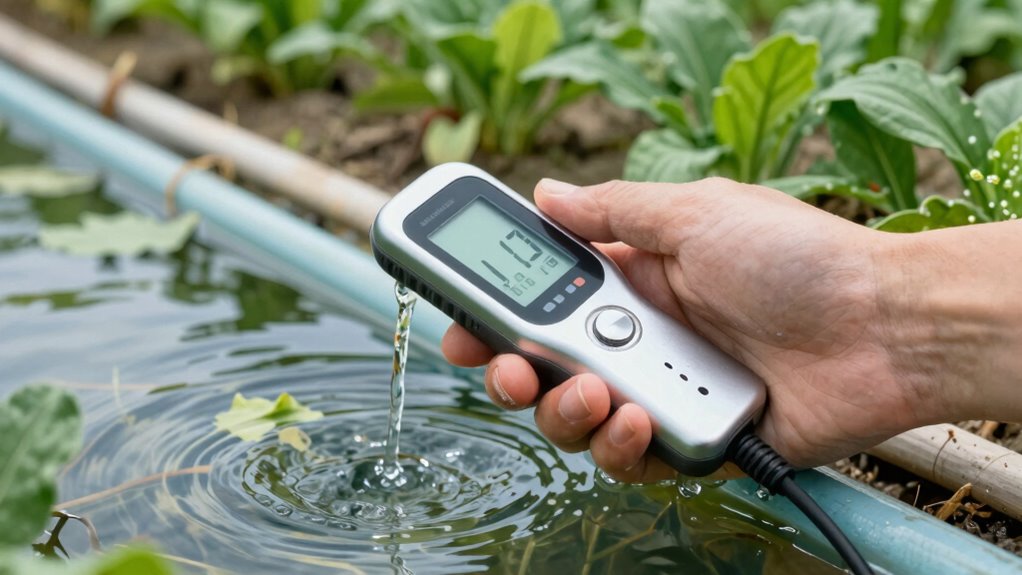
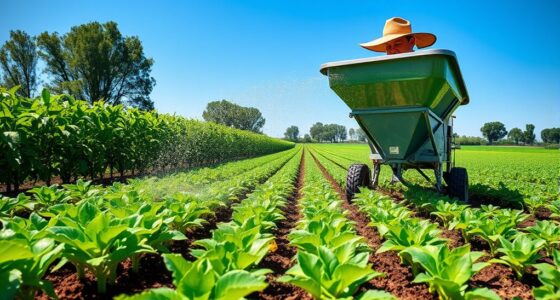
Have you ever wondered how farmers and water managers guarantee their water sources remain healthy and productive? It all comes down to careful water management practices, and salinity meters play an essential role in this process. These devices allow you to monitor the salt levels in irrigation water, which is critical because high salinity can harm soil health and reduce crop yield. When you keep salinity in check, you help ensure that your soil remains fertile and capable of supporting healthy plant growth. If salinity levels climb too high, the soil’s ability to retain water diminishes, and plants struggle to absorb nutrients, ultimately diminishing your crop output.
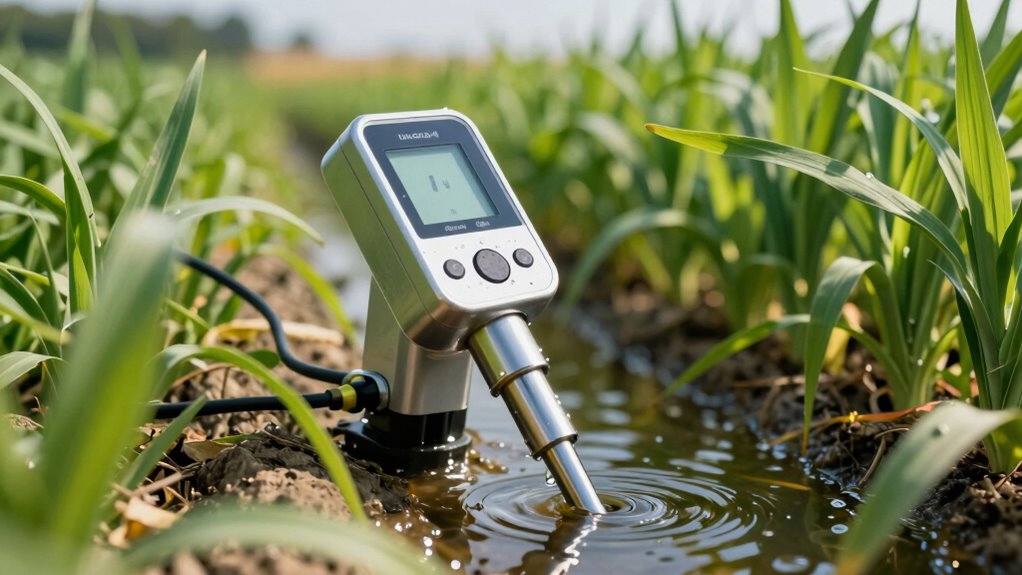
Using a salinity meter regularly gives you real-time insights into your water quality, so you can make informed decisions before problems develop. For example, if your meter indicates rising salt levels, you can take steps to mitigate the impact—perhaps by blending water sources, improving drainage, or adjusting your irrigation schedule. These proactive measures help prevent salt accumulation in the soil, which can degrade soil structure and reduce its capacity to support crops. Maintaining ideal soil health isn’t just about avoiding salinity; it’s about creating the right environment where roots can thrive and nutrients are readily available. When you prioritize soil health through diligent water monitoring, you’re ultimately enhancing your crop yield.
Effective water management also involves understanding the relationship between salinity and crop types. Some crops are more tolerant to salt than others, so knowing your water’s salinity levels helps you select suitable crops or adjust your practices accordingly. If the salinity is elevated, you might opt for salt-tolerant varieties or implement leaching techniques to flush excess salts from the soil. This careful management ensures that your land remains productive over time, rather than becoming increasingly degraded by salt buildup. Additionally, regular monitoring with salinity meters helps you detect changes early, preventing long-term soil degradation and promoting sustainable agriculture. Incorporating soil testing can further enhance your understanding of how salinity impacts overall soil health, providing a comprehensive approach to water and land management. Understanding the effects of salinity on soil quality allows for more precise and effective management strategies.
Furthermore, understanding the salinity levels in your water sources can help you make better decisions about water conservation and reuse, contributing to overall resource sustainability. Integrating salinity meters into your routine allows you to track trends over seasons or years, giving you a detailed picture of your water quality and its impact on soil and crop health. This long-term data is vital for developing effective strategies for sustainable water use, which in turn supports soil preservation. With this information, you can develop long-term strategies for sustainable water use and soil preservation. Ultimately, using salinity meters empowers you to maximize your irrigation practices, protect soil health, and boost crop yield, ensuring a resilient and productive farm or garden for years to come.
digital salinity meter for irrigation water
As an affiliate, we earn on qualifying purchases.
As an affiliate, we earn on qualifying purchases.
Frequently Asked Questions
How Often Should Salinity Meters Be Calibrated?
You should calibrate your salinity meter at least once a month to guarantee ideal calibration frequency. Regular calibration helps maintain salinity accuracy, which is essential for effective irrigation water management. If you notice inconsistent readings or use your meter in varying conditions, consider calibrating more often. Proper maintenance, including calibration, ensures your measurements are dependable, helping you make informed decisions for your crops’ health and water quality.
Can Salinity Meters Detect Specific Salt Types?
Think of salinity meters as the detectives of the water world, but they don’t always find the specific culprit. They measure overall salt levels, not the exact salt composition. So, while they give a good sense of water’s saltiness, they can’t distinguish between different salt types. This means their accuracy helps you manage irrigation effectively, but for detailed salt identification, you’d need specialized testing tools.
Are Handheld Salinity Meters Suitable for Large-Scale Irrigation?
Handheld salinity meters are suitable for large-scale irrigation, but their accuracy depends on the quality of the salinity sensor and proper calibration. While they offer portable measurement techniques, you might find that they are less precise than stationary systems for extensive fields. Use them for quick assessments, but consider more advanced tools for detailed, large-scale irrigation management to guarantee accurate salinity readings and ideal water use.
What Is the Ideal Salinity Level for Different Crops?
Think of your crops as delicate dancers, each with a unique salt tolerance. The best soil salinity levels vary: for instance, tomatoes thrive at 0.7-1.0 dS/m, while barley tolerates up to 8.0 dS/m. As soil salinity trends upward, you must adjust your irrigation to prevent stress. Monitoring salinity helps you stay in step with your crops’ needs, ensuring healthy growth and ideal yields.
How Do Environmental Factors Affect Salinity Readings?
Environmental factors like soil mineralization and water pH greatly influence salinity readings. As soil mineralization increases, salts accumulate, raising salinity levels, while changes in water pH can alter salt solubility, affecting measurements. When you monitor salinity, consider these factors because they impact your readings. Fluctuations in environmental conditions may lead to misinterpretation, so adjusting your management practices based on soil mineralization and water pH ensures more accurate assessments and healthier crop growth.
soil salinity tester for farming
As an affiliate, we earn on qualifying purchases.
As an affiliate, we earn on qualifying purchases.
Conclusion
Using salinity meters is like having a trusted compass guiding your irrigation practices. They help you monitor and manage water salinity levels effectively, preventing salt buildup that can harm your crops. By regularly checking your water’s salinity, you can make informed decisions and guarantee healthy plant growth. Just as a sailor relies on a compass to stay on course, you can rely on these meters to keep your irrigation water balanced and your fields thriving.
As an affiliate, we earn on qualifying purchases.
electronic salt level meter for soil
As an affiliate, we earn on qualifying purchases.
As an affiliate, we earn on qualifying purchases.