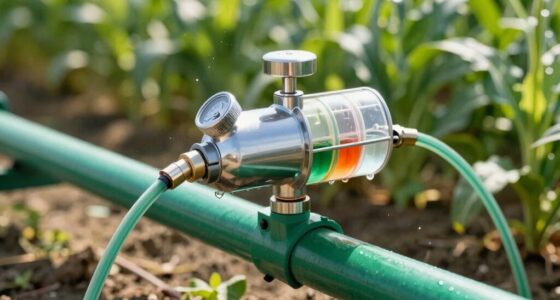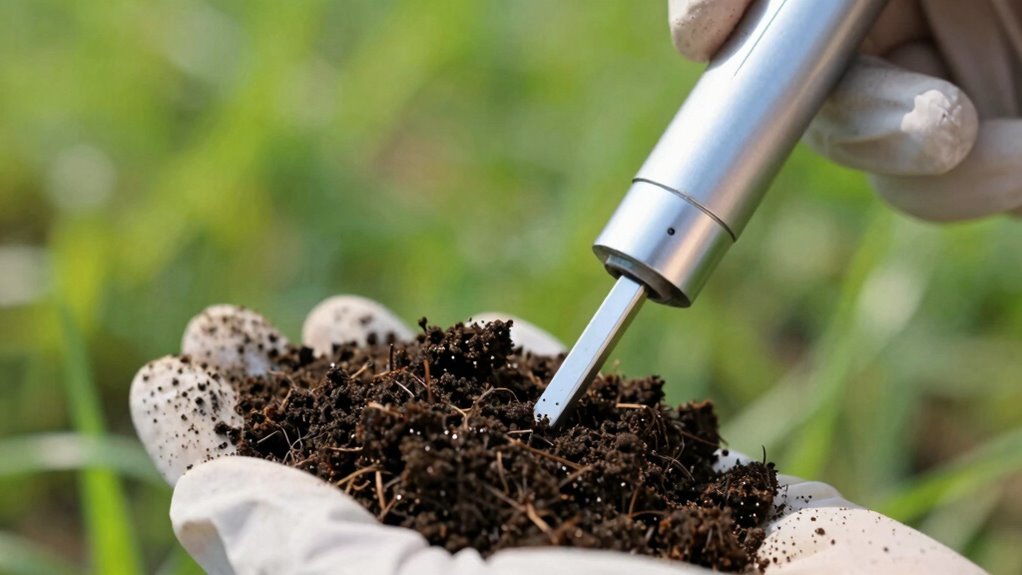

Soil EC meters help you track fertility trends by providing instant readings of your soil’s soluble salts, which reflect nutrient levels. As you monitor EC over time, you can spot patterns like salt buildup or nutrient depletion, allowing you to adjust fertilization accordingly. This helps prevent issues like salt stress or deficiencies, promoting healthy growth. Keep exploring to discover how to make the most of your soil testing for smarter crop management.
Key Takeaways
- Soil EC meters measure soluble salts, indicating nutrient levels and overall soil fertility.
- Regular readings reveal fertility trends, helping detect nutrient depletion or salt buildup over time.
- Monitoring EC assists in adjusting fertilization practices to optimize nutrient availability.
- Tracking EC changes helps prevent salt stress and maintain soil health for sustainable crop growth.
- Data from EC meters supports informed decisions for long-term soil and crop management strategies.
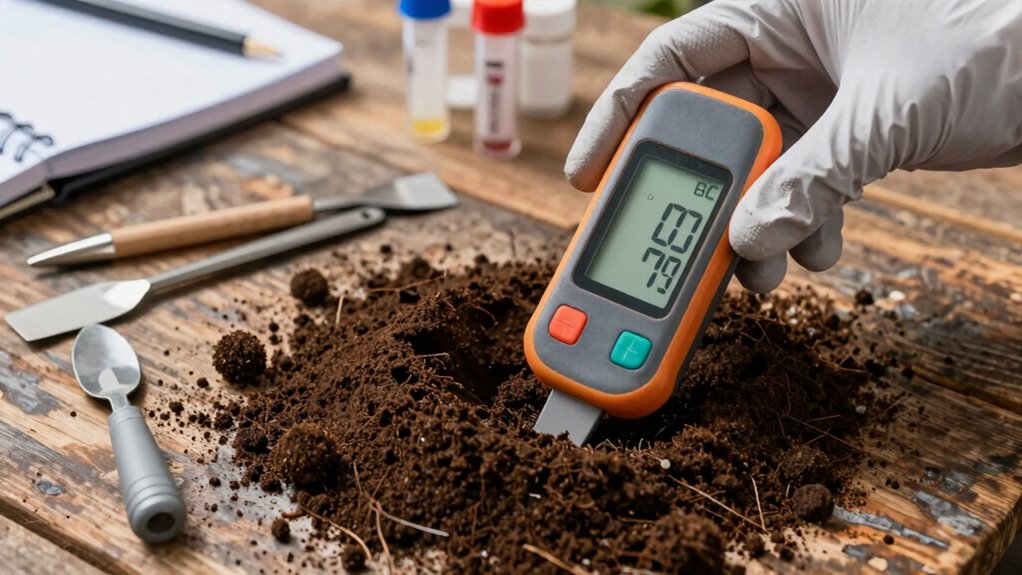
Understanding soil electrical conductivity (EC) is crucial for evaluating soil fertility and enhancing crop growth. When you measure EC, you’re fundamentally gauging how well your soil conducts electricity, which relates directly to the amount of soluble salts present. These salts include essential nutrients that plants need to thrive. By monitoring EC regularly with a soil EC meter, you can better understand soil conditions and make informed decisions to improve crop yields. One key aspect to regard is soil pH balance, as it influences nutrient availability. If the soil is too acidic or too alkaline, even nutrient-rich soil might not support healthy plant growth. An EC meter provides insight into the salt levels that impact soil pH, allowing you to make adjustments more precisely. When nutrient levels are ideal, nutrient absorption efficiency increases, meaning your plants take up nutrients more effectively, promoting healthy development.
Using a soil EC meter helps you track fertility trends over time, revealing patterns that might otherwise go unnoticed. For example, if you notice EC readings steadily rising, it could indicate an accumulation of salts, which might eventually hinder plant growth or damage roots. Conversely, declining EC values might suggest leaching or nutrient depletion, signaling that your soil needs fertilization. By keeping a close eye on these changes, you can prevent issues before they become severe, saving you time and resources. This proactive approach ensures your soil remains in a perfect state for plant growth, with balanced nutrients and proper pH levels. Regular monitoring of soil fertility trends helps you detect subtle changes and adapt your management practices accordingly. Additionally, understanding soil salinity levels through EC measurements can help prevent salt stress, which negatively impacts plant health. Recognizing the importance of nutrient management ensures that your fertilization practices support optimal plant growth while minimizing environmental impact.
Furthermore, consistent EC monitoring can help identify nutrient imbalances, enabling more precise and sustainable fertilization practices. Additionally, soil EC measurements assist in customizing fertilization strategies. Instead of applying fertilizers blindly, you can use EC data to determine what nutrients are lacking and how much to add. This precision helps enhance nutrient absorption efficiency, ensuring your plants get what they need without excess, which can lead to salt buildup and toxicity. It also minimizes waste and environmental impact. Over time, consistent monitoring with a soil EC meter enables you to develop an all-encompassing understanding of your soil’s fertility trends, guiding your long-term soil management decisions. This knowledge empowers you to maintain healthy, productive soil that consistently supports robust crop growth. Ultimately, integrating EC measurements into your farming routine helps you create a balanced soil environment, promoting sustainable practices and higher yields.
As an affiliate, we earn on qualifying purchases.
Frequently Asked Questions
How Often Should I Test Soil EC for Accurate Fertility Tracking?
You should test your soil EC every 2 to 4 weeks for accurate fertility tracking. Regular testing helps you monitor changes in soil moisture and pH balance, which influence nutrient availability. Keep in mind, soil conditions fluctuate with weather and seasons, so frequent testing ensures you catch any imbalances early. Consistent measurements allow you to adjust fertilization practices effectively, promoting healthy plant growth and maximum yields.
Can Soil EC Meters Be Used in Saline or Alkaline Soils?
Yes, soil EC meters can be used in saline or alkaline soils, but you should interpret the readings carefully. Salinity management is vital because high salinity affects EC values, and pH impact can influence these readings as well. In saline or alkaline conditions, consider calibrating your meter for such soils to guarantee accurate fertility assessments. This helps you make better decisions for nutrient management and crop health.
What Is the Ideal Soil EC Range for Different Crops?
Did you know that most crops thrive when soil EC ranges between 1.2 and 2.0 dS/m? For ideal plant health, you should monitor soil moisture levels alongside EC. Different crops have specific needs: for example, leafy greens prefer a lower EC, while fruiting crops tolerate higher levels. Regularly checking soil EC helps you adjust fertilization, ensuring your plants grow strong and healthy across varying soil conditions.
How Do Soil EC Readings Correlate With Nutrient Availability?
Soil EC readings directly correlate with nutrient availability because electrical conductivity measures how well soil conducts electricity, which depends on the amount of dissolved salts and nutrients. As soil composition changes, higher EC indicates more nutrients are present, making them more accessible for plant uptake. Monitoring these readings helps you assess nutrient levels, adjust fertilization, and optimize soil conditions for healthy crop growth.
Are There Any Calibration Tips for Maintaining Accuracy?
Think of calibration procedures as tuning your instrument before a concert; it guarantees perfect harmony. To maintain accuracy, regularly perform calibration checks with standard solutions, clean the electrodes gently after each use, and store your soil EC meter properly. Follow the manufacturer’s maintenance tips to prevent buildup and corrosion. This routine keeps your readings precise, helping you confidently monitor soil health and adjust fertility strategies effectively.
digital soil conductivity tester
As an affiliate, we earn on qualifying purchases.
As an affiliate, we earn on qualifying purchases.
Conclusion
By using soil EC meters, you’re fundamentally giving your soil a health check-up, revealing its true fertility beneath the surface. They help you read the subtle whispers of your soil’s needs, guiding you like a trusted compass through the wilderness of farming. With each reading, you’re tuning into nature’s secret language, ensuring your crops flourish and your land stays vibrant. Embrace these tools, and watch your soil’s story unfold in rich, thriving chapters.
As an affiliate, we earn on qualifying purchases.
electrical conductivity soil meter
As an affiliate, we earn on qualifying purchases.
As an affiliate, we earn on qualifying purchases.