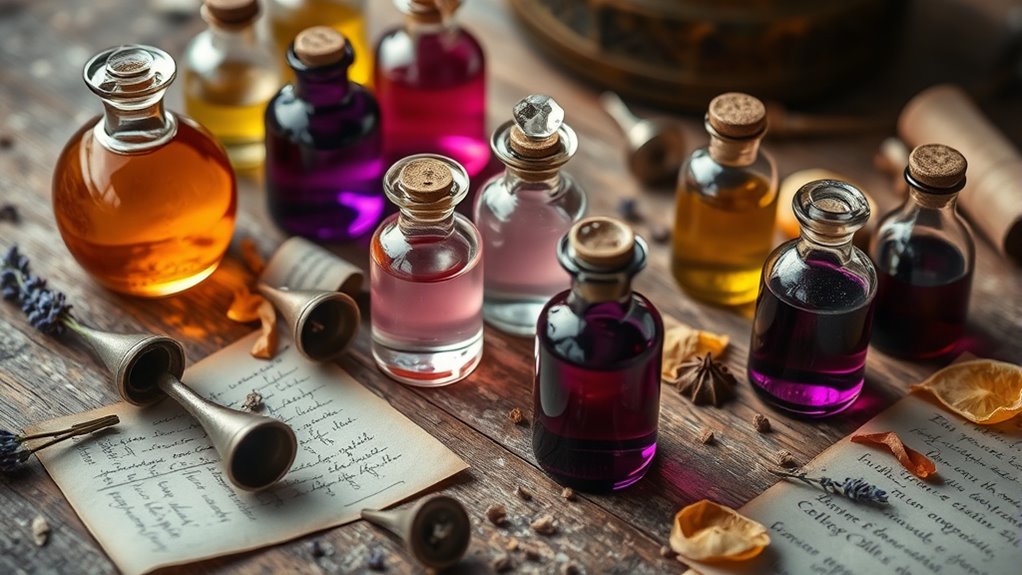

Ancient perfumers mastered chemical techniques like distillation, enfleurage, pressing, and maceration to extract fragrant compounds from plants, resins, and flowers. These methods preserved the essential oils and molecules that give perfumes their lasting scent and complexity. Different cultures adapted these techniques based on local resources, shaping unique fragrance profiles. By understanding these ancient chemistry secrets, you can appreciate the artistry behind timeless scents—and discover more about their mystical and cultural significance.
Key Takeaways
- Ancient extraction methods like distillation and maceration relied on chemical principles to isolate aromatic compounds from plants.
- The composition of natural ingredients such as resins, flowers, and herbs contributed specific volatile compounds responsible for fragrance.
- Techniques varied across cultures, influencing the chemical profiles and purity of the final perfumes.
- Understanding the chemistry of essential oils reveals how ancient artisans preserved scent and potency through their methods.
- The symbolic and spiritual significance of ingredients was linked to their chemical properties and aromatic effects.
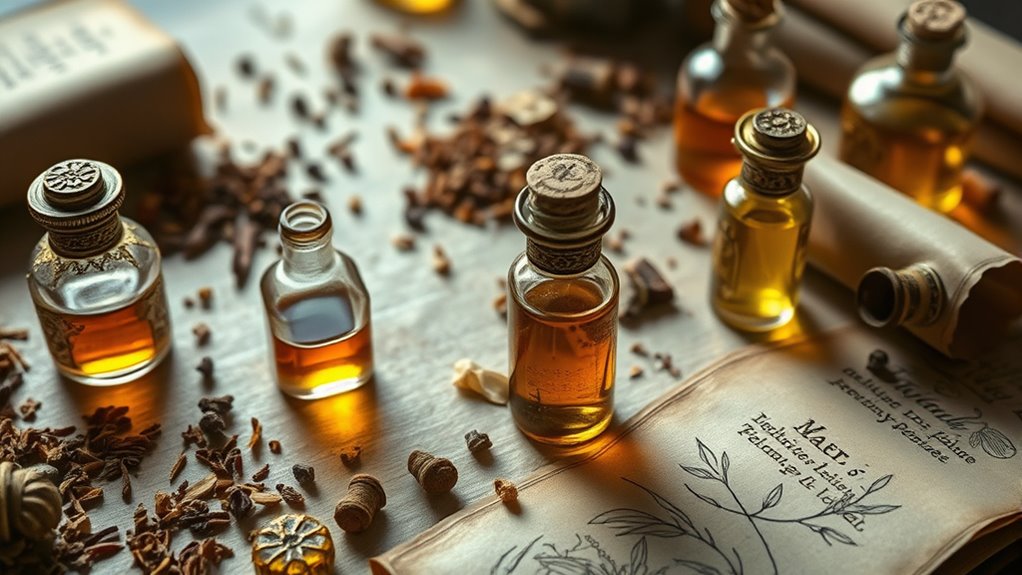
Throughout history, perfumes and fragrances have played an essential role in human culture, dating back thousands of years. You might be surprised to learn how ancient civilizations crafted those alluring scents, relying on early extraction methods that laid the foundation for modern perfumery. These methods, from enfleurage to distillation, allowed artisans to extract aromatic compounds from plants and resins, capturing the essence of nature’s most fragrant elements. As you explore ancient perfumes, it’s fascinating to see how these techniques varied across cultures, each adapting tools and processes to suit their resources and beliefs. For instance, Egyptians perfected the art of distillation, while Persians used pressing and maceration, demonstrating a deep understanding of how to preserve scent while maintaining purity.
Beyond the technical aspects, fragrances in ancient times were deeply intertwined with mythology and symbolism. You might notice that specific scents held sacred or mystical significance, often associated with gods, spirits, or spiritual practices. For example, myrrh and frankincense weren’t just chosen for their aroma; they carried profound symbolic weight in religious ceremonies, representing divine presence or spiritual purification. These perfumes weren’t merely luxurious indulgences but held a sacred purpose, believed to connect humans to the divine or to offer protection. Mythology often reinforced these associations: in Greek lore, certain herbs and flowers were linked to gods and heroes, imbuing their aroma with qualities like strength, love, or healing. The symbolism extended to social status—perfumes signified wealth, power, or spiritual devotion—and were used in rituals, burials, and celebrations to invoke divine favor or ward off evil spirits.
Understanding the cultural symbolism behind ancient perfumes helps you appreciate their significance beyond scent alone. These fragrances carried stories, beliefs, and hopes, making them more than just pleasing aromas. They served as a language of their own—conveying messages about identity, spirituality, and social hierarchy. When you think about the extraction methods used to create these ancient fragrances, it’s clear that each step was infused with cultural meaning. Whether it was a sacred blend of herbs or a royal perfume, every ingredient and technique reflected a worldview rooted in mythology and symbolism. By exploring these ancient practices, you gain insight into how humans have long sought to capture not just a pleasing smell but also a connection to the divine, the natural world, and their own cultural narratives.

Perfume Refill Kit, 10-Piece DIY Cologne & Perfume Making Kit with Storage Box – Includes Transfer Pump, Syringe Extractor, Funnels, Dropper for Travel Bottle Refilling
Complete Perfume Decanter Kit – This all-in-one perfume transfer kit is perfect for DIY perfume making kit enthusiasts,…
As an affiliate, we earn on qualifying purchases.
As an affiliate, we earn on qualifying purchases.
Frequently Asked Questions
How Did Ancient Perfumers Source Rare Ingredients?
You would find ancient perfumers sourcing rare ingredients through botanical sourcing and mineral extraction. They traveled far to collect fragrant flowers, resins, and exotic herbs, often cultivating plants themselves or trading with distant regions. For mineral ingredients like certain aromatics, they extracted essential oils or resins through methods like distillation or crushing. Their dedication and knowledge helped them obtain unique, precious components that defined their luxurious perfumes.
What Modern Techniques Recreate Ancient Fragrance Formulas?
You can recreate ancient fragrance formulas today through synthetic replication and analytical chemistry. Perfume chemists analyze original ingredients using techniques like gas chromatography-mass spectrometry (GC-MS), identifying key scent compounds. Then, they synthesize these compounds in labs, recreating the original aroma with precision. This process allows you to produce authentic-smelling perfumes that honor ancient traditions, using modern science to preserve and revive historic fragrances efficiently and accurately.
Were Ancient Perfumes Used for Medicinal Purposes?
Yes, ancient perfumes often served medicinal purposes, combining aromatic healing and spiritual scents. You might notice that they believed certain fragrances could promote health, ward off evil, or enhance spiritual connection. These perfumes weren’t just for smelling good—they played a role in healing rituals and spiritual practices. By using specific ingredients, ancient perfumers crafted scents that aimed to balance mind, body, and spirit, emphasizing their importance beyond mere adornment.
How Did Trade Routes Influence Fragrance Ingredient Availability?
Trade route dynamics greatly affected fragrance ingredient availability, making some scents rare or scarce. When routes expanded or shifted, you could access new ingredients like exotic spices or precious resins, which influenced perfume formulations. Conversely, ingredient scarcity during disruptions limited your options and led to innovations in scent blending. Overall, trade routes shaped the diversity and richness of ancient fragrances, directly impacting how perfumes were crafted and enjoyed.
What Role Did Cultural Beliefs Play in Perfume Selection?
You recognize that cultural beliefs heavily influence perfume choices, as spiritual symbolism and ritual practices guide scent preferences. In many societies, specific fragrances are believed to carry protective or healing properties, making them essential in ceremonies. You see how these beliefs shape ingredient selection and blending techniques, ensuring perfumes serve not just aesthetic purposes but also spiritual and cultural functions that reinforce tradition and community identity.

QWORK 12 Pieces 100 ML Home Distillation Apparatus Set – to Making Essential Oil, Chemistry Glass Distilling, Lab Glassware Kit
High-Performance Materials: Crafted to withstand high temperatures, our distillation apparatus maintains structural integrity without deforming or breaking, ensuring…
As an affiliate, we earn on qualifying purchases.
As an affiliate, we earn on qualifying purchases.
Conclusion
Now, you see how ancient perfumes blend natural ingredients with artistic mastery, how they evoke memories and emotions, and how they reveal cultural stories through scents. You can imagine the delicate balance of chemistry and craftsmanship, the harmony of nature and innovation, and the timeless allure that continues to inspire. As you explore these fragrances, you connect with history, embrace tradition, and discover the enduring power of scent to captivate, inspire, and transform.
Gdblsm Perfume Making Kit- DIY Cologne Making Kit for Men, Make Your Own Scent with Essential Oil, Spray Bottle, Men's Fragrances Maker, Scent Set, Perfume Gifts for Women Girls Boyfriend
Complete Perfume Making Kit: Use the JUYRLE perfume oils for men to create your own scent! It comes…
As an affiliate, we earn on qualifying purchases.
As an affiliate, we earn on qualifying purchases.

moveland 100 PCS 3ML Dropper Pipettes Essential Oil Transfer, Disposable Plastic Eye Dropper for Science Experiments, Crafting, Makeup Tool
EASY TO USE AND DISPOSABLE: These disposable eye droppers are very easy to use for tiny Applications of…
As an affiliate, we earn on qualifying purchases.
As an affiliate, we earn on qualifying purchases.