
Synthetic dyes revolutionized fashion by making vibrant, consistent colors widely accessible, transforming textile design and manufacturing. Discovered in the mid-19th century, they shifted the industry from limited natural sources to innovative chemical processes that produce bold hues quickly and cheaply. This advancement allowed designers to experiment with new shades and trends, shaping modern aesthetics and fast fashion cycles. To discover how this vibrant revolution began and evolved, keep exploring the fascinating history behind these colorful innovations.
Key Takeaways
- Synthetic dyes emerged in the mid-19th century, revolutionizing textile coloring with vibrant, consistent, and affordable options.
- The discovery of mauveine by William Henry Perkin in 1856 marked the start of the synthetic dye industry.
- Advances in dye chemistry enabled the creation of a broad spectrum of colors and improved dye durability.
- Synthetic dyes transformed fashion by supporting rapid trend changes and expanding design possibilities.
- Their widespread use has significantly influenced modern aesthetics, industry practices, and ongoing sustainability efforts.
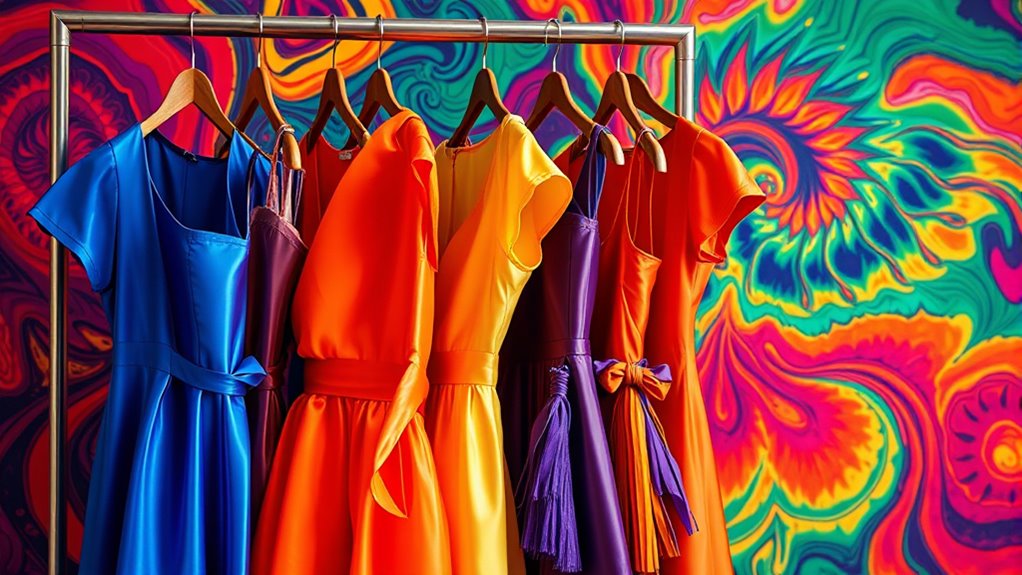
Synthetic dyes have revolutionized the fashion industry by offering vibrant, affordable, and consistent colors for textiles. Before their advent, natural dyes derived from plants, minerals, and insects dominated the scene. While natural dyes carry historical significance and appeal to eco-conscious consumers, they often lack the brightness, durability, and range of shades that synthetic dyes provide. When you compare natural vs. synthetic dyes, the differences become clear: natural dyes tend to be more subdued and less colorfast, whereas synthetic dyes deliver bold, uniform hues that last through multiple washes. This contrast has driven significant color innovation in fashion, pushing designers to experiment with shades previously impossible or impractical to produce with natural sources.
The breakthrough came in the mid-19th century when William Henry Perkin synthesized the first man-made dye, mauveine, in 1856. This discovery marked the beginning of the synthetic dye industry and introduced a new era of possibilities. With synthetic dyes, you no longer had to rely on limited natural resources; instead, chemical processes could create a vast spectrum of colors efficiently and economically. This innovation enabled mass production, making colorful clothing accessible to a broader audience and transforming the fashion landscape. Bright reds, electric blues, and neon greens became staples in fashion collections, thanks to these technological advances.
Color innovation didn’t stop there. As chemistry evolved, so did the variety and quality of synthetic dyes. Today, scientists develop dyes with enhanced colorfastness, reduced environmental impact, and even biodegradable properties. The ability to produce consistent, vibrant colors rapidly changed how fashion brands approach design and manufacturing. You can now see how synthetic dyes allow for rapid trend adaptation because new shades can be created and introduced in record time. This flexibility fuels a cycle of constant innovation, pushing designers to explore daring palettes and techniques that were once impossible to achieve with natural dyes alone.
While natural dyes still hold a special place for their cultural and ecological value, synthetic dyes continue to dominate due to their versatility. They have not only expanded the spectrum of colors available but also spurred ongoing innovation in textile coloration. You benefit from this progress whenever you wear brightly colored, durable garments, appreciating the blend of science and artistry that makes modern fashion so dynamic. Ultimately, synthetic dyes have reshaped the industry, fostering an environment where color innovation thrives and fashion keeps evolving at a rapid pace.
Frequently Asked Questions
How Did Synthetic Dyes Influence Global Textile Trade Routes?
Synthetic dyes profoundly influenced global textile trade routes by fueling trade expansion and promoting color globalization. You’ll notice how these vibrant dyes created new demand for raw materials and manufacturing centers across continents. As a result, trade routes expanded to source chemicals and distribute colorful textiles worldwide, connecting regions and boosting economies. This shift made colorful fabrics more accessible, transforming fashion and encouraging international exchange in textiles and ideas.
What Environmental Effects Resulted From Synthetic Dye Production?
Imagine rivers running with vibrant colors, but beneath the surface, chemical runoff taints the water, harming ecosystems. Synthetic dye production causes significant environmental effects, like water pollution that poisons aquatic life and contaminates drinking water sources. You might not see it at first, but these dyes leave a toxic trail, disrupting nature’s balance and threatening health, all while the beauty of the colors masks their darker environmental toll.
Did Synthetic Dyes Affect Cultural Fashion Practices Worldwide?
Synthetic dyes influenced cultural fashion practices worldwide by blending traditional techniques with modern colors, affecting cultural symbolism. You might notice that some communities adopted synthetic dyes into their traditional garments, shifting the way they express cultural identity. This integration allowed for more vibrant and diverse styles, but also challenged authentic, time-honored techniques. Overall, synthetic dyes transformed fashion practices globally, creating new cultural expressions while sometimes risking the loss of traditional craftsmanship.
How Did Synthetic Dyes Impact Clothing Affordability Over Time?
Synthetic dyes revolutionized clothing affordability more than any other innovation, making vibrant colors accessible to everyone. Thanks to dye innovation, you no longer need to spend a fortune on natural dyes, which were rare and expensive. This breakthrough drastically lowered costs, allowing people from all walks of life to enjoy colorful fashion. As a result, color accessibility skyrocketed, transforming clothing from a luxury into a everyday necessity for ordinary people.
Are There Modern Alternatives to Traditional Synthetic Dyes?
Yes, there are modern alternatives to traditional synthetic dyes. You can explore eco-friendly alternatives like plant-based dyes, which are gaining popularity due to their sustainability. The natural dye revival is making a comeback, offering vibrant colors without harmful chemicals. These options appeal to environmentally conscious consumers who want stylish, sustainable clothing. Embracing these alternatives helps reduce environmental impact while enjoying beautiful, naturally dyed fabrics.
Conclusion
As you consider the vibrant history of synthetic dyes, you realize their true power isn’t just in color but in the transformation they sparked. But what’s coming next? With technology advancing faster than ever, the future of dyes could hold surprises beyond your imagination. Will fashion continue to evolve in unexpected ways? Only time will tell. Stay tuned—what’s next might just change everything you thought you knew about color forever.