
TL;DR

Prime made for students and young adults
- Fast, free delivery for dorm and study essentials
- Prime Video and Amazon Music included
- Member-only deals
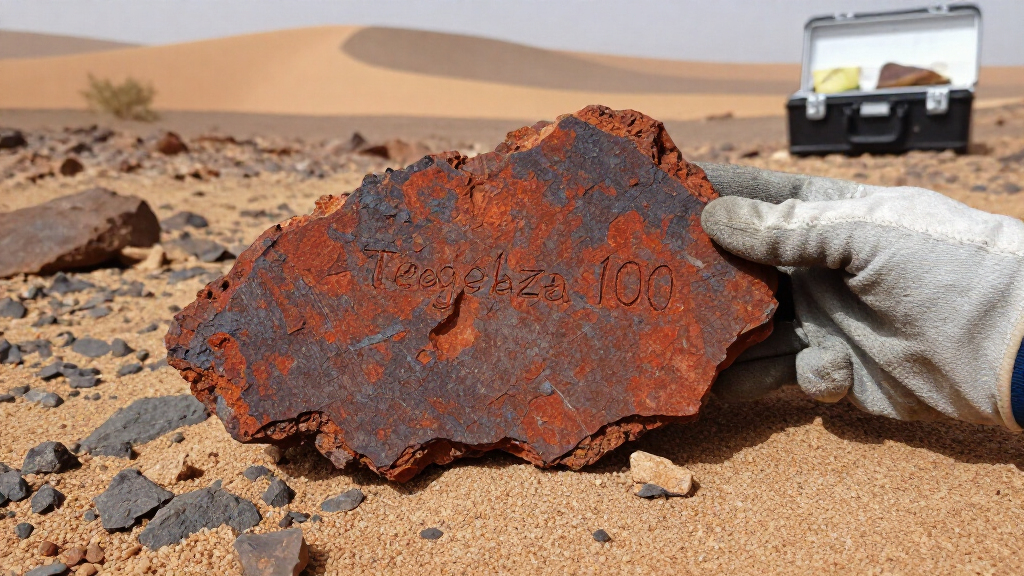
NASA published an image of a slice of Teghaza 001, a Martian meteorite described by the agency as among the most ancient found on Earth. The slice was used to determine the rock’s age; its minerals also record aspects of Mars’ crust and mantle, impact pressure, and alteration after it reached Earth.
NASA published an image on October 29, 2026, showing a slice of Teghaza 001, a meteorite the agency describes as one of the most ancient Martian meteorites found on Earth. The slice was used to determine the rock’s age, and its mineral features provide a guide for studying the meteorite’s formation, impact history and alteration on Earth.
The image, identified by NASA as PIA26801, presents the meteorite slice in reflected light. NASA says images of this kind work as a scientific road map: researchers use visible features to locate minerals of interest before examining them with other instruments. The agency’s post includes an annotated version, Figure A, that labels several kinds of material.
Among the identified minerals are iron-titanium oxides, shown as brighter grains, and pyroxene, shown in medium gray. NASA says both help tell the story of the formation of Mars’ crust and mantle. The image also marks shocked plagioclase, appearing darker gray, which the agency says forms under the extreme pressures associated with impacts.
NASA links that impact evidence to the event that launched Teghaza 001 from Mars into space, on a journey that eventually brought it to Earth as a meteorite. The description also identifies fine-grained carbonate, sulfate and clay minerals as alteration products formed on Earth. The image therefore brings together evidence from different stages: the rock’s Martian origins, the force of its ejection and changes after arrival.
Minerals Record Teghaza’s Journey
The slice matters because a meteorite can preserve traces of events that are otherwise difficult to study directly. NASA says the labeled minerals offer clues to Mars’ crust and mantle, while shocked plagioclase records the high pressures associated with an impact. Together, these features let researchers investigate both the rock’s formation and the event that helped send it away from Mars.
The distinction between Martian material and Earth alteration is also scientifically relevant. NASA identifies carbonate, sulfate and clay as fine-grained minerals formed on Earth, rather than presenting them as original evidence of Martian conditions. Recognizing that distinction helps scientists interpret which features may reflect the meteorite’s history on Mars and which developed after it landed here.
The published image is a research aid, not a complete account of the findings. Its practical value is showing how reflected-light imaging can help scientists locate features for further analysis. NASA says the slice was used to determine the rock’s age, but the image description does not provide the resulting age or explain the dating method.
Popular right now

Shark Rotator Lift-Away Vacuum with DuoClean PowerFins (LA555) – Dark Grey

Dyson Airwrap i.d. Multi-Styler for Straight and Wavy Hair

KitchenAid Artisan Series 5-Quart Tilt-Head Stand Mixer, Dried Rose (KSM150PS)
As an affiliate, we earn on qualifying purchases.
From Martian Rock to Earth Sample
NASA’s description places Teghaza 001 within the broader category of Martian meteorites: rocks that originated on Mars and later reached Earth. In this case, the agency says an impact produced the pressure recorded in shocked plagioclase and sent the rock through space. The photojournal entry calls Teghaza 001 one of the most ancient Martian meteorites ever found on Earth, but does not give a numerical age or specify how that standing was established.
The October 29, 2026, entry is a NASA/JPL-Caltech image release, rather than a detailed research paper in the supplied material. Its focus is the slice and the minerals marked in the image. NASA credits the image to NASA/JPL-Caltech and assigns it the reference number PIA26801. The text explains the scientific purpose of the slice but does not name the researchers or provide publication details for the age determination.
Age and Analysis Details Not Given
The NASA image description does not state Teghaza 001’s numerical age, how that age was calculated, or the uncertainty range associated with the measurement. It says the slice was used to determine the age, but offers no underlying results or methods. The description also does not provide details on when or where the meteorite was found, its size, or the circumstances of its recovery.
NASA’s characterization of the rock as one of the most ancient Martian meteorites found on Earth is not accompanied in this post by a comparison list or a specific ranking. The image identifies minerals and describes their significance, but it does not quantify their abundance or report additional instrument results. Those points should not be inferred from the photograph alone.
Further Dating Results Could Add Detail
The published post provides no schedule for a follow-up announcement. Further information about the age measurement, its method and its uncertainty would help readers understand the dating result beyond the image description. Additional analysis could also clarify how researchers distinguish minerals formed on Mars from the alteration products NASA says developed on Earth.
For now, the confirmed development is the release of the NASA/JPL-Caltech image and the agency’s explanation of the slice’s use and visible mineral features. Any more specific claims about the meteorite’s age, research team or scientific conclusions would require information beyond the supplied NASA photojournal entry.
Key Questions
What is Teghaza 001?
Teghaza 001 is a Martian meteorite. NASA describes it as one of the most ancient Martian meteorites found on Earth.
Why did scientists use a slice of the meteorite?
NASA says the slice was used to determine the rock’s age. The image also helps scientists locate minerals for analysis with other instruments.
What minerals are identified in the image?
The annotations identify iron-titanium oxides, pyroxene and shocked plagioclase. NASA also describes fine-grained carbonate, sulfate and clay minerals as alteration products formed on Earth.
Does NASA give Teghaza 001’s exact age?
No. The October 29, 2026, image description says the slice was used to determine the age, but does not report a numerical age, dating method or uncertainty range.
What does the image say about the meteorite’s history?
NASA says iron-titanium oxides and pyroxene provide clues to the formation of Mars’ crust and mantle. Shocked plagioclase records extreme impact pressure, while the agency attributes some fine-grained minerals to alteration after the rock reached Earth.
Source: science.nasa.gov