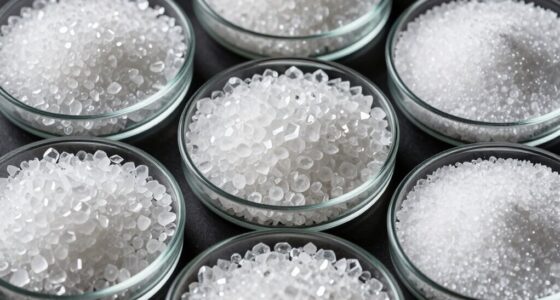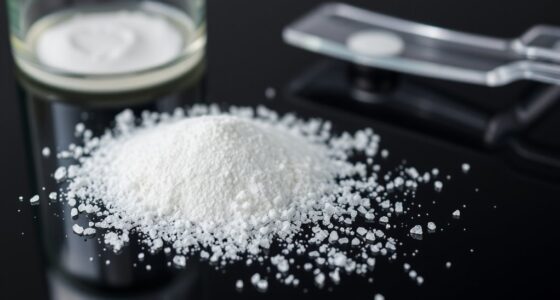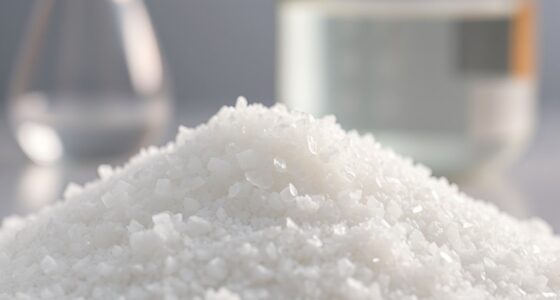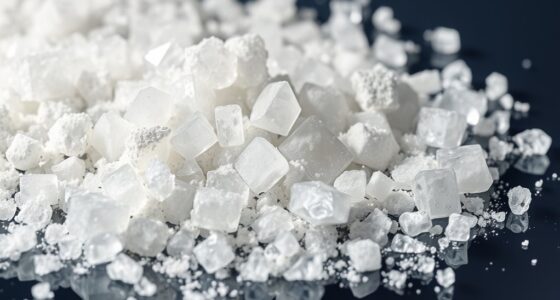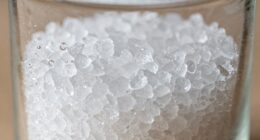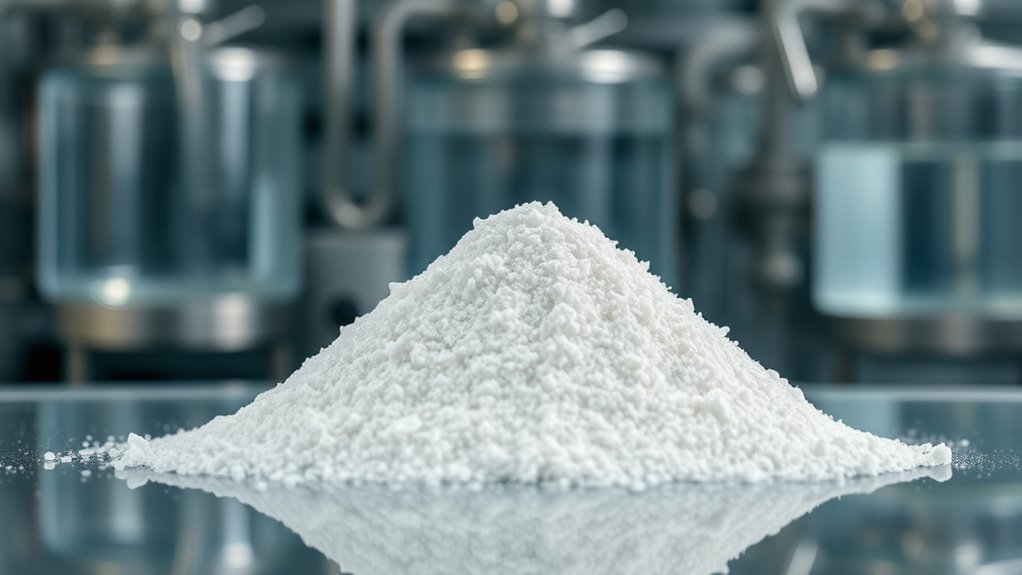

Sodium carbonate, or soda ash, is essential in glassmaking because it acts as a flux, lowering silica’s melting point for clearer, smoother glass. It’s also widely used in water treatment to adjust pH levels and soften water by removing calcium and magnesium. This helps prevent pipe corrosion and improves equipment lifespan. If you want to understand how soda ash impacts these industries further, there’s more worth exploring.
Key Takeaways
- Sodium carbonate acts as a flux in glassmaking, reducing silica melting temperature for clearer, smoother glass production.
- It streamlines glass manufacturing processes and lowers energy consumption through its fluxing properties.
- In water treatment, it adjusts pH levels and softens water by precipitating calcium and magnesium ions.
- Proper use of soda ash prevents pipe corrosion and protects equipment in water systems.
- Environmental management of soda ash production and application minimizes ecological impacts and promotes sustainability.

Have you ever wondered what makes soda ash an essential ingredient in industries like glassmaking, detergents, and chemicals? It all comes down to its unique chemical properties and versatility. As a major source of sodium carbonate, soda ash plays a vital role in various industrial applications, particularly in glass production and water treatment. Its use, however, comes with environmental considerations that influence how it’s sourced and processed. Understanding both its benefits and impacts helps you appreciate why soda ash remains a key industrial chemical today.
In glassmaking, soda ash acts as a flux, lowering the melting temperature of silica, which is the primary component of glass. This reduces energy consumption and enhances production efficiency. When you see a clear, smooth glass surface, you’re witnessing the result of soda ash’s ability to streamline the manufacturing process. Its application extends beyond just glass; in detergent manufacturing, soda ash softens water and boosts cleaning effectiveness. It helps break down grease and stains by increasing alkalinity, which is essential for effective cleansing. In chemical manufacturing, soda ash serves as a raw material for producing other chemicals like sodium bicarbonate and sodium silicates, further emphasizing its industrial significance.
However, the environmental impact of soda ash production and use warrants attention. Traditional methods involve mining trona ore or solving natural brines, processes that can disturb ecosystems, deplete natural resources, and generate waste. The extraction process may lead to land degradation and water contamination if not managed responsibly. Furthermore, manufacturing soda ash consumes energy, often derived from fossil fuels, contributing to greenhouse gas emissions. That’s why sustainable practices are increasingly essential—many companies now adopt environmentally friendly extraction and processing techniques to mitigate these concerns. Additionally, advancements in sustainable extraction methods aim to reduce ecological footprints and promote responsible resource management.
In water treatment, soda ash is indispensable for controlling pH levels and removing hardness from water supplies. It softens water by precipitating calcium and magnesium ions, making it easier to treat and use for drinking, industrial processes, or irrigation. Its ability to regulate pH also prevents corrosion in pipes and equipment, ensuring safety and longevity. Yet, the environmental footprint of large-scale soda ash usage in water treatment shouldn’t be overlooked. Excessive use can lead to increased alkalinity in natural water bodies, potentially harming aquatic life.

Chemwell Soda Ash Lite Grade 100 (2 lbs) – 100% Pure Sodium Carbonate – Water Softener, pH Adjuster, Cleaner & Pool Chemical, Tie-Die Enhancer – Multi-Purpose Powder for Home & Industrial Use
100% PURE – Highest-purity Soda Ash Lite with no additives or fillers; reliable for home, lab, or industrial…
As an affiliate, we earn on qualifying purchases.
As an affiliate, we earn on qualifying purchases.
Frequently Asked Questions
How Is Soda Ash Environmentally Disposed of After Use?
After use, you should recycle soda ash to minimize environmental impact. Proper soda ash recycling involves collecting and processing leftover material to prevent it from contaminating soil or water sources. This approach reduces waste and limits potential ecological harm. By actively recycling soda ash, you help protect the environment, conserve resources, and promote sustainable practices, ensuring that the chemical’s use remains as eco-friendly as possible.
What Are the Latest Innovations in Soda Ash Production Technology?
You should explore the latest innovations in soda ash production, which focus on sustainable manufacturing and automation advancements. New methods like the Solvay process improvements and fluidized bed reactors reduce energy consumption and emissions. Automation enhances process efficiency and precision, minimizing waste. These innovations help produce soda ash more environmentally friendly, aligning with global sustainability goals and reducing the industry’s ecological footprint.
Can Soda Ash Be Used in Pharmaceutical Applications?
Yes, soda ash can be used in pharmaceutical applications. You use it as a pharmaceutical excipient to adjust pH levels and improve stability in medicinal formulations. Its alkaline properties help in manufacturing effervescent tablets and other dosage forms. When incorporated properly, soda ash guarantees consistency and efficacy, making it a valuable ingredient in pharmaceutical production. Just ensure it meets safety and purity standards required for medicinal use.
How Does Soda Ash Compare to Other Alkali Agents in Water Treatment?
You’ll find soda ash excels in water treatment because of its superior alkali effectiveness and ability to precisely adjust water pH. Unlike other alkali agents, soda ash dissolves easily and offers consistent pH control, making it ideal for balancing water chemistry. Its efficiency means you need less material, reducing costs. Overall, soda ash provides reliable, effective water pH adjustment, outperforming many other alkali options in water treatment processes.
Are There Any Health Risks Associated With Handling Soda Ash?
Handling soda ash can pose health concerns if you’re not careful. It may cause skin and eye irritation, so you should always wear appropriate handling precautions like gloves and goggles. Inhalation of dust can irritate your respiratory system. To stay safe, work in a well-ventilated area, avoid creating dust, and wash your hands thoroughly after handling. Taking these precautions minimizes health risks associated with soda ash.

Duda Energy 50 lb Pail of Pure Sodium Carbonate Dense Soda Ash Na2CO3 pH Adjust Chemical Spa Pool Cleaning Dishwasher
Industrial Grade Soda ash (Sodium Carbonate) Na2CO3 99.8+% Soda Ash, 0.2% Water
As an affiliate, we earn on qualifying purchases.
As an affiliate, we earn on qualifying purchases.
Conclusion
Now that you know how sodium carbonate is crucial in glassmaking and water treatment, consider this: over 50 million tons are produced worldwide each year. This powerful compound not only helps create the glass you use daily but also guarantees clean, safe water for millions. Its versatility and importance make it an indispensable chemical in modern industry. Next time you see a glass or enjoy purified water, remember the role of soda ash behind the scenes.

In The Swim pH Increaser for Pools – Granular 100% Sodium Carbonate (Soda Ash) to Raise pH Up – 45 Pounds
In The Swim pH increaser raises the total alkalinity and pH levels in your pool.
As an affiliate, we earn on qualifying purchases.
As an affiliate, we earn on qualifying purchases.

Duda Energy 5 lb Bag of Pure Sodium Carbonate Dense Soda Ash Na2CO3 pH Adjust Chemical Spa Pool Cleaning Dishwasher
Industrial Grade Soda ash (Sodium Carbonate) Na2CO3 99.8+% Soda Ash, 0.2% Water
As an affiliate, we earn on qualifying purchases.
As an affiliate, we earn on qualifying purchases.