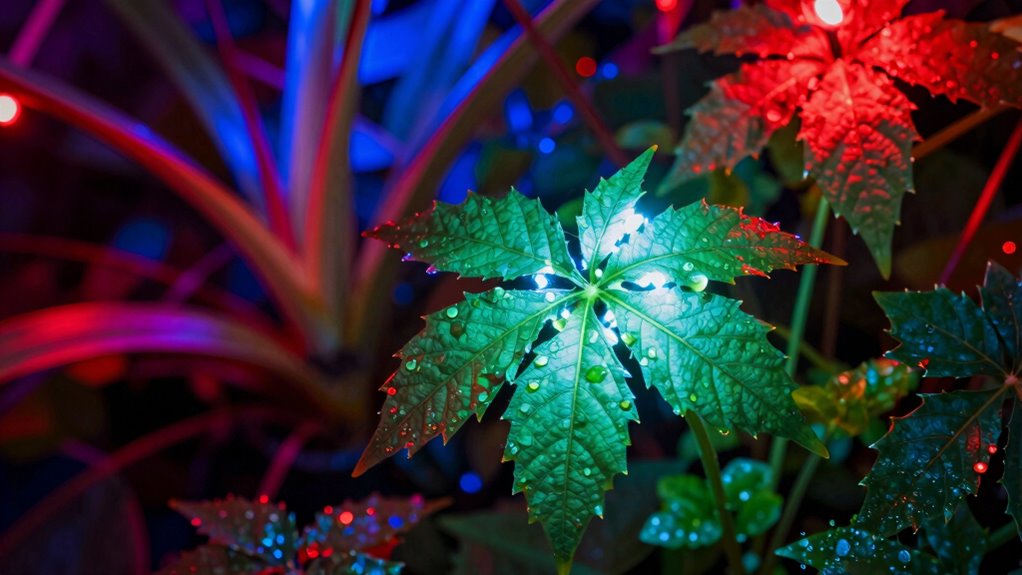

LED grow lights give you the ability to target specific wavelengths that directly influence plant chemistry. By adjusting the light spectrum, you can promote the production of compounds like chlorophyll, carotenoids, and sugars, which improve growth, flavor, and overall health. Different colors encourage vegetative growth or flowering, making your plants respond precisely to their needs. If you want to discover how customizing light spectra can maximize plant quality, keep exploring how these lights work.

Prime made for students and young adults
- Fast, free delivery for dorm and study essentials
- Prime Video and Amazon Music included
- Member-only deals
Key Takeaways
- LED grow lights provide specific wavelengths that influence plant chemical processes like chlorophyll and carotenoid production.
- Spectrum tuning with LEDs enhances photosynthesis efficiency, affecting plant growth and chemical composition.
- Different light spectra trigger the synthesis of secondary metabolites, improving flavor, nutrient content, and flower vibrancy.
- LEDs’ energy efficiency and low heat allow closer light placement, optimizing chemical responses without stress.
- Customizable LED spectra enable targeted manipulation of plant chemistry for improved quality and tailored growth outcomes.
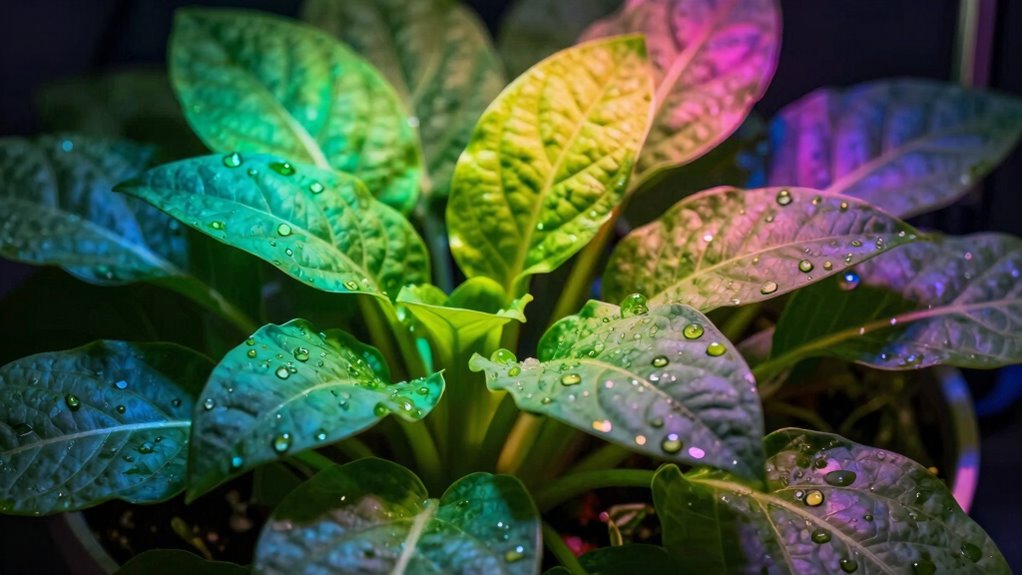
LED grow lights have revolutionized indoor gardening by providing targeted wavelengths that directly influence plant chemistry. Unlike traditional lighting, LEDs allow you to fine-tune the light spectrum, guaranteeing your plants receive exactly what they need for ideal growth. This precision plays a pivotal role in enhancing photosynthesis efficiency, which is the process plants use to convert light into energy. When you choose the right spectrum, you boost the plant’s ability to produce sugars and other essential compounds, leading to healthier, more vigorous growth.
Light spectrum optimization is at the heart of why LED grow lights outperform conventional options. Plants respond differently to various wavelengths—blue light encourages vegetative growth, while red light promotes flowering and fruiting. By tailoring your LED setup to include the appropriate mix of these wavelengths, you can influence how efficiently your plants photosynthesize. This targeted approach means your plants absorb light more effectively, making the process of converting light into energy faster and more complete. As a result, you’ll notice quicker growth rates, increased yields, and improved plant health overall.
You’ll find that LED grow lights also allow you to manipulate plant responses beyond just growth speed. For example, certain wavelengths trigger the production of secondary metabolites, like chlorophyll, carotenoids, and other phytochemicals that affect plant chemistry and nutritional content. When you optimize the light spectrum, you’re not just encouraging faster growth—you’re also influencing the quality of your harvest. This control over plant chemistry can lead to more flavorful herbs, richer fruits, and more vibrant flowers, depending on what you’re growing.
Moreover, LEDs consume less energy compared to traditional grow lights, which means you can run them longer without skyrocketing your electricity bill. Their low heat emission allows you to place lights closer to your plants, maximizing light absorption without risking heat damage. When you combine energy efficiency with spectrum customization, you create a highly effective environment for your plants. This guarantees that every photon emitted is used efficiently, further boosting photosynthesis efficiency and overall plant response. Additionally, understanding the chemistry of plant response helps you better tailor your lighting setup to achieve desired growth outcomes. Incorporating light spectrum optimization is essential for maximizing plant health and productivity.
In addition, the ability to customize light spectrum with LED technology helps optimize plant chemistry more precisely than traditional lighting options. In essence, LED grow lights put you in control of your indoor garden’s chemistry. By focusing on light spectrum optimization, you enhance photosynthesis efficiency and steer your plants toward healthier, more productive growth. This tailored lighting approach transforms your gardening experience, making it easier to achieve consistent, high-quality results while conserving energy and resources. Furthermore, this control allows for experimenting with different spectra to discover what best suits specific plant varieties and their unique chemistry responses.
LED grow lights for plant chemistry
As an affiliate, we earn on qualifying purchases.
As an affiliate, we earn on qualifying purchases.
Frequently Asked Questions
How Do Different LED Wavelengths Affect Plant Growth Stages?
Different LED wavelengths markedly impact each growth stage by optimizing photosynthesis efficiency and light spectrum. Blue light promotes vegetative growth, while red light boosts flowering and fruiting. You’ll notice better plant development when you tailor the light spectrum to each phase, ensuring your plants absorb the right wavelengths. By using spectrum optimization, you maximize growth, health, and yield, making your LED grow lights more effective throughout the entire plant lifecycle.
Can LED Grow Lights Replace Natural Sunlight Entirely?
No, LED grow lights can’t replace natural sunlight entirely. While they improve photosynthesis efficiency through light spectrum manipulation, sunlight provides a full spectrum that’s hard to replicate completely. LEDs are great for supplementing or extending growth periods indoors, but natural sunlight offers a broader range of wavelengths essential for maximum plant health. Relying solely on LEDs may limit certain growth aspects that sunlight naturally supports.
What Are the Environmental Impacts of Using LED Grow Lights?
Using LED grow lights impacts the environment mainly through energy consumption and light pollution. While they use less energy than traditional lighting, they still contribute to overall energy use, which can affect carbon emissions. Additionally, if used improperly, they may cause light pollution, disturbing local ecosystems and nocturnal wildlife. However, their efficiency and targeted use help minimize these effects, making them a more eco-friendly choice than older lighting options.
How Do LED Grow Lights Influence Plant Nutrient Uptake?
You’ll find that LED grow lights influence plant nutrient uptake by impacting soil nutrient dynamics and root absorption processes. The specific light spectrum encourages healthy root development and enhances the efficiency of nutrient absorption. As a result, your plants can better access essential nutrients like nitrogen, phosphorus, and potassium, promoting vigorous growth. By optimizing these processes, LED lights help guarantee your plants stay healthy and productive.
Are There Specific LED Brands Proven to Optimize Plant Chemistry?
You might find that brands like Spider Farmer and Viparspectra stand out for optimizing plant chemistry, thanks to their spectral efficiency and brand reliability. Coincidentally, their lights deliver precise wavelengths that boost nutrient absorption and growth. When choosing, focus on those with proven track records, so you can confidently support your plants’ health. Relying on reputable brands guarantees consistent quality, helping you achieve better yields and healthier plants with your LED grow lights.
As an affiliate, we earn on qualifying purchases.
Conclusion
As you harness LED grow lights, you shape not just plant growth but the very chemistry within each leaf. Like a conductor guiding an orchestra, your choices influence complex biological reactions—photosynthesis and nutrient uptake—that define importance. While the lights mimic natural sunlight, they also remind you that technology and nature are intertwined, each amplifying the other. In this dance of science and life, your decisions become the silent conductor shaping thriving, resilient plants.
As an affiliate, we earn on qualifying purchases.
energy efficient indoor grow lights
As an affiliate, we earn on qualifying purchases.
As an affiliate, we earn on qualifying purchases.
Fall Picks
fall essentials
As an affiliate, we earn on qualifying purchases.