To produce potassium nitrate from natural brines, you start by locating mineral-rich geological formations, such as salt beds or evaporite layers. You extract and concentrate the brine through evaporation, then purify it by removing impurities. Next, control crystallization conditions to precipitate potassium nitrate carefully. The crystals are filtered, washed, dried, and packaged. If you continue exploring, you’ll uncover detailed steps to optimize quality and sustainability throughout the process.
Key Takeaways
- Identify and extract natural brines rich in potassium and nitrates through geological surveys and specialized drilling.
- Concentrate brines via evaporation and filter out impurities to obtain high-salinity, purified solutions.
- Crystallize potassium nitrate by controlling temperature, supersaturation, and cooling rates during evaporation.
- Use filtration and washing to purify crystals, removing residual impurities and ensuring product quality.
- Dry, package, and store the final potassium nitrate while maintaining environmental sustainability and product integrity.
Identifying Natural Brine Sources

How do you effectively identify natural brine sources for potassium nitrate production? You begin by analyzing biological indicators, which reveal past ecological conditions and hint at mineral richness. These indicators can include specific algae, microorganisms, or organic deposits that thrive in mineral-rich environments. Next, you assess mineral compositions through sampling and laboratory testing, focusing on potassium, nitrate, and other relevant minerals. High potassium levels alongside nitrogen compounds suggest potential brine sources suitable for potassium nitrate production. Pay attention to the geological context as well; areas with evaporite deposits often contain natural brines with desirable mineral profiles. Additionally, understanding sound healing science can inform sustainable extraction methods that promote health and environmental balance. Combining biological indicators with detailed mineral analyses helps you pinpoint the most promising brine sources, ensuring efficient and sustainable extraction for your potassium nitrate manufacturing process.
Extraction of Brine From Geological Formations

Extracting brine from geological formations involves drilling into subsurface deposits where natural brines are stored, often within salt beds, aquifers, or evaporite layers. These geological formations contain concentrated mineral deposits that hold the brine rich in dissolved salts. You’ll need specialized drilling equipment to reach these depths safely and efficiently. Once you access the deposit, you extract the brine through pumping systems designed to handle high salinity fluids without contamination. The geological formations vary in depth and composition, so understanding their structure is essential for successful extraction. Properly locating and tapping into these mineral deposits ensures a steady supply of brine, which is critical for the subsequent steps in producing potassium nitrate. Geological surveys help optimize the extraction process and minimize environmental impact, especially considering the evolving AI capabilities that can assist in analyzing geological data more efficiently. Utilizing advanced geophysical methods can further improve the accuracy of locating optimal extraction sites.
Concentration and Purification of the Brine

Once the brine has been successfully extracted from geological formations, the next step involves concentrating and purifying it to remove impurities and increase the concentration of potassium salts. You do this by increasing the brine’s salinity through evaporation or other methods, which helps isolate potassium-rich solutions. During this process, impurity removal is essential; unwanted minerals and contaminants are separated to enhance purity. Techniques such as filtration, centrifugation, or chemical treatment help eliminate insoluble impurities and dissolved impurities that could interfere with final product quality. Filtration is particularly effective in removing suspended particles and ensuring clarity of the solution. By carefully controlling these steps, you guarantee the brine’s salinity reaches the desired level, making it suitable for subsequent processing. Furthermore, understanding the chemical composition of the impurities aids in selecting the most effective purification techniques. This purification process lays the foundation for efficient potassium nitrate production. Celebrity transformations reveal how meticulous processes and attention to detail are crucial for achieving high-quality results.
Precipitation of Potassium Nitrate
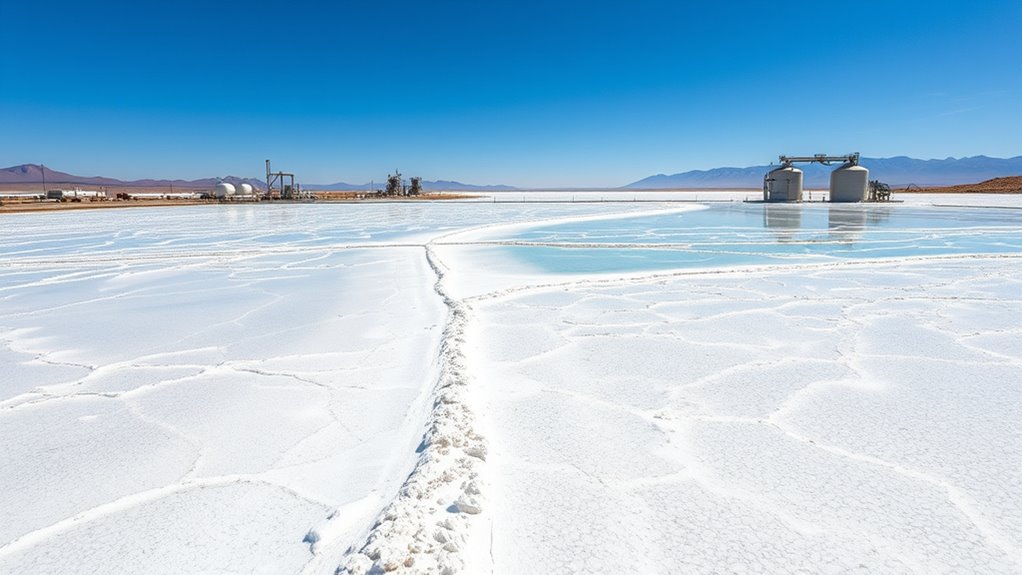
Precipitating potassium nitrate efficiently requires optimizing crystallization conditions to guarantee high yield and quality. Understanding the salt’s precipitation mechanism helps you control factors like temperature and concentration. Additionally, selecting appropriate purification and filtration methods guarantees the final product’s purity. Properly managing crystallization parameters is essential to achieve consistent and high-quality potassium nitrate production. Employing suitable filtering techniques can further enhance process efficiency and safety.
Crystallization Conditions Optimization
Optimizing crystallization conditions is essential for efficient potassium nitrate precipitation from natural brines. To achieve this, you should carefully control temperature, concentration, and cooling rates. These factors influence the thermal stability of the solution, preventing unwanted decomposition or impurity formation. Proper conditions also promote favorable crystal morphology, which improves filtration and handling. Here are some key considerations:
- Maintain ideal temperature to balance solubility and thermal stability
- Adjust cooling rates for uniform crystal growth
- Control solution concentration to avoid supersaturation issues
- Minimize impurities that could disrupt crystal morphology
- Use agitation to promote even crystal development
- Monitoring data privacy concerns is crucial when managing sensitive process data to ensure compliance with regulations and protect proprietary information.
Nitrate Salt Precipitation Mechanism
Understanding the mechanism behind nitrate salt precipitation is essential for controlling the formation of potassium nitrate from natural brines. When the solution becomes supersaturated, salt crystallization begins as excess dissolved salts start to form solid crystals. This process is driven by the degree of supersaturation, which determines how readily potassium nitrate precipitates. As concentration increases beyond equilibrium levels, nucleation occurs, leading to the formation of salt crystals. Controlling factors like temperature, concentration, and evaporation rate influences the onset of crystallization. Proper management of solution supersaturation ensures uniform salt crystallization, minimizing impurities and optimizing yield. Additionally, color accuracy impacts the overall quality of the precipitated salt, affecting its visual purity and market value. By understanding this mechanism, you can better manipulate conditions to control the size, purity, and rate of potassium nitrate salt formation during the precipitation process. Supersaturation levels play a crucial role in the efficiency of the process and can be optimized through careful monitoring of solution conditions. Furthermore, maintaining consistent headphone compatibility ensures accurate process control and equipment performance during chemical processing.
Purity and Filtration Methods
Ensuring the purity of potassium nitrate during precipitation is essential to producing a high-quality product. Meeting strict purity standards depends on effective filtration techniques that remove impurities and unwanted residues. You’ll want to carefully select filtration methods such as filter presses or centrifugation to guarantee clarity and purity. Proper filtration not only improves product quality but also minimizes impurities that could compromise stability or potency. To optimize filtration, consider factors like flow rate, filter medium, and temperature control. Maintaining cleanliness and regular maintenance of equipment also plays a critical role in achieving consistent results. Additionally, understanding the horsepower of electric dirt bikes can be useful when designing energy-efficient filtration systems. By prioritizing effective filtration techniques, you guarantee your potassium nitrate meets purity standards and is suitable for its intended applications. Implementing advanced filtration technologies can further enhance the removal of microscopic impurities, ensuring higher purity levels.
Filtration and Washing Processes
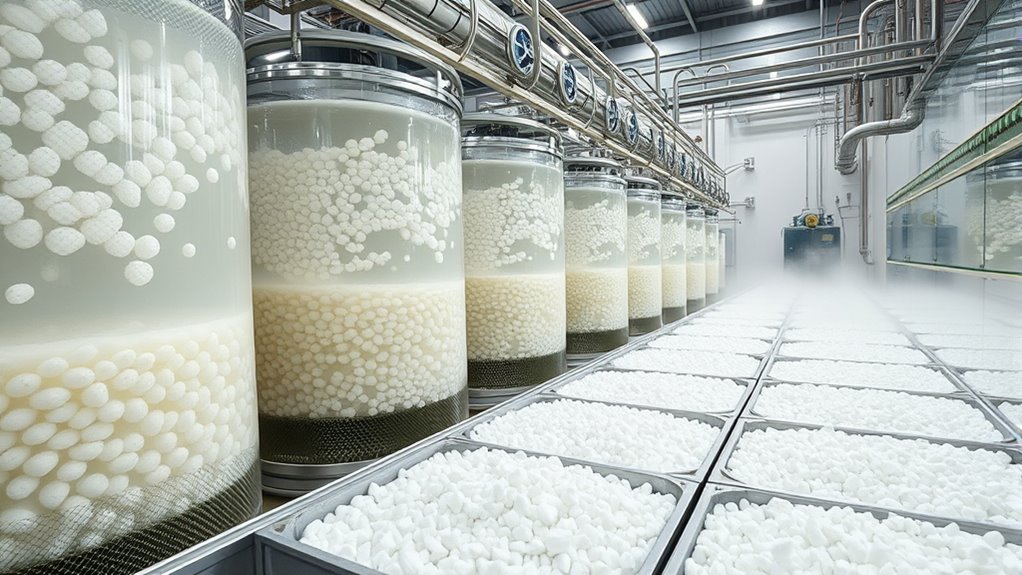
You need effective filtration techniques to separate the solid potassium nitrate from the liquid brine efficiently. Optimizing washing processes guarantees the removal of impurities without losing valuable product. By focusing on these steps, you can improve overall purity and yield of the final potassium nitrate. Incorporating proper filter maintenance ensures consistent separation quality and prevents contamination. Regular inspection and cleaning of filters prevent clogging and maintain optimal flow rates, which is essential for efficient separation. Additionally, understanding filter media compatibility with the chemicals involved can significantly enhance the filtration effectiveness.
Filtration Techniques Overview
Filtration and washing are critical steps in the potassium nitrate production process, as they help separate solid impurities from the liquid solution and guarantee product purity. You’ll primarily use techniques like membrane filtration and depth filtration to accomplish this. Membrane filtration effectively removes fine particles, ensuring high purity, while depth filtration captures larger impurities and prevents clogging. These methods are essential for optimizing filtration efficiency and maintaining consistent product quality. Proper selection of filtration media and techniques influences the clarity of the solution and the purity of the final product. By controlling flow rates and pressure, you ensure efficient separation. Additionally, understanding the effectiveness of filtration methods can help optimize the overall process. Selecting the appropriate filtration media and adjusting process parameters are vital for achieving desired purity levels. Utilizing advanced filtration technologies can further enhance process reliability and product quality. Remember, combining membrane and depth filtration creates a robust system that improves overall process reliability and purity standards.
Washing Efficiency Optimization
Optimizing washing efficiency is crucial for maximizing product purity and minimizing waste in potassium nitrate production. Effective washing ensures thorough removal of residual impurities, which can interfere with chemical reactions and reduce product quality. To enhance efficiency, control the washing water volume and flow rate, ensuring it reaches all solid surfaces uniformly. Proper filtration before washing minimizes contamination and improves waste management by reducing excess wastewater. Adjusting washing parameters based on the solubility of impurities prevents unnecessary water use. This not only conserves resources but also prevents dilution of the product. By fine-tuning filtration and washing steps, you optimize chemical reactions during crystallization and reduce waste, ensuring a cleaner, purer final product while supporting sustainable waste management practices.
Drying and Packaging of the Final Product
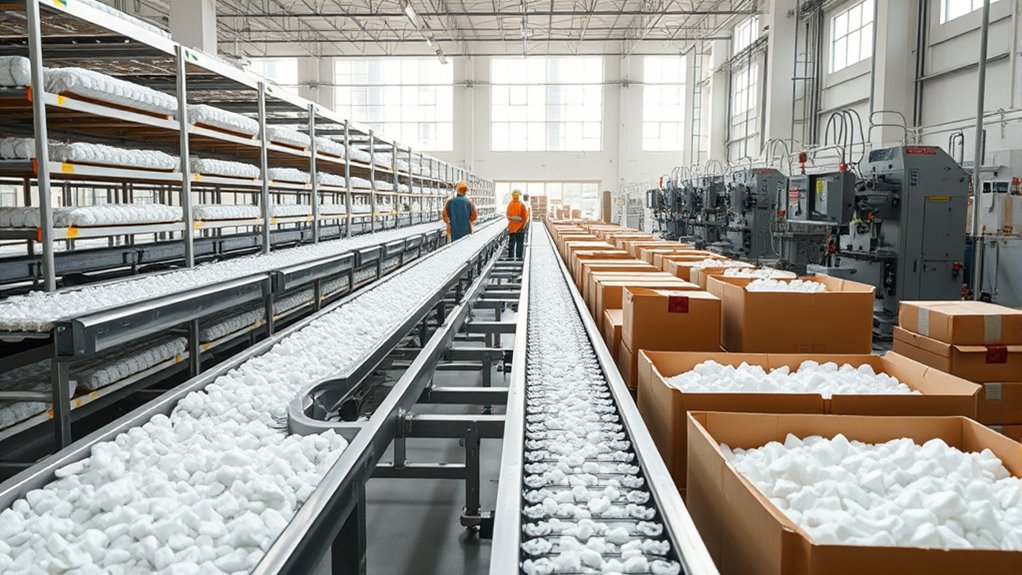
After the potassium nitrate has been thoroughly dried to achieve the desired purity and moisture content, it is then carefully packaged to prevent contamination and guarantee stability during storage and transport. The packaging design focuses on durability, easy handling, and protection from environmental factors. Modern drying technology ensures the product reaches ideal dryness without compromising quality. You’ll want to select moisture-resistant materials and appropriate container sizes to maintain product integrity. Proper sealing prevents moisture ingress and contamination. Keep in mind, consistent quality control during packaging is essential for customer satisfaction. Use labeling that clearly indicates the product’s specifications and safety instructions. A well-executed packaging process ensures your potassium nitrate remains stable, pure, and ready for distribution.
- Packaging design that protects against moisture and contamination
- Use of advanced drying technology for ideal moisture removal
- Seal integrity for long-term stability
- Labeling for safety and quality assurance
- Easy-to-handle packaging formats
Environmental and Economic Benefits
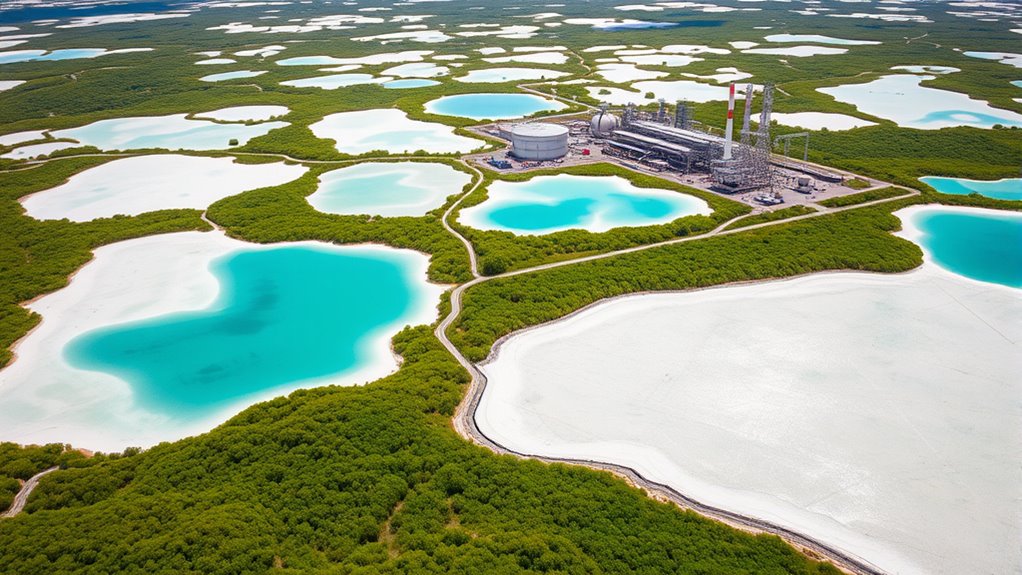
Utilizing natural brines for potassium nitrate production offers significant environmental and economic advantages. This approach reduces reliance on energy-intensive synthetic methods, often powered by non-renewable energy sources, thereby lowering the ecological impact. By tapping into renewable energy where possible, you minimize greenhouse gas emissions and conserve resources. Economically, using natural brines decreases raw material costs and simplifies processing, leading to cost savings and enhanced profitability. Additionally, this sustainable method promotes regional development by utilizing local resources, which can create jobs and foster economic growth. Overall, adopting natural brines for potassium nitrate not only benefits the environment but also offers a more resilient, cost-effective production process aligned with ecological preservation goals.
Frequently Asked Questions
What Are the Safety Precautions During Potassium Nitrate Production?
When handling chemicals during potassium nitrate production, you should always prioritize personal safety. Wear protective gear like gloves, goggles, and lab coats to prevent skin and eye contact. Work in well-ventilated areas to avoid inhaling fumes. Follow safety protocols strictly, such as proper storage and handling procedures. Never mix chemicals without proper knowledge, and keep emergency equipment nearby. Your careful approach mitigates risks and ensures a safe working environment.
How Does Brine Composition Vary Regionally?
You’ll notice regional mineral variations influence brine composition diversity. In some areas, high potassium content dominates, while others have more sodium or magnesium. These differences impact extraction methods and product quality. Understanding regional mineral variations helps you optimize processing and adapt techniques to specific brine compositions, ensuring efficient potassium nitrate production. Recognizing these regional variations is essential for developing tailored, cost-effective solutions for different geographic locations.
What Are Alternative Methods for Potassium Nitrate Synthesis?
You can explore alternative methods like electrochemical synthesis, where electric currents produce potassium nitrate directly from potassium sources. Chemical reduction is another approach, using reducing agents to convert potassium compounds into nitrate. These methods bypass traditional natural brine extraction, offering potentially cleaner and more controlled production processes. Both techniques are promising for efficient potassium nitrate synthesis, especially when regional brine composition varies or sustainable practices are prioritized.
How Is Product Quality Tested and Ensured?
When ensuring product quality, you rely on rigorous quality assurance and testing protocols. These steps help you verify that potassium nitrate meets the desired purity and composition standards. You conduct chemical analyses, such as spectrometry and titration, to detect impurities and confirm consistency. By diligently following these procedures, you maintain high product standards, ensuring your potassium nitrate is both safe and effective for its intended uses.
What Are Potential Applications Beyond Agriculture?
You might not realize it, but potassium nitrate has diverse applications beyond agriculture. In industrial uses, it’s essential for manufacturing explosives, fireworks, and heat-resistant glass. Medical applications include its use in treating certain health conditions and as a food preservative. Its versatility makes it valuable in various fields, and ongoing research could uncover even more innovative uses. You benefit from this compound’s broad utility in everyday life and specialized industries.
Conclusion
By understanding each step in producing potassium nitrate from natural brines, you can appreciate the process’s efficiency and sustainability. Have you considered how this eco-friendly method could shape future fertilizer production? Embracing natural sources not only reduces environmental impact but also offers economic advantages. As you explore this process, remember that innovation in natural resource utilization can lead to a greener, more sustainable agricultural future. Isn’t it time we harness nature’s solutions more thoughtfully?