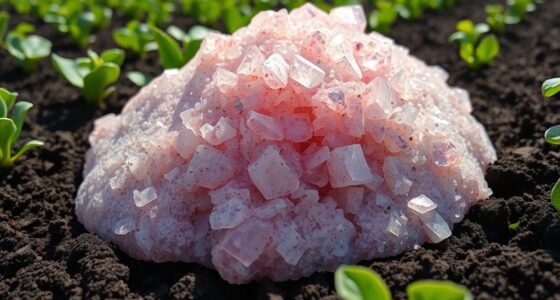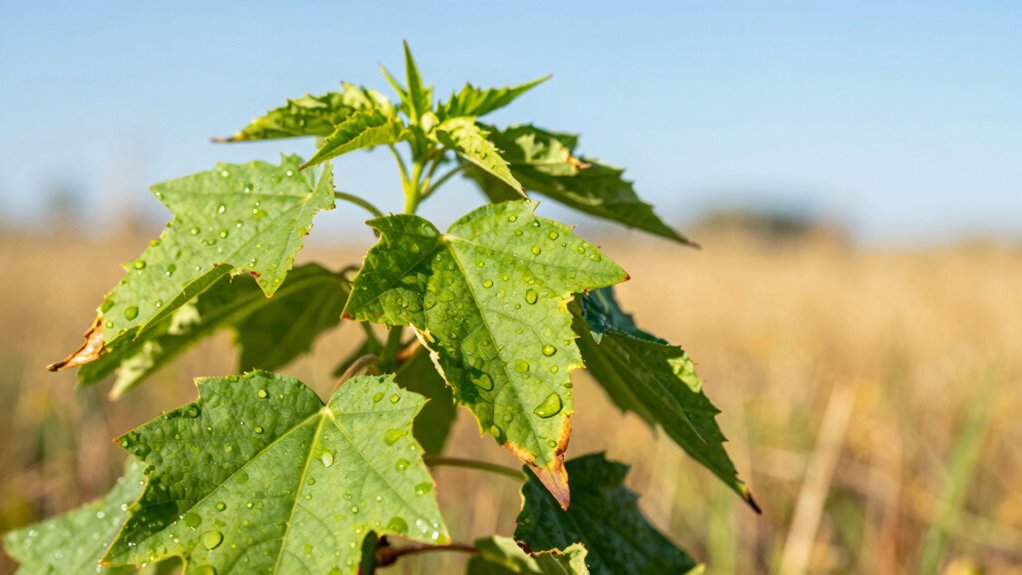

During heat waves, potassium helps your plants resist stress by regulating water loss through stomata, supporting cellular functions, and boosting root growth. Adequate potassium guarantees plants can conserve moisture, prevent cellular damage, and access deeper soil resources. It also enhances nutrient transport and plant resilience, helping your crops stay healthy during extreme temperatures. If you want to learn more about how managing soil nutrients improves heat tolerance, keep exploring these essential strategies.
Key Takeaways
- Potassium regulates stomatal opening, reducing water loss during heat stress.
- Adequate potassium enhances cellular functions and stress-responsive enzyme activity.
- Sufficient potassium improves root growth, enabling plants to access deeper soil moisture.
- Proper potassium nutrition maintains cellular integrity, preventing damage under high temperatures.
- Soil management with potassium boosts overall plant resilience and crop yield during heat waves.

During heat waves, plants face increased stress that can severely impact their growth and productivity. High temperatures lead to water loss through transpiration, cause cellular damage, and disrupt essential physiological processes. One key factor that influences how well plants withstand these stressful conditions is the soil nutrient balance. Maintaining a balanced level of nutrients, especially potassium, is indispensable for supporting plant resilience during extreme heat. Potassium plays a fundamental role in regulating stomatal opening, which controls water loss and helps plants conserve moisture when temperatures soar. When soil lacks adequate potassium, plants struggle to keep their stomata functioning properly, leading to excessive water loss and increased vulnerability to heat stress. Conversely, a well-balanced soil nutrient profile ensures that plants can maintain cellular functions, support metabolic activities, and stay healthier under stressful conditions. This balance not only helps plants endure heat but also contributes to crop yield improvement over time.
Incorporating sufficient potassium into your soil can markedly boost your plants’ ability to tolerate heat stress. Potassium enhances the synthesis of proteins and enzymes involved in stress response mechanisms, helping plants repair cellular damage caused by high temperatures. It also improves the transportation of sugars and other nutrients within the plant, supporting energy production and growth even when conditions are less than ideal. When plants receive enough potassium, they are better equipped to maintain turgor pressure, which keeps cells firm and prevents wilting during prolonged heat spells. This, in turn, leads to healthier plants and more consistent yields, even in challenging weather. Additionally, adopting natural soil amendments can promote a more sustainable approach to maintaining optimal nutrient levels, further supporting plant resilience. Proper nutrient management, particularly in soil fertility, is crucial for long-term plant health and stress tolerance. Incorporating practices that improve soil health can also enhance nutrient availability, making essential elements like potassium more accessible to plants. A balanced nutrient profile not only supports immediate heat stress response but also fosters a resilient root system capable of thriving in changing environmental conditions.
Moreover, potassium influences the development of root systems, encouraging deeper and more extensive roots that can access moisture from lower soil layers. This adaptation is essential during heat waves, as surface water becomes scarce and soil moisture levels drop rapidly. By strengthening root growth, potassium application helps your plants sustain themselves longer during periods of drought and high temperatures. Improving soil nutrient balance with targeted potassium fertilization not only shields your plants from immediate heat stress but also sets the stage for better crop yield improvement in subsequent seasons. When you pay attention to these nutrient dynamics, you’re actively supporting plant health, resilience, and productivity, guaranteeing your crops are better prepared to face the increasing frequency of heat waves.
As an affiliate, we earn on qualifying purchases.
Frequently Asked Questions
How Does Potassium Affect Plant Water Retention During Heat Stress?
Potassium enhances your plant’s water retention during heat stress by improving soil moisture uptake and supporting root development. It helps regulate stomata, reducing water loss through transpiration. With healthier roots, your plants can access water more efficiently, even in dry conditions. This increased water retention keeps your plants hydrated and resilient during heat waves, ensuring they stay healthier and better able to withstand stressful, dry environments.
Are Certain Plant Species More Responsive to Potassium Supplementation in Heat Waves?
Some plant species, like those with high genetic adaptability and soil compatibility, respond better to potassium during heat waves. Think of these plants as chameleons, adjusting seamlessly to stress. Their genetic makeup allows them to utilize potassium more efficiently, boosting resilience. If you select species naturally suited to your soil, you’ll enhance their heat tolerance, making them more responsive to supplementation and better equipped to withstand extreme temperatures.
What Are the Long-Term Effects of High Potassium Levels on Plant Health?
High potassium levels can benefit your plant health initially, but long-term, they may cause soil alkalinity, reducing nutrient availability. Excess potassium can also lead to potassium leaching, where valuable nutrients wash away, potentially harming your plants. To maintain ideal health, monitor soil levels carefully and avoid over-application, ensuring your plants receive balanced nutrients while preventing negative effects like soil imbalance and nutrient depletion.
Can Potassium Help Plants Recover After Heat Stress Has Subsided?
Yes, potassium can aid plants in recovering after heat stress subsides. It helps mitigate heat stress by improving water regulation and strengthening cell walls. If your plants face potassium deficiency, their recovery slows down, and stress effects worsen. Ensuring adequate potassium levels post-heat wave boosts resilience, supports repair processes, and promotes healthy growth. Regular potassium fertilization is key to helping your plants bounce back more quickly from high-temperature stress.
How Does Potassium Interact With Other Nutrients During Heat Stress Conditions?
During heat stress, potassium interacts with other nutrients through nutrient antagonism, which can hinder their uptake. You should monitor your plant’s nutrient balance because high levels of potassium may reduce magnesium or calcium absorption, affecting overall health. To improve uptake efficiency, guarantee a balanced fertilization approach and avoid excess potassium. This helps maintain nutrient harmony, supporting your plants’ resilience and recovery during and after heat stress conditions.
As an affiliate, we earn on qualifying purchases.
Conclusion
Think of potassium as the steady lighthouse guiding your plants through the storm of a heat wave. Just as a lighthouse offers direction amidst chaos, potassium strengthens your plants’ resilience, helping them withstand the scorching sun and relentless heat. By nurturing this essential element, you equip your garden with a beacon of hope and vitality, ensuring your plants not only survive but thrive amid the fiery tempests of summer’s fury.
plant stress tolerance nutrients
As an affiliate, we earn on qualifying purchases.
As an affiliate, we earn on qualifying purchases.
As an affiliate, we earn on qualifying purchases.