To build a potassium strategy for high-value crops, start with soil testing to identify potassium levels and deficiencies. Use those results to tailor fertilizer applications, applying nutrients precisely through methods like banding or fertigation at key growth stages. Time your applications early and consider split doses to reduce runoff, while balancing other nutrients like nitrogen and phosphorus. Pay attention to soil pH and environmental factors to maximize uptake and minimize waste — explore further to perfect your approach.
Key Takeaways
- Conduct soil testing to determine existing potassium levels and identify deficiencies.
- Tailor fertilizer applications based on crop-specific potassium needs and soil test results.
- Use precise application methods like banding or fertigation aligned with crop growth stages.
- Adjust potassium management considering soil pH, rainfall, and leaching risks.
- Maintain nutrient balance with nitrogen and phosphorus for optimal crop health and yield.
Have you ever wondered how to optimize crop yields through nutrient management? Building an effective potassium strategy starts with understanding your soil’s current nutrient profile. Soil testing is your first step—it’s a quick, accurate way to determine potassium levels and identify any deficiencies or excesses. By analyzing soil tests, you gain essential insights that inform your fertilizer application plan. This guarantees you’re not wasting resources on unnecessary inputs or missing out on critical nutrients that could boost crop performance.
Soil testing is the first step to optimize potassium management and boost crop performance.
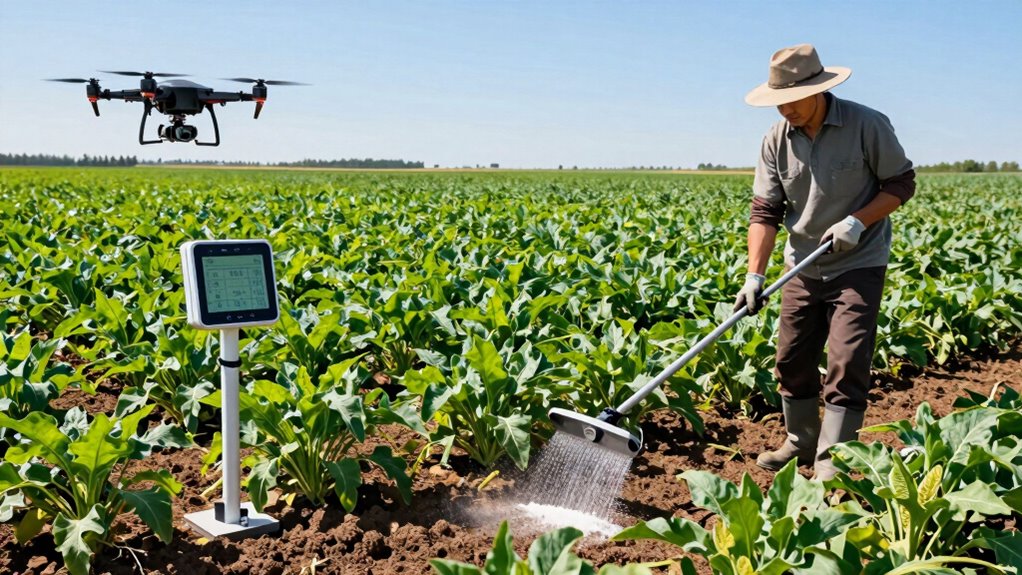
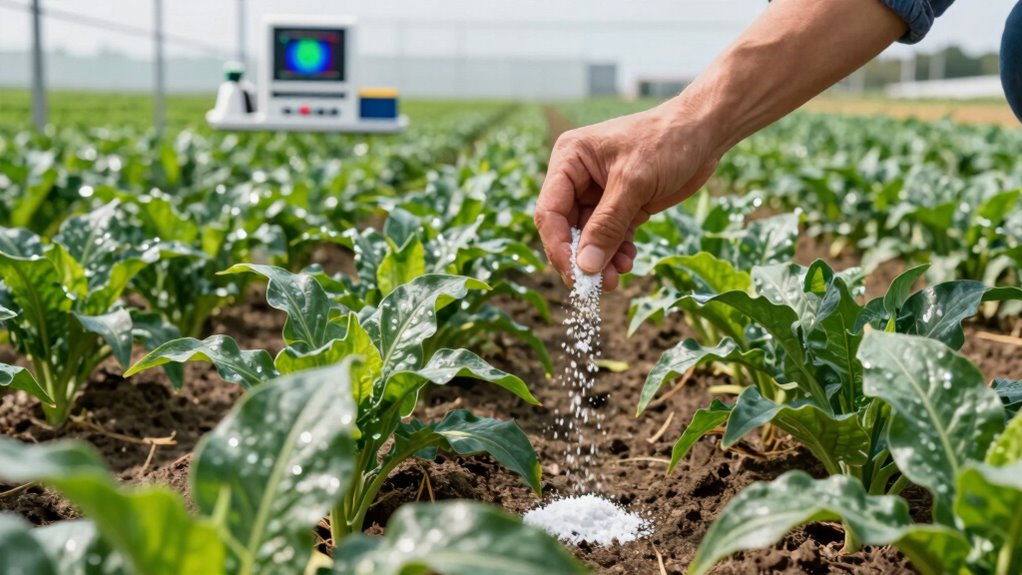
Once you’ve interpreted your soil test results, you can tailor your fertilizer application to meet your crop’s specific potassium needs. For high-value crops, precision is key. You want to supply enough potassium to support vigorous growth, improve disease resistance, and enhance yield quality without overspending or causing environmental harm. Depending on your soil’s potassium levels and crop requirements, you might choose to apply potassium through broadcasting, banding, or fertigation. Each method has its advantages, but the goal remains the same: delivering the right amount of potassium at the right time to maximize uptake.
Timing your fertilizer application is equally important. For high-value crops, early-stage applications often set the foundation for strong development. You might incorporate potassium during planting or early vegetative stages, ensuring the plant’s roots have ample access to this essential nutrient. As the crop develops, consider split applications—applying smaller doses periodically—to maintain ideal potassium levels without causing runoff or leaching. This approach helps your plants continually access the nutrients they need for healthy growth and high yields. Additionally, understanding the contrast ratio of your soil’s nutrient availability can help predict how well your crops will respond to the applied potassium, ultimately optimizing your input efficiency. Properly managing soil nutrient availability is essential for maximizing fertilizer effectiveness. Recognizing how environmental factors like soil pH influence nutrient uptake can further improve your management practices.
A well-planned potassium strategy also involves understanding environmental factors that influence nutrient availability. Heavy rainfall, for example, can leach potassium from the soil, requiring more frequent applications or the use of potassium sources less prone to leaching. Incorporating soil nutrient management practices can help mitigate these effects and improve overall efficiency. Maintaining a balanced nutrient profile by coordinating potassium with other nutrients like nitrogen and phosphorus ensures your high-value crops achieve their maximum potential. By combining soil testing, precise fertilizer application, and attentive management, you set the stage for healthier plants, better yields, and increased profitability.

Soil Test Kit -140 Test- 2026 Version- Testing PH Ammonia Nitrogen Phosphorus and Potassium – Tester for Your Vegetable Garden Lawn and Soil
Comprehensive Soil Analysis: Liquid soil test kits offer a comprehensive analysis of essential soil parameters, including pH, ammonia,…
As an affiliate, we earn on qualifying purchases.
As an affiliate, we earn on qualifying purchases.
Frequently Asked Questions
How Does Potassium Deficiency Affect Crop Quality?
Potassium deficiency harms crop quality by disrupting plant nutrient balance, leading to weaker cell walls and reduced disease resistance. You’ll notice poor crop health indicators like yellowing leaves, stunted growth, and lower yields. Without adequate potassium, plants struggle to develop ideal fruit size, color, and flavor. To maintain high-quality crops, you must monitor these indicators closely and adjust potassium levels accordingly, ensuring healthy growth and superior produce.
What Are the Environmental Impacts of Potassium Fertilization?
You should consider that potassium fertilization can lead to environmental impacts like soil erosion and water pollution. Excessive application may wash away nutrients, causing runoff that contaminates nearby water sources. It can also destabilize soil structure, increasing erosion risks. To minimize these effects, you need to optimize application rates and timing, adopt best management practices, and monitor soil and water quality regularly, ensuring sustainability while maintaining crop productivity.
How to Test Soil Potassium Levels Accurately?
To test soil potassium levels accurately, you should conduct soil testing through a reputable lab. Collect representative samples from different field areas and mix them well. Guarantee your samples are taken at the right depth, typically 6-8 inches. This helps you assess nutrient balance effectively, guiding your potassium application. Regular testing allows you to monitor soil health, prevent deficiencies, and optimize crop yield without over-fertilizing.
What Are Cost-Effective Potassium Sources for High-Value Crops?
You can use cost-effective potassium sources like potassium sulfate and potassium chloride, which are common potassium soil amendments. Organic potassium sources, such as composted manure and wood ash, also work well and add organic matter. These options are affordable and effective for high-value crops. Incorporate them based on soil test results to optimize plant growth while managing costs, ensuring your crops receive adequate potassium without overspending.
How Often Should Potassium Be Applied During the Growing Season?
Think of your crop’s health as a symphony that needs perfect timing. You should apply potassium based on your crop’s growth stage, typically every 3-4 weeks, adjusting for soil tests and crop demand. Proper fertilizer scheduling guarantees potassium is available consistently, preventing deficiencies or excesses. Focus on potassium timing throughout the season, especially during critical growth phases, to maximize yield and quality, keeping your crop’s performance in harmony.

EZ‑FLO 1‑Gallon Fertilizer Injector | Hose Bib & Drip Connection System | Up to 16,000 sq ft Coverage | Adjustable Micro‑Dosing | 3/4″ GHT Connector | EZ 1010‑HB | for On/Off & Constant Pressure |
🌱 Complete Fertigation System for Any Gardener – Connects directly to a standard garden hose or drip system;…
As an affiliate, we earn on qualifying purchases.
As an affiliate, we earn on qualifying purchases.
Conclusion
By developing a solid potassium strategy, you’re setting your high-value crops up for success, much like planting a sturdy foundation for a grand building. When you tailor your potassium application to your crop’s needs, you guarantee healthy growth, better yields, and increased resilience against stress. Think of it as giving your plants the perfect recipe for success—like a master chef perfecting each dish. With this approach, you’ll nurture thriving crops that stand tall and flourish.

Fertileeze Fertilizer Applicator
PRECISE DOSE CONTROL – Adjustable twist-dose system delivers up to 35 g (7 teaspoons) per pump in convenient…
As an affiliate, we earn on qualifying purchases.
As an affiliate, we earn on qualifying purchases.

Scotts Turf Builder EdgeGuard Mini Broadcast Spreader – Spreader For Lawn Fertilizer, Weed & Insect Control, Grass Seed, and Ice Melt, Holds Up To 15,000 sq. ft. of Product
Mini broadcast spreader: Scotts Turf Builder EdgeGuard Mini Broadcast Spreader can be used to apply lawn care products…
As an affiliate, we earn on qualifying purchases.
As an affiliate, we earn on qualifying purchases.