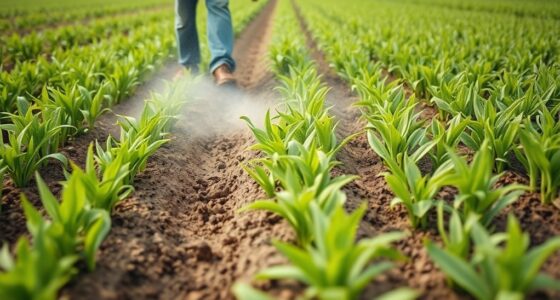
Potassium plays a crucial role in improving your crop’s water use efficiency and resilience. It helps regulate stomatal opening, ensuring better water management and supporting photosynthesis under stress. By maintaining cell turgor and strengthening roots, potassium enhances water uptake and plant health. Proper soil potassium levels allow your crops to withstand droughts and environmental challenges more effectively. Keep exploring how ideal nutrient management can boost your crop resilience and yield potential.
Key Takeaways
- Adequate potassium enhances stomatal regulation, improving water retention and photosynthesis efficiency.
- Proper soil potassium management supports root growth, increasing water uptake and drought resilience.
- Potassium maintains cellular ion balance, aiding plant adaptation to water stress conditions.
- Sufficient potassium levels bolster plant turgor pressure, reducing water loss and promoting healthy growth.
- Managing soil potassium optimizes water use efficiency, leading to healthier crops and higher yields under stress.
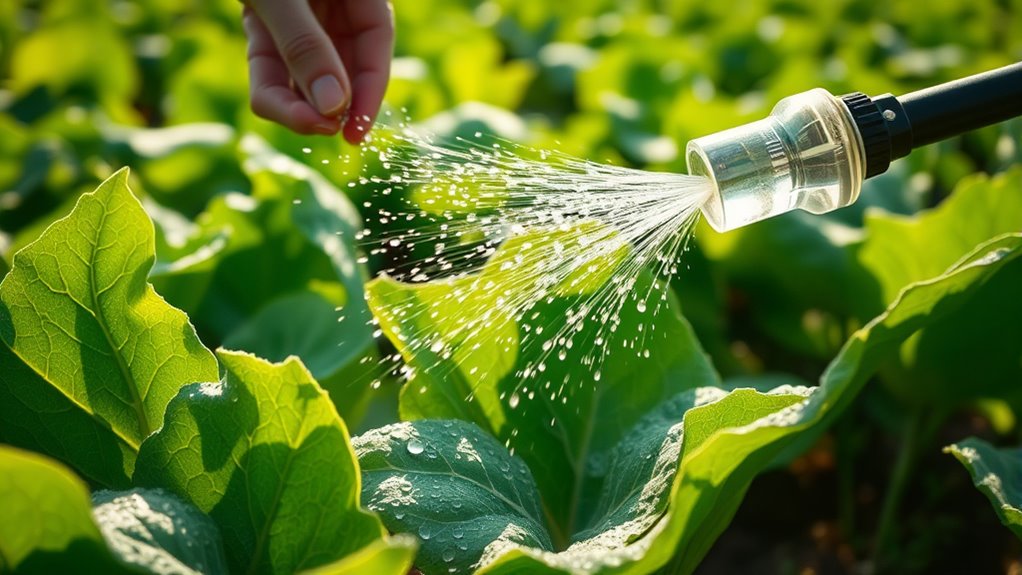
Potassium plays a pivotal role in enhancing water use efficiency (WUE) in plants by regulating processes such as stomatal opening and photosynthesis. When you manage soil nutrients effectively, especially potassium levels, you give your crops the tools they need to maximize water uptake and utilization. Proper soil nutrient management ensures that potassium is available in adequate amounts, which directly influences how well your plants can adapt to environmental stresses. This nutrient helps maintain the balance of ions inside plant cells, facilitating efficient water movement and retention. As a result, your crops become more resilient under drought conditions, reducing water wastage and improving overall productivity.
Managing soil potassium levels enhances plant water efficiency and stress resilience.
The role of potassium in crop stress adaptation is essential. When plants face water scarcity or other environmental challenges, potassium supports cellular functions that help them cope better. For instance, it contributes to maintaining turgor pressure in cells, which keeps plants upright and healthy during periods of limited water availability. When your soil has sufficient potassium, your crops can better regulate stomatal behavior, opening and closing these pores more effectively to control water loss while still allowing carbon dioxide intake for photosynthesis. This balance is fundamental for maximizing growth efficiency, especially in water-limited environments.
Incorporating strategic soil nutrient management practices, such as soil testing and targeted fertilization, guarantees that potassium levels are optimized for your specific crop needs. This proactive approach helps prevent deficiencies that could impair water use efficiency and stress resilience. When potassium is adequately supplied, crops are less likely to experience physiological stress, and their ability to perform photosynthesis remains high even under adverse conditions. This means your plants can sustain growth and yield, despite fluctuations in water availability.
Furthermore, effective soil nutrient management with an emphasis on potassium enhances crop stress adaptation by fostering stronger root systems. Deep, healthy roots improve water absorption from the soil, helping your crops withstand drought and other stressors. Adequate potassium also influences enzyme activities related to stress responses, enabling quicker recovery from adverse conditions. By ensuring your soil’s nutrient profile supports these functions, you empower your crops to maintain higher WUE and resilience.
In essence, managing soil nutrients carefully, especially potassium, is a fundamental step toward boosting water use efficiency and fostering crop resilience. It’s not just about providing nutrients but creating ideal conditions that enable your plants to adapt and thrive amid environmental challenges. With proper management, you help your crops become more efficient in their water use, ultimately leading to healthier plants, better yields, and more sustainable farming practices.
As an affiliate, we earn on qualifying purchases.
Frequently Asked Questions
How Does Potassium Influence Plant Drought Tolerance?
Potassium boosts your plant’s drought tolerance by regulating water movement and opening stomata efficiently. If there’s potassium deficiency, your plants become more vulnerable to drought stress and soil salinity, reducing water uptake. Adequate potassium helps maintain cell turgor, supports enzyme activity, and enhances overall resilience. By ensuring sufficient potassium levels, you improve your crops’ ability to withstand dry conditions and soil salinity challenges.
What Are Optimal Potassium Levels for Different Crops?
You should aim for soil potassium levels specific to each crop, generally between 100-200 ppm for ideal growth. For example, cereals need about 150 ppm, while vegetables require around 200 ppm. Too little soil potassium causes deficiency symptoms, reducing drought tolerance and crop yield. Regular soil testing helps you monitor potassium levels, ensuring you apply the right amount of fertilizer to prevent deficiencies and improve water use efficiency.
Can Potassium Supplementation Replace Water Management Strategies?
You might think potassium alone can replace water management, but don’t be fooled. Overdoing potassium can cause toxicity, harming your crops. Soil potassium testing reveals true needs, helping you avoid this trap. Water management strategies are essential—they optimize water use, improve resilience, and prevent stress. Relying solely on potassium supplementation won’t cut it; combine proper testing with smart water practices for the best results.
How Does Potassium Interact With Other Nutrients in Water Use?
Potassium interacts with other nutrients through nutrient synergy, enhancing overall water use efficiency. It helps balance soil buffering capacity, preventing nutrient imbalances that hinder water uptake. When you optimize potassium levels, you improve the soil’s ability to retain nutrients and moisture, encouraging healthy root growth. This synergy ensures that nutrients like nitrogen and phosphorus work more effectively, ultimately boosting crop resilience and maximizing water use efficiency.
Are There Environmentally Sustainable Ways to Increase Potassium Availability?
You can boost potassium availability sustainably by adopting practices that give you a leg up, like potassium recycling and using soil amendments. Recycling involves returning crop residues or compost rich in potassium to the soil, reducing waste. Soil amendments, such as organic matter or natural mineral sources, enhance soil health and potassium levels without harming the environment. These methods are eco-friendly and help maintain long-term crop resilience.
As an affiliate, we earn on qualifying purchases.
Conclusion
By optimizing potassium levels, you can boost water use efficiency and strengthen your crops’ resilience. Don’t put all your eggs in one basket; diversifying your nutrient management guarantees better drought tolerance and overall productivity. Remember, a stitch in time saves nine—addressing potassium needs early on pays off in healthier plants and better yields. Stay proactive and attentive to nutrient balance, and you’ll see your crops thrive even in tough conditions.
water use efficiency plant supplement
As an affiliate, we earn on qualifying purchases.
As an affiliate, we earn on qualifying purchases.
drought resistant crop fertilizer
As an affiliate, we earn on qualifying purchases.
As an affiliate, we earn on qualifying purchases.