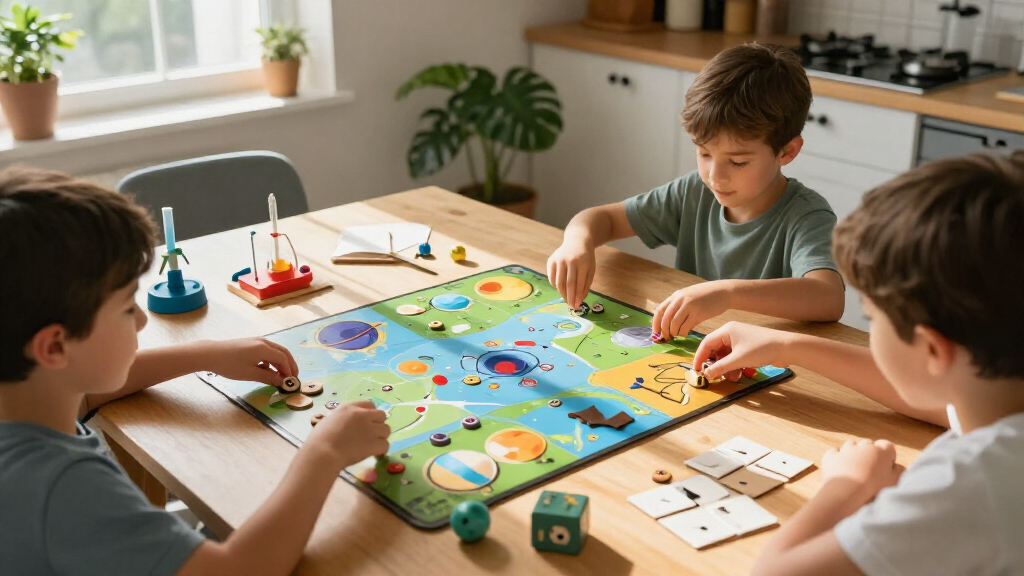

Educational science board games can turn chemistry, biology, ecology, and space into lively family play, but they vary widely in complexity and how directly they teach. I’d put Subatomic: An Atom Building Game first for its focused science theme and strategic play, while Somebody Human Anatomy 5-in-1 stands out for younger learners seeking variety and Ecosystem Family Card Game for nature-minded groups. The main tradeoff is between accessible questions and hands-on learning on one side, and deeper concepts that may need adult guidance on the other. Age fit, reading demands, and whether a game rewards recall or teaches through play can matter as much as its subject. Continue reading for the full comparison and help matching a game to your players.

Prime made for students and young adults
- Fast, free delivery for dorm and study essentials
- Prime Video and Amazon Music included
- Member-only deals
Key Takeaways
- Subatomic leads for players who want a science-centered strategy game; its atom-building theme gives the play a closer link to the subject than quick trivia formats.
- Somebody Human Anatomy 5-in-1 offers the broadest variety for families who want several ways to explore one science area, though a set of activities may feel less focused than a single, deeper game.
- Ecosystem Family Card Game makes ecology and interconnected habitats its central draw, while Genotype and Cytosis suit groups ready for more specialized biology concepts.
- Guess in 10: NASA Space and QUOKKA Travel Space favor approachable, portable space play; they are easier to bring out than heavier strategy games but offer a different kind of learning.
- The lineup spans card games, board games, and a multi-game set, so the best choice depends on attention span, reading comfort, and whether players prefer fast questions or longer strategic turns.
| Valence Chemistry Card Game for Kids | 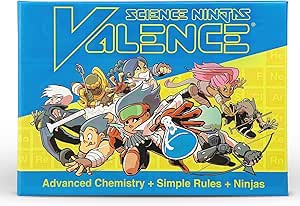 | Best for Chemistry Beginners | Brand: Science Ninjas | Game type: Card game | Recommended age: 8 years and up | VIEW LATEST PRICE | See Our Full Breakdown |
| Somebody Human Anatomy 5-in-1 Educational Board Game |  | Best for Younger Anatomy Learners | Brand: TaliCor | Number of players: 2–4 | Recommended age: 6–10 years | VIEW LATEST PRICE | See Our Full Breakdown |
| Ecosystem Family Card Game |  | Best for Quick Ecology Play | Brand: Genius Games | Game type: Card drafting game | Players: 2–6 | VIEW LATEST PRICE | See Our Full Breakdown |
| Subatomic: An Atom Building Game (2nd Edition) |  | Best for Strategic Chemistry Learning | Brand: Genius Games | Edition: 2nd Edition | Recommended age: 14 years and up | VIEW LATEST PRICE | See Our Full Breakdown |
| Cytosis: A Cell Biology Board Game |  | Best for In-Depth Cell Biology | Brand: Genius Games | Genre: Educational, Family | Players: 2, 3, 4 or 10+ | VIEW LATEST PRICE | See Our Full Breakdown |
| Skillmatics Guess in 10: NASA Space Card Game |  | Best for Quick Space-Themed Play | Brand: Skillmatics | Age range: 8 years and up | Players: 2–6 | VIEW LATEST PRICE | See Our Full Breakdown |
| Periodic: A Game of the Elements |  | Best for Chemistry Strategy | Brand: Genius Games | Genre: Strategy | Players: 2–6 | VIEW LATEST PRICE | See Our Full Breakdown |
| QUOKKA Travel Space Board Game for Kids and Families |  | Best for Adjustable Family Learning | Brand: QUOKKA | Age range: 8 years and up | Players: 2–6 | VIEW LATEST PRICE | See Our Full Breakdown |
| The Awkward Yeti Organ Attack Card Game |  | Best for Humorous Anatomy Learning | Players: 2–6 | Recommended age: 8 years and up | Playing time: About 30 minutes | VIEW LATEST PRICE | See Our Full Breakdown |
| Genotype: A Mendelian Genetics Board Game |  | Best for Deep Genetics Strategy | Age range: 8 years and up | Manufacturer: Genius Games | Model number: GOT1011 | VIEW LATEST PRICE | See Our Full Breakdown |
| educational science board game | Brand | Recommended age | Included components | Players |
|---|---|---|---|---|
| Valence Chemistry Card Game fo | Science Ninjas | 8 years and up | Cards | — |
| Somebody Human Anatomy 5-in-1 | TaliCor | 6–10 years | — | — |
| Ecosystem Family Card Game | Genius Games | 12 years and up | Game | 2–6 |
| Subatomic: An Atom Building Ga | Genius Games | 14 years and up | — | — |
| Cytosis: A Cell Biology Board | Genius Games | — | Cytosis: A Cell Biology Game | 2, 3, 4 or 10+ |
| Skillmatics Guess in 10: NASA | Skillmatics | — | 50 game cards, 6 clue cards, portable box, instruction manual | 2–6 |
| Periodic: A Game of the Elemen | Genius Games | 10 years and up | Game | 2–6 |
| QUOKKA Travel Space Board Game | QUOKKA | — | 50 space cards, 6 astronaut tokens, 1 illustrated game board | 2–6 |
| The Awkward Yeti Organ Attack | — | 8 years and up | Cards | 2–6 |
| Genotype: A Mendelian Genetics | — | 8+ | — | — |
More Details on Our Top Picks
Valence Chemistry Card Game for Kids
Valence is the most approachable chemistry pick here: its card-game format introduces the periodic table and basic chemistry through play, without the longer, heavier strategy commitment of Subatomic. That makes it a better starting point for younger learners or a short classroom activity, while Subatomic suits players ready to build atoms through more involved deck-building. The linen-finish cards are designed for repeated handling, and the game is intended for both home and classroom use. Its focus is narrower than Ecosystem, which explores biodiversity and habitats, so it will not offer the same range of science topics. The supplied details do not specify player count, session length, or exact mechanics, so I would choose it for its chemistry focus rather than assume it fits a particular group or schedule.
Pros:- Introduces periodic-table and basic chemistry concepts through gameplay
- Card format is suited to shorter, flexible play sessions
- Linen-finish cards are designed for repeated use
- Intended for both home and classroom settings
Cons:- The product details do not state player count or typical play time
- Its chemistry scope is narrower than games covering ecology or cell biology
- The listed information does not explain the specific card mechanics
Best for: Families or teachers seeking a hands-on introduction to the periodic table for children ages 8 and up
Not ideal for: Buyers seeking a detailed chemistry strategy game, a confirmed player count, or a game with a stated session length
- Brand:Science Ninjas
- Game type:Card game
- Recommended age:8 years and up
- Included components:Cards
- Set name:Valence
- Unit count:1 count
- Manufacturer:Science Ninjas
Our verdict“Choose Valence for an accessible, card-based first step into chemistry, but pick Subatomic for deeper atom-building strategy.”
Somebody Human Anatomy 5-in-1 Educational Board Game
Somebody earns its place for breadth at an age when anatomy can be easier to grasp through pictures and puzzles than through abstract strategy. Its five games include puzzle play for younger children and activities about the body, organs, and systems, giving families more than one way to approach the subject. Compared with Valence, which focuses on chemistry concepts in a card format, this is a more visual, multi-activity choice for ages 6–10. It also accommodates 2–4 players, making it practical for a small family group. The tradeoff is that its listed age range is younger and narrower than the older-student science games, and small parts present a choking hazard. I would keep it away from children who still mouth toys.
Pros:- Five different games provide varied ways to engage with anatomy
- Combines puzzle play with learning about organs and body systems
- Supports small-group play for 2–4 players
- No batteries are required
Cons:- Small parts may pose a choking hazard
- Recommended age range of 6–10 may limit its appeal to older learners
- Its anatomy focus offers less topic variety than ecology or chemistry games
Best for: Families with children ages 6–10 who want several visual anatomy activities for a small group
Not ideal for: Households with children who may put small pieces in their mouths, or older students seeking deeper science strategy
- Brand:TaliCor
- Number of players:2–4
- Recommended age:6–10 years
- Included games:Five
- Educational objective:STEM
- Batteries:Not required
- Weight:1.3 pounds
- Dimensions:14.75 x 1.75 x 10.75 inches
- Material:Plastic
Our verdict“Choose Somebody for younger children who learn well through puzzles and varied activities, provided small parts are safe for the household.”
Ecosystem Family Card Game
Ecosystem is the easiest fit when a group wants science in a compact session: players draft and arrange cards to build habitats, with biodiversity rewarded and monocultures penalized. That scoring gives ecological relationships a direct role in play rather than presenting them only as facts. Its 15–20 minute sessions are much shorter than Cytosis, which is listed at 90 minutes, and the 2–6 player range suits a broader family or classroom table. The main limitation is age: at 12 and up, it is not the best match for younger children, unlike the anatomy activities in Somebody. It also concentrates on ecology, so buyers looking for chemistry or human biology will need another game. I would pick it for quick, repeatable ecology lessons with older kids and adults.
Pros:- Connects biodiversity and habitat relationships to in-game scoring
- Short 15–20 minute playing time suits limited lesson or family-game windows
- Supports 2–6 players
- Drafting offers strategic choices while remaining easy to learn
Cons:- Recommended for ages 12 and up, excluding many younger learners
- Ecology is its central science topic rather than one of several subjects
- Player count is capped at six
Best for: Families or teachers looking for a short ecology game for groups of 2–6, with players ages 12 and up
Not ideal for: Younger children, or buyers who want detailed chemistry, anatomy, or cell-biology content
- Brand:Genius Games
- Game type:Card drafting game
- Players:2–6
- Playing time:15–20 minutes
- Recommended age:12 years and up
- Material:Cardboard
- Included components:Game
- Model year:2019
Our verdict“Choose Ecosystem for brisk, group-friendly ecology play; choose Cytosis if cell biology and a longer strategy game are the priority.”
Subatomic: An Atom Building Game (2nd Edition)
Subatomic makes chemistry a strategic project: players use deck-building and particle cards to construct atoms and score points, while a science booklet supports learning beyond the turns themselves. That combination gives it more structured chemistry depth than Valence, whose card-game format is positioned as an introduction to basic concepts. It is also a more focused choice than Ecosystem, which teaches ecology through habitat-building rather than atomic structure. The tradeoff is commitment: sessions run about 40–60 minutes, and the 14+ age guidance puts it beyond younger children who may suit Valence or Somebody better. Its 2–4 player limit also rules out larger groups. I would choose this for teens and adults who want substantive chemistry content woven into a strategy game.
Pros:- Particle-card play connects atom construction to chemistry concepts
- Deck-building adds strategic choices beyond recall-based learning
- Includes a science booklet for classroom or follow-up use
- Designed for 2–4 players
Cons:- A 40–60 minute session is a substantial commitment for casual play
- The recommended age of 14 and up excludes younger children
- The 2–4 player limit does not suit larger classes or gatherings
Best for: Teen and adult players who want an atom-building chemistry game with strategic deck-building and a supporting science booklet
Not ideal for: Younger learners, large groups, or casual sessions that need to finish quickly
- Brand:Genius Games
- Edition:2nd Edition
- Recommended age:14 years and up
- Number of players:2–4
- Play time:40–60 minutes
- Model year:2019
- Item type:Game
Our verdict“Choose Subatomic for older learners who want deeper chemistry strategy; pick Valence for a simpler introduction or shorter, more flexible play.”
Cytosis: A Cell Biology Board Game
Cytosis stands apart for its subject-specific depth: worker placement has players gather resources and build enzymes, hormones, and receptors inside a human cell. The included peer-reviewed science booklet offers context beyond the game, making this a strong fit for classroom extensions or families who want more than a quick science-themed activity. Compared with Ecosystem, its listed 90-minute play time asks for a much bigger commitment; Ecosystem is the better choice for a short lesson or casual game night. Cytosis also targets cell biology rather than the atom-building focus of Subatomic, so the choice depends on which science topic matters most. The 10+ minimum age is more accessible than Subatomic’s 14+ guidance, but the long session can still challenge younger players’ attention. The listed player count is unusual, so group fit may need checking.
Pros:- Worker placement ties resource choices to cell biology processes
- Covers enzymes, hormones, and receptors through play
- Includes a peer-reviewed booklet explaining the science
- Listed minimum age of 10 is lower than Subatomic’s 14+ recommendation
Cons:- Listed playing time of 90 minutes may be too long for casual sessions
- The player-count listing of 2, 3, 4 or 10+ is unusual and may be unclear
- Its specialized cell-biology focus offers less subject variety than a multi-game anatomy set
Best for: Families and educators seeking a substantial cell-biology strategy game for learners ages 10 and up
Not ideal for: Players who need a short activity, or groups that require a clearly stated conventional player count
- Brand:Genius Games
- Genre:Educational, Family
- Players:2, 3, 4 or 10+
- Playing time:90 minutes
- Minimum age:10 years
- Included components:Cytosis: A Cell Biology Game
- Model number:GOT1006
Our verdict“Choose Cytosis for a long, science-rich cell-biology session; choose Ecosystem for quicker play or Subatomic for chemistry.”
Skillmatics Guess in 10: NASA Space Card Game
NASA imagery and a question-driven format make this the easiest pick here for a short, approachable science game. Players use up to 10 questions, clue cards, and bonus questions to identify space objects, so the learning comes through recall and narrowing down possibilities rather than a long strategy system. At about 20 minutes per round, it is a lighter commitment than Genotype or Periodic, which ask players to manage more involved mechanics. The tradeoff is that this is a guessing card game, not a board game with a developing map or layered science model; the available description also does not specify how much factual detail appears on each card. I’d choose it for group conversation and portability, but skip it if your priority is sustained science strategy.
Pros:- NASA images give the space theme a recognizable visual anchor.
- Questioning and clue use encourage communication and deductive thinking.
- Portable box suits travel and small game-night setups.
- Supports 2 to 6 players.
Cons:- The guessing format offers less strategic depth than Periodic or Genotype.
- The description does not specify the level of scientific detail on individual cards.
- No product warranty is listed.
Best for: Families with space-curious children ages 8 and up who want a portable, conversation-led game for short sessions.
Not ideal for: Buyers seeking a full board-game strategy experience or detailed, curriculum-style explanations of astronomy concepts.
- Brand:Skillmatics
- Age range:8 years and up
- Players:2–6
- Average playtime:20 minutes per round
- Included components:50 game cards, 6 clue cards, portable box, instruction manual
- Material:Paper
- Model number:SKILL579GNS
Our verdict“Choose this for portable, short space-themed rounds built around questions and clues, not for a deep science strategy game.”
Periodic: A Game of the Elements
Periodic makes chemistry part of the strategy: players use periodic trends to move across the table, discover elements, and collect points. That gives the subject a direct role in decision-making, unlike Skillmatics Guess in 10: NASA Space Card Game, where science knowledge supports a quicker clue-and-guess format. Its tactical movement and action economy suit families or classrooms looking for more than fact recall, and the listed STEM and NGSS alignment adds relevance for structured learning settings. The cost of that depth is a higher entry barrier: players need to engage with chemistry concepts, and the recommended age starts at 10. Compared with QUOKKA Travel Space Board Game, this is the stronger fit for players who enjoy planning, but it is less immediately accessible to younger children or casual groups.
Pros:- Uses periodic trends as a functional part of movement and scoring.
- Combines tactical movement, action economy, and set collection.
- Designed for family, classroom, and strategy-game settings.
- Lists STEM and NGSS standards alignment.
Cons:- Players need some willingness to engage with chemistry concepts.
- The recommended age of 10 and up limits its fit for younger children.
- The listed components identify only a game, offering little detail about what is included.
Best for: Families, science clubs, and teachers with players age 10 and up who want chemistry concepts embedded in tactical play.
Not ideal for: Groups seeking a very simple science introduction or players who would rather avoid chemistry terminology and strategic planning.
- Brand:Genius Games
- Genre:Strategy
- Players:2–6
- Recommended age:10 years and up
- Edition:Standard Edition
- Included components:Game
- Standards:STEM and NGSS
Our verdict“Pick Periodic when your group wants chemistry knowledge to shape strategic choices and is ready for a more involved game.”
QUOKKA Travel Space Board Game for Kids and Families
Three difficulty levels give this space game a useful advantage for mixed-experience family groups: players can engage with clues about planets, moons, and other space objects at a level that better fits them. Unlike Skillmatics Guess in 10: NASA Space Card Game, which centers on identifying what is on a card, QUOKKA adds an illustrated board and astronaut tokens, giving correct guesses a shared path through the game. Its 50 fact-filled cards make the science theme more explicit, while the 20–60 minute playtime leaves room for a fuller session. That range is also the main drawback, since a game can run longer than younger players may want. Compared with Periodic, it is more approachable and less focused on strategic systems, but it offers less chemistry-style tactical depth.
Pros:- Three difficulty levels help accommodate different levels of space knowledge.
- Cards cover planets, moons, and other space objects.
- Board, astronaut tokens, and cards create a more complete board-game format than a card-only guessing game.
- Supports 2 to 6 players.
Cons:- Playtime ranges from 20 to 60 minutes, which may be unpredictable for younger players.
- Clue-based movement may offer less tactical depth than Periodic.
- The compact board dimensions may feel small for groups wanting a larger tabletop layout.
Best for: Families with children ages 8 and up who want adjustable space clues, board movement, and a game that can suit different experience levels.
Not ideal for: Caregivers looking for reliably short rounds or players who prefer dense strategy over clue-based space learning.
- Brand:QUOKKA
- Age range:8 years and up
- Players:2–6
- Playing time:20–60 minutes
- Included components:50 space cards, 6 astronaut tokens, 1 illustrated game board
- Material:Cardboard
- Language:English
- Board dimensions:8.66 × 8.66 × 0.04 inches
- Educational objective:Learn about space and its objects
Our verdict“Choose QUOKKA for a family space game with adjustable clue difficulty and board movement, provided your group can handle variable session length.”
The Awkward Yeti Organ Attack Card Game
Organ Attack pairs anatomy with direct player interaction, using afflictions and immunity cards in a humorous contest to be the last player with an organ. That makes it a more playful route into body-related subject matter than Periodic, whose chemistry learning is tied to tactical movement and element collection. The humor and familiar card-game structure may help a mixed-age group get started, while the book-style case is easier to pack and store than a larger board setup such as QUOKKA Travel Space Board Game. The tradeoff is the theme and interaction: attacking opponents with afflictions may not suit every child or household, and the description does not suggest a systematic anatomy lesson. It also needs at least two players, so it is not a solo learning choice.
Pros:- Uses humor and card strategy to introduce human anatomy themes.
- Works for children and adults in the same group.
- Book-style case offers convenient storage and portability.
- Supports groups of 2 to 6 players.
Cons:- The attack-and-affliction theme may not suit all children or families.
- The description emphasizes humorous play rather than a detailed anatomy curriculum.
- Requires at least two players.
Best for: Families with children ages 8 and up who enjoy humorous, competitive card games and want a light introduction to organ names and anatomy themes.
Not ideal for: Players who want detailed, structured anatomy teaching, solo play, or a gentler game without attacks on opponents.
- Players:2–6
- Recommended age:8 years and up
- Playing time:About 30 minutes
- Material:Paper
- Included components:Cards
- Theme:Humor and human anatomy
- Package dimensions:8 × 6 inches
- Item weight:440 g
- Storage:Hardcover book-style case
Our verdict“Pick Organ Attack for a portable, humorous anatomy-themed card game, not for a structured lesson or solo science play.”
Genotype: A Mendelian Genetics Board Game
Genotype gives genetics the most involved strategic treatment in this group, using worker placement and dice drafting to frame Mendel’s pea plant experiments. Its science booklet adds a reference beyond the turns themselves, a useful distinction from The Awkward Yeti Organ Attack Card Game, which uses anatomy as a humorous theme rather than a described scientific system. Solo play is another advantage: unlike the multiplayer-only Organ Attack, Genotype supports one player. The tradeoff is commitment. At 45–75 minutes, it runs longer than Periodic and the space games, while its layered mechanics may be a poor match for casual players despite the listed age of 8 and up. I’d choose it for a group ready to plan and learn, not for a quick family filler game.
Pros:- Worker placement and dice drafting give the science game substantial strategic play.
- Focuses on Mendelian genetics through Mendel’s pea plant experiments.
- Includes a science booklet for additional educational context.
- Solo mode supports individual play as well as groups.
Cons:- The 45–75 minute playtime is longer than the space and anatomy options here.
- Layered mechanics may be difficult for casual players and beginners.
- The listed age of 8 and up may not reflect how demanding the strategy feels to younger players.
Best for: Science-minded families, older children, and solo players who want substantial genetics content alongside worker-placement and dice-drafting strategy.
Not ideal for: Casual groups seeking a short, low-rules game or younger beginners likely to find its mechanics and long sessions demanding.
- Age range:8 years and up
- Manufacturer:Genius Games
- Model number:GOT1011
- Player count:1–5
- Play time:45–75 minutes
- Recommended age:8+
- Material type:Cardboard
- UPC:653341737809
Our verdict“Choose Genotype for a longer, strategy-heavy genetics game with solo play, and skip it if your group wants quick, simple science entertainment.”
How We Picked
I compared each game by how clearly its play connects to its science subject, how approachable its rules and concepts are for its likely audience, and whether it offers enough variety or strategic depth to keep a group engaged. I also weighed format and practical fit: a portable card game serves a different family need than a longer, more involved strategy game. Because this lineup includes anatomy, ecology, chemistry, cell biology, genetics, and space, I favored games that offer a distinct educational experience rather than treating every science theme as interchangeable.
The ranking reflects those differences, not a claim that one game suits every learner. Subatomic takes the lead as a focused blend of science and strategy; Somebody Human Anatomy and Ecosystem rank well for variety and accessible family play. More specialized titles such as Cytosis, Genotype, and Periodic may be a stronger fit for players seeking a particular subject or greater depth, while the space picks and Organ Attack offer lighter, more casual routes into science themes.
| educational science board game | Brand | Material |
|---|---|---|
| Valence Chemistry Card Game fo | Science Ninjas | — |
| Somebody Human Anatomy 5-in-1 | TaliCor | Plastic |
| Ecosystem Family Card Game | Genius Games | Cardboard |
| Subatomic: An Atom Building Ga | Genius Games | — |
| Cytosis: A Cell Biology Board | Genius Games | — |
| Skillmatics Guess in 10: NASA | Skillmatics | Paper |
| Periodic: A Game of the Elemen | Genius Games | — |
| QUOKKA Travel Space Board Game | QUOKKA | Cardboard |
| The Awkward Yeti Organ Attack | — | Paper |
| Genotype: A Mendelian Genetics | — | — |
Factors to Consider When Choosing Educational Science Board Games
Before choosing a title, match the game to the kind of learning and family play you want. A science label alone does not tell you whether players will learn through strategy, questions, or repeated exposure to terms.
Match the Science Theme to a Real Interest
A subject that already interests a child can make new vocabulary feel like part of the fun rather than a lesson. Start with the topics they talk about—space, the human body, animals, or chemistry—instead of choosing the most advanced-sounding title. A narrow theme can offer a more coherent experience, while a broad set may give a family more ways to play around one subject. Avoid assuming that a child who likes dinosaurs or planets will automatically enjoy a quiz about them; the game’s pace and mechanics still need to fit. For mixed-age groups, a familiar theme can help younger players join even when older players handle more complex decisions. Pick a subject the group will want to revisit, not just one that looks educational on the box.
Decide Whether You Want Recall or Learning Through Play
Some science games ask players to recognize facts or ask questions, while others make a subject part of the choices players take during a turn. Recall-based play can be welcoming when the group enjoys guessing and quick rounds, but it may favor players who already know the material. Mechanic-led play can create a stronger link between an idea and an action, though it may take longer to explain. A common mistake is to treat every correct answer or science-themed component as proof of deep learning. Ask whether players will encounter concepts repeatedly and whether those concepts affect what they do. If your goal is to spark curiosity, a lively introductory game may be a better fit than a demanding simulation.
Check Age Fit, Reading Load, and Adult Support
The age range on a game is only one part of its accessibility. Rule length, unfamiliar terminology, reading speed, and how much information a player must hold in mind can all shape who gets to participate. For younger children, look for a game that lets them make meaningful choices without needing an adult to translate every turn. Older children and adults may enjoy more detailed concepts, but a steep first game can stall a family night. If players have different reading abilities, consider whether someone can read prompts aloud without taking over the game. When in doubt, choose for the youngest regular player and let older players add challenge through discussion or self-imposed goals.
Choose a Play Length and Format You Will Actually Use
A compact card game can be easier to carry and bring out for a short break, while a larger board game may suit a planned session with room to spread out. Neither format is automatically more educational; the practical question is whether it fits your household’s routines. Check the stated play time and player count, then think about how often your group can gather for that long. A game with several modes may appeal to families who want options, but extra components can also mean more setup and sorting. Portable games are handy for travel, though a small footprint does not guarantee that every player will enjoy the mechanics. Buying for the play occasion helps prevent a good game from sitting unused.
Pay for the Right Kind of Depth
A more specialized game can be worthwhile when players already enjoy its subject and are ready to learn more detailed concepts. That depth may bring a longer rules explanation or make the game less suitable for casual visitors and younger siblings. For first exposure, approachable play and replayability can matter more than technical detail. Families with science enthusiasts may prefer a focused game that offers meaningful decisions, while a classroom or mixed-interest group may need shorter turns and a gentler entry point. Do not equate complicated mechanics with stronger education: the game should make its ideas understandable through play. The best fit is the one that meets your learning goal without asking the group to tolerate a style of play they dislike.
Frequently Asked Questions
Which game is the strongest choice if I want science concepts built into the gameplay?
Subatomic is the clearest starting point in this lineup for players who want science and strategy to work together, rather than a science topic serving mainly as a prompt for questions. Cytosis and Genotype also focus on biology concepts, making them worth exploring for groups interested in those subjects. The right choice depends on whether your players want a broad entry into science or a more specific theme. Before buying, check the rules and age guidance to judge how much explanation your group will welcome. For a casual family gathering, a lighter format may get more people involved even if it offers less strategic depth.
Are these games suitable for children who have not studied the subject yet?
Some are better suited to beginners than others, but a science theme does not guarantee that no prior knowledge is needed. Games built around accessible questions or familiar topics can invite conversation, while specialized titles may introduce more terms and concepts at once. Younger players may benefit from an adult reading prompts, explaining unfamiliar words, or playing an open-handed practice round. Treat a first session as a chance to learn the rules and notice what interests the child, rather than expecting them to master the topic immediately. If a child becomes frustrated by reading or technical language, choose a simpler style before moving to a more detailed game.
Should I choose a broad educational set or a game focused on one science topic?
A multi-game set such as Somebody Human Anatomy 5-in-1 can suit households that value variety and want different activities around one subject. A focused game is often the better pick when a player has a strong interest or when you want repeated engagement with a particular branch of science. The tradeoff is breadth versus depth: variety can encourage exploration, while a single format may build familiarity through repeated decisions. Think about whether your family tends to replay favorites or prefers switching activities. If you are unsure which topic will hold attention, variety can be a safer starting point; if you already know the interest, focused play may feel more rewarding.
Can a quick card game work for a classroom or group with mixed ages?
Quick card games can be useful when a group needs short turns, flexible participation, or a format that is easy to carry between activities. They may also make it simpler to split a larger group into smaller tables. Mixed ages still bring differences in reading speed, subject knowledge, and confidence, so choose a game where younger players can contribute without needing to know every answer. An adult or older child can read aloud, but avoid making that person the permanent expert who decides whether everyone else is right. For classroom use, check player limits and consider whether the game supports discussion rather than only rewarding the quickest response.
How do I choose between a space-themed game and a biology or chemistry game?
Start with the kind of conversation you want the game to prompt. The space options can be a natural fit for players drawn to NASA, exploration, or planets, while chemistry and biology titles focus on matter, cells, genetics, anatomy, or ecosystems. Then compare play style: the lineup includes lighter question-based and travel-friendly formats as well as more involved strategy games. A child’s favorite subject is a useful clue, but attention span and comfort with reading matter just as much. If the game is meant for a group with varied interests, an approachable format may be more successful than choosing a subject solely for its academic value.
Conclusion
Best overall: I recommend Subatomic: An Atom Building Game for players who want a focused science theme paired with strategic decisions. Best value: Somebody Human Anatomy 5-in-1 makes the most sense for families who want several ways to play around one subject. Best for beginners: Skillmatics Guess in 10: NASA Space is a strong option for an approachable, question-led introduction to space. Best premium-style pick: Choose Cytosis if your group wants a more specialized cell-biology experience and is comfortable with added complexity. For specific interests, pick Ecosystem for ecology, Genotype for genetics, Periodic or Valence for chemistry, QUOKKA for portable space play, or Organ Attack for a lighter body-themed card game. The best choice is the one whose subject, pace, and learning style match the people who will actually play.