

Science reference books vary more than most buyers expect — the right pick depends heavily on whether the reader is a curious adult, a middle-schooler cramming for exams, or a parent building a home library. After comparing ten popular titles across depth, accuracy, visuals, and age-appropriateness, The Science Book (DK Big Ideas) earns the top spot for its rare balance of rigorous content and accessible, idea-driven structure. Knowledge Encyclopedia Science! 2nd Edition stands out as the best visual reference for younger readers, while Everything You Need to Ace Science in One Big Fat Notebook is the clear choice for students who need curriculum-aligned study support rather than browsing material. The main tradeoff in this category is breadth versus depth: single-volume encyclopedias cover everything at a survey level, while subject-specific and laminated guides go deeper but cover less. Read on for the full breakdown, including who each book serves best and which ones fall short.

Prime made for students and young adults
- Fast, free delivery for dorm and study essentials
- Prime Video and Amazon Music included
- Member-only deals
Key Takeaways
- Single-volume ‘big idea’ references like The Science Book (DK Big Ideas) beat children’s encyclopedias for teen-and-up readers because they organize content around concepts rather than topics, which holds up better as a long-term shelf reference.
- Visual density is the biggest differentiator among the DK and Usborne encyclopedias — Knowledge Encyclopedia Science! and Knowledge Encyclopedia Space! trade portability for rendered imagery that keeps younger readers engaged far longer than text-heavy alternatives.
- The One Big Fat Notebook is the only pick aligned to a middle-school curriculum; every other title on this list is a browsing reference, so buyers shopping for study help should not be swayed by flashier encyclopedias.
- The QuickStudy laminated Biology guide and the 6-book children’s box set sit at opposite extremes of scope: one trades coverage for exam-speed recall, the other trades depth for breadth across subjects.
- Two ‘encyclopedia’ titles overlap heavily (Usborne Science Encyclopedia and Knowledge Encyclopedia Science!) — the Usborne wins on explanations of underlying principles, while the DK wins on visuals, so owning both is usually redundant.
| The Science Book (DK Big Ideas) |  | Best Overall | Format: Hardcover (DK Big Ideas series) | Coverage: All major sciences, organized chronologically by idea | Audience level: Teen to adult | VIEW LATEST PRICE | See Our Full Breakdown |
| National Geographic Kids Science Encyclopedia: Atom Smashing, Food Chemistry, Animals, Space, and More! |  | Best for Elementary Readers | Format: Hardcover | Publisher: National Geographic Kids | Coverage: Chemistry, biology, physics, space, animals, and more | VIEW LATEST PRICE | See Our Full Breakdown |
| Knowledge Encyclopedia: Human Body |  | Best Single-Subject Pick | Format: Hardcover | Subject scope: Human body and anatomy only | Audience level: Roughly ages 8-13 | VIEW LATEST PRICE | See Our Full Breakdown |
| Biology: A QuickStudy Laminated Reference Guide | 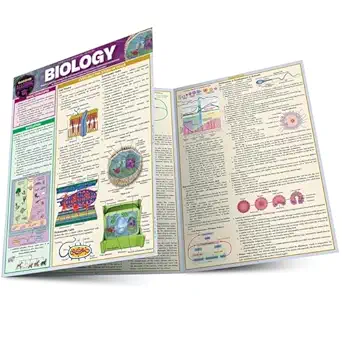 | Best for Exam Prep | Format: Laminated reference chart, 6 pages | Publisher: QuickStudy Academic | Subject scope: Biology fundamentals only | VIEW LATEST PRICE | See Our Full Breakdown |
| The Usborne Science Encyclopedia: An In-depth Guide for Young Scientists Exploring Gravity, Flight, Genes, DNA and More |  | Best Interactive Learning | Format: Hardcover | Publisher: Usborne | Coverage: Physics, biology, genetics, flight, and more | VIEW LATEST PRICE | See Our Full Breakdown |
| Knowledge Encyclopedia Space! The Universe as You’ve Never Seen it Before |  | Best Deep-Space Visual Pick | Format: Hardcover illustrated encyclopedia | Subject Focus: Space, astronomy, and the universe | Target Age Range: Approximately 8-14 years (all ages) | VIEW LATEST PRICE | See Our Full Breakdown |
| Knowledge Encyclopedia Science! 2nd Edition |  | Best All-Ages Family Reference | Format: Illustrated hardcover encyclopedia | Edition: 2nd Edition (updated content) | Subject Coverage: General science: physics, chemistry, biology, earth science | VIEW LATEST PRICE | See Our Full Breakdown |
| Science Knowledge Encyclopedia for Children: Collection of 6 Books (Box Set) |  | Best Boxed Set for Young Learners | Format: Boxed set of 6 paperback/hardcover books | Subject Coverage: Multiple science topics across six themed volumes | Target Age Range: Young children (not specified by publisher) | VIEW LATEST PRICE | See Our Full Breakdown |
| Science Book: Everything You Need to Know About the World and How It Works |  | Best for Adult Learners | Format: Illustrated trade reference book | Subject Coverage: General science: how the world and universe work | Target Audience: Teens and adults (age not specified by publisher) | VIEW LATEST PRICE | See Our Full Breakdown |
| Everything You Need to Ace Science in One Big Fat Notebook: The Complete Middle School Study Guide |  | Best Study Guide for Students | Format: Softcover study guide, notebook-style layout | Subject Coverage: Complete middle school science curriculum | Target Grade Level: Middle school (grades 6-8) | VIEW LATEST PRICE | See Our Full Breakdown |
| science reference book | Format | Use case | Audience level |
|---|---|---|---|
| The Science Book | Hardcover (DK Big Ideas series) | — | Teen to adult |
| National Geographic Kids Scien | Hardcover | — | Elementary (roughly ages 7-11) |
| Knowledge Encyclopedia: Human | Hardcover | — | Roughly ages 8-13 |
| Biology: A QuickStudy Laminate | Laminated reference chart, 6 pages | Exam review and quick lookup | High school to early college |
| The Usborne Science Encycloped | Hardcover | — | Roughly ages 9-14 |
| Knowledge Encyclopedia Space! | Hardcover illustrated encyclopedia | Home reference and curiosity-driven reading | — |
| Knowledge Encyclopedia Science | Illustrated hardcover encyclopedia | Home reference, homework support, general curiosity | — |
| Science Knowledge Encyclopedia | Boxed set of 6 paperback/hardcover books | Curiosity-building home reading, gifts | — |
| Science Book: Everything You N | Illustrated trade reference book | Adult self-education, home reference | — |
| Everything You Need to Ace Sci | Softcover study guide, notebook-style layout | Exam preparation and curriculum review | — |
More Details on Our Top Picks
The Science Book (DK Big Ideas)
The Science Book earns the top spot because it does what a general science reference is actually supposed to do: cover every major discipline without collapsing into shallow trivia. Its chronological, idea-by-idea structure explains how concepts like evolution and relativity developed, which gives readers context rather than isolated facts. Compared with the Usborne Science Encyclopedia, which is aimed squarely at younger learners, this volume treats readers as capable adults — the visual layouts help, but the text carries the weight.
The tradeoff is real, though. Anyone needing textbook-level rigor, like an AP or university student, will find the explanations too simplified, and there are no digital companion materials at all. Think of it as the smartest coffee-table science book on the shelf rather than a study tool.
Pros:- Covers the full sweep of scientific discovery across disciplines
- The ‘Big Ideas’ format explains how each concept developed and why it matters
- Rich diagrams and imagery make dense topics approachable
- Durable, giftable hardcover that works as a lasting home reference
Cons:- Explanations stay at the conceptual level with little mathematical or technical depth
- No supplementary online resources or study materials included
Best for: Curious adults and teens who want a single, handsome volume spanning all of science
Not ideal for: University or advanced students who need equations, technical depth, and exam-aligned content
- Format:Hardcover (DK Big Ideas series)
- Coverage:All major sciences, organized chronologically by idea
- Audience level:Teen to adult
- Visual content:Full-color illustrations, diagrams, and timelines
- Supplementary materials:None
- Reading style:Browsable, one concept per spread
Our verdict“If you want one science reference the whole household can actually enjoy reading, this is the one to buy.”
National Geographic Kids Science Encyclopedia: Atom Smashing, Food Chemistry, Animals, Space, and More!
Where The Science Book assumes an adult attention span, this encyclopedia meets younger readers exactly where they are: short, punchy entries, big photography, and the kid-friendly tone National Geographic does best. Topic coverage is impressively broad — food chemistry sits comfortably alongside space and animals — so a child who doesn’t yet know which branch of science they love can sample everything.
Compared with the Usborne Science Encyclopedia, it skews slightly younger and leans on photography rather than linked multimedia, which makes it more self-contained but less expansive for kids ready to go deeper. Parents of strong readers in upper elementary may find their child outgrows it within a couple of years, and there’s no real depth for school reports on any single topic.
Pros:- Broad topic range that lets kids discover which sciences excite them
- High-quality National Geographic photography throughout
- Accessible writing that reluctant readers can manage
- Strong browsing design — kids can open to any page and enjoy it
Cons:- Content depth is thin; not sufficient as a sole source for school projects
- Children will age out of it relatively quickly
Best for: Parents of roughly 7- to 11-year-olds wanting a first serious science reference at home
Not ideal for: Middle schoolers and up — the reading level and content depth cap out well below what they need
- Format:Hardcover
- Publisher:National Geographic Kids
- Coverage:Chemistry, biology, physics, space, animals, and more
- Audience level:Elementary (roughly ages 7-11)
- Visual content:Full-color photography and graphics
- Entry style:Short, browsable topic spreads
Our verdict“The best first science encyclopedia for elementary-age kids, provided you accept they’ll eventually need something meatier.”
Knowledge Encyclopedia: Human Body
Every other book in this roundup goes broad; this one goes deep on a single subject, and that focus is its entire value proposition. Instead of a few pages on anatomy inside a general encyclopedia, young readers get detailed cross-sections and 3D-style renderings that make organs, bones, and body systems genuinely understandable. It’s the natural next step after a child has browsed the National Geographic Kids Science Encyclopedia and announced that bodies are their favorite thing.
The obvious limitation: it is useless as a general reference. A household that buys only this book has no coverage of chemistry, physics, or space, so it works best as a companion to a broader pick like The Science Book rather than a replacement. Anatomical detail is solid for kids but stops short of what a high school biology student needs.
Pros:- Deep, focused anatomy coverage that general encyclopedias can’t match
- Detailed illustrations and renderings that clarify complex body systems
- Excellent for anatomy-obsessed kids and school body-unit projects
- Grows with a child better than general kid encyclopedias
Cons:- Single-subject scope means it can’t serve as your main science reference
- Detail level still falls short of secondary-level biology coursework
Best for: Kids ages 8-13 who are fascinated by anatomy and want a dedicated human body reference
Not ideal for: Anyone wanting a general science reference — this covers one subject only
- Format:Hardcover
- Subject scope:Human body and anatomy only
- Audience level:Roughly ages 8-13
- Visual content:3D-style illustrations, cross-sections, and anatomical renderings
- Series:DK Knowledge Encyclopedia
- Organization:By body system
Our verdict“Buy this alongside a general encyclopedia if your child loves anatomy — not instead of one.”
Biology: A QuickStudy Laminated Reference Guide
Everything else here is a book you sit and browse; this is a tool you cram from. The laminated, six-page format compresses core biology — cell structure, genetics, taxonomy, basic processes — into a reference a student can keep in a binder and glance at mid-study. Compared with the Big Fat Notebook style of middle school study guides also in this roundup, it offers none of the narrative explanation, but it wins decisively on speed and durability when a test is two days away.
Be honest about what it isn’t: there is no room for teaching here. A student who doesn’t already understand a concept won’t learn it from three-line summaries, and it covers only biology — no chemistry, physics, or earth science. It’s a supplement, full stop.
Pros:- Extremely fast access to key definitions, formulas, and diagrams
- Laminated pages survive backpacks, binders, and spilled drinks
- Cheap enough to buy for a single course and keep afterward
- Fits in a binder alongside notes
Cons:- Summaries are too terse to teach concepts from scratch
- Biology only — no coverage of other sciences
Best for: High school and early college biology students who need rapid review before exams
Not ideal for: Learners seeking explanation or context — the telegraphic summaries assume prior knowledge
- Format:Laminated reference chart, 6 pages
- Publisher:QuickStudy Academic
- Subject scope:Biology fundamentals only
- Audience level:High school to early college
- Use case:Exam review and quick lookup
- Durability:Waterproof, three-hole punched lamination
Our verdict“A cheap, indestructible cramming aid for biology students — pair it with a real textbook, don’t replace one with it.”
The Usborne Science Encyclopedia: An In-depth Guide for Young Scientists Exploring Gravity, Flight, Genes, DNA and More
This pick earns its place through multimedia integration no print competitor matches: over 180 video clips and 1,000 vetted website links turn a physical encyclopedia into a gateway for supervised online exploration. That makes it the strongest choice here for home-schooling families, because a topic that sparks interest on the page can immediately be pursued further. Compared with the National Geographic Kids Science Encyclopedia, the Usborne covers tougher material — genes and DNA get genuine treatment — and serves an older, more independent reader.
The tradeoffs are worth weighing. The digital components depend on links staying live, so some resources will inevitably break over time, and kids without supervised internet access lose a large part of the value. At this price point for a children’s reference, some buyers will reasonably prefer a cheaper, purely print option.
Pros:- 180+ video clips and 1,000 recommended websites extend learning far beyond the page
- Handles advanced topics like genetics at a level kids can genuinely grasp
- Broad coverage across physics, biology, and engineering themes
- Encourages self-directed research habits
Cons:- Web links will degrade over time as sites move or disappear
- A meaningful share of the learning value requires internet access
- Pricier than comparable print-only children’s encyclopedias
Best for: Home-schooling families and independent readers ages 9-14 with internet access
Not ideal for: Households limiting screen time or without reliable internet — much of the book’s value lives online
- Format:Hardcover
- Publisher:Usborne
- Coverage:Physics, biology, genetics, flight, and more
- Audience level:Roughly ages 9-14
- Digital extras:180+ video clips, 1,000 recommended websites
- Learning style:Print plus linked multimedia exploration
Our verdict“The best choice for curious kids who will actually follow the digital trails — a weaker one if your home is mostly offline.”
Knowledge Encyclopedia Space! The Universe as You’ve Never Seen it Before
While most science reference books spread themselves across every discipline, this one goes all-in on space, and that focus pays off. The CGI renderings do real explanatory work — they show readers what a photograph cannot, like cross-sections of planets and the scale of the solar system. Compared with the broader Science Book: Everything You Need to Know About the World and How It Works, this option trades wide coverage for depth in a single domain, which makes it far more compelling for a kid who is already obsessed with astronomy. The tradeoff is real, though: advanced readers and hobbyist astronomers will find the explanations stop well short of technical. This pick makes the most sense as a visually driven gateway into space science rather than a serious reference for coursework.
Pros:- Stunning CGI visuals that explain concepts photos cannot capture
- Single-topic focus gives space far more depth than general encyclopedias
- Accessible to a wide age range, works for shared family reading
- Strong gift appeal for space-obsessed young readers
Cons:- Limited technical depth for advanced or older readers
- Covers only astronomy, so it cannot serve as an all-purpose science reference
Best for: Curious kids and teens (roughly 8-14) who are fascinated by space and learn better through visuals than dense text
Not ideal for: Adult amateur astronomers or students needing quantitative depth — orbital mechanics and astrophysics are kept at surface level
- Format:Hardcover illustrated encyclopedia
- Subject Focus:Space, astronomy, and the universe
- Target Age Range:Approximately 8-14 years (all ages)
- Reading Level:Accessible, visual-first explanations
- Illustrations:Full-color CGI renderings throughout
- Series:DK Knowledge Encyclopedia series
- Use Case:Home reference and curiosity-driven reading
Our verdict“Buy this for a young space enthusiast who wants a visually spectacular deep dive, not for anyone needing a general science reference.”
Knowledge Encyclopedia Science! 2nd Edition
This is the generalist counterpart to the space-focused volume above it, and arguably the safest default choice for a family bookshelf. Where Knowledge Encyclopedia Space! drills into one subject, the 2nd edition here spreads across physics, chemistry, biology, and earth science with DK’s signature rendered illustrations doing the heavy lifting on difficult concepts. Compared with the Usborne Science Encyclopedia, this edition benefits from updated facts and refreshed content, which matters in fast-moving fields. The drawback is specificity: no single topic gets the room it deserves, so a student researching one area deeply will outgrow it quickly. Buyers should also note the lack of reader reviews on this edition, so there’s less community feedback to lean on than with older, proven titles.
Pros:- Broad coverage across all major science disciplines in one volume
- Updated facts distinguish it from older first-edition references
- Vibrant illustrations make abstract concepts concrete
- Readable across a wide age span, from children to adults
Cons:- Shallow treatment of individual topics compared with single-subject books
- Limited review history for this edition makes it a less proven purchase
Best for: Families with multiple kids at different ages who want one attractive, up-to-date science reference for the shared bookshelf
Not ideal for: Students or researchers needing depth in one discipline — coverage is intentionally broad rather than deep
- Format:Illustrated hardcover encyclopedia
- Edition:2nd Edition (updated content)
- Subject Coverage:General science: physics, chemistry, biology, earth science
- Target Age Range:All ages / family reference
- Illustrations:Full-color diagrams and rendered artwork
- Series:DK Knowledge Encyclopedia series
- Use Case:Home reference, homework support, general curiosity
Our verdict“The strongest single-volume choice for a household that wants current, well-illustrated science coverage without buying multiple books.”
Science Knowledge Encyclopedia for Children: Collection of 6 Books (Box Set)
Rather than one thick single-volume encyclopedia, this set splits science across six themed books, and that format choice changes how kids actually use it. A young reader can grab the volume that matches their current interest without wrestling with a heavy tome — a genuine advantage over something like the National Geographic Kids Science Encyclopedia for children with shorter attention spans. The set is built as an introduction to fundamentals, not a reference kids will carry into middle school. Two caveats stand out: the publisher provides little detail on contents or age range, and there’s no ratings history to verify quality, so buyers are taking more of a chance here than with the DK or National Geographic names. Compared with Everything You Need to Ace Science, this set is for exploration, not structured study.
Pros:- Six-book format lets kids follow specific interests one volume at a time
- Lighter individual books are easier for small hands than one large encyclopedia
- Encourages self-directed browsing and curiosity
- Strong value as a bundled introduction to multiple science topics
Cons:- Minimal publisher information on contents and recommended age range
- No reviews or ratings to verify quality before buying
- Introductory depth only — kids will outgrow it within a few years
Best for: Parents of early-elementary readers who want an affordable, browsable multi-book set that builds general science curiosity
Not ideal for: Buyers who want proven editorial quality — the thin publisher details and absent reviews make this a riskier pick than DK or NatGeo alternatives
- Format:Boxed set of 6 paperback/hardcover books
- Subject Coverage:Multiple science topics across six themed volumes
- Target Age Range:Young children (not specified by publisher)
- Reading Level:Introductory, designed for early learners
- Use Case:Curiosity-building home reading, gifts
- Publisher Detail:Limited content and age information available
Our verdict“A reasonable budget pick for sparking early science interest, if you accept the uncertainty that comes with a lesser-known publisher.”
Science Book: Everything You Need to Know About the World and How It Works
This title occupies the grown-up slot in the lineup. Where Knowledge Encyclopedia Science! is pitched at a family audience with heavy illustration, this book is written for teens and adults who want genuinely broad scientific literacy without returning to a textbook. The explanations favor conceptual clarity — how things work and why — over visual spectacle, which makes it a better fit for a curious adult than the DK volume, but less engaging for a seven-year-old. Its main weakness is ambiguity: the publisher doesn’t clearly signal a target age or reading level, so buyers have to judge fit themselves. Compared with The Science Book (DK Big Ideas), which organizes science around landmark theories and thinkers, this one is more of a practical, systems-oriented tour of how the world operates.
Pros:- Concept-first explanations suit mature readers better than cartoon-heavy kids’ encyclopedias
- Wide-ranging coverage connects physics, biology, earth science, and technology
- Readable straight through or dipped into as needed
- Serves as a durable long-term shelf reference
Cons:- No stated target age or reading level, making fit uncertain
- Fewer illustrations than competing visual encyclopedias
- Not deep enough to replace subject-specific references
Best for: Adults and older teens who want a single readable volume explaining how everything from weather to machines to cells actually works
Not ideal for: Younger children — the text-forward approach and unclear age labeling make it a poor match for early readers
- Format:Illustrated trade reference book
- Subject Coverage:General science: how the world and universe work
- Target Audience:Teens and adults (age not specified by publisher)
- Reading Level:Accessible adult nonfiction
- Illustrations:Diagrams and photos supporting text-led explanations
- Use Case:Adult self-education, home reference
Our verdict“The right choice for an adult or teen building general science literacy, provided they prefer substance over flashy visuals.”
Everything You Need to Ace Science in One Big Fat Notebook: The Complete Middle School Study Guide
Every other book in this roundup is for browsing; this one is for passing the test. Styled like a borrowed set of class notes, it distills the entire middle school science curriculum into digestible, mnemonic-friendly pages with diagrams and practice questions — a fundamentally different job than an encyclopedia like Knowledge Encyclopedia Science! does. That focus is its strength and its ceiling: a student prepping for exams gets far more usable help here than any reference volume can offer, but there’s nothing for casual curiosity outside the curriculum, and nothing for high schoolers. Compared with Biology: A QuickStudy Laminated Reference Guide, this notebook covers the full year of science rather than one subject, at the cost of being bulkier and less exam-room-portable. Note that buyer feedback and pricing are thin in the listing data.
Pros:- Aligned directly to the middle school science curriculum
- Notes-style layout with diagrams aids memorization and quick review
- Practice questions reinforce each unit
- Covers the full science year in one affordable volume
Cons:- Strictly limited to middle school level — outgrown quickly
- Functional design with no coffee-table or gifting appeal
- Thin review and pricing data in the current listing
Best for: Middle school students (and their parents) who need curriculum-aligned review, clear notes, and practice questions for tests
Not ideal for: High school students, general browsers, or anyone wanting a beautiful reference book — this is strictly a curriculum study tool
- Format:Softcover study guide, notebook-style layout
- Subject Coverage:Complete middle school science curriculum
- Target Grade Level:Middle school (grades 6-8)
- Study Features:Diagrams, clear notes, and practice questions
- Series:Big Fat Notebook series
- Use Case:Exam preparation and curriculum review
Our verdict“If the goal is exam results rather than exploration, this notebook beats every encyclopedia in the lineup for middle schoolers.”

How We Picked
My ranking logic starts with audience fit, because a science reference book that’s too simple or too dense fails regardless of quality. I grouped these titles into four reader profiles — adults and teens building general knowledge, elementary and middle-school browsers, exam-focused students, and subject specialists — and judged each book only against the needs of its intended audience. From there, I weighed accuracy and currency (does the content reflect updated science, especially in fast-moving areas like space and genetics), navigability (index quality, logical organization, whether a reader can find an answer in under a minute), and longevity (whether the book stays useful for years or gets outgrown within a school year).
I also factored in value per dollar, which favors thick single-volume references over thin guides unless the thin guide serves a specific purpose the big books can’t — which is exactly why the QuickStudy laminated guide and the Big Fat Notebook earned places despite their narrow scope. Finally, I penalized redundancy: where two titles covered nearly the same ground, only the one executing better ranked highly, and I’ve flagged the overlap so buyers don’t double-purchase.
| science reference book | Audience level | Use case |
|---|---|---|
| The Science Book | Teen to adult | — |
| National Geographic Kids Scien | Elementary (roughly ages 7-11) | — |
| Knowledge Encyclopedia: Human | Roughly ages 8-13 | — |
| Biology: A QuickStudy Laminate | High school to early college | Exam review and quick lookup |
| The Usborne Science Encycloped | Roughly ages 9-14 | — |
| Knowledge Encyclopedia Space! | — | Home reference and curiosity-driven reading |
| Knowledge Encyclopedia Science | — | Home reference, homework support, general curiosity |
| Science Knowledge Encyclopedia | — | Curiosity-building home reading, gifts |
| Science Book: Everything You N | — | Adult self-education, home reference |
| Everything You Need to Ace Sci | — | Exam preparation and curriculum review |
Factors to Consider When Choosing Science Reference Books
Before choosing a science reference book, it helps to understand what actually separates a book that gets used weekly from one that gathers dust. These are the factors that shaped my rankings and the mistakes I see buyers make most often.Match the Reading Level Before Anything Else
The single most common mistake is buying an encyclopedia written two grade levels above or below the reader. A visually stunning adult reference will sit unread by a nine-year-old, and a kids’ encyclopedia will feel condescending to a teenager within months. Check the publisher’s stated age range, but also flip through sample pages if possible — sentence length, vocabulary, and whether concepts are explained or merely named tell you more than the label does. Books like the Usborne and National Geographic Kids encyclopedias bridge levels reasonably well, while the DK Big Ideas series assumes comfortable reading stamina. When in doubt for a growing reader, buy slightly up and let the book grow with them; reference books have longer usable lifespans than novels.
Breadth Versus Depth: You Usually Can’t Have Both
A 500-page encyclopedia covering all of science devotes perhaps ten pages to genetics; a dedicated human body or space encyclopedia gives that single subject a hundred or more. Buyers frequently overestimate how much depth a general reference contains, then are disappointed when a child’s specific interest isn’t covered thoroughly. If the reader has a dominant interest — space obsessives are the classic example — a subject-specific encyclopedia is the better purchase even if it costs similar money. General references earn their keep for households with varied curiosity or school-age children who cycle through topics with each science unit. The box-set format tries to split the difference and can work, but check page counts per volume, because ‘six books’ sometimes means six very slim books.
Currency Matters More in Some Subjects Than Others
Chemistry, physics fundamentals, and basic biology change little, but space science, climate science, and genetics are moving targets — an edition from a decade ago may be missing exoplanet discoveries, updated climate data, or gene-editing developments. This is why I favored revised editions where they exist; publishers like DK update flagship encyclopedias on multi-year cycles, and the differences are usually more than cosmetic. For used-book bargain hunters, this is the trap: older editions of space and science encyclopedias can be found cheap precisely because portions are outdated. Mathematics references and physics primers age far more gracefully. If buying secondhand to save money, stick to stable subjects and buy new for anything touching astronomy or biotechnology.
Visuals Are Not Just Decoration
In science reference publishing, imagery carries information — cutaway diagrams, labeled illustrations, and scale comparisons do explanatory work that paragraphs cannot. The distinction to understand is between decorative stock-style imagery and genuinely instructive graphics: a rendered cross-section of a cell teaches; a pretty photo of a nebula decorates. The DK Knowledge Encyclopedia line and Usborne both invest heavily in instructive diagrams, which is why they dominate for visual learners. Adult-oriented references tend toward charts and timelines instead, which suit analytical readers but lose younger audiences. Flip through a preview and ask whether the images answer questions or merely fill space; that single test predicts how much use the book will get.
Physical Format Affects How the Book Gets Used
Large-format encyclopedias are beautiful on a coffee table but awkward in a backpack, and their bindings take real abuse from younger readers — check reviews for complaints about spine cracking, because heavy glossy pages stress bindings over time. Laminated quick-reference guides solve the portability problem entirely and survive backpack life, but at the cost of all narrative context. Middle-size trade paperbacks like the Big Fat Notebook hit the practical sweet spot for school use: they fit in a bag, lie flat, and can be written in. Think about where the book will live and who will handle it; a reference that’s too precious to be carried is a reference that stops being referenced.
Curriculum Alignment Versus Curiosity-Driven Learning
Parents often buy general encyclopedias hoping they’ll help with schoolwork, then discover the encyclopedia’s coverage doesn’t match what’s on the test. Study guides built to curriculum standards, like the One Big Fat Notebook series, are structured around what middle-schoolers are actually tested on, with worked examples and check-yourself questions. Encyclopedias, by contrast, are for curiosity — they build background knowledge and scientific literacy that pays off long-term but won’t rescue anyone before Thursday’s quiz. The honest answer is that many families benefit from one of each, and if budget forces a choice, the child’s immediate academic need should win. A struggling student needs the study guide; a bored student needs the encyclopedia.
Frequently Asked Questions
Is one general science encyclopedia enough, or do I need subject-specific ones?
For casual browsing and homework support, one strong general encyclopedia covers most household needs — The Science Book or Knowledge Encyclopedia Science! handles the vast majority of questions a family will throw at it. Subject-specific encyclopedias become worthwhile when a reader has a persistent, dominant interest, because a general reference gives any single topic only a fraction of its pages. A child fascinated by space will exhaust the astronomy section of a general encyclopedia within weeks, while a dedicated space encyclopedia sustains that interest for a year or more. My suggestion is to start general, watch what topics the reader keeps returning to, and only then invest in a subject-specific volume. This approach also avoids the shelf-clutter problem of buying specialized books for interests that turn out to be passing phases.
Which of these books is best for a middle-schooler struggling in science class?
That’s the one scenario where an encyclopedia is the wrong tool, and the One Big Fat Notebook is the clear answer. It’s organized around the standard middle-school science curriculum, written in student-friendly language, and includes mnemonics, worked examples, and practice questions that encyclopedias don’t attempt. A struggling student needs condensed, test-aligned explanations, not beautiful two-page spreads on unrelated topics. The QuickStudy Biology laminated guide serves a similar purpose for biology units specifically — it’s built for rapid review right before an exam. Pair either with a general encyclopedia for background reading once grades stabilize, but lead with the curriculum-aligned material.
Are the DK ‘Knowledge Encyclopedia’ and ‘Big Ideas’ series the same thing?
No, and the naming similarity causes real confusion among buyers. The Big Ideas series, including The Science Book, is text-forward and written for teens and adults — it traces the development of scientific ideas and arguments rather than cataloging facts. The Knowledge Encyclopedia line, including Science! and Space!, is heavily visual and pitched at roughly ages 9–14, with rendered imagery carrying much of the explanatory load. An adult buying the Knowledge Encyclopedia may find it too light; a ten-year-old handed the Big Ideas volume will likely stall on the density. Knowing which DK line you’re buying is probably the most useful single fact for navigating this category, since both lines cover similar scientific territory at very different levels.
How long will a science encyclopedia stay current before it’s outdated?
It depends on the subject mix, and the honest range is five to fifteen years. Core physics, chemistry, and most biology content ages slowly and remains accurate across editions. Space science is the fastest to date — new missions, exoplanet counts, and revised imagery mean space encyclopedias lose value fastest, so buy the newest edition available. Climate data and genetics sit in the middle, with meaningful updates every few years. Publishers’ revised editions usually refresh these fast-moving sections while leaving stable content untouched, which is why second editions justify their existence. If you buy used to save money, avoid used space encyclopedias older than a decade; used physics and general references hold up far better.
Are the children’s box sets a better value than single encyclopedias?
They can be, but the value depends entirely on page counts and quality per volume, which vary widely. Some six-book sets total fewer pages than one thick single-volume encyclopedia, splitting thin content across attractive packaging — always check the total page count against the price before assuming the box format means more book. Genuine advantages include portability per volume, the ability to hand a child one focused topic at a time, and durability, since slim books survive handling better than massive tomes. The disadvantage is fragmentation: cross-referenced topics like energy or the water cycle don’t fit neatly into six categories, so coverage can feel scattered. For younger elementary readers, a good box set often works; for anyone past about age ten, a well-indexed single encyclopedia usually delivers more substance per dollar.
Conclusion
The right choice here depends less on quality — most of these books are well made — and more on who’s reading. For the best overall pick, I’d point most buyers to The Science Book (DK Big Ideas): it has the longest usable lifespan, serves teens through adults, and organizes science around ideas rather than trivia. For best value, Everything You Need to Ace Science in One Big Fat Notebook delivers more practical academic benefit per dollar than anything else on this list, provided the reader is in middle school. The premium pick is the pairing of Knowledge Encyclopedia Science! with Knowledge Encyclopedia Space! — together they form a visual reference library that justifies the combined cost for families with younger readers. For beginners and younger children, the National Geographic Kids Science Encyclopedia is the friendliest entry point, with the Usborne Science Encyclopedia as the step up once reading confidence grows. Specific needs round out the map: Biology: A QuickStudy Laminated Reference Guide for exam-speed review, Knowledge Encyclopedia: Human Body for anatomy-focused readers, Science Book: Everything You Need to Know About the World and How It Works for adults wanting a general-audience desk reference, and the 6-book box set for elementary-age readers who do better with one slim topic at a time. Buy for the reader in front of you, not the shelf you imagine, and any of these will earn its place.
Fall Picks
fall essentials
As an affiliate, we earn on qualifying purchases.