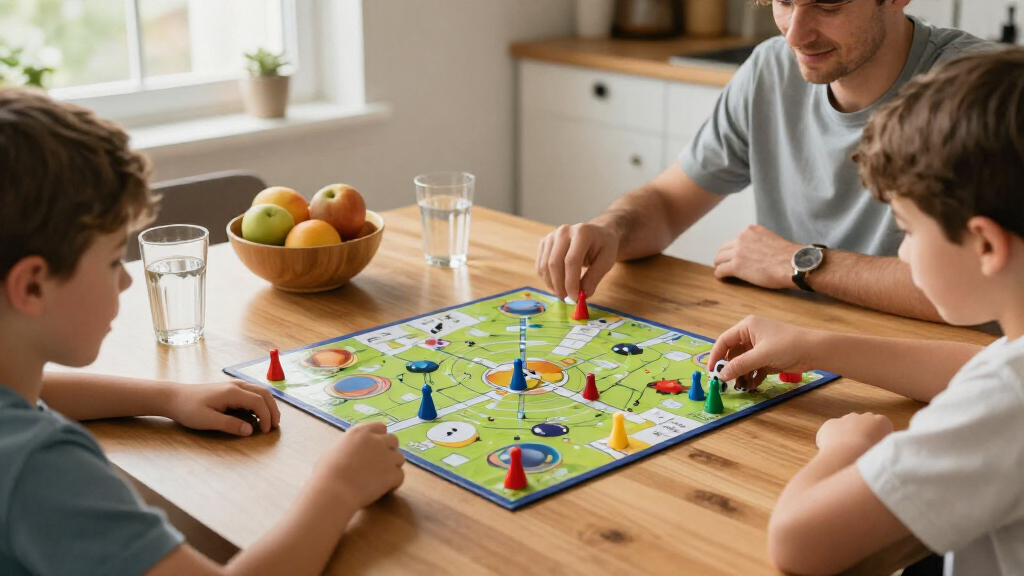

For families seeking science board games, I’d start with MindWare Science Trivia Challenge for a broad, accessible mix of science questions, while Guess in 10: NASA Space is a lighter pick for quick rounds and Dr. Eureka turns science-themed play into hands-on logic. The main choice is between easy-to-teach games that work across ages and deeper strategy games that reward players willing to learn more rules. Some options focus on recalling facts; others build understanding through decisions about atoms, cells, genetics, or habitats. Read on for the full breakdown and help matching a game to your family’s ages, patience, and appetite for science.

Prime made for students and young adults
- Fast, free delivery for dorm and study essentials
- Prime Video and Amazon Music included
- Member-only deals
Key Takeaways
- MindWare Science Trivia Challenge is the broadest starting point in this lineup, while NASA-themed Guess in 10 narrows the subject to space and keeps play conversational.
- Dr. Eureka offers a hands-on logic alternative to question-and-answer games, making it a useful choice when younger players prefer puzzles to science facts.
- The lineup’s heavier strategy games—Genotype, On the Origin of Species, Compounded, Cellulose, and Cytosis—suit families who want science to shape decisions, not just provide a theme.
- Ecosystem and Periodic offer distinct middle paths: one centers on habitats and ecological relationships, while the other builds play around the elements.
- The best fit depends less on the word “science” on the box than on your family’s preferred session length, reading comfort, and willingness to learn rules.
| MindWare Science Trivia Challenge Game | 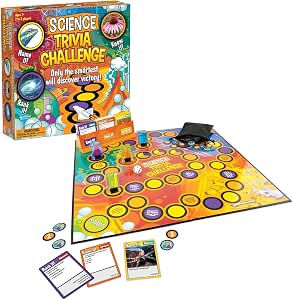 | Best for Mixed-Age Science Trivia | Brand: MindWare | Recommended age: Ages 8 and up (description also states ages 7 and up) | Players: Up to 4 | VIEW LATEST PRICE | See Our Full Breakdown |
| Skillmatics Guess in 10: NASA Space Card Game |  | Best Compact Pick | Brand: Skillmatics | Game type: Travel card game | Players: 2–6 | VIEW LATEST PRICE | See Our Full Breakdown |
| Subatomic: An Atom Building Game (2nd Edition) |  | Best for Teen Science Strategists | Brand: Genius Games | Edition: 2nd Edition | Players: 2–4 | VIEW LATEST PRICE | See Our Full Breakdown |
| Blue Orange Dr. Eureka Logic Puzzle Game |  | Best for Hands-On Family Puzzles | Brand: Blue Orange | Players: 1–4 | Recommended age: 8 years and up | VIEW LATEST PRICE | See Our Full Breakdown |
| Genotype: A Mendelian Genetics Board Game |  | Best for Genetics-Focused Family Strategy | Brand: Genius Games | Players: 1–5 | Game time: 45–75 minutes | VIEW LATEST PRICE | See Our Full Breakdown |
| On the Origin of Species: Evolutionary Research Board Game |  | Best for Science History | Brand: Genius Games | Publisher: Artana Games | Game type: Science history board game | VIEW LATEST PRICE | See Our Full Breakdown |
| Compounded: The Peer-Reviewed Edition — Chemistry Strategy Board Game |  | Best Chemistry Game for Older Families | Brand: Greater Than Games | Edition: The Peer-Reviewed Edition | Players: 2–5 | VIEW LATEST PRICE | See Our Full Breakdown |
| Cellulose: A Plant Cell Biology Strategy Board Game |  | Best for Plant Cell Biology Enthusiasts | Brand: Genius Games | Players: 1–5 | Playing time: 60–90 minutes | VIEW LATEST PRICE | See Our Full Breakdown |
| Ecosystem: A Family Card Game About Building Habitats |  | Best Quick Family Game | Players: 2–6 | Play time: 15–20 minutes | Game type: Card drafting / strategy | VIEW LATEST PRICE | See Our Full Breakdown |
| Periodic: A Game of the Elements |  | Best for Learning the Periodic Table | Brand: Genius Games | Genre: Strategy | Players: 2–6 | VIEW LATEST PRICE | See Our Full Breakdown |
| Cytosis: A Cell Biology Strategy Board Game |  | Best for Cell Biology Strategy | Brand: Genius Games | Genre: Educational, Family | Number of Players: 2, 3, 4 or 10+ | VIEW LATEST PRICE | See Our Full Breakdown |
| science board games for familie | Brand | Players | Recommended age | Game type |
|---|---|---|---|---|
| MindWare Science Trivia Challe | MindWare | Up to 4 | Ages 8 and up (description also states ages 7 and up) | Board game |
| Skillmatics Guess in 10: NASA | Skillmatics | 2–6 | 8 years and up | Travel card game |
| Subatomic: An Atom Building Ga | Genius Games | 2–4 | 14 years and up | — |
| Blue Orange Dr. Eureka Logic P | Blue Orange | 1–4 | 8 years and up | Logic, strategy, and dexterity |
| Genotype: A Mendelian Genetics | Genius Games | 1–5 | 8 years and up | — |
| On the Origin of Species: Evol | Genius Games | 2–4 | 8 years and up | Science history board game |
| Compounded: The Peer-Reviewed | Greater Than Games | 2–5 | 14 years and up | — |
| Cellulose: A Plant Cell Biolog | Genius Games | 1–5 | 14 years and up | Educational strategy board game |
| Ecosystem: A Family Card Game | — | 2–6 | — | Card drafting / strategy |
| Periodic: A Game of the Elemen | Genius Games | 2–6 | 10+ | — |
| Cytosis: A Cell Biology Strate | Genius Games | — | — | — |
More Details on Our Top Picks
MindWare Science Trivia Challenge Game
MindWare Science Trivia Challenge suits families who want science questions to drive the game rather than sit in a booklet on the side. Its double-sided beginner and advanced cards give players with different knowledge levels a way to join the same session, while observation tokens, a die, and pawns add a shared board-game structure. Compared with Skillmatics Guess in 10: NASA Space Card Game, this covers science more broadly instead of focusing on space, but it also supports fewer players and asks families to work through trivia cards. Solo play is listed as an option, which adds flexibility, though the competitive group format may be the stronger fit. The age guidance is inconsistent: the description says 7+, while the manufacturer recommendation says 8+. I’d follow the higher age guidance when choosing for children.
Pros:- Beginner and advanced questions on double-sided cards help accommodate mixed knowledge levels.
- Science trivia spans a broader theme than a game focused only on space.
- Includes observation tokens, a die, and pawns for structured group play.
- Can be played solo or with a group.
Cons:- Supports up to four players, limiting its fit for larger family gatherings.
- Age guidance differs between the description and manufacturer recommendation.
- Trivia-led play may suit quiz fans better than families seeking a tactile puzzle.
Best for: Families with children around age 8 and up who want broad science trivia and questions at different difficulty levels.
Not ideal for: Groups of five or more, or families seeking a hands-on science activity rather than a question-led game.
- Brand:MindWare
- Recommended age:Ages 8 and up (description also states ages 7 and up)
- Players:Up to 4
- Game type:Board game
- Theme:Science trivia
- Included components:216 cards, die, 50 observation tokens, token bag, 4 pawns
- Material:Paper
- Language:English
Our verdict“Choose this for a small family that wants broad science trivia with a way to adjust question difficulty.”
Skillmatics Guess in 10: NASA Space Card Game
For families who want a science game that can travel easily, Guess in 10: NASA Space Card Game keeps the format focused: players ask up to 10 questions, use clues and bonus questions, and race to collect seven cards. The portable box and roughly 20-minute rounds make it easier to bring along than the longer strategy games in this roundup, such as Genotype: A Mendelian Genetics Board Game. Its NASA imagery gives the space theme an appealing anchor, but the science coverage is narrower than MindWare Science Trivia Challenge, which ranges across science topics. The guessing format encourages players to reason from clues, though it needs at least two people and offers less of a board-game feel than a game with a map or shared board. I’d pick it for quick, conversational play, not a solo science session.
Pros:- Portable box makes it convenient to take on trips.
- NASA images and space facts give the guessing rounds a clear educational theme.
- Clue cards and bonus questions add choices beyond simple guessing.
- Around 20 minutes per round suits shorter play sessions.
Cons:- Requires at least two players, so it does not work for solo play.
- Focuses on space rather than the wider range of topics in MindWare Science Trivia Challenge.
- Card-based guessing offers less board-game structure than the strategy titles in this roundup.
Best for: Families with children ages 8 and up who want a portable, short space-themed game for car trips or casual breaks.
Not ideal for: Solo players or families looking for broad science coverage and a substantial board-game setup.
- Brand:Skillmatics
- Game type:Travel card game
- Players:2–6
- Recommended age:8 years and up
- Average playtime:20 minutes per round
- Included components:50 game cards, 6 clue cards, portable box, instruction manual
- Material:Paper
- Model number:SKILL579GNS
Our verdict“Pick this for quick, portable space questions with another player, rather than for solo or broad-topic science play.”
Subatomic: An Atom Building Game (2nd Edition)
Subatomic: An Atom Building Game is the pick here for older children and adults who want chemistry concepts inside a strategic game, not just as trivia prompts. Players use deck-building to assemble point-scoring atoms from subatomic particles, with scientist and element cards adding further goals. Its science booklet supports learning beyond the turns, while the 14+ recommendation and 40–60-minute playtime make it a more demanding choice than the quicker Blue Orange Dr. Eureka Logic Puzzle Game. Compared with Genotype: A Mendelian Genetics Board Game, Subatomic has a narrower focus on atoms and chemistry and a slightly smaller player range; Genotype instead centers on genetics and supports solo play. This is a stronger fit for families with strategy-game experience, but younger children and casual players may find the mechanisms and session length a barrier.
Pros:- Deck-building makes atom construction a strategic part of play.
- Accurate science concepts are integrated into the game.
- A science booklet provides context beyond the gameplay.
- Scientist and element cards connect strategy to real scientific ideas.
Cons:- The 14+ age recommendation rules it out for many younger family members.
- A 40–60-minute session is longer than Dr. Eureka’s 15-minute playtime.
- Strategy depth may be too demanding for casual players.
Best for: Families with teens ages 14 and up who enjoy strategy games and want to explore atoms and chemistry through play.
Not ideal for: Families with younger children, players wanting a quick activity, or groups who prefer simple rules and light competition.
- Brand:Genius Games
- Edition:2nd Edition
- Players:2–4
- Playtime:40–60 minutes
- Recommended age:14 years and up
- Material:Cardboard
- Model number:GOT1012
- Release year:2019
Our verdict“Choose Subatomic for teen-and-adult family groups that want a substantial chemistry strategy game and can manage its longer, more complex play.”
Blue Orange Dr. Eureka Logic Puzzle Game
Dr. Eureka turns a science-lab setup into a fast visual and dexterity challenge: players rearrange colored balls among test tubes to match a formula card without touching or dropping them. At about 15 minutes per game, it offers a livelier, more physical alternative to the question-led MindWare Science Trivia Challenge and the longer strategy of Subatomic. Solo play is also supported, so a child can tackle the challenge cards without waiting for a group. The tradeoff is that the scientific theme is mainly conveyed by the lab equipment and puzzle framing; it does not teach a specific science topic as directly as Subatomic’s atom-building or Genotype’s genetics focus. The small balls also demand careful handling, so this works best for players comfortable with precise movements rather than rough-and-ready play.
Pros:- Combines visual logic with hands-on dexterity.
- Supports solo play as well as groups of up to four.
- Short 15-minute playtime makes it easy to fit into a family game session.
- Test tubes and colorful balls create a clear laboratory theme.
Cons:- The science theme is less directly instructional than Subatomic or Genotype.
- Players must move balls without touching them, which can frustrate some children.
- Small balls can be dropped during play and call for careful handling.
Best for: Families with children ages 8 and up who enjoy short visual challenges, dexterity puzzles, and the option to play solo.
Not ideal for: Players seeking substantial science lessons or families who want a game that tolerates careless handling of small pieces.
- Brand:Blue Orange
- Players:1–4
- Recommended age:8 years and up
- Playing time:15 minutes
- Contents:12 test tubes, 24 balls, 54 challenge cards, illustrated rules
- Language:English
- Game type:Logic, strategy, and dexterity
Our verdict“Choose Dr. Eureka for quick, tactile lab-themed puzzles, but look elsewhere if direct science teaching is your main goal.”
Genotype: A Mendelian Genetics Board Game
Genotype gives families a focused way to explore Mendelian genetics: players act as scientists studying pea-plant traits through worker placement and dice drafting. Those mechanisms reward planning and turn choices, while the 12-page science booklet supplies context about Mendel’s research. Compared with Subatomic, it reaches a younger listed audience and allows up to five players, but its 45–75-minute sessions ask for more time than the quick rounds of Guess in 10: NASA Space Card Game. The solo mode is useful for a player who wants to work independently, though the strategy may be a lot for families seeking a simple introduction to science games. Its topic is also specific: choose it for genetics, not for broad science trivia or hands-on lab puzzles like Dr. Eureka.
Pros:- Worker placement and dice drafting give players strategic choices.
- Solo mode supports independent play.
- The 12-page science booklet adds context about genetics and Mendel’s research.
- Supports up to five players, one more than Subatomic.
Cons:- 45–75-minute games require more time than Guess in 10’s short rounds.
- Strategy-focused mechanics may be complex for some families.
- Its genetics focus is narrower than a general science trivia game.
Best for: Families with children ages 8 and up who enjoy strategic board games and want a focused introduction to Mendel and genetic traits.
Not ideal for: Families with limited playtime, younger children who need very simple rules, or buyers seeking broad science topics in one game.
- Brand:Genius Games
- Players:1–5
- Game time:45–75 minutes
- Recommended age:8 years and up
- Material:Cardboard
- Included components:Game
- Edition:Standard Edition
- Model number:GOT1011
Our verdict“Pick Genotype for a family ready to spend a longer session exploring genetics through strategy rather than quick trivia.”
On the Origin of Species: Evolutionary Research Board Game
Evolution and natural history take center stage here: players research habitats, discover species, and use their habitat knowledge to place new species as Darwin’s Beagle travels along its track. That gives families a way to connect strategic decisions with the Galápagos research behind evolutionary science, rather than simply answering science questions. Compared with the shorter, approachable habitat-building of Ecosystem, this game offers a more historical journey and a longer strategic session. Its 90-minute play time is the main tradeoff; it asks for more attention than a quick family game and may stretch younger players’ patience. The Beagle’s progress also sets a fixed end point, so the game is structured around completing that voyage. I’d choose it for families who enjoy history alongside science and have time for a full-length game.
Pros:- Connects species discovery and habitat decisions to a recognizable chapter of science history.
- Combines researching species tiles with using habitat knowledge, giving players different ways to pursue points.
- Supports 2–4 players, making it suitable for a smaller family group.
- The Beagle’s track gives the game a clear shared endpoint.
Cons:- The 90-minute play time is a substantial commitment for a family game.
- Its research and placement decisions may be a lot for players seeking simple, fast science play.
Best for: Families with children aged 8 and up who enjoy Darwin, natural history, and a longer strategy game.
Not ideal for: Families looking for a quick, low-complexity science game or a short activity for younger children.
- Brand:Genius Games
- Publisher:Artana Games
- Game type:Science history board game
- Players:2–4
- Recommended age:8 years and up
- Playing time:90 minutes
- Language:English
- Edition:Standard Edition
Our verdict“Choose this for a family ready to spend a full game session exploring evolution through Darwin’s voyage.”
Compounded: The Peer-Reviewed Edition — Chemistry Strategy Board Game
Lab management with real chemistry themes is the draw: players collect and trade elements, then build compounds to score while deciding how long to hold volatile combinations. The revised rules are designed for more streamlined play, and the larger pieces and elements bag should make handling the lab materials easier. At 45 minutes, it is a shorter commitment than On the Origin of Species, though its recommended age of 14 and up makes it a better match for teens and adults than younger family groups. Compared with Periodic: A Game of the Elements, which builds play around movement across the periodic table, Compounded focuses on gathering ingredients and completing compounds. Trading and luck add table talk, but they can frustrate players who want full control over their plans; waiting too long can also put volatile compounds at risk.
Pros:- Makes collecting elements and building compounds the core of a strategic laboratory game.
- Revised rules are designed for faster, more streamlined play.
- Larger components and a bigger elements bag make the pieces easier to handle.
- Trading creates opportunities for negotiation and interaction among 2–5 players.
Cons:- The recommended age of 14 and up rules it out for many families with younger children.
- Luck and social trading can make outcomes feel less controlled for strategy-focused players.
- Volatile compounds may explode if players take too long to collect what they need.
Best for: Families with teens aged 14 and up who enjoy chemistry, negotiation, and tactical resource management.
Not ideal for: Families with younger children or players who prefer a quiet, low-luck strategy game without trading.
- Brand:Greater Than Games
- Edition:The Peer-Reviewed Edition
- Players:2–5
- Playing time:45 minutes
- Recommended age:14 years and up
- Game mechanics:Hand management, trading, worker placement
- Educational focus:Chemistry, compounds, and elements
- Language:English
Our verdict“Pick Compounded for teen-and-adult family groups that want hands-on chemistry strategy with trading and some uncertainty.”
Cellulose: A Plant Cell Biology Strategy Board Game
Plant cell biology becomes a resource puzzle in this worker-placement game, where actions draw on processes such as photosynthesis. Players compete for limited action spaces and shared resources, so the biology theme is paired with real tactical pressure rather than serving as decoration. Its solo mode with the Ivy AI opponent also gives science-minded players a way to play without assembling a group; that’s a different strength from Ecosystem, which is designed for a quick shared family session. Cellulose adds a science booklet and Cactus and Mangrove scenarios, giving players extra context and different resource challenges. The tradeoff is its 60–90-minute duration and 14-and-up age recommendation, which make it a more demanding fit than the shorter, more accessible Ecosystem. I’d put it on the table when the group specifically wants detailed biology and strategic play.
Pros:- Builds the strategy around plant cell biology and processes such as photosynthesis.
- Solo mode includes the Ivy AI opponent, so play does not depend on finding a group.
- Cactus and Mangrove scenarios add different resource challenges.
- A science booklet provides additional information about the biology behind the game.
Cons:- A 60–90-minute session is longer than a quick family game.
- The recommended age of 14 and up makes it less suited to families with younger children.
- Competition for limited action spaces and shared resources can constrain players’ plans.
Best for: Older families, biology enthusiasts, or solo players who want a strategic game focused on plant cells.
Not ideal for: Families seeking an easy-to-teach game for younger children or a short, casual science activity.
- Brand:Genius Games
- Players:1–5
- Playing time:60–90 minutes
- Recommended age:14 years and up
- Game type:Educational strategy board game
- Language:English
- Additional scenarios:Cactus and Mangrove
- Included components:Cards, solo-mode board and deck, Science Behind the Game booklet
Our verdict“Choose Cellulose when your group wants a demanding plant-biology strategy game, including the option to play solo.”
Ecosystem: A Family Card Game About Building Habitats
Fast habitat-building gives Ecosystem a clear advantage for families who want science in a short session. Players draft cards and arrange animals alongside environments such as forests and streams, creating an accessible route into biodiversity and sustainability without the longer setup and play commitment of Cellulose. With a 15–20-minute play time and room for 2–6 players, it is the easiest fit here for a quick game with a mixed-age group. That accessibility comes with less room for extended strategy than Periodic: A Game of the Elements or the longer research and planning in On the Origin of Species. Its short length may leave strategy fans wanting another round, and the six-player limit excludes larger groups. I’d choose Ecosystem when a family wants ecology-themed decisions that are easy to teach and easy to fit into a busy evening.
Pros:- Short 15–20-minute play time suits busy evenings and repeat rounds.
- Accessible rules make it easier for children and adults to play together.
- Card drafting and habitat arrangement introduce biodiversity and sustainability concepts.
- Supports 2–6 players, covering a wider group than several longer strategy games here.
Cons:- The six-player maximum excludes larger families or groups.
- Its short play time may not satisfy players looking for a substantial strategy session.
- The card-game format offers less extended development than longer board games such as Periodic.
Best for: Families with children and adults who want an easy-to-learn ecology game that fits into a short session.
Not ideal for: Larger groups of more than six or strategy fans seeking a long, involved game with extended planning.
- Players:2–6
- Play time:15–20 minutes
- Game type:Card drafting / strategy
- Target audience:Kids, adults, families, classrooms
- Card types:11
- Educational focus:Ecology, biodiversity, and sustainability
Our verdict“Choose Ecosystem for an approachable, short ecology game that works well with a mixed-age family group.”
Periodic: A Game of the Elements
Periodic trends shape the strategy in this game: players move across the periodic table, discover elements, pursue element-family goals, and advance along an achievement track. That gives chemistry a visible role in the decisions, making it a stronger choice for families who want to engage with how the table is organized than Ecosystem’s more intuitive habitat-building. It supports 2–6 players and is listed for ages 10 and up, offering a younger entry point than Compounded or Cellulose. The tradeoff is that players need to learn or already understand chemistry concepts to get fully involved; it is less suitable as a casual game for a group that wants science in the background. Competition for limited achievement-track spaces can also force players to adjust plans. I’d choose it for families ready to make chemistry the focus of game night.
Pros:- Uses real elements, periodic trends, and element families as part of play.
- Combines tactical movement, set collection, and action-economy decisions.
- Supports 2–6 players, including family and classroom groups.
- The listed age of 10 and up offers a younger starting point than Compounded and Cellulose.
Cons:- Players need to learn or understand chemistry concepts to engage fully.
- Competition for limited achievement-track spaces can disrupt planned strategies.
- Its chemistry focus is a less accessible fit than Ecosystem for families wanting intuitive ecology play.
Best for: Families with children aged 10 and up who want to learn periodic trends and element families through strategy.
Not ideal for: Players seeking a science-light game or a casual pick for a group unwilling to engage with chemistry concepts.
- Brand:Genius Games
- Genre:Strategy
- Players:2–6
- Recommended age:10+
- Edition:Standard Edition
- Included components:Game
- Standards:STEM and NGSS
- Science focus:Periodic trends, elements, and element families
Our verdict“Pick Periodic for a family that wants chemistry learning built directly into competitive strategy.”
Cytosis: A Cell Biology Strategy Board Game
Cytosis is a strong choice for families who want biology to shape the decisions, not just the theme. Its worker-placement turns have players gather resources and use them to build enzymes, hormones, and receptors, giving the group a strategic reason to engage with cell processes. A fact-based booklet, reviewed by science professionals, adds context beyond the board. Compared with Cellulose, another cell-themed strategy game in this roundup, Cytosis focuses on a human cell and its components, making it a good fit for families especially curious about human biology. The tradeoff is session length: the listed 90-minute playing time asks for more attention than a quick family game. Its age recommendation of 10 and up also makes it less suited to younger children, while the unusual player-count listing leaves group-size expectations unclear.
Pros:- Builds cell biology concepts into resource collection and strategic actions.
- Focuses on human cell components such as enzymes, hormones, and receptors.
- Includes a fact-based booklet reviewed by science professionals.
- Designed for family, classroom, and game-night use.
Cons:- The listed 90-minute play time can be a long commitment for a family session.
- The recommended minimum age of 10 excludes many younger family members.
- The listed player count includes an unusual 10+ entry, making group-size guidance unclear.
Best for: Families with science-curious players aged 10 and up who enjoy worker-placement strategy and want a focused introduction to human cell biology.
Not ideal for: Families seeking a short, lightweight game or a clearly specified player count, and households with younger children who may find the strategy and session length a poor fit.
- Brand:Genius Games
- Genre:Educational, Family
- Number of Players:2, 3, 4 or 10+
- Playing Time:90 minutes
- Recommended Minimum Age:10 years
- Included Components:Cytosis: A Cell Biology Game
- Edition:Cytosis Game
- Model Number:GOT1006
- Warranty:No warranty
Our verdict“Choose Cytosis for older family members who want a substantial, human-cell biology strategy game, but skip it if your group needs a shorter session or clear player-count guidance.”
How We Picked
I compared these 11 games by how well they fit family play: how quickly players can understand the central task, whether different ages can participate meaningfully, and how directly science affects what players do. I also weighed subject breadth, opportunities for discussion or problem-solving, and the likely learning curve. A science theme alone was not enough; I favored games where questions, puzzles, or strategic choices connect clearly to the subject.
The ranking gives priority to approachable options that can suit a wider range of family groups, then distinguishes more focused or demanding games by the kind of play they offer. That puts trivia, space cards, and logic puzzles ahead for ease of entry, while games about genetics, evolution, chemistry, plant cells, and cell biology are better matches for families seeking deeper strategy. The order is a guide to fit, not a claim that every family will prefer a lighter game.
| science board games for familie | Brand | Game type |
|---|---|---|
| MindWare Science Trivia Challe | MindWare | Board game |
| Skillmatics Guess in 10: NASA | Skillmatics | Travel card game |
| Subatomic: An Atom Building Ga | Genius Games | — |
| Blue Orange Dr. Eureka Logic P | Blue Orange | Logic, strategy, and dexterity |
| Genotype: A Mendelian Genetics | Genius Games | — |
| On the Origin of Species: Evol | Genius Games | Science history board game |
| Compounded: The Peer-Reviewed | Greater Than Games | — |
| Cellulose: A Plant Cell Biolog | Genius Games | Educational strategy board game |
| Ecosystem: A Family Card Game | — | Card drafting / strategy |
| Periodic: A Game of the Elemen | Genius Games | — |
| Cytosis: A Cell Biology Strate | Genius Games | — |
Factors to Consider When Choosing Science Board Games For Families
Before choosing, match the game to the way your family likes to learn and play. A subject children love may still make a poor fit if the rules, reading, or session demands leave some players behind.
Choose the Kind of Science Interaction You Want
Science games can ask players to recall facts, solve a physical puzzle, or use scientific ideas to make strategic choices. These formats create different kinds of family conversation: trivia rewards what players already know, while strategy can prompt questions about why one move works better than another. A common mistake is buying by topic alone, such as choosing a biology game for a child who prefers building or deduction. Think about whether your group likes competing over answers, handling components, or planning several moves ahead. If you want a game to prompt discussion, look for science that shapes decisions rather than serving only as a setting. If your priority is a relaxed shared activity, a demanding strategy game may be less useful than a simpler format.
Match Rules and Reading to the Youngest Player
The youngest player often determines whether a family game feels inclusive, even when older players are enthusiastic about its subject. Consider how much text players must read, how many rules they need to hold in mind, and whether adults will need to manage turns or explain concepts. A game can be age-accessible without giving every player the same level of challenge, but that works best when experienced players can help without taking over. Avoid assuming that a familiar science topic means the game itself is easy to learn. When possible, check the publisher’s age guidance and rulebook before choosing. For mixed-age groups, simple turn structure can matter more than a large amount of educational detail.
Set Expectations for Learning Versus Play
A board game can introduce vocabulary, reinforce ideas, or encourage players to reason about a system, but it is not automatically a full science lesson. Decide whether your goal is exposure to a topic, repeated practice, or a strategic challenge built around scientific concepts. Families sometimes expect a game to teach unfamiliar material without adult support; a quick rule explanation or follow-up conversation may be part of making the subject meaningful. Fact-based games can be rewarding when players enjoy recalling information, but they may favor children who have already encountered the topic. Strategy games can invite more reasoning, though their rules may take longer to learn. Choose the learning role that fits how your household actually plays.
Plan for Session Length and Repeat Play
A game that fits a family’s available time is more likely to reach the table again than one that demands a special evening. Short card and puzzle formats can work between activities, while deeper games need players who are happy to spend longer learning and planning. Do not judge replay value only by the number of cards or components; changing choices and player interaction can matter just as much. On the other hand, a narrow topic may lose appeal once the family has explored it, especially if the game relies heavily on memorized answers. Think about whether your group likes repeating familiar challenges or prefers new strategic situations. The right length is the one your family can finish without rushing or losing interest.
Decide How Much Complexity Your Group Will Welcome
More rules do not always mean more science, but games with interconnected systems can give experienced players richer choices. That depth comes with a learning cost: someone may need to read the rules in advance, teach the game, and guide the first round. If your family includes players who dislike being corrected or waiting through explanations, start with a more direct format before moving to a heavier strategy title. Families who already enjoy complex games may find a simple quiz too limited, even if its subject is appealing. Look at complexity as a shared preference, not a measure of quality. Paying attention to who will teach the game can prevent a promising purchase from becoming shelf décor.
Check That the Theme Fits More Than One Player
One person’s favorite branch of science may not hold the whole table’s attention. A broad science quiz can appeal across interests, while a game focused on genetics, chemistry, cells, or evolution is a stronger match when several players already enjoy that subject. Before choosing a specialized theme, ask whether the appeal comes from the topic itself, the style of play, or both. A narrower game can still work for newcomers if its decisions are understandable and the subject unfolds naturally through play. But a strong theme cannot compensate for a play style the group dislikes. For a gift, consider the recipient’s favorite subjects alongside the interests and experience of the people likely to join them.
Frequently Asked Questions
Which science board game is a good first choice for a family with mixed ages?
I would begin with a format that does not require every player to bring the same background knowledge. A broad trivia game can let family members contribute across science topics, while a quick space card game gives players a narrower subject and a conversational way to participate. If the youngest players prefer doing over answering, a logic puzzle may be a better entry point. Check reading demands and the suggested age range, since those can affect inclusion more than the science theme. Pick the option your group can learn and finish comfortably, then move to deeper strategy if everyone wants more challenge.
Should I choose a trivia game or a science strategy game?
Choose trivia when your family enjoys quick questions, recalling facts, and talking through answers. Strategy is a better match when players want their choices to shape the outcome and are comfortable learning more rules. Trivia can be easier to teach, but it may favor players with prior knowledge of the subject. Strategy can give players ways to reason through a system, though the science may take time to understand. If your household is split, a shorter, more accessible game is often a safer first purchase than a specialized strategy title.
Are the biology and chemistry games suitable for children who are new to those subjects?
They can be, but a science-heavy theme does not tell you how demanding the rules or terminology will be. Look at the game’s age guidance and whether the rules expect players to recognize concepts before play. A parent or older sibling may need to explain unfamiliar terms, especially in games built around genetics, cells, or chemical systems. If your child is curious but new to the topic, choose a format where the decisions remain clear even when the science is unfamiliar. Treat the game as a reason to ask questions, not as a substitute for a full lesson.
How can I tell whether a science game will work for a short family game night?
Check the listed play time, but also account for setup, rule teaching, and the possibility that younger players will need help. A short card or puzzle game is generally easier to fit into a busy evening than a strategy game with several connected systems. If the group has not played before, the first session may run longer than the box estimate. Consider whether the game can be paused or played in shorter rounds without spoiling the experience. When time is uncertain, favor a format your family can start quickly rather than one that needs a dedicated teaching session.
Is a specialized science game a better gift than a broad science game?
A specialized game makes a stronger gift when you know the recipient already likes its subject, such as space, chemistry, evolution, or cell biology. A broader science game is usually a safer choice when you do not know the interests of everyone who will play. Also think about the recipient’s preferred game style: a science enthusiast may still prefer a quick puzzle over a complex strategic simulation. Check who is expected to join, since an excellent two-person interest match may not suit a larger family group. When in doubt, prioritize accessible play and a theme with room for several players to join in.
Conclusion
Best overall: I’d choose MindWare Science Trivia Challenge for families wanting a broad science entry point. Best value in play flexibility: Guess in 10: NASA Space suits quick, focused rounds, while Dr. Eureka is my pick for beginners who would rather solve a puzzle than answer questions. For a best premium-style strategy experience, look to the deeper titles—Genotype, On the Origin of Species, Compounded, Cellulose, or Cytosis—based on the subject your family wants to explore. Choose Ecosystem for habitat relationships or Periodic for element-focused play. In short, match the game’s complexity and science topic to the people at your table, not just the age of the youngest player.