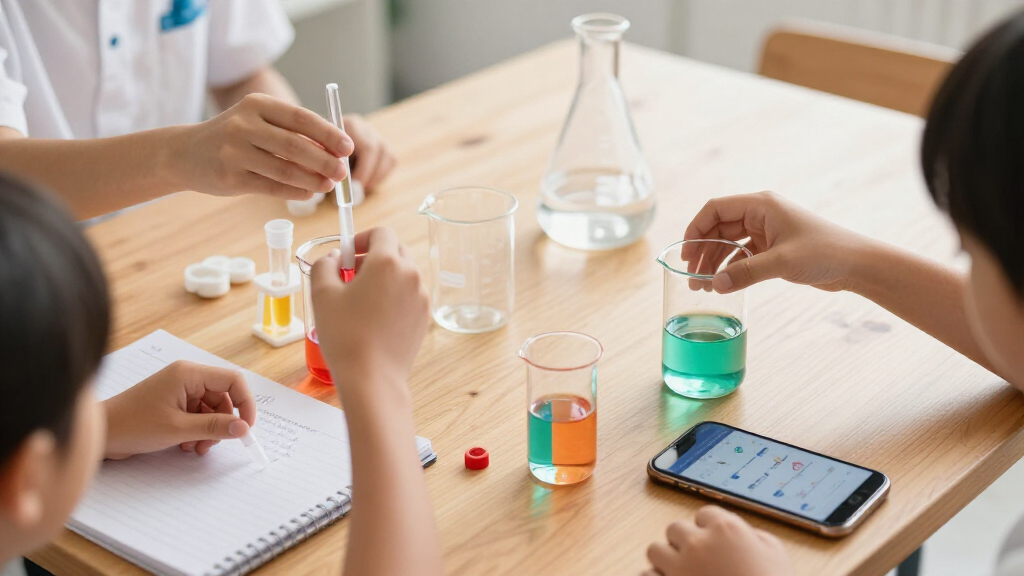

Science experiment kits for students range from messy chemistry labs to structured circuit-building sets, and the right choice depends heavily on the student’s age, subject interest, and how much supervision you can provide. After comparing 12 popular options, the National Geographic Mega Science Lab with 75 Experiments stands out as the best overall pick for its breadth, clear instructions, and strong classroom-to-kitchen balance. For tighter budgets, the UNGILINGA 40+ Experiments kit delivers surprising variety at a lower price, while the EUDAX School Physics Labs Basic Electricity kit is the strongest choice for high school students who need real physics depth rather than flashy demos. The main tradeoff in this category is breadth versus depth — multi-experiment kits keep kids entertained but often repeat similar reactions, whereas single-subject kits teach more but demand more patience. Read on for the full breakdown of all 12 kits and who each one suits best.

Prime made for students and young adults
- Fast, free delivery for dorm and study essentials
- Prime Video and Amazon Music included
- Member-only deals
Key Takeaways
- The National Geographic Mega Science Lab earned the top spot because it balances variety (75 experiments), quality instruction manuals, and refill-friendly consumables better than any other multi-subject kit in the lineup.
- Three EUDAX circuit kits appear in this roundup, and their rankings differ sharply by audience: the high school electricity and magnetism version is the most educationally rigorous product here, while the beginner circuit versions are too basic for students beyond middle school.
- Chemistry kits cluster around the $30–$40 range, but experiment count is misleading — National Geographic’s 100+ experiment sets often recombine the same core reactions, so the 45-experiment version sometimes offers better-documented labs per dollar.
- The Everything Kids’ Science Experiments Book is the only non-kit entry, and it won its niche because it trades included materials for household-item experiments — the cheapest path to genuine scientific thinking, though it requires adult prep time.
- Across all 12 products, instruction quality predicted satisfaction more than experiment count; kits with illustrated, error-proofed manuals (National Geographic, EUDAX) consistently outperformed higher-count kits with vague instructions (budget UNGILINGA, Mysterystone).
| STEM Electric Circuit Kit for Kids Ages 8+ |  | Best for Elementary Circuit Basics | Brand: Forskere | Recommended Age: 8 years and up | Number of Experiment Packs: 7 | VIEW LATEST PRICE | See Our Full Breakdown |
| National Geographic Mega Science Lab with 75 Experiments for Kids 8-12 |  | Best Overall | Brand: Blue Marble / National Geographic | Recommended Age: 8 years and up | Number of Experiments: 75 | VIEW LATEST PRICE | See Our Full Breakdown |
| UNGILINGA 40+ Experiments Science Kit for Kids Chemistry Set STEM Toy |  | Best Value | Brand: UNGILINGA | Number of Experiments: Over 40 | Type: Chemistry STEM toy set | VIEW LATEST PRICE | See Our Full Breakdown |
| EUDAX Physics Science Lab Learning Circuit Kit – Electricity Experiment Set for Students |  | Best for Middle and High School Physics | Brand: EUDAX | Recommended Grade Level: Grades 7-11 | Core Components: Switches, wires, bulbs, LEDs, and more | VIEW LATEST PRICE | See Our Full Breakdown |
| The Everything Kids’ Science Experiments Book: Boil Ice, Float Water, Measure Gravity | 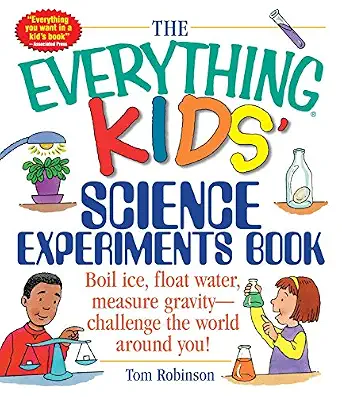 | Best Budget-Friendly Companion | Format: Paperback activity book | Type: Hands-on science experiment collection | Signature Experiments: Boiling ice, floating water, measuring gravity | VIEW LATEST PRICE | See Our Full Breakdown |
| National Geographic Chemistry Set with 45 Experiments for Kids 8-12 |  | Best Classic Chemistry Starter | Number of Experiments: 45 | Recommended Age: 8-12 years | Brand: National Geographic | VIEW LATEST PRICE | See Our Full Breakdown |
| National Geographic Science Magic Kit for Kids with 100+ Experiments and Tricks |  | Best for Group Presentations and Class Demos | Number of Experiments: 100+ | Bonus Content: Booklet with 85+ additional magic tricks | Age Range: 8 years and up | VIEW LATEST PRICE | See Our Full Breakdown |
| UNGILINGA 150 Experiments Science Kits for Kids Chemistry Lab STEM Toys |  | Best Experiment Volume for the Price | Number of Experiments: 150 | Educational Focus: Science, Chemistry, Physics, Earth Science | Includes: Tools and materials for experiments | VIEW LATEST PRICE | See Our Full Breakdown |
| EUDAX Physics Science Lab Learning Circuit Kit, Electricity Experiment Set for Students |  | Best Introduction to Circuits | Suitable Age: 7th to 9th grade | Focus: Series and parallel electrical circuits | Includes: English instructions, various circuit components | VIEW LATEST PRICE | See Our Full Breakdown |
| EUDAX School Physics Labs Basic Electricity Discovery Circuit and Magnetism Experiment Kits for High School Students |  | Best Advanced Physics Lab Set | Total Items: 79 | Electricity Components: 56 items | Magnetism Components: 21 items | VIEW LATEST PRICE | See Our Full Breakdown |
| National Geographic Amazing Chemistry Set with 100+ Experiments for Ages 8-12 |  | Best Variety for Elementary Learners | Brand: Blue Marble (National Geographic) | Age Range: 8 years and up | Number of Experiments: 100+ | VIEW LATEST PRICE | See Our Full Breakdown |
| Mysterystone Science Experiment Kit for Kids Electricity and Magnetism STEM Learning |  | Best for High School Physics | Brand: Mysterystone | Age Range: 13 – 18 years | Number of Items: 55 | VIEW LATEST PRICE | See Our Full Breakdown |
| science experiment kits for student | Brand | Number of Experiments | Model Number |
|---|---|---|---|
| STEM Electric Circuit Kit for | Forskere | — | FK1601 |
| National Geographic Mega Scien | Blue Marble / National Geographic | 75 | NGMEGASCIKIT |
| UNGILINGA 40+ Experiments Scie | UNGILINGA | Over 40 | — |
| EUDAX Physics Science Lab Lear | EUDAX | — | — |
| The Everything Kids’ Science E | — | — | — |
| National Geographic Chemistry | National Geographic | 45 | — |
| National Geographic Science Ma | Blue Marble (National Geographic) | 100+ | NGMEGAMAGIC |
| UNGILINGA 150 Experiments Scie | — | 150 | — |
| EUDAX Physics Science Lab Lear | — | — | — |
| EUDAX School Physics Labs Basi | — | — | EUDAX-FC-80PCS |
| National Geographic Amazing Ch | Blue Marble (National Geographic) | 100+ | NGMEGACHEMAR |
| Mysterystone Science Experimen | Mysterystone | 50+ | MYS257SOY |
More Details on Our Top Picks
STEM Electric Circuit Kit for Kids Ages 8+
Most circuit kits aimed at kids either oversimplify or jump straight to middle-school physics, but this option lands in the middle by wrapping seven themed experiment packs — series and parallel circuits, fruit batteries, even seawater power generation — into a format an 8-year-old can follow. Compared with the EUDAX Physics Science Lab kit, which targets grades 7-11 with bare components and a thin manual, the Forskere set leans on detailed diagrams and step-by-step instructions to make concepts accessible before formal physics class. The tradeoff is depth: kids who already understand circuits will outgrow it quickly, and you’ll need to supply your own AA batteries. For a first encounter with electricity, though, this pick makes the most sense for younger students who need structure rather than open-ended tinkering.
Pros:- Seven distinct experiment packs keep interest alive over multiple sessions
- Illustrated instructions make circuit logic understandable for pre-teens
- Unusual experiments like seawater power go beyond standard bulb-and-battery setups
- Works equally well for classroom demos or home use
Cons:- AA batteries sold separately, so it isn’t fully out-of-box ready
- Younger children will likely need adult help with the harder experiments
- Limited ceiling for kids who master the basics early
Best for: Parents of curious 8-12 year olds who want a structured, guided introduction to circuits at home
Not ideal for: Middle and high school students — the EUDAX kits cover the same concepts with more rigor and component variety
- Brand:Forskere
- Recommended Age:8 years and up
- Number of Experiment Packs:7
- Learning Focus:Critical thinking, problem solving, exploratory skills
- Subjects Covered:Series/parallel circuits, fruit batteries, seawater power
- Model Number:FK1601
- Batteries Required:AA (not included)
- Use Setting:Home or classroom
Our verdict“This is the right first circuit kit for elementary students who need hand-holding, not a lab set for teens.”
National Geographic Mega Science Lab with 75 Experiments for Kids 8-12
If a student’s interests haven’t settled yet, this bundle solves the guessing game by combining earth science, chemistry, and science magic into a single purchase — volcanoes, crystal growing, and reaction-based tricks all in one box. That breadth is exactly why it earns the top spot: compared with the UNGILINGA 40+ Experiments kit, which stays inside one chemistry lane, the Mega Science Lab lets a kid sample three disciplines before a family commits to a specialized set. The brand reputation and satisfaction guarantee also reduce the risk that comes with cheaper generic kits. Be aware that “75 experiments” includes many quick five-minute activities, so a motivated student may burn through the box in a few weeks, and several reactions need an adult nearby. It’s breadth over depth — deliberately so.
Pros:- Three-in-one bundle spans earth science, chemistry, and demonstration-style magic
- Recognizable brand with a customer-service backing
- Experiments are genuinely easy to run with household supervision
- Strong gift appeal for the 8-12 age range
Cons:- Individual experiments are quick, so content can run out fast
- Some activities require adult supervision
- Depth per subject is shallower than a single-discipline kit
Best for: Families buying for a student who hasn’t picked a favorite science yet and wants variety in one gift
Not ideal for: Advanced or older students who already know they love one subject — a dedicated chemistry or circuit set will go further
- Brand:Blue Marble / National Geographic
- Recommended Age:8 years and up
- Number of Experiments:75
- Included Kits:Earth Science, Chemistry, Science Magic
- Learning Focus:Critical thinking, observation skills, STEM
- Model Number:NGMEGASCIKIT
- Warranty:Backed by National Geographic customer service
Our verdict“The safest all-around pick for a student who wants to try a bit of everything without a big commitment to one field.”
UNGILINGA 40+ Experiments Science Kit for Kids Chemistry Set STEM Toy
Not every family wants to pay National Geographic prices for a first chemistry set, and this kit is the budget-friendly entry point that still delivers real experiments — bouncy balls, lava lamps, and other reaction-based activities that feel like magic but teach actual science. Against the National Geographic Mega Science Lab, you give up roughly half the experiment count, the third earth-science kit, and the brand guarantee, but you keep the essentials: illustrated child-friendly instructions and most materials in the box. Compared with UNGILINGA’s own 150-experiment version, this smaller set is the smarter buy if you’re not sure chemistry will stick. The catches are real, though — some experiments pull in household items you may not have on hand, and younger kids will need an adult for the messier ones.
Pros:- Lower price point than comparable name-brand chemistry sets
- Over 40 experiments with illustrated, kid-readable instructions
- Most required materials are included
- Fun, tangible outcomes like bouncy balls keep kids engaged
Cons:- Some experiments require additional household items
- Adult supervision needed for younger children
- Smaller experiment library than the brand’s 150-experiment version
Best for: Budget-conscious parents testing whether a child’s interest in chemistry justifies a bigger investment
Not ideal for: Families wanting a premium, all-inclusive experience with no extra shopping — the Mega Science Lab covers more ground out of the box
- Brand:UNGILINGA
- Number of Experiments:Over 40
- Type:Chemistry STEM toy set
- Materials:Most included; some household items required
- Instructions:Illustrated, child-friendly guide
- Signature Activities:Bouncy balls, lava lamps
- Supervision:Recommended for younger children
Our verdict“A low-risk way to gauge a young student’s chemistry interest before spending more on a larger kit.”
EUDAX Physics Science Lab Learning Circuit Kit – Electricity Experiment Set for Students
This is where the roundup shifts from play to curriculum. The EUDAX kit is built for grades 7-11, covering series and parallel circuits, electromagnets, hand crank generators, and even wind power cars — the actual experiments that show up in physics class. Compared with the Forskere STEM Circuit Kit, which teaches the same core ideas through simplified, parent-guided packs, EUDAX hands students real components — switches, wires, bulbs, LEDs — in a transparent storage box and expects them to build from a more technical base. The tradeoff for that rigor is a basic manual: a beginner with no classroom support may flounder without supplemental guidance, and you’ll need two AA batteries and occasional extra materials. For a student with a physics textbook open beside them, nothing else in this lineup matches it.
Pros:- Aligns directly with grades 7-11 physics curriculum topics
- Broad component set: switches, wires, bulbs, LEDs, and more
- Builds advanced projects like electromagnets and hand crank generators
- Transparent storage box keeps parts organized between sessions
Cons:- Manual is thin and may require a teacher or textbook for support
- Requires 2 AA batteries not included
- Some projects need additional tools or materials
Best for: Students in grades 7-11 who need hands-on reinforcement of classroom electricity and magnetism topics
Not ideal for: Elementary-age kids or families wanting a polished, parent-friendly manual — the Forskere kit is far more accessible
- Brand:EUDAX
- Recommended Grade Level:Grades 7-11
- Core Components:Switches, wires, bulbs, LEDs, and more
- Project Types:Series/parallel circuits, electromagnets, hand crank generators, wind power cars, traffic lights
- Storage:Transparent component box
- Batteries Required:2 AA (not included)
- Use Setting:Classroom or individual study
Our verdict“The clear choice for a middle or high school student who needs a lab-style circuit set that mirrors what they’re studying in class.”
The Everything Kids’ Science Experiments Book: Boil Ice, Float Water, Measure Gravity
Every physical kit in this roundup eventually runs out of materials — this book never does. For the price of a single experiment pack, students get dozens of activities like boiling ice, floating water, and measuring gravity that use common household items, making it the most renewable option here. It won’t replace the National Geographic Mega Science Lab for wow-factor demonstrations like erupting volcanoes, and it lacks specialized tools or chemicals entirely, but that’s the point: it teaches kids to see their kitchen as a laboratory. The honest limitation is depth and polish — experiments lean basic, the presentation is text-heavy compared with illustrated kit manuals, and there are no included components at all. As a companion to any kit in this guide, or a standalone starter for a reluctant reader-turned-scientist, it earns its slot on sheer value.
Pros:- Extremely low cost with effectively unlimited re-runs
- Experiments use everyday household items
- Encourages independent curiosity beyond a fixed kit curriculum
- Doubles as a reading activity for young scientists
Cons:- No materials, tools, or chemicals included
- Experiments are relatively basic and lack visual polish
- Text-heavy format may not hold the attention of younger or reluctant readers
Best for: Families on a tight budget, or parents wanting a low-cost supplement to stretch a physical kit’s learning
Not ideal for: Kids who need visual, component-based engagement — without materials in the box, motivation depends entirely on the child
- Format:Paperback activity book
- Type:Hands-on science experiment collection
- Signature Experiments:Boiling ice, floating water, measuring gravity
- Materials Required:Common household items (none included)
- Learning Focus:Curiosity, independent hands-on learning
- Reusability:Unlimited — experiments can be repeated with household supplies
Our verdict“The cheapest way into this hobby — best as a companion to a physical kit rather than a substitute for one.”
National Geographic Chemistry Set with 45 Experiments for Kids 8-12
This set takes the most traditional route to chemistry: volcanoes, geysers, and rocket launches that land exactly where an 8-12 year old’s attention already lives. Compared with the UNGILINGA 150 Experiments kit, it trades sheer volume for tighter curation — 45 experiments is plenty for a school year of weekend projects, and the illustrated instructions mean kids can lead rather than watch. Where the National Geographic Science Magic Kit leans on showmanship, this one stays closer to genuine reaction chemistry, which matters if the goal is learning rather than performing. The honest tradeoff: it sits at the basic end of the spectrum, so a middle schooler already comfortable with lab concepts may burn through it quickly and want something like the EUDAX circuit kits instead.
Pros:- 45 well-known experiments that reliably excite kids
- Illustrated, kid-friendly instructions encourage independence
- Strong balance of entertainment and genuine STEM learning
- Backed by National Geographic’s educational reputation
Cons:- Some experiments require adult supervision, limiting solo use
- Sparse documentation on included materials makes refill planning hard
- Content skews basic for older children
Best for: Parents of 8-12 year olds who want a dependable, curriculum-friendly first chemistry set with recognizable experiments
Not ideal for: Older or advanced students who already know basic chemistry and need more rigorous, quantitative experiments
- Number of Experiments:45
- Recommended Age:8-12 years
- Brand:National Geographic
- Retail Channel:Amazon exclusive
- Experiment Types:Volcano eruptions, geysers, rocket launches
- Instruction Style:Easy-to-follow illustrated guide
Our verdict“The safest first chemistry set for the 8-12 crowd — buy it for engagement, not for advanced lab rigor.”
National Geographic Science Magic Kit for Kids with 100+ Experiments and Tricks
Where most kits here are built for quiet desk work, this one is built for an audience. Pairing science experiments with magic tricks and a bonus booklet of 85+ additional illusions, it gives students material to perform at science fairs, family nights, or classroom show-and-tell — then explains the science behind the trick. Compared with the National Geographic Chemistry Set, the experiment depth is shallower but the engagement ceiling is higher: a shy student presenting a trick learns public speaking alongside chemistry. The 100+ activity count also beats the NG Mega Science Lab’s 75 for raw variety. The catch is durability — props get handled repeatedly during performances, and component quality isn’t well documented. It’s also pitched squarely at the 8-and-up crowd, so a high schooler would find it condescending rather than challenging.
Pros:- Over 100 experiments plus a bonus booklet of 85+ magic tricks
- Unique performance angle builds confidence and presentation skills
- Award-winning kit with broad age appeal from age 8
- Science explanations accompany each trick, keeping it educational
Cons:- Repeated handling of magic props raises durability concerns
- Supervision needed for some experiments
- Skews young — older students may outgrow the framing
Best for: Teachers and parents who want demo-ready experiments for science fairs, classrooms, or kids who love performing for an audience
Not ideal for: Quiet, self-directed learners who want methodical experiments rather than performance-oriented tricks
- Number of Experiments:100+
- Bonus Content:Booklet with 85+ additional magic tricks
- Age Range:8 years and up
- Brand:Blue Marble (National Geographic)
- Model Number:NGMEGAMAGIC
- UPC:816448027680
- Recognition:Award-winning product
Our verdict“If your student learns best by performing, this kit turns science into a stage — just don’t expect lab-grade depth.”
UNGILINGA 150 Experiments Science Kits for Kids Chemistry Lab STEM Toys
For pure activities per dollar, nothing else in this lineup comes close — 150 experiments spanning chemistry, physics, earth science, and surface tension means this kit can anchor a full school year of at-home labs. Compared with the UNGILINGA 40+ Experiments set, the jump to 150 broadens the topic coverage from pure chemistry into multiple disciplines, which suits students who haven’t settled on a favorite science yet. That breadth is also the tradeoff: it’s a survey course, not a deep track, so a student hooked on electricity specifically would be better served by the EUDAX circuit kits. The high-quality tools and illustrated instructions elevate it above typical budget kits, but expect to raid the pantry — several experiments assume household items you’ll need to supply, and younger kids will need an adult alongside them.
Pros:- 150 experiments deliver the best value per activity in the roundup
- Covers four science disciplines for well-rounded exposure
- High-quality tools included rather than flimsy throwaways
- Illustrated instructions kids can follow with minimal help
Cons:- Some experiments require household items not included in the box
- Younger children still need adult supervision
- Breadth over depth means limited follow-on material per topic
Best for: Budget-conscious families and homeschoolers who want maximum experiment variety across multiple science topics without buying several kits
Not ideal for: Students who want to go deep on one discipline like circuits or advanced chemistry, since the breadth comes at the cost of depth
- Number of Experiments:150
- Educational Focus:Science, Chemistry, Physics, Earth Science
- Includes:Tools and materials for experiments
- Instruction Style:Well-illustrated, easy-to-follow guide
- Use Setting:Home or school
- Supervision:Recommended for younger children
Our verdict“The volume king for families who want a year of varied experiments on one budget — skip it if your student wants specialization.”
EUDAX Physics Science Lab Learning Circuit Kit, Electricity Experiment Set for Students
Most kits in this roundup mix sciences broadly; this one commits to a single, well-defined skill — building series and parallel circuits. For a middle schooler meeting electricity for the first time, that focus is a feature: instead of 150 scattered activities like the UNGILINGA kit, every component here reinforces one concept that maps directly onto 7th-9th grade physics curriculum. The English instructions and included circuit components mean a student can wire their first working circuit within minutes of opening the box. Compared with the larger EUDAX School Physics Labs kit, this is the simpler, cheaper entry point — but that simplicity cuts both ways. It covers only basic circuit types, so a motivated student will exhaust it within weeks, and you’ll need to add batteries since none ship in the box.
Pros:- Curriculum-aligned coverage of series and parallel circuits
- First working circuit achievable within minutes of setup
- Clear English instructions suitable for independent student use
- Components pack neatly into the included plastic storage box
Cons:- Batteries not included, so it’s not truly ready out of the box
- Limited to basic circuit types with little room to grow
- Younger students still require adult supervision
Best for: Middle school students (7th-9th grade) studying electricity who need hands-on circuit practice that matches their coursework
Not ideal for: Students beyond the basics, or families wanting variety across multiple science topics rather than a single deep dive
- Suitable Age:7th to 9th grade
- Focus:Series and parallel electrical circuits
- Includes:English instructions, various circuit components
- Storage:Plastic storage box
- Batteries Included:No
- Skill Level:Introductory
Our verdict“A focused, affordable circuit trainer that earns its place for coursework support — just expect to graduate to a bigger kit quickly.”
EUDAX School Physics Labs Basic Electricity Discovery Circuit and Magnetism Experiment Kits for High School Students
This is the most serious educational kit in the batch — 79 items covering both electricity and magnetism for grades 9-11, with detailed manuals guiding students through genuine lab-style investigations. Where the smaller EUDAX Learning Circuit Kit stops at basic wiring, this set adds magnetism experiments and enough component depth to keep a high schooler occupied for a semester, making it the natural upgrade once the basic kit is exhausted. Compared with chemistry-focused options like the National Geographic Chemistry Set, the payoff here is different: less spectacle, more transferable physics understanding that pays off directly in exams. The tradeoffs are real, though — setup is complex enough that younger users (despite the 8-18 age range) will struggle without help, and you’re buying batteries separately. This pick makes the most sense for a student who treats science as a subject to master, not just a Saturday activity.
Pros:- 79 components span both electricity and magnetism for extended study
- Detailed manuals support structured, curriculum-style learning
- Repair tools and storage bag keep the set organized long-term
- Genuine depth that justifies the price for serious students
Cons:- Requires 3 AA batteries purchased separately
- Setup complexity overwhelms younger children despite the stated age range
- Academic tone offers little instant gratification
Best for: High school students (grades 9-11) who need a semester-long electricity and magnetism lab set that mirrors classroom physics
Not ideal for: Casual or younger users expecting quick, flashy experiments — the setup complexity and academic focus will frustrate them
- Total Items:79
- Electricity Components:56 items
- Magnetism Components:21 items
- Repair Tools:2 included
- Recommended Age:8-18 years (target grades 9-11)
- Batteries Required:3 AA (not included)
- Model Number:EUDAX-FC-80PCS
- Storage:Storage bag
Our verdict“The roundup’s most rigorous option — buy it for a committed high school physics student, not for entertainment.”
National Geographic Amazing Chemistry Set with 100+ Experiments for Ages 8-12
When the goal is keeping an 8-to-12-year-old actually excited about chemistry week after week, this set’s 100+ experiment count is hard to beat in this lineup. Compared with the National Geographic Mega Science Lab with 75 Experiments, this kit trades some topic breadth for depth in pure chemistry — more bubbling, color-changing, and glowing reactions per dollar. The inclusion of real lab tools like test tubes, beakers, and pipettes means kids practice actual technique rather than just watching fizz. The tradeoff is that many experiments lean on household supplies and adult supervision, so it is not a self-serve option for independent play. And unlike the UNGILINGA 150 Experiments kit, there is little room to expand once the included experiments run out.
Pros:- Over 100 experiments provide exceptional variety and repeat-play value for the age group
- Includes real scientific tools (test tubes, beakers, pipettes) that build genuine lab skills
- Award-winning kit with a strong reputation for encouraging STEM curiosity
- Covers multiple chemistry themes including reactions and crystal growing in one box
Cons:- Many experiments require adult supervision and household items not included in the box
- No meaningful expansion options once the included experiments are used up
- Not suitable for children under 8, limiting sibling sharing in younger families
Best for: Parents of curious 8-12 year olds who want a long-lasting chemistry-focused kit with genuine lab equipment
Not ideal for: Households seeking a fully independent activity — many experiments need adult supervision and extra household items
- Brand:Blue Marble (National Geographic)
- Age Range:8 years and up
- Number of Experiments:100+
- Included Components:Chemistry kit with experiments, crystal growing, reactions, lab tools
- Educational Focus:STEM / Chemistry
- Model Number:NGMEGACHEMAR
- Manufacturer:JMW Sales, Inc.
- Warranty:Backed by high-quality standards and customer service
Our verdict“This is the strongest pick for elementary-age students who want maximum chemistry variety with authentic lab tools, provided a parent is willing to supervise.”
Mysterystone Science Experiment Kit for Kids Electricity and Magnetism STEM Learning
Most kits in this roundup top out around middle school, which is exactly where this Mysterystone set carves out its niche. Aimed at ages 13-18, it covers electricity and magnetism at a depth the STEM Electric Circuit Kit for Kids Ages 8+ simply does not attempt. With 55 components and 50+ experiments, plus a detailed explanatory manual, this option reads more like a portable physics lab than a toy — a smart bridge for students who need tangible demonstrations of textbook concepts. The sturdy storage case is a quiet advantage over looser kits like the EUDAX circuit sets, keeping tiny parts from disappearing between sessions. The tradeoffs: the manual assumes some baseline knowledge, and younger siblings will find it frustrating rather than fun.
Pros:- Over 50 experiments tailored to genuine high school-level physics concepts
- 55 included items with a detailed manual that explains the science, not just the steps
- Sturdy storage case keeps components organized and portable between sessions
- One of the few kits in this price range designed specifically for ages 13-18
Cons:- Age rating of 13-18 makes it inaccessible for younger or mixed-age households
- The manual can feel complex and dense for students with no prior circuit experience
Best for: High school students studying physics who benefit from hands-on reinforcement of electricity and magnetism concepts
Not ideal for: Kids under 13 or absolute beginners — the explanations assume prior knowledge and the experiments skip the simplification younger kits offer
- Brand:Mysterystone
- Age Range:13 – 18 years
- Number of Items:55
- Number of Experiments:50+
- Educational Focus:STEM / Electricity and Magnetism
- Model Number:MYS257SOY
- Category:Educational Science Kits
Our verdict“Buy this if you have a teen who needs real physics depth; skip it if your student is younger or brand new to circuits.”
How We Picked
I evaluated each kit against four buyer-relevant criteria: educational depth (does the student learn a concept or just watch a reaction), instruction clarity (can a student follow along without an adult decoding steps), materials quality and safety (are chemicals, wires, and components built to survive repeated use), and value per experiment (cost divided by genuinely distinct activities, not rebranded repeats). I also weighed age-appropriateness carefully, because several kits in this category are marketed broadly but actually suit narrow age bands — a circuit kit labeled 8+ can frustrate an 8-year-old and bore a 14-year-old.
The ranking logic favors kits that align subject depth with their target student. National Geographic’s sets rank high for middle-grade general science because their manuals explain the why behind each experiment, not just the steps. The EUDAX high school kit ranks near the top for older students precisely because it sacrifices entertainment value for curriculum-grade physics. Budget kits rank lower not because they’re cheap, but because thin instructions and single-use consumables shorten their effective lifespan.
| science experiment kits for student | Model Number |
|---|---|
| STEM Electric Circuit Kit for | FK1601 |
| National Geographic Mega Scien | NGMEGASCIKIT |
| UNGILINGA 40+ Experiments Scie | — |
| EUDAX Physics Science Lab Lear | — |
| The Everything Kids’ Science E | — |
| National Geographic Chemistry | — |
| National Geographic Science Ma | NGMEGAMAGIC |
| UNGILINGA 150 Experiments Scie | — |
| EUDAX Physics Science Lab Lear | — |
| EUDAX School Physics Labs Basi | EUDAX-FC-80PCS |
| National Geographic Amazing Ch | NGMEGACHEMAR |
| Mysterystone Science Experimen | MYS257SOY |
Factors to Consider When Choosing Science Experiment Kits For Students
Choosing between these 12 kits comes down to matching the kit’s design philosophy to the student’s learning stage. Below are the factors that actually changed rankings in this comparison — and the mistakes that leave buyers disappointed.Match the Subject to the Student’s Interest, Not Their Grade
The single most common mistake is buying a general science kit for a student who has already developed a specific interest. A student fascinated by electricity will get more from a dedicated circuit kit than a 100-experiment chemistry mega-set, even if the mega-set has triple the activities. Conversely, a student who hasn’t found their niche benefits from multi-subject kits like the National Geographic Mega Science Lab, which samples chemistry, earth science, and physics in one box. Pay attention to whether the kit teaches concepts or just produces visual effects — color-changing reactions entertain, but circuit building and measurement-based experiments build the skills students need in actual coursework. If the kit is meant to support school learning rather than replace screen time, single-subject depth almost always wins over variety.
Experiment Count Is a Marketing Number — Divide by Uniqueness
Every kit in this roundup advertises a big experiment count, but the honest number is usually 30–50% of what’s on the box. Many “experiments” are variations of the same reaction with a different color or container, and some kits count setup steps as separate activities. When comparing prices, estimate how many genuinely distinct experiments each kit offers and calculate cost per activity. In this comparison, the National Geographic 45-experiment chemistry set frequently beat the 100+ experiment version on this metric because its labs were more thoroughly documented and less repetitive. Also check whether consumables can be replenished with household items — kits built around baking soda and vinegar keep working long after specialty chemicals run out, while proprietary tablets and powders turn the kit into shelf decor once depleted.
Instruction Quality Matters More Than Materials
A mediocre kit with an excellent manual outperforms a well-stocked kit with confusing directions, and this pattern repeated across nearly every product compared here. Look for manuals with step-by-step illustrations, explanations of the science behind each experiment, and troubleshooting guidance for when something doesn’t work. Kits aimed at classroom use — like the EUDAX physics line — typically have the most rigorous documentation because teachers can’t afford ambiguous directions. Before buying, check whether the manufacturer offers replacement manuals or PDF downloads, since paper manuals get lost or destroyed by spilled solutions. For younger students, picture-heavy instructions allow independent play; for teens, look for manuals that include real scientific vocabulary and measurement exercises they can connect to school curriculum.
Age Ratings Are Suggestions, Not Rules
Manufacturer age ranges in this category tend to run wide, and several kits performed outside their labeled bands during this comparison. A kit marked 8+ that requires precise wire stripping or careful chemical measuring will frustrate most 8-year-olds without heavy adult involvement — the EUDAX beginner circuit kits are a good example. On the flip side, kits capped at 12 will bore a 13-year-old who has taken a school science class. The practical approach: for younger students, buy toward the lower end of the age range so the challenge grows with them; for older students, buy kits marketed to the grade above their current level so they aren’t finishing everything in one weekend. Chemistry kits deserve extra scrutiny here, since safe handling expectations vary enormously between an 8-year-old and a 12-year-old working alone.
Supervision Requirements and Household Mess
Some kits are designed for independent play, and others quietly assume an adult is present for every experiment — a distinction that rarely appears on the box. Circuit kits generally need the least supervision once basics are taught, making them strong choices for independent learners. Chemistry kits vary widely: some use nothing stronger than citric acid and can run on a kitchen table, while others involve heat, color stains, or reactions that demand goggles and close oversight. The Science Magic kit in this lineup leans performance-heavy, which means an adult often ends up as stagehand. Honest budgeting of your own time matters here; the Everything Kids’ book is nearly free in materials but shifts nearly all prep and supervision onto the parent, while self-contained kits trade money for your time back.
Durability, Reusability, and Total Cost of Ownership
The sticker price is only part of the cost. Chemistry kits are inherently consumable, so their long-term value depends on refill availability and whether the experiments can be repeated with grocery-store substitutes. Circuit kits are the opposite — nearly all their value sits in reusable wires, bulbs, switches, and boards, so build quality determines whether the kit lasts one semester or several years. Check connector quality specifically, because flimsy alligator clips and loose spring terminals are the most common failure points in budget electrical kits and cause frustrating “broken” experiments that are really just bad contacts. For students who will genuinely reuse a kit across years, spending 30–50% more on a durable physics set usually costs less per year of use than replacing a cheap kit twice.
Frequently Asked Questions
Is a big multi-experiment kit better than a single-subject kit for learning?
Not usually. Multi-experiment kits like the 75- and 100+ experiment sets excel at sustaining interest and helping undecided students discover what they enjoy, but their experiments tend to be shorter, simpler, and more repetitive. A single-subject kit — the EUDAX circuit sets, for example — goes deeper into one discipline, teaching concepts like series versus parallel circuits that directly map to school curriculum. The best approach depends on your goal: choose breadth for exploration and engagement, depth for academic support. Many families get the most value from buying one multi-subject kit first, watching which experiments the student repeats, then investing in a focused kit for that subject.
Which type of kit is safest for students working without adult supervision?
Low-voltage circuit kits are the safest unsupervised option by a wide margin, since they run on AA batteries and pose no chemical or heat risk — the Mysterystone and EUDAX beginner sets fall into this category. Chemistry kits should almost always have an adult nearby, even when the chemicals are household-grade, because spills, staining, and skipped safety steps are common. Magic-style science kits can be the riskiest unsupervised, since they encourage showmanship over careful procedure. If independent use is the priority, prioritize electrical kits or book-based experiments using kitchen materials, and reserve chemistry sets for weekend sessions when a parent can participate or observe.
At what age should a student move from toy-style kits to lab-grade equipment?
The transition usually makes sense around ages 12 to 14, when school science courses introduce formal measurement, variables, and lab reports. Before that point, toy-style kits with dramatic visual results keep motivation high, and their simpler procedures prevent frustration. After middle school, kits like the EUDAX high school electricity and magnetism set offer far more value because they use real components, real terminology, and experiments that mirror classroom labs. A student who stays with toy-style kits too long often outgrows them mid-box and loses interest. Watch for the signal that experiments feel “too easy” — that’s the moment to step up to curriculum-grade equipment, even if the packaging looks less exciting.
Are the chemicals in these chemistry kits dangerous or difficult to dispose of?
Reputable student chemistry kits — particularly the National Geographic sets in this lineup — use diluted, household-adjacent chemicals like citric acid, baking soda, and food-safe dyes that can safely go down a kitchen drain with water. That said, quantities and mixtures still matter, so gloves and eye protection are worth enforcing as good lab habit even when the risk is low. The bigger practical issue is staining: red cabbage powder and similar indicators will mark clothing and counters permanently. Disposal is rarely a concern at this level, unlike advanced hobby chemistry sets that involve stronger reagents. If a kit arrives without a clear safety data explanation in the manual, treat that as a quality red flag beyond just the chemicals themselves.
Can a science experiment book replace a physical kit?
It can, if you’re willing to supply materials yourself and accept more setup effort. The Everything Kids’ Science Experiments Book costs a fraction of any kit and teaches arguably better scientific thinking, because the student learns to gather equipment, measure, and problem-solve rather than open pre-portioned packets. The tradeoffs are real, though: you’ll need to stock items like cornstarch, vinegar, and batteries, some experiments fail without exact materials, and the visual wow-factor is lower without specialty chemicals. Books work best for motivated students ages 9 and up with a parent who enjoys helping. For gift-giving or students who need built-in excitement to engage, a physical kit’s unboxing appeal still earns its price.
Conclusion
After comparing all 12 kits, the right pick depends on the student more than the products. For best overall, the National Geographic Mega Science Lab wins for students aged 8–12 because it combines variety, strong manuals, and repeatable value better than any competitor. For best value, the UNGILINGA 40+ Experiments kit delivers genuine chemistry fun at a budget price, provided you accept thinner instructions. For best premium, the National Geographic Amazing Chemistry Set with 100+ experiments justifies its higher cost with the most polished chemistry experience in the lineup. For beginners, the STEM Electric Circuit Kit for Kids Ages 8+ and the Mysterystone electricity and magnetism kit offer low-risk, confidence-building entry points into physics. For specific needs, the EUDAX high school electricity and magnetism set is the clear choice for older students needing curriculum-grade depth, while the Everything Kids’ Science Experiments Book remains the smartest low-cost option for motivated learners with a hands-on parent. Whatever you choose, prioritize instruction quality over experiment count — that single factor separated the best kits from the rest more than any other in this comparison.
Fall Picks
fall essentials
As an affiliate, we earn on qualifying purchases.