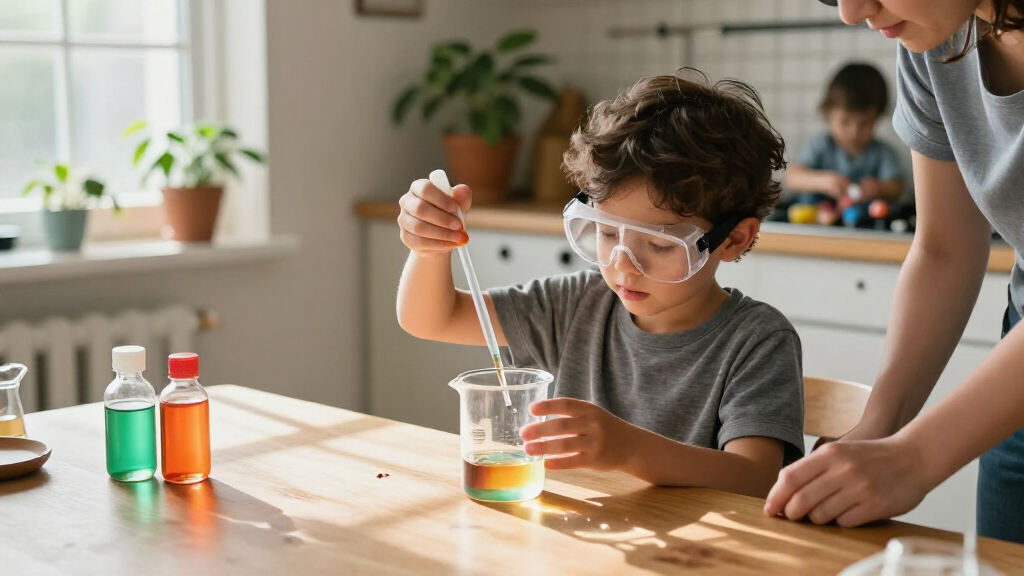
Chemistry sets for kids range from simple first science activities to larger kits built around a more structured lab experience. My best overall pick is the National Geographic Amazing Chemistry Set with 100+ Experiments, which pairs a broad activity selection with chemistry-focused play. For younger children, the Doctor Jupiter First Science Experiments Kit is the age-specific starting point, while the Thames & Kosmos CHEM C1000 Beginner Chemistry Set suits families seeking a more formal chemistry progression. The main tradeoffs are age fit, how much adult help activities need, and whether you want chemistry alone or a broader mix of science themes. Read on for the full comparison and guidance on choosing a set that matches your child and your available setup space.

Prime made for students and young adults
- Fast, free delivery for dorm and study essentials
- Prime Video and Amazon Music included
- Member-only deals
Key Takeaways
- The broadest experiment count does not automatically make the best chemistry set: choose based on how well the activities suit your child’s age and attention span, not the number on the box.
- The National Geographic Amazing Chemistry Set leads the general-purpose group with 100+ experiments, while the CHEM C1000 is a more chemistry-centered choice for families who want a beginner lab format.
- Age fit changes the shortlist: Doctor Jupiter is the named option for ages 4+, while several National Geographic kits target ages 8–12 or 8+.
- Some kits trade focused chemistry for variety: the Discovery, UNGLINGA, and multi-theme National Geographic sets may suit kids who want a wider range of STEM activities.
- Theme can drive repeat interest: ooze, gross science, and magic-based kits offer distinctive hooks, but may be less suitable for children who want a conventional chemistry sequence.
| National Geographic Amazing Chemistry Set with 100+ Experiments |  | Best for Household-Material Variety | Brand: Blue Marble | Age range: 8 years and up | Experiments: 15 kit-based experiments plus 85 household-item activities | VIEW LATEST PRICE | See Our Full Breakdown |
| National Geographic Junior Chemistry Set with 50 Experiments |  | Best for Young Beginners | Brand: Blue Marble | Age range: 4 years and up | Experiments: 50 | VIEW LATEST PRICE | See Our Full Breakdown |
| National Geographic Chemistry Set with 45 Experiments for Kids Ages 8+ |  | Best for Action-Focused Experiments | Brand: National Geographic | Age range: 8 years and up | Experiments: 45 stated; product information also lists 100-plus in an included-components entry | VIEW LATEST PRICE | See Our Full Breakdown |
| Thames & Kosmos Ooze Labs Chemistry Station Experiment Set |  | Best Dedicated Lab Station | Brand: Thames & Kosmos | Age range: 6 years and up | Experiments: Approximately 20 | VIEW LATEST PRICE | See Our Full Breakdown |
| Discovery Super Reactions Science Kit – 66 Experiments STEM Lab for Kids |  | Best for Guided and DIY Variety | Brand: Discovery | Age range: 8 years and up | Experiments: 66 total: 26 guided activities and 40 household-item projects | VIEW LATEST PRICE | See Our Full Breakdown |
| National Geographic Science Magic Kit with 100+ Experiments for Kids Ages 8–12 |  | Best for Experiment Variety | Brand: National Geographic | Experiments: 100+ | Recommended age: 8–12 years | VIEW LATEST PRICE | See Our Full Breakdown |
| UNGLINGA 70-Experiment Science Kit for Kids |  | Best for Mixed STEM Activities | Brand: UNGLINGA | Number of experiments: 70 | Recommended age: 8 years and up | VIEW LATEST PRICE | See Our Full Breakdown |
| National Geographic Mega Science Lab with 75 Experiments for Kids |  | Best Multi-Subject Lab | Brand: Blue Marble | Age range: 8 years and up | Experiments: 75 | VIEW LATEST PRICE | See Our Full Breakdown |
| National Geographic Gross Science Kit with 45 Experiments for Kids Ages 8–12 |  | Best for Gross-Out Chemistry | Brand: Blue Marble | Age range: 8 years and up | Experiments: 45 total: 15 with included materials and 30 using household items | VIEW LATEST PRICE | See Our Full Breakdown |
| Doctor Jupiter First Science Experiments Kit for Kids Ages 4+ |  | Best for Preschool Beginners | Recommended age: 4+ | Number of experiments: 50+ | Safety standard: ASTM F963-17 | VIEW LATEST PRICE | See Our Full Breakdown |
| Thames & Kosmos CHEM C1000 Beginner Chemistry Set, 125 Experiments |  | Best for Learning Real Lab Techniques | Experiments: 125 | Topics: 10 | Manual: 80-page, full-color illustrated manual | VIEW LATEST PRICE | See Our Full Breakdown |
| Kuovei Science Kit for Kids with 80 Experiments |  | Best for Colorful, Guided Activities | Experiments: 80 | Recommended age: 36 months–12 years | Included components: Goggles, chemical materials, petri dishes, measuring cups, test tubes, gloves, droppers, balloons, and other experiment supplies | VIEW LATEST PRICE | See Our Full Breakdown |
| National Geographic Gross Science Kit Chemistry Toy for Ages 8-12 |  | Best for Gross-Out Chemistry | Core experiments: 6 | Bonus activities: 10, using common household items | Age range: 8 years and up | VIEW LATEST PRICE | See Our Full Breakdown |
| UNGLINGA 150-Experiment Science Kit for Kids – Chemistry Lab & STEM Toys | 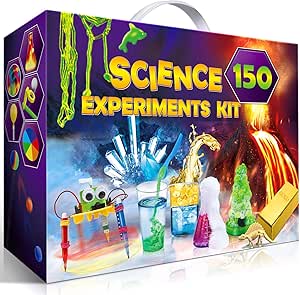 | Best for Maximum Activity Variety | Experiments: 150 | Subject coverage: Chemistry, physics, earth science, and more | Recommended age: 8 years and up | VIEW LATEST PRICE | See Our Full Breakdown |
| National Geographic Magic Chemistry Set for Kids Ages 8–12 |  | Best for Science-Shy Beginners | Experiments: 10 | Recommended age: 8–12 years | Included accessories: Magic wand and white gloves | VIEW LATEST PRICE | See Our Full Breakdown |
| chemistry sets for kid | Experiments | Brand | Age range |
|---|---|---|---|
| National Geographic Amazing Ch | 15 kit-based experiments plus 85 household-item activities | Blue Marble | 8 years and up |
| National Geographic Junior Che | 50 | Blue Marble | 4 years and up |
| National Geographic Chemistry | 45 stated; product information also lists 100-plus in an included-components entry | National Geographic | 8 years and up |
| Thames & Kosmos Ooze Labs Chem | Approximately 20 | Thames & Kosmos | 6 years and up |
| Discovery Super Reactions Scie | 66 total: 26 guided activities and 40 household-item projects | Discovery | 8 years and up |
| National Geographic Science Ma | 100+ | National Geographic | — |
| UNGLINGA 70-Experiment Science | — | UNGLINGA | — |
| National Geographic Mega Scien | 75 | Blue Marble | 8 years and up |
| National Geographic Gross Scie | 45 total: 15 with included materials and 30 using household items | Blue Marble | 8 years and up |
| Doctor Jupiter First Science E | — | — | — |
| Thames & Kosmos CHEM C1000 Beg | 125 | — | 10+ |
| Kuovei Science Kit for Kids wi | 80 | — | — |
| National Geographic Gross Scie | — | — | 8 years and up |
| UNGLINGA 150-Experiment Scienc | 150 | — | — |
| National Geographic Magic Chem | 10 | National Geographic | — |
More Details on Our Top Picks
National Geographic Amazing Chemistry Set with 100+ Experiments
This kit pairs 15 supplied-material experiments with a guide to 85 more activities using common household items, giving it a different kind of variety from the National Geographic Chemistry Set with 45 Experiments, which centers on a defined experiment count. Test tubes, beakers, and pipettes let kids practice handling basic lab equipment while exploring crystal growing and color-changing reactions. I’d choose it for families who like repeating science activities with things already at home, rather than expecting every project’s materials to come in the box. The main tradeoff is that the headline total can overstate what the kit itself supplies: only 15 experiments use included materials, and the rest depend on household supplies. Its age guidance also makes it a better fit for school-age children than preschool beginners.
Pros:- Includes materials for 15 hands-on experiments
- Adds 85 activities that use common household items
- Includes test tubes, beakers, and pipettes for basic lab practice
- Features crystal-growing and color-changing activities
Cons:- Only 15 experiments use the included materials
- The additional activities require household supplies
- Its 8+ age guidance may not suit younger first-time experimenters
Best for: Families with children ages 8 and up who want lab tools plus a broad supply of experiments that can use household materials.
Not ideal for: Buyers who want materials for every listed activity included, or younger children who need a kit designed for preschool-level instruction.
- Brand:Blue Marble
- Age range:8 years and up
- Experiments:15 kit-based experiments plus 85 household-item activities
- Included tools:Test tubes, beakers, and pipettes
- Educational objective:STEM
- Dimensions:8.78 x 3.19 x 11.93 inches
- Weight:1.8 pounds
Our verdict“Choose this for ages 8 and up when you value reusable lab tools and household-supply activities more than a box containing materials for every experiment.”
National Geographic Junior Chemistry Set with 50 Experiments
Designed for ages 4 and up, this set is the youngest-child option among these five, with illustrated, step-by-step instructions intended to make basic chemistry approachable. Its 50 activities and more than 20 kid-friendly tools offer a more structured start than the Thames & Kosmos Ooze Labs Chemistry Station, which is aimed at ages 6 and up and organizes experiments around a dedicated station. The Junior set is a better match for a child who is just learning to follow simple experiment steps, especially with an adult nearby. That accessibility comes with a ceiling: older children may find the activities too basic compared with kits aimed at age 8 and up. Some projects also call for common household items, so the full activity count does not mean every material is supplied.
Pros:- Designed for children as young as 4
- Includes 50 hands-on experiments
- Provides more than 20 lab tools, including test tubes and goggles
- Illustrated, step-by-step instructions support early learners
Cons:- Some activities require common household items
- Older children may outgrow the introductory level
- Younger children will need adult support with experiments
Best for: Families introducing chemistry to children ages 4 to 7 who benefit from illustrated instructions, basic activities, and a large selection of kid-friendly tools.
Not ideal for: Older children seeking more challenging chemistry concepts, or buyers who want every experiment’s materials included in the box.
- Brand:Blue Marble
- Age range:4 years and up
- Experiments:50
- Lab tools:More than 20
- Included components:Test tubes, goggles, and other lab tools
- Educational objective:STEM
- Battery requirement:No
- Dimensions:11 x 4.22 x 9.64 inches
Our verdict“Pick this for a young first-time experimenter who needs clear guidance and can do activities with an adult, rather than an older child seeking advanced chemistry.”
National Geographic Chemistry Set with 45 Experiments for Kids Ages 8+
Volcano, geyser, and rocket activities give this set a more dramatic project mix than the crystal-growing focus of the National Geographic Amazing Chemistry Set. For children ages 8 and up, that variety can make basic chemistry and the scientific process feel tangible, while illustrated instructions introduce safe experiment habits. I’d favor it when a child is drawn to visible reactions and energetic demonstrations rather than a kit built around a fixed lab station like Thames & Kosmos Ooze Labs. There is a notable buying uncertainty: the product information lists 45 experiments in some places and 100-plus in another, so I would not choose it based on the larger count. The available details also say less about the included tools and materials than some competing kits.
Pros:- Includes energetic projects such as a volcano, geyser, and rocket
- Illustrated instructions introduce chemistry fundamentals
- Covers the scientific process and safe experiment practices
- Designed for children ages 8 and up
Cons:- Product information conflicts on the total experiment count
- Available details do not specify the included tools
- May suit children seeking action more than a dedicated lab setup
Best for: Families with children ages 8 and up who are most motivated by volcano, geyser, and rocket-style demonstrations.
Not ideal for: Buyers who need a consistent, clearly documented experiment count or detailed information about which tools and materials come in the box.
- Brand:National Geographic
- Age range:8 years and up
- Experiments:45 stated; product information also lists 100-plus in an included-components entry
- Educational objective:STEM
- Battery requirement:No
- Model number:NGMEGACHEMX
- Dimensions:8.78 x 3.19 x 11.93 inches
- Weight:2.9 pounds
Our verdict“Choose this for an 8+ child drawn to dramatic demonstrations, but skip it if a clearly confirmed activity count is a priority.”
Thames & Kosmos Ooze Labs Chemistry Station Experiment Set
A built-in chemistry station is the defining advantage here: experiment cards clip onto it, keeping instructions close while children work through roughly 20 activities. That organized setup makes it distinct from the National Geographic Chemistry Set with 45 Experiments, which lists more activities but does not specify a comparable station. The Ooze Labs kit suits children ages 6 and up who enjoy slime, fizzing reactions, chromatography, and other hands-on projects and benefit from a set workspace. It also includes a 16-page full-color manual and non-hazardous chemicals, with no borax. The tradeoff is breadth: about 20 experiments is a smaller menu than the 45 or 50 listed for other kits here, and some activities still rely on chemicals or materials supplied in the kit.
Pros:- Includes a plastic chemistry station with clips for experiment cards
- Offers about 20 activities, including slime and chromatography
- Uses non-hazardous chemicals and contains no borax
- Comes with a full-color manual and varied lab equipment
Cons:- Offers fewer listed experiments than several other kits in this roundup
- Some activities depend on chemicals or materials included in the kit
- The station-based format may be less appealing to families wanting a larger range of projects
Best for: Families with children ages 6 and up who want a dedicated, organized workspace and a guided set of hands-on chemistry activities.
Not ideal for: Buyers seeking the largest experiment count or activities that can all be done without kit-specific materials.
- Brand:Thames & Kosmos
- Age range:6 years and up
- Experiments:Approximately 20
- Number of pieces:57
- Included components:Plastic chemistry station, experiment cards, vessels, syringe, measuring cup, pipette, spatula, tube, petri dish, funnel, non-hazardous chemicals, and full-color manual
- Educational objective:Science
- Model number:642105
- Warranty:1 year against manufacturer defects
Our verdict“Choose Ooze Labs for an organized station and guided experiments, not for the highest activity count or a household-material-first format.”
Discovery Super Reactions Science Kit – 66 Experiments STEM Lab for Kids
Twenty-six guided experiments plus 40 household-item projects give this kit a useful middle ground between a fully directed set and open-ended repeat activities. It lists more total activities than the Thames & Kosmos Ooze Labs Chemistry Station, while its 26 guided projects provide a clearer kit-based starting point than the 15 supplied-material experiments in the National Geographic Amazing Chemistry Set. Test tubes, a volcano mold, slime mix, and colorful chemicals support experiments involving acid-base reactions and gas expansion. That variety is appealing for children ages 8 and up who like hands-on reactions, but the household projects require extra supplies and adult supervision is specified. Slime and powders can also mean more cleanup than a less messy activity set, so this is not the easiest pick for families prioritizing tidy sessions.
Pros:- Combines 26 guided activities with 40 household-item projects
- Includes test tubes, a volcano mold, slime mix, and colorful chemicals
- Explores acid-base reactions and gas expansion
- Offers a mix of structured and DIY activities for ages 8 and up
Cons:- The 40 bonus projects use household items that are not listed as included
- Adult supervision is required
- Slime and powders can add cleanup work
Best for: Families with children ages 8 and up who want a mix of guided chemistry activities and household-item projects, with an adult available to supervise.
Not ideal for: Caregivers seeking a low-mess, self-directed kit or a set that supplies materials for all 66 activities.
- Brand:Discovery
- Age range:8 years and up
- Experiments:66 total: 26 guided activities and 40 household-item projects
- Included tools and materials:Test tubes, volcano mold, slime mix, and colorful chemicals
- Example topics:Acid-base reactions and gas expansion
- Adult supervision:Required
- Model number:1019069
- Manufacturer part number:1019069
Our verdict“Pick this for an 8+ child who wants both guided reactions and DIY follow-ups, provided an adult can supervise and handle extra cleanup.”
National Geographic Science Magic Kit with 100+ Experiments for Kids Ages 8–12
For families choosing a chemistry set for kids that keeps activities varied, this National Geographic kit offers more than 100 experiments for ages 8–12. Its science-magic framing may appeal to children who like surprising demonstrations as much as conventional lab-style activities. Compared with the UNGLINGA 70-Experiment Science Kit, it promises a larger activity count, though the supplied details do not specify individual experiments or materials, so the number alone cannot show how much chemistry practice is included. It is also less clearly divided by subject than the National Geographic Mega Science Lab, which names chemistry, Earth science, and magic as separate areas. Blue Marble’s Toy Association Toy of the Year Award recognition adds context about the developer, but does not replace checking whether the activities match a child’s chemistry interests. Choose it for breadth; skip it if you want a clearly chemistry-focused kit.
Pros:- Offers more than 100 experiments, giving children a wide activity pool.
- Designed for the stated 8–12 age range.
- Science-magic framing can suit children drawn to surprising demonstrations.
- Developed by Blue Marble, which received the Toy Association’s Toy of the Year Award.
Cons:- The provided product details do not identify specific experiments or included components.
- The chemistry content cannot be judged from the listed information alone.
- The large activity count does not clarify how many experiments use supplied materials.
Best for: Adults shopping for children ages 8–12 who want a large variety of science-magic activities and are comfortable with limited activity details.
Not ideal for: Families seeking a chemistry-first set with clearly listed experiments, included materials, or a defined balance of chemical topics.
- Brand:National Geographic
- Experiments:100+
- Recommended age:8–12 years
- Product developer:Blue Marble
- Developer recognition:Toy Association Toy of the Year Award recipient
- Kit focus:Science magic
Our verdict“Pick this for an ages 8–12 child who values a broad menu of science-magic activities more than a clearly specified chemistry curriculum.”
UNGLINGA 70-Experiment Science Kit for Kids
The UNGLINGA kit suits families who want chemistry alongside several kinds of STEM play, rather than a narrow set of reaction demonstrations. Its 70 activities include crystal growing and a volcano alongside a balloon rocket and fruit circuits, so children can move between chemistry-related projects and other science topics. The illustrated instructions and learning guide offer more teaching context than the sparse experiment details provided for the National Geographic Science Magic Kit. That said, this is not as explicitly organized into named subject kits as the National Geographic Mega Science Lab, and the product details do not specify the included components. Some activities may also call for adult help. I’d choose it for an older child who likes switching project types and can follow guided steps, not for a buyer who needs a clearly itemized chemistry lab with every material accounted for.
Pros:- Includes 70 hands-on experiments across varied STEM activities.
- Illustrated instructions and a learning guide explain the science behind activities.
- Examples include crystal growing, a volcano, a balloon rocket, and fruit circuits.
- Ingredients are described in the product information as safe and child-friendly.
Cons:- The included components are not specified in the supplied product details.
- Some experiments may require adult supervision.
- Its broad STEM mix means it is less chemistry-focused than a dedicated chemistry set.
Best for: Families with children ages 8 and up who want a guided mix of chemistry, engineering-style projects, and other STEM activities.
Not ideal for: Buyers who need a fully itemized materials list or a chemistry-only kit, or who want children to complete every activity without adult help.
- Brand:UNGLINGA
- Number of experiments:70
- Recommended age:8 years and up
- Educational focus:STEM and chemistry
- Set name:Comprehensive Science Experiment Set
- Model number:HZDZKH030
- Material:Plastic
- Dimensions:11 x 8.66 x 3.54 inches
Our verdict“Choose this for an ages-8-and-up child who wants guided variety across chemistry and other STEM projects and has an adult available when needed.”
National Geographic Mega Science Lab with 75 Experiments for Kids
The Mega Science Lab is the clearest fit for a household that wants chemistry as one part of a broader science kit. It divides its 75 activities among Earth science, chemistry, and science magic, and includes rock, mineral, and crystal specimens to give the geology side a tangible starting point. Thirty additional activities use household items, which can stretch the set beyond its supplied experiments but also means some projects depend on what is already at home. Compared with the National Geographic Gross Science Kit, this covers more subject areas and includes specimens; the Gross Science Kit instead offers a more focused gross-science theme. This lab is recommended for ages 8 and up, but it is not the strongest choice for a child who wants chemistry alone or expects every activity’s materials to come in the box.
Pros:- Combines Earth science, chemistry, and science magic in one kit.
- Provides 75 experiments, including 30 activities using household items.
- Includes rock, mineral, and crystal specimens for hands-on Earth science.
- Names its included science areas clearly, making its broad focus easier to judge.
Cons:- Some activities require common household items.
- Its three-subject format gives chemistry less exclusive attention than a dedicated chemistry set.
- The supplied details do not specify which experiments use included materials.
Best for: Families with children ages 8 and up who want chemistry, Earth science, and science magic in one varied kit.
Not ideal for: Children seeking a chemistry-centered set with only supplied-material experiments, or families who prefer not to gather household items.
- Brand:Blue Marble
- Age range:8 years and up
- Experiments:75
- Experiment areas:Earth science, chemistry, and science magic
- Educational objectives:Critical thinking, observation skills, and STEM
- Included components:Earth science kit, chemistry kit, and science magic kit
- Specimens:Rock, mineral, and crystal specimens
- Model number:NGMEGASCIKIT
Our verdict“Choose this for an age-8-and-up child who prefers a three-subject science lab over a chemistry-only set and can use household supplies for some activities.”
National Geographic Gross Science Kit with 45 Experiments for Kids Ages 8–12
This kit uses gross-out activities as a hook for chemistry concepts, including polymers, chemical reactions, and pH science. That focused theme may get reluctant experimenters interested, while the illustrated instructions give children a more approachable route into each activity. The total is 45 experiments, but only 15 include kit materials; the other 30 use common household items. Compared with the broader National Geographic Mega Science Lab, this pick is more pointed in its gross-science angle but covers fewer named subject areas and relies on household supplies for a larger share of the activity list. It makes sense for children who enjoy messy or silly science, and less sense for buyers who want a complete, self-contained chemistry set or a wider range of science themes.
Pros:- Introduces polymers, chemical reactions, and pH through hands-on activities.
- Includes illustrated, kid-friendly instructions.
- Offers 45 experiments in total.
- Adds 30 household-item activities beyond the 15 supplied-material experiments.
Cons:- Only 15 experiments come with kit materials.
- Many activities require common household products.
- Its gross-science theme may not appeal to children who prefer conventional chemistry projects.
Best for: Families with children ages 8–12 who are motivated by gross-out themes and want approachable introductions to reactions, polymers, and pH.
Not ideal for: Buyers seeking a kit where most experiments use included materials, or children who prefer tidy activities and broad science coverage.
- Brand:Blue Marble
- Age range:8 years and up
- Experiments:45 total: 15 with included materials and 30 using household items
- Educational objective:STEM
- Concepts introduced:Polymers, chemical reactions, and pH science
- Included components:Gross Science Kit
- Batteries:Not required
- Model number:NGMEGAGRS
Our verdict“Choose this for an ages-8–12 child who enjoys gross science and can use household supplies for many of the activities.”
Doctor Jupiter First Science Experiments Kit for Kids Ages 4+
Doctor Jupiter is the age outlier in this group: it starts at age 4+, while the National Geographic and UNGLINGA kits are aimed at children ages 8 and up. Its 50-plus experiments and illustrated, step-by-step instructions are designed to make early STEM activities more approachable for young children and their adults. Examples such as oobleck, volcanoes, and perfumes offer sensory entry points, though the product details do not establish how many activities focus on chemistry specifically. Adult help may be needed, so the lower age recommendation should not be read as a promise of independent use. Compared with the National Geographic Gross Science Kit, this is the better age match for preschoolers, while the Gross Science Kit gives older children named chemistry concepts such as polymers and pH. Choose Doctor Jupiter for early, shared exploration—not for a stand-alone chemistry curriculum.
Pros:- Designed for young children starting at age 4.
- Includes more than 50 hands-on experiments.
- Illustrated, step-by-step instructions guide children and adults.
- Activities such as oobleck, volcanoes, and perfumes offer varied sensory introductions to STEM.
Cons:- Some experiments may require adult assistance.
- The supplied details do not specify how many activities are chemistry-focused.
- Older children seeking more advanced chemistry content may outgrow its introductory approach.
Best for: Adults seeking screen-free, guided science activities to do with children ages 4 and up, especially first-time experimenters.
Not ideal for: Older children seeking detailed chemistry concepts or independent experiments, and families who need a kit requiring little adult involvement.
- Recommended age:4+
- Number of experiments:50+
- Safety standard:ASTM F963-17
- Instruction format:Illustrated, step-by-step instructions
- Example activities:Oobleck, volcanoes, and perfumes
- Learning focus:STEM and critical thinking
- Activity format:Screen-free hands-on activities
Our verdict“Choose this for a young beginner who will explore science alongside an adult, rather than for an older child wanting independent chemistry experiments.”
Thames & Kosmos CHEM C1000 Beginner Chemistry Set, 125 Experiments
For families seeking a chemistry-first kit rather than a broad sampler of science topics, the CHEM C1000 pairs 125 experiments with glassware, seven chemicals, and an illustrated 80-page manual. That combination gives kids practice with measuring and handling lab tools, while explanations of procedures, safety, and disposal help adults guide activities responsibly. Compared with the UNGLINGA 150-Experiment Science Kit, this set offers fewer activities but a clearer focus on chemistry and laboratory technique instead of chemistry mixed with physics and earth science. Its main tradeoff is the greater need for attentive adult involvement: real glass equipment and chemicals call for careful supervision, not casual independent play. The age guidance is also higher than for many general science kits in this roundup.
Pros:- 125 hands-on experiments span 10 chemistry topics
- Includes glass test tubes, graduated beakers, goggles, and other lab equipment
- Seven included chemicals support experiments without relying only on household materials
- Illustrated manual covers procedures, scientific ideas, safety, and disposal
Cons:- Requires adult supervision, particularly when children handle chemicals or glassware
- Careful handling and disposal make activities less convenient than simpler kits
Best for: Families with children aged 10 and up who want a chemistry-focused introduction to lab equipment, procedures, and safety.
Not ideal for: Younger children or families looking for low-supervision activities, since the set includes glassware and chemicals that need careful handling.
- Experiments:125
- Topics:10
- Manual:80-page, full-color illustrated manual
- Chemicals included:7
- Age range:10+
- Lab equipment:Glass test tubes, graduated beakers, funnel, dropper pipettes, safety goggles, and other accessories
- Safety standard:EN 71-4
Our verdict“Choose this set for an older child ready to learn chemistry through structured lab techniques, provided an adult can supervise.”
Kuovei Science Kit for Kids with 80 Experiments
The Kuovei kit is a broad, activity-led choice for kids drawn to visible results such as erupting volcanoes, rainbow fountains, and balloon inflation. Its 80 experiments come with guidance cards and a varied supply of tools, including test tubes, petri dishes, measuring cups, gloves, and goggles. Compared with the Thames & Kosmos CHEM C1000, Kuovei is aimed at a wider age range and playful STEM exploration rather than a chemistry curriculum centered on lab methods and safety instruction. That makes it a more approachable fit for mixed-age family activities, though its listed age span—from 36 months to 12 years—is broad, and chemical activities still call for adult oversight. The supplied dimensions are listed as 1 x 1 x 1 inches, which do not give a useful picture of the kit’s storage footprint.
Pros:- Includes materials and guidance for 80 experiments
- Activities such as volcanoes and rainbow fountains offer visible results
- Supplies include goggles, gloves, test tubes, petri dishes, and measuring tools
- Guidance cards explain steps and scientific principles
Cons:- Some experiments use chemical materials and need adult supervision
- The stated age range is unusually broad, so activity suitability may vary by child
- Listed dimensions do not provide a helpful estimate of the full kit’s size
Best for: Families who want a varied collection of guided, visually engaging STEM activities for children at different ages.
Not ideal for: Buyers seeking a clearly chemistry-focused course or reliable information about the kit’s storage size; the activity range is broad and the listed dimensions are uninformative.
- Experiments:80
- Recommended age:36 months–12 years
- Included components:Goggles, chemical materials, petri dishes, measuring cups, test tubes, gloves, droppers, balloons, and other experiment supplies
- Item dimensions:1 x 1 x 1 inches (listed)
- Item weight:0.75 kg
- Set name:Single Set
- Number of packs:1
Our verdict“Pick Kuovei for guided, colorful activities across a wide age range, but choose CHEM C1000 for more structured chemistry learning.”
National Geographic Gross Science Kit Chemistry Toy for Ages 8-12
Kids who are more curious about gooey guts than conventional lab exercises may find this gross-science theme a stronger hook than the magic tricks in the National Geographic Magic Chemistry Set. The kit has six core hands-on chemistry experiments, including gross-themed activities, and a bonus guide with ten more projects using common household items. That format can make concepts memorable through tactile, playful demonstrations, but the core kit is much smaller than options such as the UNGLINGA 150-Experiment Science Kit. Some bonus activities may require materials beyond the box, and messy experiments can call for extra cleanup and adult help. I’d treat it as a theme-driven introduction, not a full chemistry course: its appeal is the subject matter and hands-on fun, rather than a large sequence of progressively developed lab skills.
Pros:- Gross-themed experiments give chemistry an attention-grabbing format
- Six core experiments offer hands-on activities
- Bonus guide adds 10 activities using common household items
- Compact listed size makes it easier to store than a large multi-topic kit
Cons:- Only six experiments are included as core kit activities
- Some bonus projects may require extra household materials
- Messy activities can require adult supervision and cleanup
Best for: Children aged 8 and up who are motivated by slime, goo, and gross-themed activities, and families comfortable with some cleanup.
Not ideal for: Buyers wanting a large, chemistry-focused experiment collection or activities that use only kit contents.
- Core experiments:6
- Bonus activities:10, using common household items
- Age range:8 years and up
- Educational objective:STEM
- Theme:Chemistry
- Item dimensions:7.67 x 2.79 x 10.51 inches
- Item weight:1.2 pounds
Our verdict“Choose this National Geographic kit for a child who loves gross-out themes, not for the broadest chemistry curriculum.”
UNGLINGA 150-Experiment Science Kit for Kids – Chemistry Lab & STEM Toys
The UNGLINGA kit offers the largest stated experiment count in this five-product group: 150 activities spanning chemistry, physics, earth science, and other subjects. That breadth suits families who want a box to revisit over school breaks, rather than a set devoted entirely to chemical reactions. Compared with the Thames & Kosmos CHEM C1000, which puts more emphasis on chemistry lab techniques and includes seven chemicals, UNGLINGA is the broader STEM pick; the product details do not specify a comparable chemical supply list or manual. Goggles and lab tools are included, but not every experiment is self-contained, since some call for household materials. A large assortment can also mean more small parts to sort and store. Its value here is variety and repeat activity, with less evidence of a focused chemistry learning path.
Pros:- 150 experiments provide a wide range of activities
- Covers chemistry, physics, earth science, and more
- Includes lab tools and safety goggles
- Age guidance starts at 8 years
Cons:- Some experiments require additional household materials
- Numerous small parts can be difficult to organize
- Broader science coverage means less chemistry-specific focus than CHEM C1000
Best for: Families with children aged 8 and up who want one kit for a long run of varied science activities across several subjects.
Not ideal for: Buyers who want a chemistry-only curriculum, a specified set of included chemicals, or experiments that all use materials from the box.
- Experiments:150
- Subject coverage:Chemistry, physics, earth science, and more
- Recommended age:8 years and up
- Included equipment:Lab tools and safety goggles
- Number of packs:1
- Item dimensions:11.42 x 8.67 x 3.94 inches
- Material type:Plastic
Our verdict“Choose UNGLINGA for a broad, long-lasting STEM activity box, but select CHEM C1000 if chemistry depth matters more than variety.”
National Geographic Magic Chemistry Set for Kids Ages 8–12
This set gives chemistry a performance angle: children make effects such as a floating coin, color-changing water, and appearing snow, then use the illustrated guide to learn the science behind each trick. The magic wand and white gloves support the presentation, making it a natural fit for kids who enjoy showing an experiment to family or friends. Compared with the National Geographic Gross Science Kit, it trades slime and gross-out appeal for a cleaner, more show-and-tell-friendly theme. The limitation is clear: there are only 10 experiments, so it offers less repeat variety than the Kuovei 80-experiment kit or UNGLINGA’s larger activity collection. I’d choose it as an inviting first step for a child who might resist a conventional lab set, rather than as the main kit for sustained chemistry practice.
Pros:- Magic-trick format can engage children who are less drawn to standard lab activities
- Illustrated guide explains the science behind the experiments
- Includes the tools needed for the listed experiments
- Wand and white gloves add a performance element
Cons:- Limited to 10 experiments
- Offers less activity variety than Kuovei’s 80-experiment kit or UNGLINGA’s 150-experiment set
Best for: Children aged 8–12 who enjoy magic, demonstrations, and explaining surprising effects to others.
Not ideal for: Families seeking a large experiment collection or a chemistry set that builds extensive laboratory practice.
- Experiments:10
- Recommended age:8–12 years
- Included accessories:Magic wand and white gloves
- Instructions:Illustrated experiment guide explaining the science behind the tricks
- Experiment examples:Floating a coin, changing water color, and making snow appear
- Brand:National Geographic
Our verdict“Pick this set for a beginner who learns best through simple science demonstrations with a magic-show twist.”

How We Picked
I compared the 15 kits on factors that shape a child’s experience: stated age range, chemistry focus, experiment variety, learning structure, and likely adult involvement. I also considered whether the theme gives a child a clear reason to return to the kit, and whether the product is presented as a focused chemistry set or a broader science collection. Since kit contents and activity instructions can vary, I ranked only from the supplied product details and avoided assuming unlisted materials, safety equipment, or refill availability.
The ranking favors options that make a strong match for a defined buyer need, rather than simply rewarding the biggest experiment count. The National Geographic Amazing Chemistry Set ranks first as a broad chemistry-oriented starting point; the CHEM C1000 earns distinction for a more explicitly beginner-chemistry format, while Doctor Jupiter stands out for younger children. Specialty and multi-topic kits follow when their particular theme or variety may matter more than a traditional chemistry progression. Before buying, check the current box contents, age guidance, and supervision instructions.
| chemistry sets for kid | Brand |
|---|---|
| National Geographic Amazing Ch | Blue Marble |
| National Geographic Junior Che | Blue Marble |
| National Geographic Chemistry | National Geographic |
| Thames & Kosmos Ooze Labs Chem | Thames & Kosmos |
| Discovery Super Reactions Scie | Discovery |
| National Geographic Science Ma | National Geographic |
| UNGLINGA 70-Experiment Science | UNGLINGA |
| National Geographic Mega Scien | Blue Marble |
| National Geographic Gross Scie | Blue Marble |
| Doctor Jupiter First Science E | — |
| Thames & Kosmos CHEM C1000 Beg | — |
| Kuovei Science Kit for Kids wi | — |
| National Geographic Gross Scie | — |
| UNGLINGA 150-Experiment Scienc | — |
| National Geographic Magic Chem | National Geographic |
Factors to Consider When Choosing Chemistry Sets For Kids
Choosing among these kits is less about finding the one with the most activities and more about matching the kit to the way your child likes to learn. I would start with age and adult availability, then decide whether a focused chemistry experience or a broader science theme is more likely to hold attention.
Match the age guidance to the child, not just the label
Age guidance is a useful first filter, but it does not describe every child’s patience, reading ability, or comfort with following steps. The Doctor Jupiter kit is specifically listed for ages 4+, while several National Geographic options name ages 8–12 or 8+, giving shoppers clearer starting points for those groups. Avoid buying an older-child kit on the assumption that an adult can simply do every difficult part; that can turn a child’s activity into a demonstration they mostly watch. For younger children, look for activities that can be completed in short stages and shared with an adult. For older kids, check whether the instructions encourage them to make predictions and compare results. Use the manufacturer’s age guidance and supervision notes as the final check rather than relying on the word “kids” alone.
Decide how much adult participation fits your household
A kit can be child-friendly and still call for an adult to organize materials, read steps, or supervise the activity. Before choosing, think about whether experiments will happen during planned family time or whether your child hopes to work independently. A high experiment count may mean more choices, but it can also create more setup and cleanup across repeated sessions. Check the current instructions for any required household items, disposal guidance, and safety equipment rather than assuming everything needed is included. If your schedule is tight, a kit with a small number of clear, repeatable activities may get used more often than a large collection that requires extensive preparation. Adult involvement should be part of the buying decision, not an afterthought.
Choose focused chemistry or broader STEM variety
Not every product described as a science kit offers the same chemistry experience. The CHEM C1000 is explicitly framed as a beginner chemistry set, while options such as the Discovery Super Reactions kit and the UNGLINGA collections present broader STEM or science-kit identities. A focused kit may be a better fit for a child who wants to build chemistry knowledge over several activities. A broader set may work better for a child whose interests shift between science themes. The common mistake is choosing by experiment count without checking how many activities actually center on chemistry. Read the activity list, where available, and decide whether variety or subject depth matters more for your child.
Treat experiment count as a starting point, not a quality measure
Counts such as 45, 70, 100+, or 150 can help distinguish the scale of a kit, but they do not tell you how long activities take or how much they differ from one another. Some sets may offer many short variations, while another may provide a more structured sequence; the listed number alone cannot settle that comparison. Ask whether your child prefers frequent quick experiments or a smaller number of activities with more explanation and follow-up. Check whether experiments reuse the same supplies, require extra household materials, or depend on consumables that may run out. These details affect how long a kit stays useful far more than the headline count. When the listing does not clarify them, avoid treating the number as a promise of long-term replay value.
Pick a theme that supports repeat interest
Ooze, gross science, and magic themes can give a child an immediate reason to try a kit, but the theme should match what they enjoy. The Ooze Labs set has a clear goo-centered identity, while National Geographic’s Gross Science and magic-themed options offer different ways to present science activities. A child drawn to theatrical surprises may prefer a magic framing; a child who likes messy or unusual reactions may gravitate toward gross science. If the novelty is likely to wear off quickly, check whether the activities also teach ideas your child wants to revisit. Consider where experiments will happen and how much mess your household can comfortably manage. A memorable theme is useful when it leads to engagement, not when it creates an expectation the kit cannot meet.
Check storage, refills, and the real cost of keeping the kit usable
Before buying a large set, think through where the pieces will live and how they will be kept together between sessions. A box with many small components can be harder to manage than a compact, station-style format, even if it offers more activities. Look for clear details about included materials, reusable tools, consumables, and whether additional household supplies are needed. Do not assume that every experiment can be repeated just because a kit lists many activities; some may use up ingredients or require fresh materials. If storage space is limited, a focused kit may be easier to maintain than a large collection. Product listings can change, so confirm the current contents and any refill information before purchase.
Frequently Asked Questions
Which chemistry set is a sensible first choice for a child who has never done experiments?
I would first match the kit to the child’s age and the amount of help an adult can provide. The Doctor Jupiter First Science Experiments Kit is the clearest age-specific option for younger children, while the Thames & Kosmos CHEM C1000 is explicitly presented as a beginner chemistry set. For an older child who wants more activities, the National Geographic Amazing Chemistry Set offers a broad chemistry-oriented selection. Compare the instructions and activity list before deciding, since “beginner” can mean different levels of reading and setup. Plan to do the first activity together so you can judge whether the kit’s pace suits your child.
Should I choose a kit with the highest experiment count?
Not by itself. Counts like 100+ or 150 tell you the advertised activity volume, but not how varied, independent, or repeatable those activities are. A child who wants a more focused chemistry experience may be better served by the CHEM C1000 than by a broader science collection with a larger count. Check how many activities are specifically chemistry-based and whether supplies are reused or consumed. Also consider whether your child prefers many short trials or fewer activities with more explanation. The best count is the one your child can realistically work through and enjoy.
Are broader science kits a good substitute for a chemistry-focused set?
They can be, if your child values variety more than a sustained focus on chemistry. The Discovery Super Reactions kit and UNGLINGA sets are presented as broader science or STEM collections, which may suit kids who like changing themes. A dedicated chemistry option is a stronger fit when the goal is to explore chemistry as a subject rather than sample several types of science activities. Read the activity list to see how much of the kit actually involves chemistry. If the child has asked specifically for chemistry experiments, a focused set is usually the safer match.
What should I check before buying a chemistry set for a child who wants to work independently?
Check the age guidance, reading demands, supervision instructions, and whether each activity needs adult setup. A product’s age range does not guarantee independent use, and the supplied information here does not establish that any kit is fully self-directed. Look at the current manual or listing for safety directions, required household items, and cleanup or disposal instructions. If those details are not clear, plan for adult participation rather than assuming the child can proceed alone. You can also start with one activity together to see how much help is needed before leaving the child to continue with suitable tasks.
When is a themed set better than a conventional chemistry lab kit?
A themed set can be the better pick when its hook matches what already interests the child. Ooze Labs may appeal to a child who enjoys goo-focused activities, while gross science and magic chemistry sets present science through more playful themes. A conventional option such as the CHEM C1000 may make more sense for a child who wants a chemistry-centered format rather than a themed experience. Consider whether the theme will keep the child curious after the first activity, and check that the underlying activities fit the learning goal. If the child is unsure about chemistry, a strong theme may make trying science feel more inviting.
Conclusion
For most families seeking a broad chemistry-oriented starting point, I would choose the National Geographic Amazing Chemistry Set with 100+ Experiments as the best overall. The National Geographic Junior Chemistry Set is a value-minded option to compare when a smaller experiment count better fits your needs, while the Thames & Kosmos CHEM C1000 is my best premium-style choice for shoppers who want an explicitly beginner chemistry format. For younger children, start with the age-specific Doctor Jupiter First Science Experiments Kit and follow its supervision guidance. Choose Ooze Labs for a goo-centered theme, or a National Geographic gross-science or magic set if that framing is more likely to hold your child’s attention. Before ordering any pick, verify the current age guidance, contents, and activity instructions so the kit fits your household and the child who will use it.
Fall Picks
fall essentials
As an affiliate, we earn on qualifying purchases.