Educational science kits for students offer a hands-on way to explore scientific concepts and spark curiosity. The best kits balance engaging experiments with educational value, but they vary widely in complexity, price, and focus areas. The Dan&Darci Root Viewer Kit stands out as a top overall choice for its versatility and ease of use, while the Thames & Kosmos Structural Engineering Kit excels for budding engineers. However, buyers face tradeoffs between affordability and depth, as some kits are more suited for beginners while others challenge more advanced students. Keep reading for a detailed breakdown of the top options and how to choose the right kit for your needs.
Listen free for 30 days with Audible
Thousands of audiobooks and originals — cancel anytime.
Start your free trialAs an affiliate, we earn on qualifying purchases.
Key Takeaways
- Most top-rated kits deliver a combination of STEM learning and fun, making them suitable for a broad age range.
- Higher-priced kits often include more experiments and detailed components, catering to more serious learners.
- Ease of use and safety features are critical for younger students, while older or advanced students may prioritize complexity.
- Versatility in experiment types—chemistry, physics, biology—adds significant educational value.
- The best kits balance engagement, educational depth, and durability for long-term use.
| Dan&Darci Root Viewer Kit for Kids |  | Best for Introducing Young Children to Botany | Includes: transparent viewer box, nutrient-rich soil, seeds (Spring Onion and Cilantro), stickers, instruction guide | Recommended Age: 4-8 years | Educational Focus: botany, plant growth, science | VIEW LATEST PRICE | See Our Full Breakdown |
| Thames & Kosmos Structural Engineering: Bridges & Skyscrapers Science & Engineering Kit |  | Best for Building Structural Engineering Skills | Number of Models: 20 | Building Pieces: 285+ | Manual Pages: 36 | VIEW LATEST PRICE | See Our Full Breakdown |
| Klutz LEGO Gear Bots Science/STEM Activity Kit for Ages 8-12 |  | Best for Creative Engineering and Robotics | Brand: Klutz | Model Number: 9781338603453 | Age Range: 8-12 years | VIEW LATEST PRICE | See Our Full Breakdown |
| National Geographic Amazing Chemistry Set with 100+ Experiments for Ages 8-12 |  | Best for Extensive Hands-On Chemistry Exploration | Number of Experiments: 100+ | Age Range: 8-12 | Included Materials: Test tubes, beakers, pipettes | VIEW LATEST PRICE | See Our Full Breakdown |
| National Geographic Junior Chemistry Set with 50 Experiments for Kids |  | Best for Early Science Exploration for Younger Children | Number of Experiments: 50 | Lab Tools: 20+ | Recommended Age: 4+ | VIEW LATEST PRICE | See Our Full Breakdown |
| LINKTOR Chemistry Molecular Model Kit (444 Pieces) for Organic and Inorganic Chemistry Learning |  | Best for Advanced Molecular Visualization | Number of Pieces: 444 | Atoms Included: 136 | Bonds Included: 158 | VIEW LATEST PRICE | See Our Full Breakdown |
| UNGILINGA 150 Experiments Science Kits for Kids, STEM Educational Project Toys for Boys and Girls |  | Best for Wide-ranging Science Exploration | Number of Experiments: 150 | Suitable for: Kids | Includes: Science tools and materials | VIEW LATEST PRICE | See Our Full Breakdown |
| Evviva Sciences Microbiology Science Project Kit with Pre-Poured Agar Plates |  | Best for Microbiology Enthusiasts Aged 15+ | Agar Plates: 10 pre-poured | Cotton Tipped Sticks: 10 | Pipette: 1 | VIEW LATEST PRICE | See Our Full Breakdown |
| Sntieecr Electric Circuit Motor Kit – STEM Educational Science Experiment Set for Kids |  | Best for Beginner Electronics Projects | Components: 5 crocodile clip leads, 5 bulbs, 2 motors, motor holders, switches, propellers, buzzer, bulb holders, battery holders | Battery Type: AA 1.5V | Recommended Age: 8+ years | VIEW LATEST PRICE | See Our Full Breakdown |
| National Geographic Microscope for Kids with Up to 400x Magnification, STEM Science Kit with Slides and Specimens |  | Best for Entry-Level Microscopy Exploration | Magnification: up to 400x | Included slides: 6 prepared, 6 blank | Specimens: 6 rocks and minerals | VIEW LATEST PRICE | See Our Full Breakdown |
| National Geographic Science Magic Kit – 100+ Experiments & Magic Tricks for Kids |  | Best for Fun and Creativity | Number of Experiments: 100+ | Magic Tricks Included: 20 | Bonus Experiments: 85+ | VIEW LATEST PRICE | See Our Full Breakdown |
| Carson Dellosa STEM Challenges, Hands-On Science Kits for Kids Ages 7-10 |  | Best for Structured Learning and Variety | Number of Cards: 30 | Dimensions of Each Card: 7¾ inches x 5½ inches | Includes Divider: Yes | VIEW LATEST PRICE | See Our Full Breakdown |
| National Geographic Earth Science Kit with 100+ Activities for Kids 8-12 | 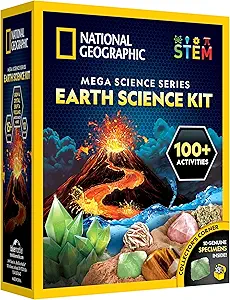 | Best for Extensive Earth Science Exploration | Activities: 100+ | Age Range: 8-12 | Includes: Crystal Growing, Volcano Experiments, Rock Collection, Earth Science Activities | VIEW LATEST PRICE | See Our Full Breakdown |
| STEM Electric Circuit Kits – 8 Experiments in 7 Sets for Students |  | Best for Electrical Engineering Fundamentals | Number of Experiments: 8 | Number of Sets: 7 | Recommended Age: 8+ | VIEW LATEST PRICE | See Our Full Breakdown |
| EUDAX School Physics Labs Basic Electricity Discovery Circuit and Magnetism Experiment Kits for High School Students |  | Best for Advanced Physics Exploration | Items Included: 56 for Electricity, 21 for Magnetism, 2 repair tools | Manual: Color page manual | Batteries Needed: 3 AA batteries (not included) | VIEW LATEST PRICE | See Our Full Breakdown |
More Details on Our Top Picks
Dan&Darci Root Viewer Kit for Kids
The Dan&Darci Root Viewer Kit stands out for its ability to make plant growth visible to children aged 4-8, fostering early curiosity about nature. Unlike more complex kits like the Thames & Kosmos Structural Engineering set, this option is simple and focused on observation, making it ideal for beginners. Its transparent planter and included seeds help kids see roots develop, encouraging responsibility and patience. However, it’s limited to indoor use and may be challenging for very young children to track growth accurately. The kit’s all-in-one design makes it easy for parents and educators to facilitate supervised learning, though growth monitoring might require additional guidance. This pick makes the most sense for educators or parents seeking an engaging, age-appropriate introduction to plant biology.
Pros:- Educational and engaging for young children
- Includes all necessary components for a mini garden
- Encourages responsibility and curiosity about nature
- Provides visual insight into root development
Cons:- Limited to indoor use, reducing exposure to outdoor environments
- Growth tracking may be difficult for very young children
- Supervision needed to prevent misuse or damage
Best for: Families and teachers wanting a straightforward, beginner-friendly botany project for early learners.
Not ideal for: Older children or students interested in more advanced science or gardening projects, as it offers limited complexity.
- Includes:transparent viewer box, nutrient-rich soil, seeds (Spring Onion and Cilantro), stickers, instruction guide
- Recommended Age:4-8 years
- Educational Focus:botany, plant growth, science
Our verdict“This kit is best suited for early learners who need a simple, visual introduction to plant science.”
Thames & Kosmos Structural Engineering: Bridges & Skyscrapers Science & Engineering Kit
The Thames & Kosmos Structural Engineering Kit excels at teaching intermediate students about forces like load, compression, and tension through hands-on model building. Compared with the simpler Dan&Darci kit, this set offers more complexity and a broader understanding of engineering principles, making it ideal for students ready to tackle more challenging projects. Its 20 models and 285+ pieces provide extensive variety, supported by a detailed manual, though it demands a certain level of patience and skill, which could frustrate complete beginners. The limited scope to structural models narrows its appeal for those seeking a broader science experience, but it’s perfect for dedicated learners who enjoy engineering challenges. This kit makes the most sense for middle school students interested in STEM careers or hands-on engineering projects.
Pros:- Educational and engaging for intermediate learners
- Includes a large variety of building pieces
- Comprehensive manual and assembly instructions
- Develops understanding of force and structure
Cons:- Requires intermediate skill level, not suitable for absolute beginners
- Limited to structural engineering projects, less variety in science topics
- No specific age range provided, may require adult supervision
Best for: Students with some prior experience or interest in engineering who want a challenging, detailed construction project.
Not ideal for: Beginners or younger children without foundational building skills, due to the intermediate difficulty level.
- Number of Models:20
- Building Pieces:285+
- Manual Pages:36
- Award:Parents’ Choice Gold Award
Our verdict“This set is ideal for motivated middle school students seeking a detailed engineering challenge with real-world applications.”
Klutz LEGO Gear Bots Science/STEM Activity Kit for Ages 8-12
The Klutz LEGO Gear Bots kit appeals to children aged 8-12 with its focus on building kinetic creatures using LEGO Technic bricks and papercraft. Compared to the more straightforward Dan&Darci planting kit, this product emphasizes mechanical movement and creativity, making it suitable for kids interested in robotics and engineering. Its 64-page idea book and variety of models help develop manual dexterity and problem-solving skills, though the small parts and need for patience might challenge younger or less dexterous children. The inclusion of papercraft adds a creative twist, but limits the model complexity somewhat compared to advanced robotics kits. This kit makes the most sense for kids eager to explore physics and mechanical design through hands-on play and storytelling.
Pros:- Encourages STEM learning through hands-on building
- Includes detailed instructions and a variety of models
- Promotes creativity with papercraft components
- Develops manual dexterity and problem-solving skills
Cons:- Requires patience and some manual dexterity
- Limited complexity for older kids or advanced robotics enthusiasts
- Small parts could be challenging for some children
Best for: Children aged 8-12 with an interest in robotics, mechanics, and creative engineering projects.
Not ideal for: Children under 8 or those with limited manual dexterity, as assembly can be tricky.
- Brand:Klutz
- Model Number:9781338603453
- Age Range:8-12 years
- Included Components:64-page book, 62 LEGO elements, 10 sheets of papercraft
Our verdict“This kit is best suited for creatively inclined kids eager to build and understand mechanical movement with LEGO and paper craft.”
National Geographic Amazing Chemistry Set with 100+ Experiments for Ages 8-12
The National Geographic Amazing Chemistry Set offers over 100 experiments, making it a standout for kids eager to explore a wide range of chemical reactions. Unlike the more craft-focused Klutz kit, this set emphasizes real scientific techniques with test tubes, beakers, and pipettes, fostering a deeper understanding of chemistry. Its extensive variety of experiments, including crystal growth and color-changing solutions, provides ongoing engagement, especially with the bonus 85 experiments. However, it requires adult supervision for safety and some household items outside the kit. Its focus on chemistry makes it less versatile for broader science interests, but it’s perfect for committed young chemists who want a substantial, experiment-rich experience.
Pros:- Wide variety of engaging, hands-on experiments
- Includes real scientific tools for authentic learning
- Extensive bonus experiments for extended exploration
- Award-winning product that emphasizes safety and education
Cons:- Requires adult supervision for safety
- Some experiments need household items not included
- Limited to chemistry, less focus on other sciences
Best for: Middle school students or dedicated young scientists interested in in-depth chemistry experiments and scientific tools.
Not ideal for: Young children or casual science explorers, since the kit involves handling potentially messy or hazardous materials requiring supervision.
- Number of Experiments:100+
- Age Range:8-12
- Included Materials:Test tubes, beakers, pipettes
- Bonus Experiments:85
Our verdict“This set is ideal for young students ready for a serious, experiment-rich chemistry experience with real tools.”
National Geographic Junior Chemistry Set with 50 Experiments for Kids
The National Geographic Junior Chemistry Set is tailored for children aged 4 and up, making it one of the simplest options for early science engagement. It features over 20 child-safe lab tools and 50 experiments designed to be easy and safe for young children, unlike the more advanced sets like the Amazing Chemistry Set. Its clear, illustrated instructions help foster independence in young learners, encouraging early curiosity and foundational science skills. However, the set’s simplicity means it may be too basic for older children or those seeking more complex experiments. Household preparations like baking soda and vinegar are required, which could be a minor inconvenience. This kit makes the most sense for parents or educators seeking safe, introductory science activities for preschoolers and early elementary students.
Pros:- Includes 50 engaging experiments to spark curiosity
- Over 20 child-safe, easy-to-use lab tools
- Illustrated instructions for independent use
- Suitable for very young children’s developmental level
Cons:- Limited complexity, not suitable for older children
- Requires household items like baking soda and vinegar
- Basic design may not hold long-term interest
Best for: Parents and teachers wanting a safe, simple, and engaging introduction to basic chemistry for children aged 4-6.
Not ideal for: Older kids or those with more advanced science experience, as the experiments are too simple to challenge them.
- Number of Experiments:50
- Lab Tools:20+
- Recommended Age:4+
Our verdict“This set is ideal for early childhood educators or parents introducing very young children to basic science concepts safely and simply.”
LINKTOR Chemistry Molecular Model Kit (444 Pieces) for Organic and Inorganic Chemistry Learning
This comprehensive 444-piece kit excels at helping students grasp complex molecular structures in 3D, making it ideal for high school and college-level learners. Unlike the simpler models in the National Geographic Microscope kit, this set offers detailed ball-and-stick and space-filling models that clarify bonds and stereochemistry. However, its complexity can overwhelm younger children or beginners, and the small parts demand careful handling. Compared to basic kits, this model set provides a richer learning experience but requires patience and a steady hand to avoid losing tiny components.
Pros:- Highly detailed set suitable for various educational levels
- Includes both ball-and-stick and space-filling models for versatile understanding
- Durable and easy to disassemble for repeated use
Cons:- Can be too complex for very young learners
- Small parts pose a choking or loss risk for some users
Best for: Students aged 10 and up pursuing detailed chemical structure learning, especially in advanced science classes
Not ideal for: Young children or beginners who need a straightforward introduction to chemistry without the risk of small parts or complexity
- Number of Pieces:444
- Atoms Included:136
- Bonds Included:158
- Parts for Carbon-60 (Fullerene):150
- Recommended Age:10 months and up
- Model Number:MM444
Our verdict“This model kit is perfect for serious students who want a detailed, hands-on understanding of molecular structures but isn’t suited for very young or beginner learners.”
UNGILINGA 150 Experiments Science Kits for Kids, STEM Educational Project Toys for Boys and Girls
This kit offers an impressive 150 experiments covering earth science, chemistry, and physics, making it ideal for curious kids eager to explore multiple disciplines. Unlike the simpler National Geographic Microscope kit, which focuses on observation, this set encourages active experimentation with step-by-step instructions, high-quality tools, and accessible materials. It’s especially suitable for children who enjoy hands-on projects but may be less ideal for younger kids who might find some experiments complex or require adult help for household item-based activities. The broad scope makes it a versatile choice for expanding science curiosity.
Pros:- Large variety of experiments to maintain engagement
- High-quality tools and materials for safe, hands-on learning
- Clear, easy-to-follow instructions suitable for children
Cons:- Some experiments depend on household items, which might complicate setup
- Tools may require adult supervision for safety
- Potentially more suitable for older children due to complexity
Best for: Older children and middle school students who want a variety of experiments to fuel their science interests
Not ideal for: Very young children or beginners who might find the experiments overwhelming or require more guidance
- Number of Experiments:150
- Suitable for:Kids
- Includes:Science tools and materials
- Themes:Earth science, chemistry, physics
Our verdict“This extensive experiment kit suits inquisitive older kids who want diverse, hands-on science activities but may be too complex for very young learners.”
Evviva Sciences Microbiology Science Project Kit with Pre-Poured Agar Plates
This microbiology kit simplifies experiments with 10 pre-poured agar plates, making it accessible for older teens interested in microbiology. Compared to the more general National Geographic Microscope, which offers basic viewing, this set emphasizes culturing and observing microbes directly, providing a more immersive experience. Its pre-poured plates cut down on preparation time but limit the scope to microbiology only. The included educational ebook adds depth, though the setup and use are mostly suited for those with some prior lab familiarity, as supervision is recommended for safety.
Pros:- Pre-poured agar plates for ease of use
- Comprehensive educational materials enhance understanding
- Durable packaging maintains product integrity
Cons:- Limited to microbiology experiments only
- Requires adult supervision for safe handling
- Not suitable for very young children or beginners
Best for: High school students or older teens curious about microbiology and ready for more hands-on lab work
Not ideal for: Younger children or beginners who need more guidance or safer, simpler experiments
- Agar Plates:10 pre-poured
- Cotton Tipped Sticks:10
- Pipette:1
- Plastic Vial:1
- Age Range:15+
- Includes:Educational experiment ebook
Our verdict“This microbiology kit is ideal for older students seeking a real lab experience, but it’s less suitable for casual or very young science explorers.”
Sntieecr Electric Circuit Motor Kit – STEM Educational Science Experiment Set for Kids
This kit introduces children to basic electrical concepts with components like bulbs, motors, switches, and propellers, fostering early interest in engineering. It stands out compared to the National Geographic Microscope, which emphasizes observation, by focusing on active circuit-building and simple projects. The inclusion of various components supports multiple creations, but the necessity for adult supervision and the short operation time at 3V can be limiting. It’s a solid starter set for young learners, though safety and careful handling are essential to prevent overheating or short circuits.
Pros:- Encourages early STEM learning through hands-on circuit building
- Includes a variety of essential components for multiple projects
- Suitable for classroom and home experimentation
Cons:- Requires adult supervision for safe use
- Short circuit risk if used improperly
- Limited operation time at 3V to prevent overheating
Best for: Children aged 8+ eager to experiment with circuits and basic electronics in a safe, classroom-friendly way
Not ideal for: Young children under 8 or those seeking more complex robotics projects, as the set is quite basic
- Components:5 crocodile clip leads, 5 bulbs, 2 motors, motor holders, switches, propellers, buzzer, bulb holders, battery holders
- Battery Type:AA 1.5V
- Recommended Age:8+ years
- Voltage Range:1.5V-3V
- Warnings:Not for children under 3 years; risk of heat and short circuit with prolonged use
Our verdict“This kit provides a straightforward introduction to electrical circuits for young learners, but safety precautions are necessary to prevent issues.”
National Geographic Microscope for Kids with Up to 400x Magnification, STEM Science Kit with Slides and Specimens
This kid-friendly microscope is designed for young learners, offering up to 400x magnification with easy focus and built-in lighting, making it ideal for beginner observation. Compared to the more complex chemistry or microbiology kits, this microscope emphasizes visual discovery and provides included slides and specimens to spark curiosity. The educational lab guide and stickers add a fun, motivating element. However, its basic magnification limits exploration for older or more advanced students, and some users may find the specimen selection somewhat limited for sustained interest. It’s perfect for early curiosity about tiny worlds but less suited for serious microscopy study.
Pros:- Easy-to-use focus and adjustable platform for clear images
- Includes a variety of specimens and slides for engaging experiments
- Educational guide and stickers motivate continued exploration
Cons:- Limited magnification for advanced investigation
- Requires adult supervision for young children
- Some may find the included specimens insufficient for prolonged use
Best for: Children aged 6+ new to microscopy or interested in exploring tiny details in nature
Not ideal for: Older students seeking high-powered or advanced microscopy capabilities
- Magnification:up to 400x
- Included slides:6 prepared, 6 blank
- Specimens:6 rocks and minerals
- Age Range:6+
- Accessories:pipette, specimen dish, tweezers, lab guide, stickers
Our verdict“This beginner microscope is a great entry point for young kids curious about tiny worlds but offers limited scope for serious microscopy enthusiasts.”
National Geographic Science Magic Kit – 100+ Experiments & Magic Tricks for Kids
This kit stands out for blending entertainment with education, offering over 100 experiments that incorporate magic tricks to captivate children’s interest in science. Compared with more traditional experiment sets like the Carson Dellosa STEM Challenges, this kit emphasizes visual and hands-on magic illusions, making it ideal for sparking curiosity in younger kids. However, some experiments require supervision and household items that aren’t included, which can be a hassle for parents or teachers. The variety of activities keeps children engaged and promotes creative thinking, but the magic element might overshadow the science aspect for some learners seeking pure STEM focus. This pick makes the most sense for families or educators wanting a playful entry point into science that combines magic with learning.
Pros:- Engages children with fun and educational science magic tricks
- Includes a wide variety of experiments and bonus activities
- Encourages hands-on learning and creativity
Cons:- Requires supervision for some experiments
- May need additional household items for certain experiments
Best for: Kids who thrive on interactive, playful science activities and enjoy magic tricks.
Not ideal for: Parents seeking purely technical experiments without entertainment or for children who prefer structured STEM challenges without the magic component.
- Number of Experiments:100+
- Magic Tricks Included:20
- Bonus Experiments:85+
- Suitable for:Kids
Our verdict“Ideal for younger children or beginners seeking an entertaining and educational introduction to science through magic tricks.”
Carson Dellosa STEM Challenges, Hands-On Science Kits for Kids Ages 7-10
This set is well-suited for engaging children in grades 2-5 with 30 diverse activity cards that cover earth, space, physical, and life sciences. Compared with the National Geographic Earth Science Kit, it offers a more organized approach, with clear instructions and hints that foster independent problem-solving. The activities are straightforward but may be too simple for advanced learners, and sourcing household materials can sometimes be inconvenient. Its portability and storage divider make it easy to keep organized, but it’s limited strictly to science topics, lacking cross-disciplinary elements. This kit makes the most sense for educators or parents who want a manageable, topic-diverse way to introduce science concepts to young students.
Pros:- Encourages hands-on, interactive learning for grades 2-5
- Includes a variety of science topics with simple, clear instructions
- Portable and organized with a storage divider
Cons:- Requires common household materials, which may need sourcing
- Activities may be too simple for advanced learners
Best for: Elementary teachers or parents seeking structured, topic-specific science activities for children aged 7-10.
Not ideal for: Parents of older or more advanced students who need more complex challenges or cross-subject integration.
- Number of Cards:30
- Dimensions of Each Card:7¾ inches x 5½ inches
- Includes Divider:Yes
- Suitable Age Range:Ages 7-10
Our verdict“Best suited for early elementary students and educators looking for organized, topic-specific science challenges.”
National Geographic Earth Science Kit with 100+ Activities for Kids 8-12
This comprehensive kit offers over 100 activities centered on Earth sciences, including volcano eruptions, crystal growing, and geologic digs, making it a rich resource for curious kids. In comparison to the National Geographic Science Magic Kit, this set is more focused on tangible geology projects, which may appeal to children with a keen interest in Earth sciences. Some activities might require adult supervision, especially for experiments like volcano eruptions, which could limit independent exploration. While the variety keeps kids engaged, some might find certain experiments repetitive or less challenging as they grow older. This kit makes the most sense for children aged 8-12 who want a deep dive into Earth science and geological phenomena.
Pros:- Extensive variety of experiments to sustain engagement
- Educational, with clear, easy-to-follow instructions
- Encourages hands-on exploration of Earth sciences
Cons:- May require adult supervision for some activities
- Some activities might feel repetitive over time
Best for: Children interested in geology, volcanology, and earth-related STEM projects, with some adult supervision.
Not ideal for: Younger kids or those seeking a broad science curriculum beyond Earth sciences.
- Activities:100+
- Age Range:8-12
- Includes:Crystal Growing, Volcano Experiments, Rock Collection, Earth Science Activities
Our verdict“A strong choice for kids eager to explore Earth sciences in depth through a wide array of experiments.”
STEM Electric Circuit Kits – 8 Experiments in 7 Sets for Students
This kit offers a focused introduction to electrical concepts with 8 experiments, including series and parallel circuits, seawater power generation, and fruit batteries. Compared with the National Geographic Earth Science Kit, it provides more specialized experiments aimed at understanding electricity and circuitry, making it ideal for students interested in engineering. The detailed circuit diagrams are a highlight, promoting independent learning, but batteries are not included, which adds an extra step for setup. Some experiments may need adult supervision, especially when handling components or power sources. This set makes the most sense for children 8 and above who want hands-on electrical projects that foster critical thinking and problem-solving skills.
Pros:- Provides a variety of engaging electrical experiments
- Includes detailed, easy-to-follow circuit diagrams
- Promotes critical thinking and problem-solving
Cons:- Batteries are not included, requiring additional purchase
- Some experiments may need adult supervision
Best for: Middle-grade students or beginners interested in electrical engineering and circuitry concepts.
Not ideal for: Younger children or those seeking broader science topics outside of electricity and circuits.
- Number of Experiments:8
- Number of Sets:7
- Recommended Age:8+
- Includes Batteries:Batteries required separately
Our verdict“Great for budding electrical engineers looking for practical, hands-on circuit projects with clear guidance.”
EUDAX School Physics Labs Basic Electricity Discovery Circuit and Magnetism Experiment Kits for High School Students
This kit is tailored for high school students who want a comprehensive, hands-on approach to electricity and magnetism. It includes 56 items for electrical experiments and 21 for magnetism, along with detailed manuals, making it suitable for serious exploration of STEM concepts. Compared to the National Geographic Earth Science Kit, it is more specialized and demanding, emphasizing project-based learning rather than general curiosity. The need for 3 AA batteries and some assembly may be barriers for quick experiments but are typical for a high-level educational kit. It’s not a toy and requires a more mature learner to maximize its potential. This kit makes the most sense for dedicated high school students or teachers aiming to deepen understanding of electromagnetism and circuits.
Pros:- Comprehensive set for exploring electricity and magnetism
- Includes detailed manuals and all necessary components
- Suitable for serious STEM study and project work
Cons:- Batteries are not included, requiring additional purchase
- Some assembly required for projects
Best for: High school students or STEM educators seeking in-depth, practical experiments in electricity and magnetism.
Not ideal for: Younger students or casual learners who prefer simple or less technical projects.
- Items Included:56 for Electricity, 21 for Magnetism, 2 repair tools
- Manual:Color page manual
- Batteries Needed:3 AA batteries (not included)
Our verdict“Best for high school learners aiming for an advanced, hands-on understanding of electrical and magnetic principles.”

How We Picked
The evaluation process focused on several key factors that matter to buyers: educational value, ease of use, build quality, safety, and versatility of experiments. We also considered price-to-value ratio, user reviews, and the potential for long-term engagement. Kits with a broad range of activities and clear instructions ranked higher, especially if they suited different skill levels. Products that excelled in durability and safety were favored, as they ensure a positive learning experience over time. This approach ensures the list highlights options that are not only fun but genuinely educational and reliable for students at various levels.Factors to Consider When Choosing Educational Science Kits For Students
Choosing the right educational science kit involves considering several factors that influence learning outcomes and user experience. Beyond just the number of experiments, look at the kit’s complexity, safety features, and educational focus. It’s also important to match the kit’s difficulty level to the student’s age and interest to avoid frustration or boredom. Budget constraints matter, but investing in a kit with quality components and comprehensive instructions can pay off through better engagement. Lastly, consider the variety of experiments offered, as a diverse kit can sustain interest and provide a well-rounded science education.Age and Skill Level
Matching the kit to the student’s age ensures the experiments are challenging yet manageable. Kits designed for younger children typically feature simple, safe activities with larger parts, while those for older students often include more detailed components and complex procedures. Choosing a kit that aligns with the learner’s current skills reduces frustration and boosts confidence, encouraging ongoing curiosity. Be cautious of overly advanced kits for beginners, which can be overwhelming, or overly simple options for advanced students, which may quickly bore them.
Educational Focus and Content Variety
Some kits emphasize chemistry experiments, while others focus on physics, biology, or engineering. Consider what area excites the student most or aligns with their curriculum. Kits offering multiple disciplines provide a broader science experience, fostering well-rounded understanding. However, more comprehensive kits tend to be pricier and more complex, so balance scope with the student’s interest and ability. Avoid kits with repetitive activities that lack diversity, as they can diminish engagement over time.
Safety and Durability
Safety should be a priority, especially for younger children. Look for kits with non-toxic materials, secure parts, and clear safety instructions. Durable construction ensures the components withstand frequent use, which is important for long-term learning. Cheaply made kits with fragile parts can lead to frustration or safety issues, reducing the educational benefit. Always check for age restrictions and safety certifications before purchase.
Price and Value
Higher-priced kits often include more experiments, detailed instructions, and quality components, offering better value for dedicated learners. However, budget-friendly options can be perfect for introductory exploration or casual use. Consider whether the kit’s content justifies the cost—more experiments and diverse activities typically provide longer-lasting engagement. Avoid overly expensive kits that don’t significantly outperform cheaper options, especially if the user is just beginning.
Ease of Use and Instructions
Clear, step-by-step instructions are essential for a positive learning experience. Kits that include visual guides or video tutorials can help students work independently and safely. Complicated or poorly written instructions can lead to confusion and discourage continued exploration. Ensure the kit provides enough guidance to facilitate successful experiments without requiring constant adult supervision, especially for older children learning to work independently.
Frequently Asked Questions
Are educational science kits safe for young children?
Yes, most reputable science kits designed for children are made with non-toxic, child-safe materials and include safety warnings. It’s important to choose kits appropriate for the child’s age, which often feature larger parts and simple procedures. Always supervise younger children during experiments and ensure they follow safety instructions to prevent accidents. Reading reviews and product descriptions can also help verify safety standards before making a purchase.
How many experiments should I expect in a typical science kit?
The number of experiments varies widely depending on the kit’s complexity and price. Entry-level kits might include around 10-20 activities, while more comprehensive sets can offer 50 or more. Consider what level of engagement is suitable for the learner—more experiments generally provide more value and longer-lasting interest. However, it’s also important that each experiment is meaningful and educational, rather than just a quantity to boost the number of activities.
Can these kits be used for homeschooling or classroom activities?
Absolutely, many educational science kits are suitable for both homeschooling and classroom use. Kits with detailed instructions and comprehensive content can complement lesson plans effectively. For group activities, choose kits with enough components to accommodate multiple students or that include multiple experiments. Always check for age-appropriate safety features and material quality to ensure a safe and successful educational experience.
What is the best way to store and maintain these science kits?
Proper storage helps keep components organized and prevents damage, extending the life of the kit. Use clear containers or dedicated storage bins to separate different experiment parts. Keep instructions in a safe, easily accessible place, and regularly check for missing or damaged items. Storing kits in a dry, cool place protects sensitive materials and ensures they are ready for the next experiment session, making ongoing learning more convenient.
Should I prioritize a more comprehensive kit or a simpler one?
The choice depends on the learner’s age, interest level, and experience. For beginners or younger children, simpler kits with straightforward experiments foster confidence and enjoyment. More advanced students or those with a serious interest in science may benefit from comprehensive kits that offer a wider variety of experiments and deeper learning. Balancing the kit’s complexity with the learner’s curiosity ensures sustained engagement and educational growth.
Conclusion
For parents and educators seeking the best overall experience, the Dan&Darci Root Viewer Kit offers a versatile and engaging introduction to science. Those prioritizing value should consider kits like the National Geographic Amazing Chemistry Set, which packs many experiments at an accessible price. For advanced learners or high school students, the EUDAX School Physics Labs provides in-depth exploration of electricity and magnetism. Beginners or casual learners might find simpler kits like the Carson Dellosa STEM Challenges more suitable, while dedicated science enthusiasts should look for comprehensive sets with diverse disciplines. Tailoring your choice to the learner’s age, interest, and skill level ensures a rewarding science experience in 2026.
Flea & tick season Picks
flea and tick prevention
As an affiliate, we earn on qualifying purchases.