For most families, I’d start with National Geographic Kids Science Encyclopedia: its wide subject range makes it the strongest all-around reference for children ready to explore independently. National Geographic Little Kids First Big Book of Science is a gentler entry point for younger readers, while The Way Things Work stands out for children who want to understand how machines and everyday technology operate. The main choice is between a broad visual reference, a focused subject book, and a simpler read-aloud or early-reader format. Age, reading confidence, and whether a child prefers quick answers or deeper explanations matter as much as the topic. Read on for the full breakdown of all 15 options and how I’d match them to different learners.

Prime made for students and young adults
- Fast, free delivery for dorm and study essentials
- Prime Video and Amazon Music included
- Member-only deals
Key Takeaways
- The broadest reference is the strongest all-around choice: National Geographic Kids Science Encyclopedia spans subjects from animals and space to chemistry, making it more versatile than books built around one topic.
- Age and format change the experience: Baby University’s board books suit toddler sharing, while the two Little Kids First Big Books offer an easier step toward longer, illustrated explanations.
- Visual encyclopedias favor browsing over linear reading: The 100,000 Whys titles and National Geographic Kids Why? serve children who like jumping between questions, but their broad coverage may offer less depth on any one subject.
- Focused books can answer a specific interest better: The Elements Book, Knowledge Encyclopedia Human Body, Everything You Need to Know About Bugs, and The Mysteries of the Universe trade range for concentrated subject coverage.
- Hands-on and narrative appeal vary: Pete the Cat and the Supercool Science Fair adds a story and stickers, while Science Essentials offers a boxed set format; neither is a substitute for a single, broad science reference.
| National Geographic Kids Science Encyclopedia: Atom Smashing, Food Chemistry, Animals, Space, and More! |  | Best Overall Science Reference | Format: Science encyclopedia | Topics: Chemistry, biology, space, animals, and more | Content style: Facts and educational explanations | VIEW LATEST PRICE | See Our Full Breakdown |
| Baby University Board Book Set: A Science for Toddlers | 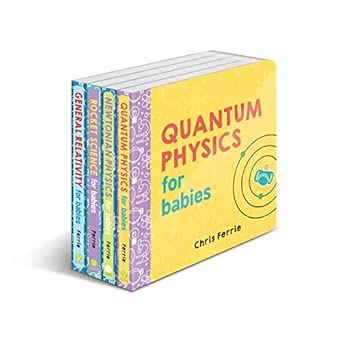 | Best for Toddlers | Format: Board book set | Subject: Introductory science | Intended audience: Toddlers | VIEW LATEST PRICE | See Our Full Breakdown |
| The Way Things Work: Newly Revised Edition |  | Best for Curious Problem-Solvers | Edition: Newly revised edition | Subject focus: Machines and systems | Content: Explanations of how things work | VIEW LATEST PRICE | See Our Full Breakdown |
| 100,000 Whys for Kids: A Full-Color Visual Encyclopedia of Big Questions, Science, Space, Animals, Nature, History, Inventions, and How the World Works for Ages 6–13 |  | Best for Broad Question-and-Answer Browsing | Format: Full-color visual encyclopedia | Stated age range: 6–13 | Topics: Science, space, animals, nature, history, inventions, and how the world works | VIEW LATEST PRICE | See Our Full Breakdown |
| The Mysteries of the Universe: Discover the Best-Kept Secrets of Space |  | Best for Space Enthusiasts | Format: Children’s space anthology | Subject focus: Space and the universe | Content: Introduction to astronomy and cosmic mysteries | VIEW LATEST PRICE | See Our Full Breakdown |
| Knowledge Encyclopedia Human Body: Human Anatomy as You’ve Never Seen It Before |  | Best for Anatomy | Subject: Human anatomy | Format: Encyclopedia | Approach: Visual explanations | VIEW LATEST PRICE | See Our Full Breakdown |
| National Geographic Kids Why?: Over 1,111 Answers to Everything |  | Best for Question-and-Answer Browsing | Subject range: Science, nature, and everyday mysteries | Content format: Questions and answers | Answer count: More than 1,111 | VIEW LATEST PRICE | See Our Full Breakdown |
| The Elements Book: A Visual Periodic Table Encyclopedia for Kids |  | Best for Young Chemistry Explorers | Subject: Chemical elements and the periodic table | Format: Visual encyclopedia | Intended audience: Children and young learners | VIEW LATEST PRICE | See Our Full Breakdown |
| National Geographic Little Kids First Big Book of Science |  | Best First Science Book | Subject: Basic science | Intended audience: Young children | Format: Illustrated children’s book | VIEW LATEST PRICE | See Our Full Breakdown |
| Pete the Cat and the Supercool Science Fair: Includes Over 30 Stickers! |  | Best Story-Led STEM Pick | Format: Children’s storybook | Theme: STEM science fair | Featured project: Volcano project | VIEW LATEST PRICE | See Our Full Breakdown |
| Science Essentials: Science Made Easy Boxed Set (6 Books) |  | Best for a Starter Science Library | Format: Boxed set | Number of books: 6 | Subject: Science | VIEW LATEST PRICE | See Our Full Breakdown |
| 100,000 Whys for Smart Kids: The Visual Encyclopedia for Curious Kids |  | Best for Brain Challenges | Format: Visual encyclopedia | Age range: 6–12 | Features: Big questions, unusual facts, and clear explanations | VIEW LATEST PRICE | See Our Full Breakdown |
| Everything You Need to Know About Bugs |  | Best for Insect-Focused Readers | Subject: Bugs and insects | Coverage: Biology, behavior, and significance | Intended audience: Readers interested in entomology or insect study | VIEW LATEST PRICE | See Our Full Breakdown |
| An Anthology of Our Extraordinary Earth: Discover the Awe-Inspiring Wonders of Planet Earth |  | Best for Earth and Nature Browsing | Format: Anthology | Subject: Planet Earth and natural wonders | Coverage: Landscapes and ecosystems | VIEW LATEST PRICE | See Our Full Breakdown |
| National Geographic Little Kids First Big Book of Why: Questions and Answers About the World for Curious Kids |  | Best for Young Question-Askers | Format: Question-and-answer book | Subject: Questions about the world | Intended audience: Young children | VIEW LATEST PRICE | See Our Full Breakdown |
| science books for kid | Intended audience | Format | Subject |
|---|---|---|---|
| National Geographic Kids Scien | Young learners interested in science | Science encyclopedia | — |
| Baby University Board Book Set | Toddlers | Board book set | Introductory science |
| The Way Things Work: Newly Rev | Readers of all ages, according to supplied description | — | — |
| 100,000 Whys for Kids: A Full- | — | Full-color visual encyclopedia | — |
| The Mysteries of the Universe: | Children | Children’s space anthology | — |
| Knowledge Encyclopedia Human B | Curious readers and students | Encyclopedia | Human anatomy |
| National Geographic Kids Why?: | Children | — | — |
| The Elements Book: A Visual Pe | Children and young learners | Visual encyclopedia | Chemical elements and the periodic table |
| National Geographic Little Kid | Young children | Illustrated children’s book | Basic science |
| Pete the Cat and the Supercool | — | Children’s storybook | — |
| Science Essentials: Science Ma | Young readers | Boxed set | Science |
| 100,000 Whys for Smart Kids: T | Curious kids | Visual encyclopedia | — |
| Everything You Need to Know Ab | Readers interested in entomology or insect study | — | Bugs and insects |
| An Anthology of Our Extraordin | Children | Anthology | Planet Earth and natural wonders |
| National Geographic Little Kid | Young children | Question-and-answer book | Questions about the world |
More Details on Our Top Picks
National Geographic Kids Science Encyclopedia: Atom Smashing, Food Chemistry, Animals, Space, and More!
This encyclopedia is the broadest science-first choice in this group, bringing together subjects such as chemistry, biology, and space in one illustrated reference. Its colorful visuals and bite-sized facts suit children who like hopping between topics rather than following a single narrative. Compared with The Mysteries of the Universe, it offers a wider science mix instead of focusing on astronomy; compared with The Way Things Work, it covers more areas than machines and systems. That breadth makes it a useful book to revisit as a child’s interests shift. The tradeoff is that a general overview may not satisfy a reader who wants advanced explanations or sustained depth on one subject. I’d choose it for an all-purpose science shelf, not as a specialist text.
Pros:- Covers multiple science areas, making it useful for varied interests.
- Colorful illustrations support visual browsing and learning.
- Engaging facts can invite children to explore topics independently.
Cons:- Broad coverage may leave advanced readers wanting more detail.
- The supplied description does not specify the age range or organization of topics.
Best for: Families seeking one illustrated science reference for children curious about several fields, including animals, chemistry, and space.
Not ideal for: Advanced young readers who want detailed explanations or children focused on a single subject such as astronomy or mechanics.
- Format:Science encyclopedia
- Topics:Chemistry, biology, space, animals, and more
- Content style:Facts and educational explanations
- Visuals:Colorful illustrations
- Intended audience:Young learners interested in science
- Edition details:Not specified in supplied product information
Our verdict“Choose this as a flexible, illustrated science reference for a child whose interests span several fields.”
Baby University Board Book Set: A Science for Toddlers
This set is the clearest early-years pick in the lineup: its board book format and simple explanations are tailored to children who are not ready for reference-style reading. Rather than offering the broad browse-and-discover experience of National Geographic Kids Science Encyclopedia, it introduces basic concepts in a format suited to short shared reading sessions. The durable construction also makes it more practical for small hands than a standard encyclopedia. Its tradeoff is a narrow level of detail: toddlers get an introduction, not the fuller explanations older children may want. The supplied information does not name the individual concepts or an exact age range, so I’d check the set’s contents if a particular topic matters. This is an early curiosity-builder, not a long-term science reference.
Pros:- Board book construction suits handling by very young readers.
- Simple explanations make introductory science more approachable.
- Set format offers multiple books for early shared reading.
Cons:- Basic presentation limits its usefulness for older or more advanced children.
- The supplied description does not identify the books’ specific science concepts.
- An exact recommended age range is not provided.
Best for: Parents and caregivers looking for sturdy, simple science books to share with toddlers during short reading sessions.
Not ideal for: School-age children ready for detailed explanations, varied science topics, or independent reference reading.
- Format:Board book set
- Subject:Introductory science
- Intended audience:Toddlers
- Text style:Simple explanations
- Illustrations:Engaging illustrations
- Set contents:Number of books and individual titles not specified in supplied product information
Our verdict“Pick this set for sturdy, shared science reading with toddlers rather than for an older child’s reference shelf.”
The Way Things Work: Newly Revised Edition
Where National Geographic Kids Science Encyclopedia spreads attention across science fields, this revised edition centers on how machines and systems work. That narrower focus gives curious children a route into mechanisms and everyday technology, with explanations intended to make complex ideas accessible. The revised presentation is described as updating illustrations and explanations for modern technology, which may make it a better match for readers who want science connected to practical devices than The Mysteries of the Universe, a space-focused option. Its breadth within machines does not mean technical depth, though: the description says it is an overview, and no supplementary materials are included. I’d choose it for children who ask how things function, while readers seeking hands-on activities or specialist detail should look elsewhere.
Pros:- Focuses on explaining machines and systems rather than offering only a list of facts.
- Accessible explanations can make complex concepts easier to approach.
- Revised edition includes updated illustrations and explanations for modern technology.
Cons:- Overview-level treatment may not meet a technically advanced reader’s needs.
- No supplementary materials are included, limiting activity-based learning.
Best for: Children who regularly ask how machines, mechanisms, and everyday systems function and enjoy explanatory nonfiction.
Not ideal for: Readers seeking experiments, supplementary activities, or in-depth technical instruction on a specific machine or system.
- Edition:Newly revised edition
- Subject focus:Machines and systems
- Content:Explanations of how things work
- Illustrations:Updated illustrations
- Technology coverage:Updated explanations for modern technology
- Supplementary materials:None included, according to supplied description
- Intended audience:Readers of all ages, according to supplied description
Our verdict“Choose this for a child interested in how technology and mechanisms work, not for a broad survey of every science field.”
100,000 Whys for Kids: A Full-Color Visual Encyclopedia of Big Questions, Science, Space, Animals, Nature, History, Inventions, and How the World Works for Ages 6–13
This visual encyclopedia suits families who want one book to prompt questions across science and beyond. Its stated ages 6–13 range and coverage of science, space, animals, nature, history, and inventions make it broader than the science-centered National Geographic Kids Science Encyclopedia. That variety can keep a curious child browsing, especially when interests move from natural science to how the world works. The tradeoff is focus: a child looking for concentrated science explanations may prefer the narrower subject treatment of The Way Things Work or a dedicated astronomy book. Although the title claims 100,000 questions, the supplied description does not explain how that count is organized or what depth each answer receives. I’d pick it for wide-ranging question seekers, not for a deep study of one science topic.
Pros:- Combines science with a wide range of related and non-science topics.
- Full-color visuals support browsing and quick engagement.
- Specified age range helps families judge whether it fits their child.
Cons:- Broad subject mix may provide less focus on science than a dedicated science encyclopedia.
- The supplied description does not clarify the depth or organization of the answers.
- The title’s stated question count is not explained in the supplied product information.
Best for: Curious children ages 6–13 who enjoy jumping between science, animals, space, history, and inventions in a visual reference.
Not ideal for: Readers who want sustained, detailed science coverage or a focused book on a particular subject.
- Format:Full-color visual encyclopedia
- Stated age range:6–13
- Topics:Science, space, animals, nature, history, inventions, and how the world works
- Question count:Title states 100,000 Whys
- Visuals:Full-color visuals
- Content style:Questions and accessible explanations
Our verdict“Choose this for a visually minded child who wants to browse questions across science and many other subjects.”
The Mysteries of the Universe: Discover the Best-Kept Secrets of Space
For a child whose science interest is firmly pointed toward the sky, this book offers a more focused starting point than National Geographic Kids Science Encyclopedia. Its subject is the universe and astronomy, presented through accessible explanations and illustrations intended for young readers. That focus can make it an inviting introduction to space, while The Way Things Work is a stronger match for children more interested in machines and everyday systems. The tradeoff is limited breadth and depth: this is not an all-purpose science reference, and the supplied description notes that advanced young readers may find its treatment basic. I’d select it for a space-curious child who wants an illustrated introduction, but not as the only science book for a reader exploring many fields.
Pros:- Focused astronomy theme suits children with a strong interest in space.
- Accessible explanations introduce complex cosmic subjects to young readers.
- Illustrations help make space topics visually engaging.
Cons:- Narrow subject focus offers less variety than a general science encyclopedia.
- May not provide enough scientific detail for advanced young readers.
Best for: Young readers with a clear interest in space who want an illustrated, approachable introduction to the universe.
Not ideal for: Advanced readers seeking detailed astronomy or children looking for broad coverage of biology, chemistry, and other sciences.
- Format:Children’s space anthology
- Subject focus:Space and the universe
- Content:Introduction to astronomy and cosmic mysteries
- Explanations:Accessible explanations for young readers
- Illustrations:Illustrated
- Intended audience:Children
Our verdict“Choose this as a focused, illustrated introduction for a young space enthusiast, rather than as a broad science reference.”
Knowledge Encyclopedia Human Body: Human Anatomy as You’ve Never Seen It Before
For children drawn to how the body works, this book focuses on human anatomy rather than spreading attention across science topics. Its visual approach can make complex systems easier to grasp, giving curious readers a clearer starting point than a broad question-and-answer collection like National Geographic Kids Why?: Over 1,111 Answers to Everything. That focus is its main advantage, though the description indicates an accessible overview rather than detailed scientific depth. Readers ready for more technical explanations may outgrow it, and there are no accompanying digital resources to extend the material. I’d choose it for a child who keeps asking about organs, body systems, or anatomy, but not as a full course or reference for advanced study.
Pros:- Keeps the subject focused on human anatomy
- Uses engaging visuals to support explanations
- Makes complex biological systems accessible to young readers
Cons:- Offers limited scientific depth for advanced learners
- Does not include accompanying digital resources
Best for: Curious school-age readers who want a visual introduction to human anatomy and body systems.
Not ideal for: Advanced students seeking detailed biology explanations or families looking for digital activities to extend the reading.
- Subject:Human anatomy
- Format:Encyclopedia
- Approach:Visual explanations
- Intended audience:Curious readers and students
- Reading focus:Human body and biological systems
- Scientific depth:Accessible overview
Our verdict“Choose this for a visually oriented child focused on anatomy; choose National Geographic Kids Why? for broader questions across many subjects.”
National Geographic Kids Why?: Over 1,111 Answers to Everything
Built for kids who jump from one question to the next, this collection offers more than 1,111 answers about the world, including science, nature, and everyday mysteries. That breadth makes it a more flexible browse than The Elements Book: A Visual Periodic Table Encyclopedia for Kids, which stays within chemistry. The tradeoff is that a huge range of short answers may not provide the sustained explanation a child needs to follow one scientific idea in depth. Product details also give little information about how topics are organized or how far explanations go. I’d pick it for casual reading and curiosity-led browsing, but choose a subject-focused title when a child wants to build stronger knowledge of anatomy, chemistry, or another single field.
Pros:- Includes more than 1,111 answers
- Covers science, nature, and everyday mysteries
- Supports browsing based on a child’s questions
Cons:- The breadth may leave individual topics less developed
- Available description does not clarify organization or depth
Best for: Curious readers who enjoy dipping into short answers across science, nature, and everyday topics.
Not ideal for: Children researching one science topic in depth or readers who prefer a clearly defined subject focus.
- Subject range:Science, nature, and everyday mysteries
- Content format:Questions and answers
- Answer count:More than 1,111
- Intended audience:Children
- Reading approach:Curiosity-led browsing
- Topic depth:Not specified in the supplied product details
Our verdict“Choose this for wide-ranging, question-led browsing, but select a focused encyclopedia when depth in one subject matters more.”
The Elements Book: A Visual Periodic Table Encyclopedia for Kids
This is the most focused chemistry pick in the group: it introduces the periodic table and chemical elements through colorful visuals and accessible explanations. That narrow scope gives it a clearer learning path than National Geographic Kids Why?: Over 1,111 Answers to Everything, where chemistry is only one part of a much wider mix. The visual presentation can help younger readers connect element names with memorable facts, but it is not designed to satisfy learners seeking advanced chemistry or detailed technical treatment. I’d use it as an approachable first reference or a companion to early science lessons, rather than as a stand-alone resource for deeper study. Its appeal depends on a child having at least some interest in materials, elements, or how matter is organized.
Pros:- Keeps the focus on elements and the periodic table
- Uses colorful visuals to make chemistry approachable
- Explains chemical elements for young readers
Cons:- Provides limited detail for advanced chemistry learners
- Narrow subject focus may not suit children seeking broad science coverage
Best for: Young learners interested in the periodic table who benefit from visual explanations and concise facts.
Not ideal for: Older or advanced students who need detailed chemistry instruction beyond an introductory overview.
- Subject:Chemical elements and the periodic table
- Format:Visual encyclopedia
- Intended audience:Children and young learners
- Presentation:Colorful visuals and fun facts
- Learning focus:Introductory chemistry
- Scientific depth:Overview for young readers
Our verdict“Choose this for an accessible first look at elements; pick National Geographic Kids Why? for broader, less chemistry-focused browsing.”
National Geographic Little Kids First Big Book of Science
For early learners, an inviting first encounter matters more than technical detail, and this book pairs basic science concepts with colorful illustrations. Its early-childhood focus sets it apart from Knowledge Encyclopedia Human Body, which concentrates on anatomy and is better suited to readers ready for more specialized material. Here, the broader introduction can help a young child explore science without needing to commit to one subject. The tradeoff is a shallow level of explanation: children who already ask detailed questions about body systems or chemistry may want a more focused next step, such as The Elements Book. I’d choose this as an accessible starting point for shared reading, not as a reference for school-age readers seeking substantial scientific detail.
Pros:- Introduces basic science concepts for young children
- Uses colorful illustrations to support early reading
- Offers a broad entry point rather than focusing on one science topic
Cons:- Explanations are not designed for detailed study
- Early-childhood level may not hold older readers’ interest
Best for: Parents and caregivers introducing basic science concepts to young children through illustrated reading.
Not ideal for: Older children seeking detailed explanations or a focused reference on a subject such as anatomy or chemistry.
- Subject:Basic science
- Intended audience:Young children
- Format:Illustrated children’s book
- Presentation:Colorful illustrations and facts
- Learning level:Early introduction
- Topic scope:General science concepts
Our verdict“Choose this for a young child’s first science reading; move to Knowledge Encyclopedia Human Body or The Elements Book when a specific interest develops.”
Pete the Cat and the Supercool Science Fair: Includes Over 30 Stickers!
This is the story-first choice, using Pete the Cat’s science fair and volcano project to bring teamwork and creativity into a STEM setting. Unlike the reference-style National Geographic Kids Little Kids First Big Book of Science, it gives children a character and plot to follow rather than presenting science concepts as a broad illustrated overview. The included 30-plus stickers add an activity element, though the product description does not suggest that the book teaches experiment procedures or science in depth. I’d choose it for a young Pete the Cat fan who enjoys stories and wants a playful introduction to a science fair. Readers looking for a nonfiction guide to experiments or a structured science reference should choose another book in the roundup.
Pros:- Builds a science fair theme into a character-led story
- Features a volcano project
- Emphasizes teamwork and creativity
- Includes more than 30 stickers
Cons:- Story format offers less direct science instruction than an encyclopedia
- Product details do not specify age range or reading level
- Description gives limited information about activities beyond the stickers
Best for: Young Pete the Cat fans who enjoy story-based STEM themes, teamwork, and sticker activities.
Not ideal for: Children seeking a nonfiction science reference, detailed volcano instructions, or clearly specified learning-level guidance.
- Format:Children’s storybook
- Theme:STEM science fair
- Featured project:Volcano project
- Character:Pete the Cat
- Included activity item:More than 30 stickers
- Story themes:Teamwork and creativity
Our verdict“Choose this for story-loving Pete the Cat fans who want a playful STEM theme, not for children seeking a factual science guide.”
Science Essentials: Science Made Easy Boxed Set (6 Books)
The main advantage here is six books in one set, giving families a broader starting point than a single-topic title such as Everything You Need to Know About Bugs. Its illustrated, simplified approach aims to make science feel approachable for young readers, which can suit children who are still building confidence with nonfiction. Compared with question-led books such as National Geographic Little Kids First Big Book of Why, this set is presented as a collection for learning science concepts rather than as a world of short answers. The tradeoff is that the available description does not name the subjects covered or explain how much detail each book provides. I’d choose it for variety, but not when a child needs a specific topic or a clearly stated reading level.
Pros:- Six books offer more variety than a single-volume science introduction
- Illustrations are intended to help engage young readers
- Simplified explanations aim to make science concepts accessible
- Boxed-set format keeps the books together as a small home collection
Cons:- The described information does not identify the topics covered in each book
- No age range or reading level is provided
- The depth of explanations is unclear for children ready for more advanced material
Best for: Families seeking several illustrated science books as a broad introduction for young readers
Not ideal for: Caregivers choosing by a specific science subject, age band, or detailed curriculum coverage
- Format:Boxed set
- Number of books:6
- Subject:Science
- Presentation:Illustrated
- Approach:Simplifies science concepts
- Intended audience:Young readers
Our verdict“Choose this set for an illustrated, multi-book introduction, but pick a topic-specific title if you need defined coverage or reading guidance.”
100,000 Whys for Smart Kids: The Visual Encyclopedia for Curious Kids
This pick pairs a visual encyclopedia format with big questions, unusual facts, clear explanations, and 500 brain challenges. That makes it a strong fit for children who like to jump between topics and test their thinking, rather than follow one subject from start to finish. Its stated age range of 6–12 gives families more guidance than Science Essentials: Science Made Easy Boxed Set, though the set offers multiple books instead of one reference volume. Compared with National Geographic Kids Science Encyclopedia, the clearest distinguishing feature in the supplied details is the large number of brain challenges. The tradeoff is that the specific science subjects and the nature of those challenges are not described, so I wouldn’t choose it for targeted coverage or a particular classroom unit.
Pros:- Stated age range helps families judge whether it may suit their child
- Combines questions, facts, and explanations in a visual encyclopedia format
- Includes 500 brain challenges to prompt active thinking
- Broad, browse-friendly concept can appeal to children with varied interests
Cons:- The specific science topics and their depth are not detailed
- The available description does not explain the challenge formats
- A single encyclopedia may be less suitable than a multi-book set for children who prefer shorter separate volumes
Best for: Curious readers ages 6–12 who enjoy browsing facts and solving short thinking challenges
Not ideal for: Families seeking a clearly mapped science curriculum or detailed coverage of a particular subject
- Format:Visual encyclopedia
- Age range:6–12
- Features:Big questions, unusual facts, and clear explanations
- Brain challenges:500
- Intended audience:Curious kids
- Subject scope:Broad questions and facts; specific topics not provided
Our verdict“Pick it for an ages 6–12 reader who likes visual browsing and brain challenges, not for a focused science reference.”
Everything You Need to Know About Bugs
Where broad question-and-answer books such as National Geographic Little Kids First Big Book of Why range across the world, this title keeps its attention on bugs. The supplied description points to biology, behavior, and their significance, giving insect enthusiasts a more concentrated subject than a general science encyclopedia. That focus can help a child follow one area of natural science in greater depth, though the description does not specify particular species, activities, or how the information is organized. A stated weakness is the lack of detailed illustrations; that matters in a subject where close visual details can help readers distinguish insects and understand body structures. I’d place it above broad primers for a child already fascinated by insects, but below picture-led options for readers who rely on visual explanation.
Pros:- Concentrates on bugs rather than spreading attention across many subjects
- Covers biology and behavior as well as the significance of insects
- Can suit students pursuing an insect-focused topic
- Offers a narrower subject focus than general question-and-answer books
Cons:- Description notes a lack of detailed illustrations
- Specific species and content organization are not provided
- Limited to bugs, so it is not a broad science introduction
Best for: Children and students with a specific interest in insects who want information about their biology and behavior
Not ideal for: Young readers who need detailed insect imagery, hands-on activities, or broad coverage across science topics
- Subject:Bugs and insects
- Coverage:Biology, behavior, and significance
- Intended audience:Readers interested in entomology or insect study
- Content scope:General information about bugs
- Illustration detail:Description indicates illustrations are not detailed
- Age range:Not specified
Our verdict“Choose this for an insect-minded reader seeking focused information, and skip it if detailed visuals or broad science coverage matter more.”
An Anthology of Our Extraordinary Earth: Discover the Awe-Inspiring Wonders of Planet Earth
This anthology makes Earth’s landscapes and ecosystems its organizing idea, giving it a more visual, place-based angle than the question-driven 100,000 Whys for Smart Kids. Its illustrations and photographs can help children connect natural features with the habitats and environments around them, making it a good choice for browsing together or sparking conversation about the planet. The tradeoff is that the description emphasizes an overview of Earth’s wonders rather than detailed scientific explanations. A child asking how a process works may need a more focused science reference alongside it. No age range is provided, either, so I’d choose it for families drawn to nature imagery and broad exploration, but not as a stand-alone guide for a defined science lesson.
Pros:- Focuses on Earth’s natural wonders, landscapes, and ecosystems
- Illustrations and photographs support visual exploration
- Anthology format suits browsing across different natural features
- Can prompt discussion about habitats and the planet
Cons:- Description indicates limited detail in scientific explanations
- No specific age range is given
- A broad overview may not meet the needs of children studying one science topic
Best for: Families and young nature enthusiasts who enjoy browsing photographs and learning about Earth’s landscapes and ecosystems
Not ideal for: Readers who need detailed explanations of scientific processes, a defined age level, or topic-by-topic instruction
- Format:Anthology
- Subject:Planet Earth and natural wonders
- Coverage:Landscapes and ecosystems
- Visuals:Illustrations and photographs
- Intended audience:Children
- Age range:Not specified
Our verdict“Choose this as a visual introduction to Earth’s natural wonders, not as a detailed reference for explaining science processes.”
National Geographic Little Kids First Big Book of Why: Questions and Answers About the World for Curious Kids
For younger children who learn by asking one question after another, this book offers a simple question-and-answer format supported by colorful illustrations. That makes it easier to browse in short stretches than a focused reference such as Everything You Need to Know About Bugs, which centers on one subject, or the broader 100,000 Whys for Smart Kids, which is described for ages 6–12 and includes brain challenges. Here, the appeal is an accessible introduction to questions about the world, not a detailed science course. The main limitation is the young-child focus; older readers may want richer explanations, and the available description does not list specific topics or an exact age range. I’d select it for early curiosity, then move to a more detailed reference as questions become more specialized.
Pros:- Question-and-answer structure supports browsing in short sessions
- Colorful illustrations can help young readers engage with explanations
- Covers questions about the world rather than a single narrow subject
- Designed with curious young children in mind
Cons:- Limited to a young-child audience compared with the ages 6–12 focus of 100,000 Whys for Smart Kids
- Specific topics and explanation depth are not detailed
- No exact age range is provided
Best for: Families with young children who enjoy asking everyday questions and benefit from colorful visual explanations
Not ideal for: Older children seeking in-depth science coverage or caregivers choosing a book for a specific topic or age band
- Format:Question-and-answer book
- Subject:Questions about the world
- Intended audience:Young children
- Presentation:Colorful illustrations and simple explanations
- Reading approach:Curiosity-led questions and answers
- Age range:Not specified
Our verdict“Choose this for a young child who likes simple illustrated answers, and move to a more detailed encyclopedia for older readers.”

How We Picked
I compared these science books for kids by the job each one can do for a child: introduce basic ideas, answer spontaneous questions, support independent browsing, or build knowledge in a specific subject. I also weighed age fit, visual accessibility, likely reread value, breadth versus depth, and whether the format suits shared reading or a child reading alone. A book’s usefulness depends on more than how many topics it contains; the material has to feel approachable to its intended reader.
The ranking favors versatility, clarity, and a clear audience. The broad National Geographic science encyclopedia leads because it offers the widest starting point, while early-childhood titles and focused references rank higher for their particular needs rather than for general coverage. I treated repeated broad-encyclopedia formats as distinct choices only where their stated audience or emphasis suggests a different fit. Since exact reading levels and depth can vary within illustrated references, I recommend checking sample pages when choosing for a child who needs a specific level of text.
Factors to Consider When Choosing Science Books For Kids
Before choosing a title, I’d match the book to how the child will actually use it: as a shared read, a source for quick answers, or a reference they return to for one favorite subject. These broader checks can help prevent a common mismatch: buying the broadest book when a child wants a particular topic, or choosing a detailed reference when they need an inviting first step.
Match Reading Stage, Not Just Age
Age labels give a starting point, but reading confidence and attention span are better guides to whether a child will use a book. Toddlers often benefit from sturdy board-book pages and short exchanges with an adult, while developing readers may prefer large illustrations, concise captions, and room to browse. A child who reads fluently may still favor a simpler layout if they like quick facts. A frequent mistake is buying an advanced reference because the child is curious; curiosity does not always mean they want dense text. Check a sample spread for sentence length, label size, and how much information sits on each page. For a gift, choose a book the child can open and enjoy without needing to read every paragraph.
Choose Breadth or Depth Deliberately
Broad encyclopedias are useful when a child’s interests change often or they enjoy following one question into another. A focused title is a better match when a child repeatedly asks about space, the human body, bugs, or chemistry. The tradeoff is straightforward: broad coverage gives more entry points, while specialist books can spend more space on one subject. Families sometimes choose a general reference expecting it to satisfy a committed interest; a dedicated book may hold that child’s attention longer. Ask whether the child wants to browse many subjects or learn more about a current favorite. If both needs matter, one broad book and one focused title can complement each other better than two similar general references.
Look at How the Book Invites Browsing
Some children want to open to any page and find a surprising answer; others like a sequence that builds an explanation from one idea to the next. Question-and-answer books and visual encyclopedias support quick browsing, but can encourage short visits rather than sustained reading. Explanatory titles may reward a longer sit-down session, though a child who prefers short bursts could find them less inviting. Consider whether headings, diagrams, captions, and page organization make it easy to locate a topic. Do not assume that more facts per page means more learning; a crowded layout can make key ideas harder to follow. The best browsing style is the one that makes a child return to the book voluntarily.
Treat Visual Design as Part of the Explanation
Illustrations are not only decoration in science books: diagrams can show relationships that are difficult to explain with words alone. For anatomy, machines, and elements, check whether images label parts clearly and help explain how they connect. Photographs can be compelling for animals and nature, while cutaways and diagrams may work better for processes or structures. A common buying mistake is choosing a book because it looks colorful without checking whether the visuals carry useful information. If a child learns best by looking, prioritize clear labels and uncluttered spreads over sheer image volume. If they prefer text, make sure the captions do not carry nearly all the explanation.
Decide Whether the Book Is for Sharing or Independent Use
A book that works well at bedtime or during a family conversation may differ from one a child can use alone for a school project. Shared reading can make a toddler board book or story-led title more appealing, while an organized reference can help an older child look up facts independently. Think about who will read aloud, whether the child can find a topic without help, and if the book needs to stay open to a particular page. Interactive extras can add a playful hook, but they should not be the only reason the book fits. When choosing a resource for homework, look for clear topic labels and enough explanation to support understanding, not just isolated facts. For casual curiosity, easy access and reread appeal may matter more than depth.
Pay for the Format and Use You Will Keep
Sets can provide a range of entry points, while a single reference may be easier to store, browse, and revisit. A boxed collection makes sense when its separate volumes serve a child’s interests and reading stage; it may be less useful if several books repeat the same introductory material. Large illustrated books can be rewarding reference pieces but may be awkward for small hands or travel. Before selecting a format, consider where the child will read, whether the book needs to withstand frequent handling, and if it will be used in short sessions or kept on a shelf. Avoid paying for breadth the child is unlikely to explore. The right choice is the one whose format supports regular use, not simply the one with the most pages or volumes.
Frequently Asked Questions
Which science book is the safest first choice if I do not know a child’s favorite subject?
I’d start with National Geographic Kids Science Encyclopedia for a child ready to browse a wide range of topics, since its coverage includes several major areas of science. For a younger child, National Geographic Little Kids First Big Book of Science is a more approachable starting point. If the child is still at the toddler stage, a board-book format may suit shared reading better than an encyclopedia. The deciding factor is not just interest, but whether the child can comfortably use the book’s layout and text. When possible, preview a few pages to check that the explanations feel inviting rather than crowded.
Should I buy a broad encyclopedia or a book about one science topic?
Choose a broad encyclopedia when the child asks about many unrelated subjects or enjoys flipping to whatever catches their eye. A focused title is a stronger fit when they keep returning to the same subject, such as space, bugs, the human body, or the periodic table. Broad references offer more variety but may not satisfy a child who wants sustained detail about one interest. Focused books can hold attention more effectively, though they may see less use if the child’s interests shift. If you are unsure, notice which questions the child asks repeatedly before buying.
Are question-and-answer encyclopedias a good choice for children who do not like reading long books?
They can be a good match because children can read a few questions at a time instead of following a long chapter. Titles such as National Geographic Kids Why? and the 100,000 Whys books suit browsing and quick curiosity. That format may not provide the connected explanation a child needs for a deeper project, so it works best when paired with conversation or a more focused reference. Check how much supporting detail accompanies each answer; a short fact can spark interest without fully explaining a concept. For reluctant readers, a clear page layout may matter more than the total number of questions.
Is a boxed science set better value than choosing one book?
A set can make sense when the child will use several volumes and the topics suit their current reading stage. It can also provide variety without asking a parent to select each subject separately. A single book is often the better choice when the child has one strong interest or when you are not sure they will read multiple volumes. Compare how the set’s subjects complement one another rather than counting books alone. If several volumes repeat introductory material, a carefully chosen standalone reference may offer a more useful reading experience.
How can I tell whether a science book will work for a child who is not yet reading independently?
Look for short text sections, clear pictures, sturdy handling, and page layouts that leave room for an adult to explain ideas. A board book such as Baby University Board Book Set is designed for a different stage than a large visual encyclopedia, so match the format to how the child will handle it. You can also check whether the pictures prompt conversation without relying on the child to read captions. Avoid choosing by subject alone: an advanced book about a favorite topic may still be hard to share. A sample page read aloud can quickly show whether the vocabulary and amount of text suit your routine.
Conclusion
For a child with varied interests who is ready to browse independently, my best overall pick is National Geographic Kids Science Encyclopedia. For a younger beginner, I’d choose National Geographic Little Kids First Big Book of Science, while Baby University Board Book Set suits toddler-age shared reading. My best value choice depends on what will actually be read: a single broad reference can be a more practical buy than a set if the child will return to one book, while Science Essentials is the set to consider when its multiple volumes fit the household’s needs. For a best premium-style reference experience, consider The Way Things Work for a child drawn to machines and how things operate; for specific interests, choose The Mysteries of the Universe, Knowledge Encyclopedia Human Body, The Elements Book, or Everything You Need to Know About Bugs to narrow the focus. Pick the format and subject the child is most likely to revisit, rather than the book with the broadest promise.
Fall Picks
fall essentials
As an affiliate, we earn on qualifying purchases.